
Introduction
Some garden projects provide instant satisfaction. Annual flowers bloom within weeks, vegetable beds produce harvests in a single season, and newly planted shrubs quickly fill empty spaces.
A wisteria tunnel is not one of those projects.
Planting a wisteria is an investment measured in years rather than months. The vine often spends its early life developing an extensive root system and producing vigorous climbing stems before rewarding the gardener with abundant flowers. This long juvenile phase has given rise to one of gardening’s best-known sayings: the first lesson in growing wisteria is learning patience.
Across the world, some of the most breathtaking garden tunnels were not created overnight but over decades. Their sweeping cascades of fragrant flowers represent years of careful pruning, training, and seasonal maintenance rather than effortless growth.
For gardeners willing to invest the time, few climbing plants produce a more dramatic architectural feature.
What Is Wisteria?
Wisteria is a genus of woody climbing vines in the pea family (Fabaceae).
Native species originate primarily from:
- China.
- Japan.
- Korea.
- The eastern United States.
Unlike annual vines, wisteria is a long-lived perennial capable of surviving for many decades under suitable conditions.
Its climbing stems gradually become thick, woody, and extremely strong, allowing mature plants to cover pergolas, arches, walls, and large garden structures.
Many historic specimens planted over a century ago continue flowering today.
Why Wisteria Takes Time
One of the biggest misconceptions about wisteria is that slow flowering indicates poor health.
In reality, many young plants naturally prioritize vegetative growth before investing heavily in reproduction.
During the early years, much of the plant’s energy goes into developing:
- Extensive root systems.
- Permanent woody stems.
- Structural branches.
- Energy reserves.
Only after establishing this framework does flowering typically become increasingly reliable.
The exact timeline varies depending on:
- Species.
- Growing conditions.
- Propagation method.
- Pruning.
- Sunlight.
Seed-Grown vs. Grafted Plants
How the plant was propagated has a major influence on flowering.
Seed-Grown Wisteria
Plants grown from seed may require many years before producing flowers.
In some cases, flowering may take well over a decade.
Seed-grown plants also vary genetically and may not resemble the parent vine exactly.
Grafted Wisteria
Most nursery-grown ornamental varieties are propagated by grafting or cuttings.
Because these originate from mature flowering plants, they usually bloom much sooner than seedlings.
Gardeners purchasing new plants often benefit from choosing grafted specimens from reputable nurseries.
Choosing the Right Species
Several wisteria species are commonly cultivated.
Chinese Wisteria (Wisteria sinensis)
Known for:
- Clockwise-twining stems.
- Highly fragrant flowers.
- Dense spring displays.
- Vigorous growth.
Flowers often open before or alongside emerging leaves.
Japanese Wisteria (Wisteria floribunda)
Produces:
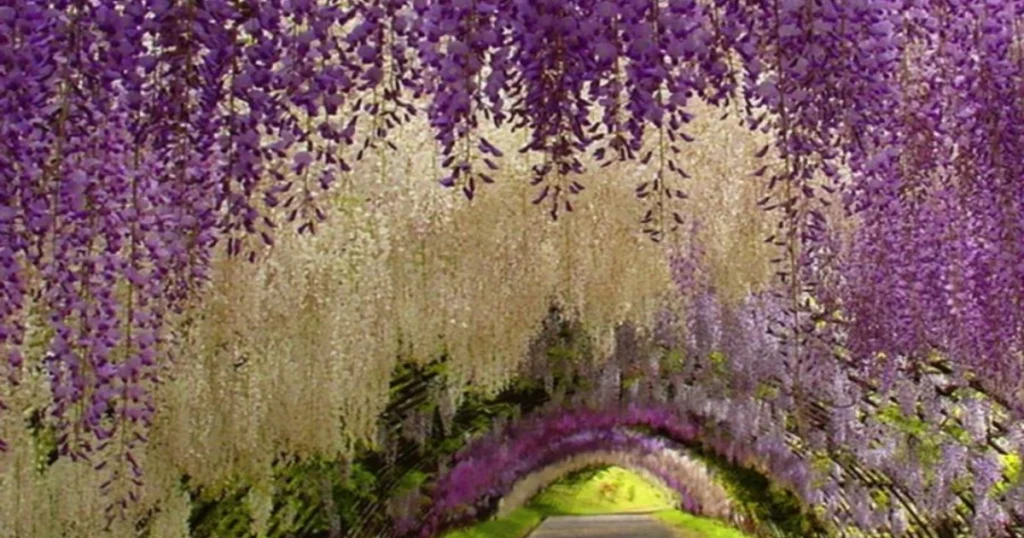
- Exceptionally long flower clusters.
- Wide range of cultivars.
- Strong fragrance.
- Elegant cascading displays.
Its flower racemes are among the longest produced by any commonly grown wisteria.
American Wisteria (Wisteria frutescens)
Native to the southeastern United States.
Compared with Asian species, it generally:
- Grows less aggressively.
- Flowers later.
- Produces shorter clusters.
- Is easier to manage in smaller gardens.
In some regions, native species are recommended because they present a lower risk of escaping cultivation.
Why Sunlight Matters
Wisteria is often planted against walls and buildings.
Although it tolerates partial shade, reliable flowering generally requires abundant sunlight.
Most experts recommend:
- At least six hours of direct sunlight daily.
- Well-drained soil.
- Good air circulation.
Insufficient sunlight commonly produces vigorous leafy growth with relatively few flowers.
Building a Strong Support
A mature wisteria becomes remarkably heavy.
Its twisting stems can eventually exceed several inches in diameter.
Suitable supports include:
- Pergolas.
- Heavy timber arches.
- Steel frames.
- Brick walls with sturdy wires.
- Strong metal trellises.
Lightweight fences and thin wooden trellises often prove inadequate over time.
The support should be considered a permanent structure capable of carrying substantial weight for decades.
Creating a Wisteria Tunnel
One of the most spectacular uses of wisteria is a flowering tunnel.
The basic process involves:
- Building a robust arch or pergola.
- Planting vines at regular intervals.
- Training stems upward.
- Directing growth across the roof structure.
- Connecting neighboring plants.
- Maintaining shape through annual pruning.
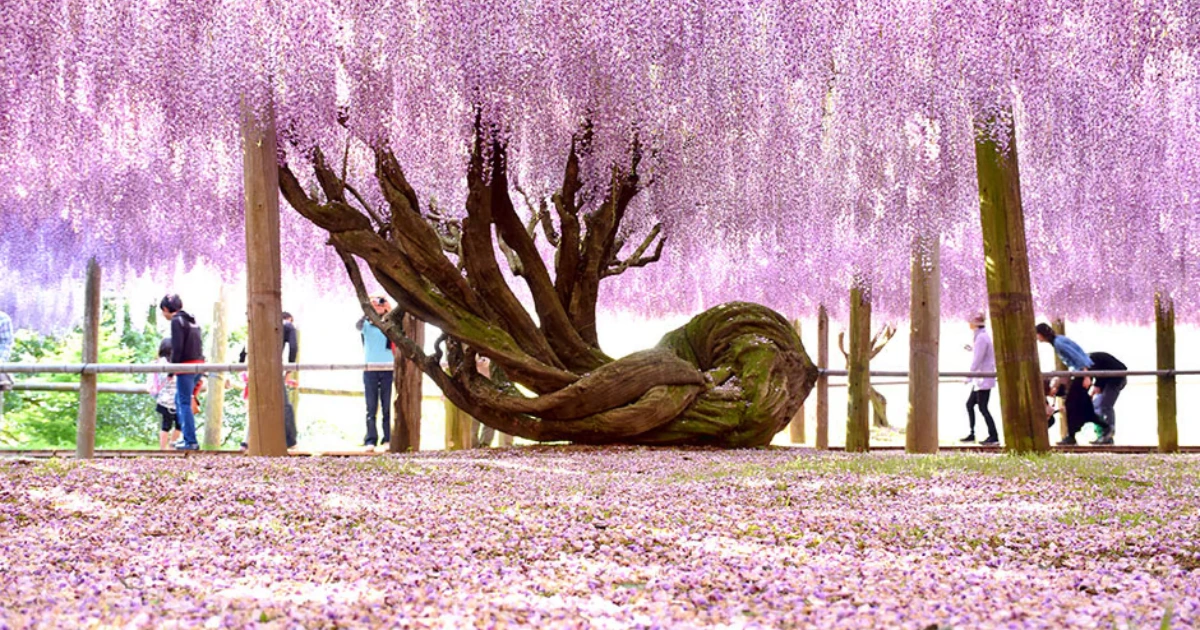
As the vines mature, the individual plants gradually merge into a continuous canopy.
When flowering begins, long clusters hang beneath the framework, creating the tunnel effect seen in many famous gardens.
Understanding Wisteria’s Growth Habit
Wisteria is an exceptionally vigorous climber.
New shoots can extend several feet in a single growing season.
Without regular pruning, vines may:
- Cover roofs.
- Block gutters.
- Enter windows.
- Damage weak structures.
- Smother nearby plants.
This vigor explains both its popularity and its reputation for becoming difficult to control.
Why Pruning Encourages Flowers
Flower buds usually develop on short spurs formed along older wood.
Unpruned vines often produce long vegetative shoots while investing less energy in flowering.
Traditional pruning generally occurs twice each year.
Summer Pruning
During summer:
- Long new shoots are shortened.
- Excess growth is removed.
- The framework remains visible.
This improves air circulation while encouraging spur development.
Winter Pruning
During winter dormancy:
- Summer-pruned shoots are shortened further.
- Flowering spurs are refined.
- Plant structure becomes easier to manage.
Regular pruning helps balance vigorous growth with flower production.
Water and Fertility
Established wisteria is relatively adaptable.
During establishment:
- Water regularly.
- Avoid prolonged drought.
- Mulch around the root zone.
Once mature, the vine usually becomes fairly drought tolerant.
Excessive nitrogen fertilizer should generally be avoided.
High nitrogen promotes leafy growth at the expense of flowers.
Balanced soil fertility combined with compost often provides excellent long-term results.
How Long Can Wisteria Live?
One remarkable characteristic of wisteria is its longevity.
Healthy plants may remain productive for many decades.
Historic specimens planted during the nineteenth century continue flowering today.
As the trunk thickens with age, flowering often becomes increasingly spectacular.
For many gardeners, a wisteria tunnel is designed not merely for one generation but for several.
Pollinators Love Wisteria
When in bloom, fragrant flowers attract numerous pollinating insects.
Visitors commonly include:
- Honey bees.
- Bumblebees.
- Carpenter bees.
- Butterflies.
Because flowering occurs over a relatively short period, the display often becomes a seasonal focal point for pollinator activity.
Is Wisteria Invasive?
The answer depends largely on the species and location.
Chinese and Japanese wisterias have escaped cultivation in parts of the eastern United States, where they may climb native trees and suppress local vegetation.
American wisteria is generally considered a better choice for gardeners wishing to support native ecosystems while enjoying similar ornamental qualities.
Always check local recommendations before planting.
Common Reasons Wisteria Fails to Bloom
Several factors may reduce flowering.
Too Little Sun
Insufficient light often leads to abundant foliage with few flowers.
Excessive Nitrogen
Too much nitrogen encourages vigorous leafy growth.
Improper Pruning
Removing flowering spurs reduces bloom production.
Young Age
Many healthy vines simply need more time to mature.
Seed-Grown Plants
Seedlings naturally require much longer before flowering than grafted plants.
Practical Tips
- Purchase grafted plants whenever possible.
- Install permanent, heavy-duty supports before planting.
- Provide full sun for maximum flowering.
- Prune twice each year.
- Avoid excessive nitrogen fertilizer.
- Mulch to conserve soil moisture.
- Be patient during the establishment years.
Common Mistakes
Underestimating Mature Size
Young plants quickly become massive woody vines.
Growing on Weak Structures
Mature stems can damage lightweight trellises and fences.
Fertilizing for Leaf Growth
Heavy nitrogen often delays flowering.
Skipping Regular Pruning
Annual pruning maintains both shape and flower production.
Expecting Instant Results
Wisteria rewards long-term care rather than quick gratification.
Frequently Asked Questions
How long does wisteria take to bloom?
Grafted plants may flower within a few years, while seed-grown plants can require significantly longer—sometimes a decade or more.
Why isn’t my wisteria flowering?
Common causes include insufficient sunlight, excessive nitrogen, improper pruning, or simple immaturity.
Which wisteria is best for North American gardens?
American wisteria (Wisteria frutescens) is often recommended because it is native to the southeastern United States and is generally less aggressive than many Asian species.
Can wisteria damage buildings?
Yes. Mature vines become extremely strong and should only be grown on sturdy, permanent structures.
How often should wisteria be pruned?
Most gardeners prune once in summer to control vigorous shoots and again during winter to refine flowering spurs.
Conclusion
A wisteria tunnel represents one of gardening’s greatest lessons in delayed reward. During its first years, the vine appears to demand far more than it gives, producing vigorous stems while offering only occasional flowers. Yet beneath that seemingly impatient growth, it is quietly building the permanent framework that will eventually support thousands of blossoms each spring.
When trained carefully, pruned consistently, and given time to mature, wisteria transforms ordinary arches and pergolas into living architecture. Its cascading flowers, twisting trunks, and seasonal fragrance become more impressive with every passing year, reminding gardeners that some of the most extraordinary landscapes cannot be rushed.
In an age of instant results, the wisteria tunnel remains a celebration of patience—proof that the most memorable gardens are often those planted with the future firmly in mind.
Internal Linking
Learn how to build a durable garden structure that lasts for decades:
https://secretsofthegreengarden.com/gabion-wall-garden-design/
Discover how to propagate climbing plants and shrubs from cuttings:
https://secretsofthegreengarden.com/propagation-from-cuttings/
Transform difficult garden corners into beautiful planting spaces:
https://secretsofthegreengarden.com/best-shade-garden-plants/
Build a dedicated gardening workspace for maintaining vines and seedlings:
https://secretsofthegreengarden.com/potting-bench-guide/
Recommended External Sources
- Royal Horticultural Society (RHS): https://www.rhs.org.uk
- Missouri Botanical Garden: https://www.missouribotanicalgarden.org
- Clemson Cooperative Extension: https://hgic.clemson.edu