
Introduction
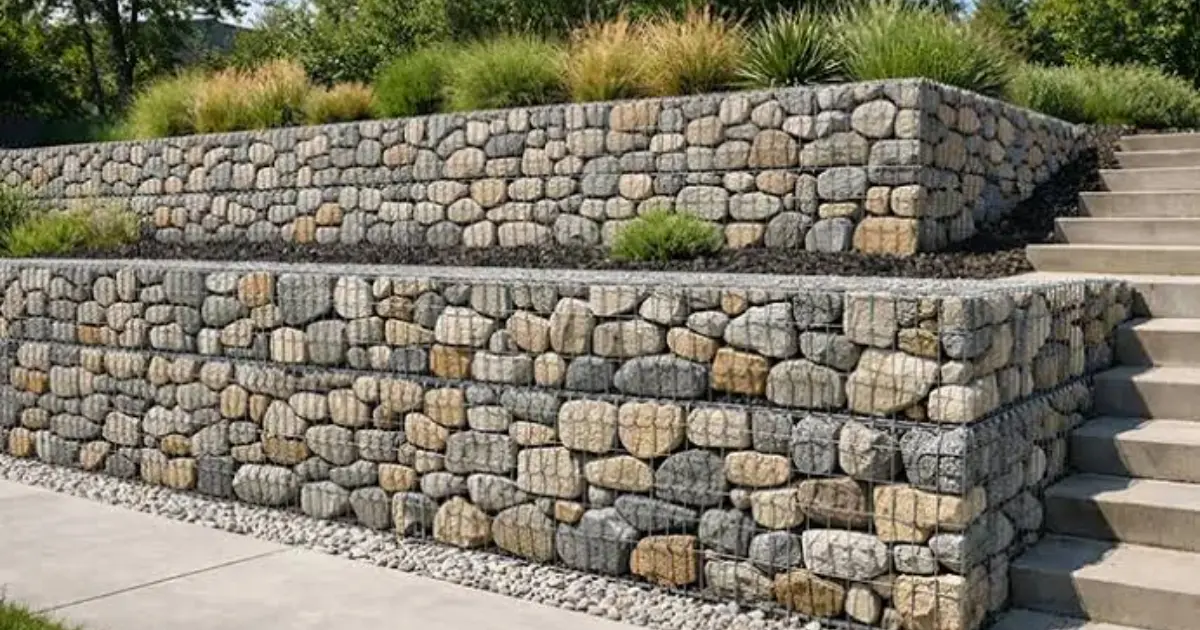
Some of the most enduring ideas in garden design come not from gardening itself but from engineering. The gabion wall is a perfect example. Originally developed as a practical solution for stabilizing riverbanks, retaining steep slopes, and protecting roads from erosion, gabions have made the transition from large-scale infrastructure to residential landscapes with remarkable success.
At first glance, a gabion wall appears deceptively simple—a steel wire cage filled with natural stone. Yet behind that simplicity lies a structure capable of supporting significant loads, resisting erosion, managing drainage, and lasting for decades with minimal maintenance.
Today, landscape architects and garden designers increasingly use gabions not only because they are exceptionally strong but because they combine the permanence of stone with a modern, natural aesthetic that complements almost any style of garden. Whether used as retaining walls, seating, raised beds, privacy screens, or decorative features, gabions offer a unique blend of beauty and functionality that few other materials can match.
What Is a Gabion Wall?
A gabion is a rectangular cage made from heavy-duty galvanized or stainless steel mesh that is filled with stone or other durable materials.
The word gabion comes from the Italian gabbione, meaning “large cage.”
Although modern gabions are manufactured using welded steel mesh, the concept dates back centuries. Engineers originally used woven baskets filled with rocks to reinforce military fortifications and protect riverbanks from erosion.
Today, gabions remain widely used in civil engineering projects, including:
- Highway retaining walls.
- Bridge approaches.
- Riverbank stabilization.
- Coastal erosion control.
- Railway embankments.
- Flood protection systems.
Their success in these demanding environments explains why they have become increasingly popular in residential landscaping.
Why Gabion Walls Work So Well
Unlike solid concrete walls, gabions rely primarily on their weight and permeability.
The stone filling creates a massive structure capable of resisting pressure, while the open spaces between the rocks allow water to drain naturally.
This combination offers several engineering advantages.
Excellent Drainage
One of the biggest causes of retaining wall failure is water pressure building behind the structure.
Gabions naturally allow water to pass through the stones.
This reduces hydrostatic pressure and often eliminates the need for complex drainage systems required behind many solid retaining walls.
Flexibility
Unlike rigid concrete, gabion structures tolerate small amounts of ground movement without cracking.
Minor settling usually causes little structural damage because the wire cages and stones adjust together.
This flexibility makes gabions particularly useful on uneven or slowly shifting ground.
Exceptional Weight
The stones provide tremendous mass.
This weight helps gabions resist:
- Soil pressure.
- Wind loads.
- Floodwater.
- Surface erosion.
The larger the structure, the more stable it generally becomes when properly engineered.
Why Garden Designers Love Gabions
While engineers appreciate gabions for their structural performance, designers value them for their appearance.
The combination of raw stone and clean geometric steel creates a modern look that still feels natural.
Gabions work equally well in:
- Contemporary gardens.
- Rustic landscapes.
- Mediterranean designs.
- Woodland settings.
- Minimalist outdoor spaces.
- Industrial-style architecture.
Over time, mosses, lichens, and nearby plants soften the structure even further.
Choosing the Right Stone
The stone determines much of the finished appearance.
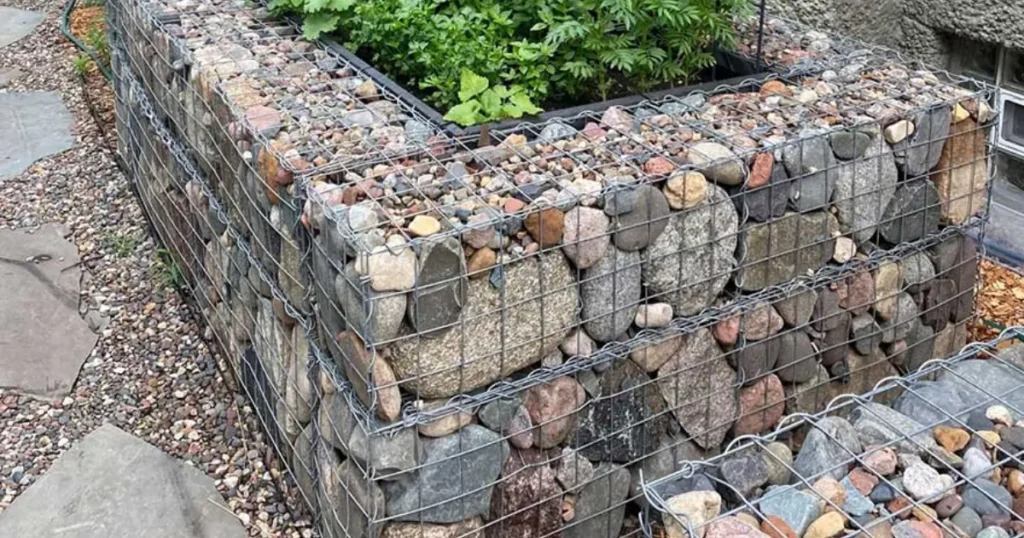
Popular options include:
- Granite.
- Limestone.
- Basalt.
- Sandstone.
- Slate.
- River rock.
Most stones should be larger than the mesh openings so they remain securely contained.
Using locally sourced stone often creates the most natural appearance while reducing transportation costs.
More Than Just Retaining Walls
Gabions are surprisingly versatile.
Garden Borders
Low gabion walls define planting beds while adding texture and visual interest.
Raised Beds
Stone-filled cages create durable raised vegetable or flower beds with excellent drainage.
Garden Seating
Wide gabion bases topped with timber slabs produce attractive outdoor benches.
Privacy Screens
Tall, narrow gabions provide screening while remaining more visually interesting than solid fences.
Outdoor Kitchens
Gabion bases can support countertops, grills, and preparation areas.
Water Features
Gabions blend naturally into ponds, streams, and waterfalls because of their close relationship with stone.
Wildlife Benefits
Unlike smooth concrete walls, gabions contain numerous small spaces between the rocks.
These gaps may provide shelter for:
- Beneficial insects.
- Spiders.
- Small reptiles.
- Amphibians.
- Solitary bees in appropriate locations.
When combined with climbing plants, gabions can contribute to greater biodiversity within the garden.
Plants That Pair Beautifully with Gabions
Many plants complement the texture of stone.
Excellent choices include:
Ornamental Grasses
- Feather reed grass.
- Blue fescue.
- Fountain grass.
Mediterranean Plants
- Lavender.
- Rosemary.
- Thyme.
- Sage.
Cascading Plants
- Creeping thyme.
- Aubrieta.
- Candytuft.
- Trailing sedums.
Climbers
- Clematis.
- Climbing roses.
- Virginia creeper.
- Star jasmine (in suitable climates).
Soft foliage creates an attractive contrast against the rigid geometry of the wire baskets.
Do Gabion Walls Last?
High-quality gabions can remain functional for many decades.
Their lifespan depends largely on:
- Quality of the steel mesh.
- Galvanization or protective coatings.
- Local climate.
- Exposure to saltwater.
- Proper installation.
Modern galvanized or zinc-aluminum coated mesh often provides excellent corrosion resistance.
In highly corrosive coastal environments, stainless steel may offer even greater longevity.
Installation Considerations
Small decorative gabions are suitable for many DIY gardeners.
However, larger retaining walls require careful planning.
Important considerations include:
- Stable foundations.
- Correct basket assembly.
- Proper stone placement.
- Local building regulations.
- Engineering advice for tall retaining walls.
Retaining structures supporting significant soil loads should always be designed according to local construction standards.
Maintenance Requirements
Gabions require relatively little maintenance.
Occasional inspections should include checking for:
- Damaged mesh.
- Loose stones.
- Vegetation growing where it could distort the baskets.
- Drainage around the structure.
Unlike timber retaining walls, gabions do not rot.
Unlike concrete, they rarely suffer from large structural cracks caused by minor ground movement.
Environmental Advantages
Gabions offer several sustainability benefits.
Long Service Life
Durable materials reduce replacement frequency.
Permeability
Water naturally infiltrates through the structure rather than being redirected.
Local Materials
Many projects use locally quarried stone, reducing transportation impacts.
Reduced Concrete Use
Some retaining walls can be built with significantly less concrete than conventional alternatives.
Common Misconceptions
Gabions Are Only for Roads
Although widely used in civil engineering, gabions have become an established feature in residential landscape design.
They Always Look Industrial
Careful stone selection and surrounding planting create warm, natural-looking landscapes.
They Require Concrete Foundations Everywhere
Many low decorative gabions require only well-prepared compacted bases rather than full concrete footings.
They Rust Quickly
Modern galvanized or coated gabion systems are designed for long outdoor service when installed correctly.
Practical Tips
- Choose stone larger than the mesh openings.
- Use locally sourced stone whenever possible.
- Combine gabions with ornamental grasses and trailing plants.
- Level the foundation carefully before installation.
- Purchase high-quality galvanized baskets for long-term durability.
- Consult local regulations before building retaining walls.
Common Mistakes
Filling with Mixed Stone Sizes
Highly variable stone sizes create uneven appearance and poor packing.
Ignoring Foundation Preparation
Even flexible structures require stable, level support.
Building Tall Retaining Walls Without Engineering Advice
Large structures retaining soil may require professional design.
Choosing Thin Mesh
Higher-quality welded mesh provides greater strength and durability.
Frequently Asked Questions
What is a gabion wall?
A gabion wall is a steel mesh cage filled with stone, commonly used for retaining walls, erosion control, landscaping, and decorative garden features.
How long do gabion walls last?
Properly installed galvanized gabions often remain functional for several decades, depending on climate and material quality.
Do gabion walls need drainage?
Their open stone-filled design provides excellent natural drainage, which is one of their greatest advantages.
Can homeowners build gabion walls?
Small decorative gabions are suitable for many DIY projects, but larger retaining walls may require engineering guidance and local approvals.
Are gabion walls environmentally friendly?
They can be. Their long lifespan, permeability, and ability to use locally sourced stone make them an environmentally attractive option for many landscaping projects.
Conclusion
Gabion walls demonstrate how engineering solutions can become beautiful landscape features. Originally designed to stabilize rivers, roads, and embankments, they have found a natural place in modern gardens thanks to their exceptional strength, excellent drainage, and timeless appearance.
Whether supporting a hillside, defining a planting bed, creating outdoor seating, or adding architectural interest, gabions combine structural performance with natural materials in a way that few garden features can match. As they weather and become integrated into the landscape, they often become even more attractive, proving that some of the best garden ideas are borrowed from the world of engineering.
Internal Linking
Learn how concrete planters become more beautiful with age:
https://secretsofthegreengarden.com/concrete-planters-age-beautifully/
Discover how healthy soil supports long-lasting garden success:
https://secretsofthegreengarden.com/why-not-leave-bare-soil-winter/
See how companion planting creates stronger, more productive gardens:
https://secretsofthegreengarden.com/the-three-sisters-garden-method-why-corn-beans-and-squash-still-grow-better-together/
Explore plants that thrive in shaded garden spaces:
https://secretsofthegreengarden.com/best-shade-garden-plants/
Recommended External Sources
- Royal Horticultural Society (RHS): https://www.rhs.org.uk
- American Society of Landscape Architects (ASLA): https://www.asla.org
- U.S. Department of Agriculture Natural Resources Conservation Service (NRCS): https://www.nrcs.usda.gov