
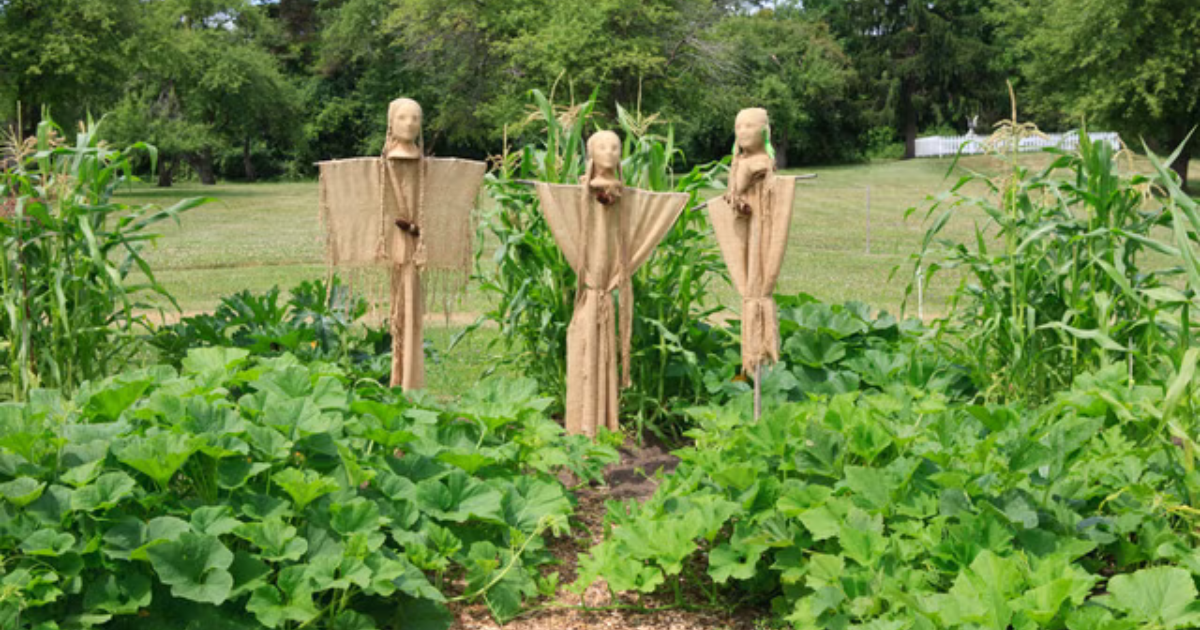
The Three Sisters garden method is one of the oldest companion planting systems still used today. Built around corn, beans, and squash, this traditional growing method shows how different plants can support one another when they are planted with purpose.
Corn provides height, beans improve soil fertility, and squash protects the ground with wide leaves. Together, they create a living system that can be more balanced than growing each crop alone.
What Is the Three Sisters Garden Method?
The Three Sisters garden method is a traditional planting technique used by many Indigenous communities in North America for centuries.
It combines three staple crops:
- Corn
- Climbing beans
- Squash or pumpkins
Each plant has a specific role. Corn grows tall and acts as a natural trellis. Beans climb the corn and add nitrogen to the soil. Squash spreads across the ground, helping shade the soil and reduce moisture loss.
This simple arrangement creates a productive planting system that uses space efficiently.
Why Corn, Beans, and Squash Work Well Together
The strength of this method comes from the way the plants complement one another.
Instead of competing for the same space, they occupy different levels of the garden.
Corn Provides Support
Corn is planted first because it needs time to grow strong stems.
Once it reaches enough height, climbing beans can use the stalks as natural support.
This reduces the need for stakes, cages, or extra trellises.
Beans Improve the Soil
Beans belong to the legume family and can work with soil bacteria to fix nitrogen.
This does not mean beans instantly fertilize the entire garden, but their roots contribute to a healthier soil system over time.
In a traditional Three Sisters planting, beans also grow vertically, making better use of garden space.
Squash Protects the Ground
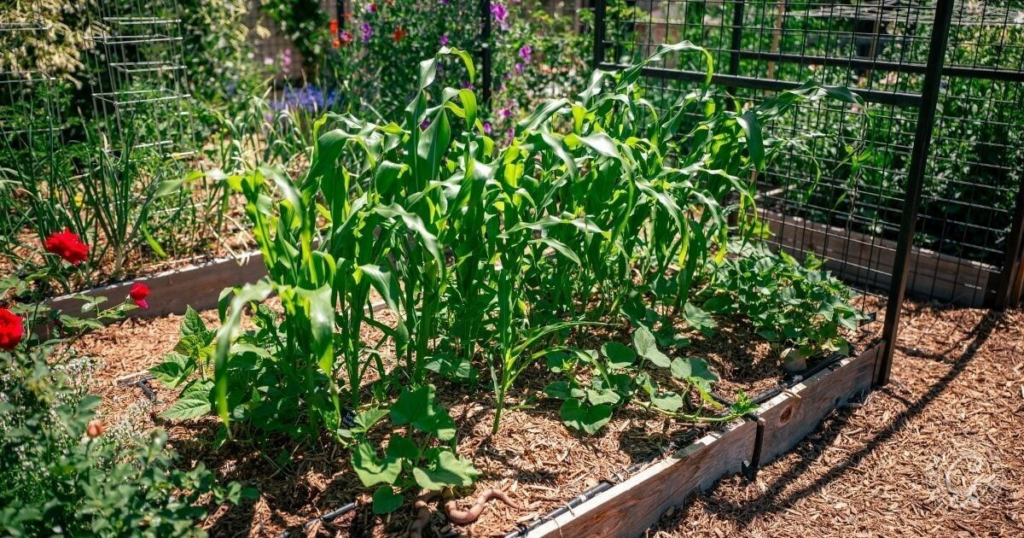
Squash plants spread wide leaves across the soil.
This living cover helps:
- Shade the soil.
- Reduce evaporation.
- Suppress some weeds.
- Protect the soil surface from direct sun.
- Create a cooler root zone.
Some squash varieties also have prickly stems, which may discourage certain animals from walking through the planting area.
How to Plant a Three Sisters Garden
This method works best when the soil is warm and the danger of frost has passed.
Choose a sunny location with fertile, well-drained soil.
Basic Planting Steps
- Build a small mound of soil about 12 inches high and 18 to 24 inches wide.
- Plant 4 to 6 corn seeds near the center of the mound.
- Wait until the corn is about 6 inches tall.
- Plant 4 to 6 climbing bean seeds around the corn.
- Plant squash seeds around the outer edge of the mound.
- Water gently and keep the soil evenly moist during germination.
Spacing matters. If the plants are crowded too tightly, airflow may decrease and disease problems can become more likely.
Best Varieties to Use
Not every variety works equally well in a Three Sisters garden.
Best Corn Types
Choose sturdy corn varieties with strong stalks.
Sweet corn can work, but traditional flour corn or field corn often provides stronger support.
Best Bean Types
Use pole beans, not bush beans.
Good options include:
- Scarlet runner beans
- Pole green beans
- Dry beans
- Climbing heirloom beans
Best Squash Types
Use spreading squash rather than compact bush types.
Good choices include:
- Pumpkins
- Winter squash
- Butternut squash
- Acorn squash
Zucchini can be used, but it does not always spread as effectively as vining squash.
Common Mistakes to Avoid
The Three Sisters method is simple, but timing and spacing are important.
Avoid these mistakes:
- Planting beans too early before corn is strong.
- Using bush beans instead of climbing beans.
- Crowding too many plants in one mound.
- Choosing weak corn varieties.
- Planting in poor, compacted soil.
- Forgetting to water during dry periods.
The most common mistake is planting all three crops at the same time. Beans can grow quickly and may pull down young corn if the stalks are not strong enough yet.
Does the Three Sisters Method Really Improve Yields?
The Three Sisters garden method is not just about growing three crops together. It is about designing a small ecosystem.
In the right conditions, it can improve space efficiency and soil cover while supporting crop diversity.
However, results depend on:
- Climate
- Soil fertility
- Plant spacing
- Crop varieties
- Water availability
- Sun exposure
For small home gardens, the biggest benefit is often better use of space and healthier soil coverage rather than guaranteed higher yields.
How to Care for a Three Sisters Garden
Once established, this planting system is relatively low maintenance.
Still, it needs regular care during the growing season.
Watering
Keep the soil moist during germination and early growth.
Once plants are established, squash leaves help reduce evaporation, but deep watering is still important during dry weather.
Weeding
Weed carefully while the plants are young.
As squash vines spread, they naturally cover much of the soil and reduce weed growth.
Feeding
Compost can be added before planting to improve soil structure and fertility.
Avoid excessive nitrogen fertilizer, which may encourage too much leaf growth at the expense of fruit and ears.
Benefits of the Three Sisters Garden Method
This traditional method offers several practical advantages:
- Better use of vertical and horizontal space.
- Natural support for climbing beans.
- Soil cover from squash leaves.
- Improved plant diversity.
- Less need for artificial trellises.
- A more resilient garden layout.
It also encourages gardeners to think beyond single-crop planting and design beds where plants support one another.
Frequently Asked Questions
Can I plant the Three Sisters in a raised bed?
Yes. A raised bed can work well if it is large enough. Allow enough room for squash vines to spread without overcrowding the corn and beans.
Should I plant all three crops on the same day?
No. Corn should be planted first. Wait until it reaches about 6 inches tall before planting the beans.
Can I use bush beans?
Bush beans are not ideal because they do not climb the corn. Pole beans are the better choice for this method.
Does squash really stop weeds?
Squash can suppress some weeds by shading the soil, but it will not eliminate weeds completely. Early weeding is still important.
Is this method good for beginners?
Yes, but beginners should pay close attention to timing, spacing, and variety selection. These details make the system work much better.
Final Thoughts
The Three Sisters garden method remains valuable because it follows a simple natural principle: plants can work together when their growth habits complement one another. Corn offers support, beans climb and contribute to soil health, and squash shades the ground while helping conserve moisture.
For gardeners who want a productive, traditional, and space-efficient planting system, this method is still worth trying. With the right timing, good spacing, and suitable varieties, corn, beans, and squash can grow as a team just as they have for generations.
Internal Linking Suggestions
Consider linking this article to related content on secretsofthegreengarden.com, such as:
- Companion Planting Guide for Beginners
- Best Vegetables to Grow in Raised Beds
- How to Improve Garden Soil Naturally
Recommended External Sources
For additional background, consult trusted educational and agricultural sources:
- Cornell University Cooperative Extension
- USDA Natural Resources Conservation Service
- University of Minnesota Extension
Primary Keyword: Three Sisters garden method
Related Keywords: companion planting, corn beans and squash, Native American gardening, garden mound planting, pole beans, squash vines, soil fertility, vegetable garden planning.
Meta Description: Learn how the Three Sisters garden method works, why corn, beans, and squash grow well together, and how to plant this traditional companion planting system in your own garden.