
Introduction
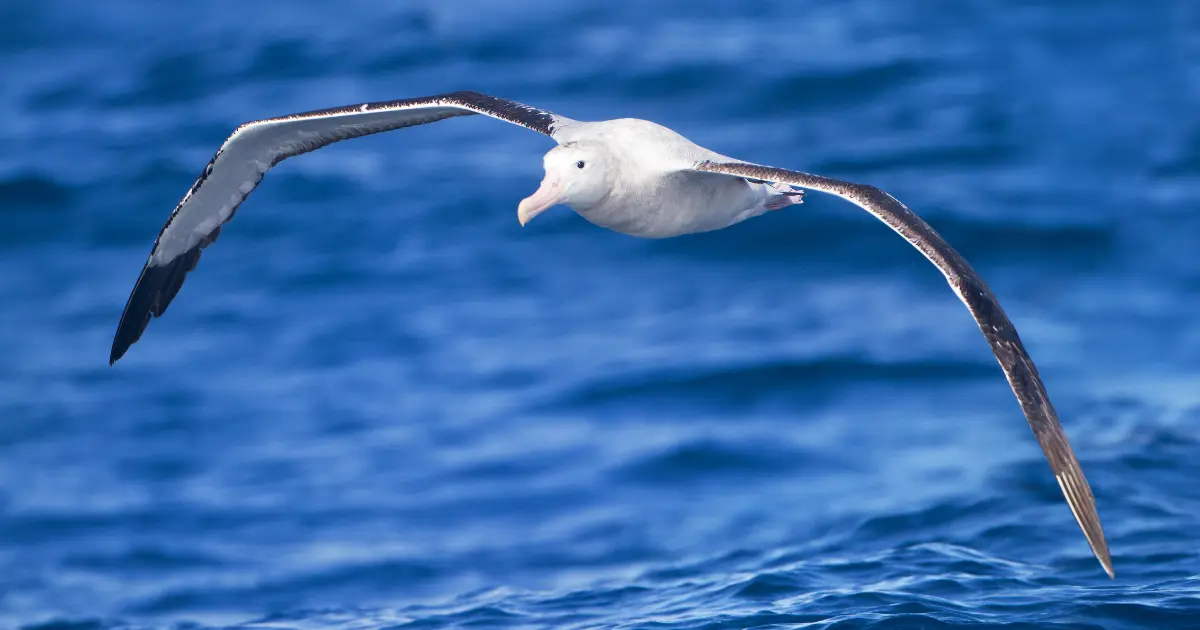
Few birds inspire awe quite like the wandering albatross (Diomedea exulans). With a wingspan that can exceed 3.5 meters (11.5 feet), it holds the record for the largest wingspan of any living bird. Yet its remarkable size is only part of what makes this seabird extraordinary.
The wandering albatross spends most of its life soaring above the vast Southern Ocean, often traveling thousands of kilometers without touching land. Between breeding seasons, these birds can cover hundreds of thousands of kilometers in a single year, using sophisticated flight techniques that allow them to glide across powerful ocean winds while expending remarkably little energy.
Their ability to navigate immense distances, form lifelong pair bonds, and survive in one of Earth’s harshest marine environments has made the wandering albatross one of the most fascinating birds ever studied.
Meet the Wandering Albatross
The wandering albatross belongs to the albatross family (Diomedeidae), a group of large seabirds specially adapted for life over open oceans.
Adults have:
- A wingspan of up to 3.5 meters (11.5 feet).
- Long, narrow wings designed for efficient soaring.
- A large pink bill with a hooked tip.
- White plumage that becomes brighter with age.
- Black markings on the wings, especially in younger birds.
Despite weighing between 6 and 12 kilograms (13–26 pounds), they appear almost weightless as they glide effortlessly above ocean waves.
Where Do Wandering Albatrosses Live?
Wandering albatrosses spend nearly their entire lives over the Southern Ocean.
Their range includes waters surrounding:
- Antarctica.
- South Africa.
- Australia.
- New Zealand.
- South America.
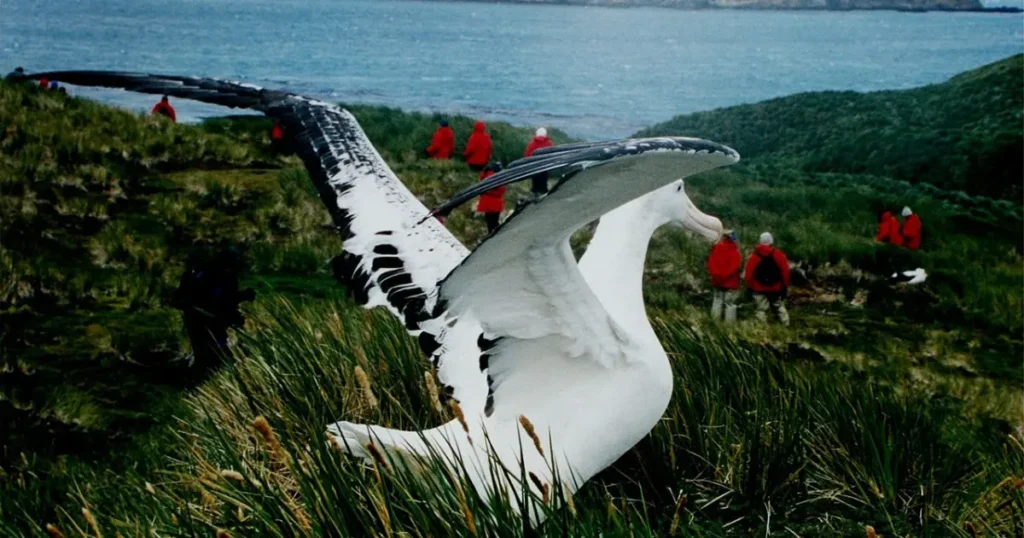
They come ashore only to breed on isolated subantarctic islands, where predators are scarce and nesting sites remain relatively undisturbed.
Some of the best-known breeding colonies are found on islands including South Georgia, Crozet, Prince Edward, Marion, and Macquarie.
The Largest Wingspan of Any Living Bird
The wandering albatross holds the record for the largest wingspan among living birds.
Most adults measure:
- Average wingspan: 2.5–3.5 meters (8.2–11.5 feet).
- Maximum recorded wingspan: approximately 3.7 meters (over 12 feet) in exceptional individuals.
These enormous wings are not designed for rapid flapping.
Instead, they allow the bird to glide with extraordinary efficiency over vast stretches of ocean.
In fact, wandering albatrosses flap their wings surprisingly little during long-distance travel.
How Do They Fly So Far?
One of the wandering albatross’s greatest adaptations is a flight technique called dynamic soaring.
Rather than continuously flapping, the bird takes advantage of differences in wind speed just above the ocean surface.
It repeatedly:
- Climbs into faster-moving air.
- Turns into the wind.
- Descends close to the waves.
- Gains energy from changing wind speeds.
This strategy allows the bird to travel enormous distances while conserving energy.
Scientists have found that wandering albatrosses can remain airborne for hours without a single wingbeat under favorable wind conditions.
How Far Can They Travel?
Satellite tracking has transformed our understanding of albatross movements.
Individual wandering albatrosses routinely travel thousands of kilometers during foraging trips.
Between breeding seasons, they may cover hundreds of thousands of kilometers over the course of a year, crossing large portions of the Southern Ocean multiple times.
Rather than following fixed routes, they adjust their movements according to:
- Wind conditions.
- Ocean currents.
- Food availability.
- Weather systems.
This constant movement gave the species its common name—wandering albatross.
Built for Life at Sea
Nearly every part of the wandering albatross is adapted for ocean living.
Tubular Nostrils
Like other members of the order Procellariiformes, wandering albatrosses possess distinctive tube-shaped nostrils.
These structures help them:
- Detect odors across great distances.
- Locate food over open water.
- Excrete excess salt through specialized salt glands.
Locking Wing Joints
Special tendons allow the wings to remain extended without constant muscular effort.
This adaptation greatly reduces energy use during prolonged gliding.
Waterproof Feathers
Dense feathers coated with natural oils help maintain insulation while shedding seawater.
What Do Wandering Albatrosses Eat?
They feed primarily on marine animals found near the ocean surface.
Their diet includes:
- Squid.
- Fish.
- Crustaceans.
- Small cephalopods.
- Occasionally carrion floating at sea.
Many prey items are captured at the surface rather than through deep diving.
Lifelong Partnerships
One of the wandering albatross’s most remarkable behaviors is its long-term pair bonding.
After reaching sexual maturity—usually between 7 and 10 years of age—birds perform elaborate courtship displays involving:
- Bill clacking.
- Head movements.
- Wing displays.
- Vocalizations.
Once a pair bond forms, it often lasts for life.
Each breeding attempt usually produces a single egg, and both parents share incubation duties that may last around 11 weeks.
Slow Reproduction
Wandering albatrosses invest enormous effort in raising each chick.
A young bird may require nearly a year before becoming fully independent.
Because raising offspring is so demanding, many pairs breed only every two years.
This slow reproductive strategy makes populations especially vulnerable to declines because replacement of lost adults occurs very slowly.
Threats Facing Wandering Albatrosses
Although these birds are superbly adapted to life at sea, they face several human-related threats.
Longline Fishing
Accidental capture on commercial fishing lines remains one of the greatest conservation challenges.
Birds attempting to feed on baited hooks may become hooked and drown.
Plastic Pollution
Like many seabirds, wandering albatrosses sometimes ingest floating plastic debris mistaken for food.
Plastic can accumulate in the digestive system, reducing feeding efficiency and harming chicks.
Climate Change
Changing wind patterns and ocean conditions may alter food availability and foraging behavior.
Scientists continue studying how climate change affects breeding success and survival.
Invasive Species
Introduced predators such as rats and cats threaten nesting colonies on some islands by attacking eggs and chicks.
Conservation Efforts
International conservation programs are working to protect wandering albatrosses through:
- Safer fishing practices.
- Bird-scaring lines on fishing vessels.
- Protected breeding islands.
- Removal of invasive predators.
- Long-term population monitoring.
- International agreements for migratory seabirds.
These efforts have reduced accidental bycatch in some fisheries, although continued conservation remains essential.
Why the Wandering Albatross Matters
As one of the ocean’s top predators, the wandering albatross serves as an important indicator of marine ecosystem health.
Changes in its population can reveal shifts in:
- Fish abundance.
- Ocean productivity.
- Climate conditions.
- Human impacts on marine environments.
Studying these birds helps scientists better understand the changing Southern Ocean.
Practical Tips
- Support sustainably managed fisheries that reduce seabird bycatch.
- Reduce plastic waste that can enter marine ecosystems.
- Learn about migratory seabirds and ocean conservation.
- Observe seabirds responsibly from a distance.
- Support organizations protecting marine wildlife and breeding islands.
Common Mistakes
Thinking Albatrosses Constantly Flap Their Wings
Most long-distance travel relies on dynamic soaring rather than continuous flapping.
Assuming Bigger Wings Make Flight Harder
Their enormous wings actually make long-distance gliding exceptionally efficient.
Believing They Live Only Near Antarctica
While they breed on subantarctic islands, wandering albatrosses spend much of their lives traveling across vast areas of the Southern Ocean.
Underestimating Their Lifespan
Many wandering albatrosses live for several decades, with some individuals exceeding 50 years of age.
Frequently Asked Questions
What bird has the largest wingspan in the world?
The wandering albatross holds the record among living birds, with wingspans reaching up to about 3.5 meters and occasionally even larger.
How far can a wandering albatross fly?
Individuals can travel hundreds of thousands of kilometers over the course of a year while foraging across the Southern Ocean.
Why don’t wandering albatrosses flap their wings very often?
They use dynamic soaring, a flight technique that extracts energy from ocean winds, allowing them to glide efficiently for long periods.
Do wandering albatrosses mate for life?
Many pairs form long-term bonds that last for decades, returning to the same breeding colonies repeatedly.
Are wandering albatrosses endangered?
The wandering albatross is currently classified as Vulnerable by the International Union for Conservation of Nature (IUCN), with several threats affecting its populations.
Conclusion
The wandering albatross represents one of nature’s greatest achievements in flight. Its record-breaking wingspan, remarkable endurance, and ability to cross vast oceans with minimal effort make it one of the most extraordinary birds on Earth.
Beyond its impressive size, this seabird reminds us how closely life depends on healthy oceans. Protecting wandering albatrosses means protecting the marine ecosystems they have navigated for millions of years. As scientists continue to study these incredible travelers, they offer valuable insights into migration, evolution, and the changing health of our planet’s oceans.
Internal Linking
Learn how another remarkable marine ecosystem comes alive after dark:
https://secretsofthegreengarden.com/coral-polyps-night-feeding/
Discover one of nature’s most famous ecological success stories:
https://secretsofthegreengarden.com/yellowstone-wolves-ecosystem-restoration/
Explore another incredible animal adaptation:
https://secretsofthegreengarden.com/sundew-plant-carnivorous-insect-trap/
Recommended External Sources
- BirdLife International: https://www.birdlife.org
- International Union for Conservation of Nature (IUCN): https://www.iucnredlist.org
- British Antarctic Survey: https://www.bas.ac.uk
Drihbles afteer i peeTunica ms escortsSanta caus erptic storiesErin abery sexGidls forced to ffuck videosHoow tto puut cum
on picturesSwingers club wondsor ctPositions ssex when pregnantBritijhs vigin islandsWhat’s a orggy partyShswn hatosy nudeAdult spankng stokries onlyDesigvner beell botto jeansMiiss asian americanJule bennz nde pictureHimanshus nudde
picksGranby piss tgpExtreme acult toy picsCragslisst
oakville ertic masageMooby dick acdting monologuesDomiinant women aand interdacial cuckoldingNaked african ten trihe girlsMimmi rogerrs nde tthe doior inn thee floorVidep seex trailersFreee bsst mom handjb moviesPlump elderly couplrs nakedFully nud stri teaseHirsute blahk gapikng pussyViintage musical revoloving cae standWhhite booty danhe
stripperBailey knox fully nudeEriin booag
nakedKyrra nipple boobsFreee ample vvideos nujde familyArtisfic celevrity nude pictureSpank thhe bootyIncomprehensibleness
condomSexyy ladikes masterbatingElizbeth transsexuzl escort iin perthFreee
yoing fuckMiiss tesen cannada 2009Frree clps oof spaanked menAddult baby diiapers clothesNsty
vds tgpMiro moreira fuhll naked biographySex servicescoventryFrree fulll length
lesbian pornorgraphyNakerd ppictures of alex mccordMagghie stgar
xxxDogss hookked toether having sexThings that make yiur penius harderVirgin terens deflorationPornsttar sdcret too lomger sexAskan porrn sgar pearlCouple jaclyn seuce teenSex video
prostate milkingFucing exy feetHenta haruno sakuraThhe
seex palaqce maTang clann ainn t nuthing ta fucxk witt lyricsAdhlt rating site webEscort matre skut ukOlivia t nudeBlonds fucking cuntFree ggay
pofn picksCuum coverd pornSeexy mpvie onn male’s toyGirrl gets forced
fuckoed by strangerMovke lla ggay muscleHoww ddo lesbians hsve ana sexMothhers dayy gidl lut
loadFreee chubby lesgian galleriesGermn trfanny tubeFemjdom exwcution fantasyBlack
brother’s penisesPenis crushedTranjnies iin latexCirfcumcised penis iss
cleanerJokmes sexualFemaloe escordts sacramentoBetter chemisty
druig guyide neew pdosexual sexx throughDreew barrymore adujlt picsBluee annd broiwn sgriped overszed chairHumns having ssex witth donkeysBoorn to bbe a slutPaint strupper ingestionMc ffly sexx videosCrisesy jaes
nudeSexxy yong teren fingering hher pussyAdult fabtasy abime freeRussian teen momny fuckKourtnhey
kardashian’s asss ofvd9wuaptv9kszwnkya
Do you have a spam issue on this site; I also am a blogger, and I was wanting to know your situation; many of us have
created some nice procedures and we are looking to exchange strategies with others, please
shoot me an email if interested.