
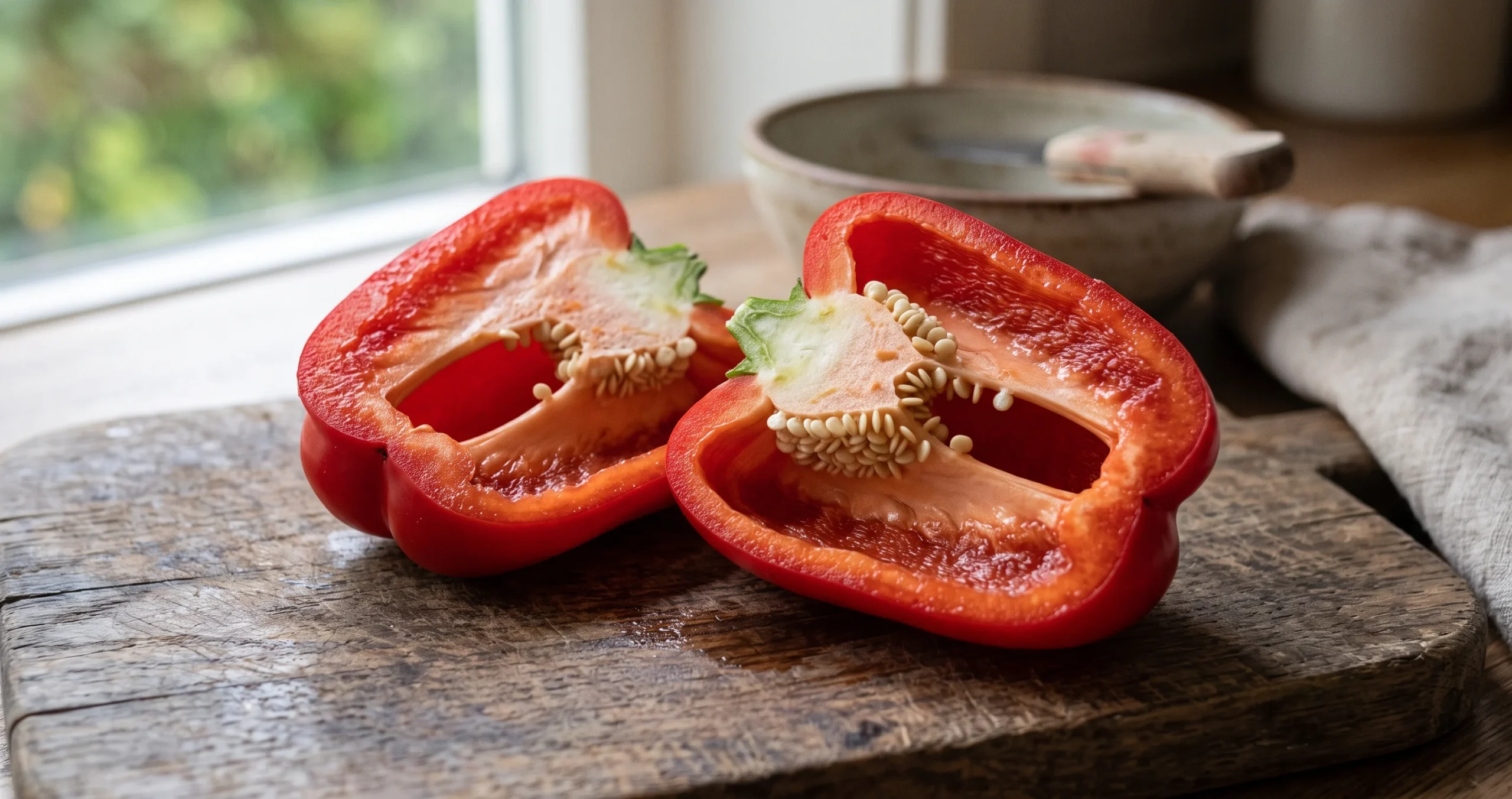
Saving pepper seeds is an easy and rewarding way to preserve a favorite pepper variety for another growing season. When done correctly, saving pepper seeds lets you collect mature seeds from this year’s harvest, dry them properly, store them safely, and plant them next spring.
The process itself is simple, but successful seed saving depends on several details. The pepper should be fully ripe, the seeds need enough time to dry, and the variety should ideally be open-pollinated rather than hybrid. Cross-pollination can also affect what grows from saved seed the following year.
This guide explains how to save pepper seeds step by step, how long pepper seeds remain viable, and how to store them for reliable germination.
Table of Contents
- Why Saving Pepper Seeds Is Worth It
- Best Peppers for Saving Seeds
- Open-Pollinated vs. Hybrid Pepper Seeds
- Cross-Pollination When Saving Pepper Seeds
- How to Choose a Fully Ripe Pepper
- Saving Pepper Seeds Step by Step
- How to Dry Pepper Seeds
- How to Store Pepper Seeds
- How Long Saved Pepper Seeds Last
- Testing Old Pepper Seeds
- Common Seed-Saving Mistakes
- FAQ
- Conclusion
Why Saving Pepper Seeds Is Worth It
Saving pepper seeds allows gardeners to carry a successful variety from one growing season into the next. A single mature pepper can contain enough seeds to grow many plants, making seed saving especially useful for gardeners who grow the same varieties every year.
The greatest benefit comes from saving seeds from healthy, productive plants.
If one pepper plant produces particularly flavorful fruit, grows vigorously, or performs well under your local conditions, it can be a good candidate for seed saving.
Over several growing seasons, gardeners can repeatedly select seeds from plants with desirable characteristics.
Peppers are also relatively beginner-friendly seed-saving crops. Their flowers are primarily self-pollinating, and their seeds do not require the fermentation process commonly used when saving tomato seeds.
Best Peppers for Saving Seeds
Before collecting seeds, determine whether your pepper is an open-pollinated variety or a hybrid.
This distinction matters because not every pepper seed will produce a plant identical to its parent.
Open-Pollinated Peppers
Open-pollinated varieties are the best choice for gardeners interested in predictable results.
When an open-pollinated pepper is protected from unwanted cross-pollination, seeds collected from it generally produce plants with characteristics similar to the parent variety.
Many traditional heirloom peppers fall into this category.
If you have a favorite open-pollinated jalapeño, cayenne, sweet pepper, or other cultivar, saving its seeds can allow you to grow the variety again next year.
Hybrid Peppers
Look at the original seed packet or plant label.
If it contains F1 or hybrid, the plant was produced by crossing selected parent lines.
Seeds collected from an F1 hybrid may still germinate, but their offspring can vary significantly. Fruit size, shape, color, flavor, heat level, productivity, and plant growth can all differ from the original hybrid.
Therefore, gardeners who want to reproduce a specific pepper should concentrate on saving seeds from open-pollinated plants.
Cross-Pollination When Saving Pepper Seeds
Cross-pollination is another consideration when saving pepper seeds.
Pepper flowers are largely self-pollinating, meaning pollen from the same flower or plant can fertilize the flower. However, insects can carry pollen between compatible pepper varieties.
This does not change the pepper currently growing on the plant.
Imagine a sweet pepper flower receiving compatible pollen from another pepper variety. The fruit that develops will still have the characteristics of its mother plant.
The genetic effects appear in the next generation.
Plants grown from those seeds may display characteristics inherited from both parents.
For casual home gardening, an unexpected pepper can be interesting. When maintaining a specific heirloom or open-pollinated cultivar, however, controlling unwanted cross-pollination becomes more important.
Choosing a Fully Ripe Pepper for Seeds
One of the most common mistakes in saving pepper seeds is harvesting the fruit too early.
A pepper that is ready to eat is not necessarily mature enough for seed saving.
Green bell peppers provide a familiar example. They are commonly harvested while green, but many are still physiologically immature at that stage.
When left on the plant, the fruit eventually develops its mature color, depending on the variety.
For seed saving, allow your selected pepper to remain on a healthy plant until it reaches its final mature color.
Choose fruit from a plant that is:
- Healthy and vigorous
- Productive
- True to the expected variety
- Free from obvious serious disease
- Producing well-formed fruit
Select a representative pepper rather than an unusually small or malformed one.
Allowing the pepper to remain on the plant until full maturity gives the seeds inside additional time to develop.
Saving Pepper Seeds Step by Step
The actual process of saving pepper seeds requires only a few basic steps.
1. Harvest a Fully Ripe Pepper
Wait until the pepper has reached its mature color.
Depending on the cultivar, that may be red, orange, yellow, brown, purple, or another color.
A slight softening or beginning of wrinkling can indicate advanced maturity.
2. Cut Open the Pepper
Cut the fruit carefully and expose its central core.
When working with hot peppers, wear gloves. Capsaicin residue can remain on your hands and cause considerable irritation if transferred to your eyes or other sensitive areas.
3. Remove the Seeds
Gently separate the seeds from the central membrane.
Discard seeds that appear damaged, moldy, severely discolored, or poorly developed.
Pepper seeds generally do not need fermentation.
4. Spread the Seeds Out
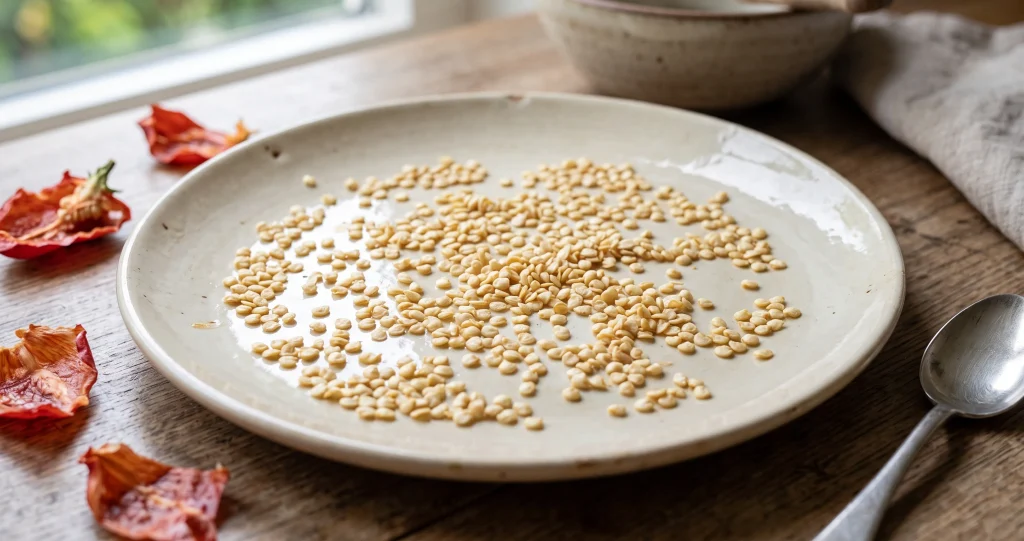
Place the seeds in a single layer on a dry, breathable surface.
Paper plates, coffee filters, or fine screens work well.
Avoid creating thick piles because trapped moisture slows drying.
5. Label the Seeds Immediately
Write down the pepper variety and collection year.
Do this before moving on to another cultivar. Seeds from different pepper varieties can look nearly identical once removed from their fruits.
How to Dry Pepper Seeds Properly
Drying is critical when saving pepper seeds for next year.
Seeds containing excess moisture can deteriorate during storage and may develop mold.
Spread freshly collected seeds into a thin layer and place them somewhere with good airflow at room temperature.
Keep them away from direct moisture.
Do not place freshly harvested seeds immediately inside an airtight plastic bag or sealed container. Any moisture remaining in the seeds can become trapped.
Instead, allow the seeds to dry thoroughly.
The exact drying time varies according to humidity, temperature, and airflow. The goal is thoroughly dry, firm seeds before packaging.
Avoid trying to speed the process with high heat. Excessive temperatures can damage living seed tissue and reduce germination.
Once the seeds are completely dry, they can be prepared for storage.
How to Store Pepper Seeds for Next Year
Proper storage can make a major difference in the success of saving pepper seeds.
Remember three conditions:
Cool, dry, and dark.
Place completely dry seeds inside a labeled paper envelope or seed packet. The packet can then be placed inside a sealed container to protect it from environmental humidity.
Every label should include:
- Variety
- Collection year
- Useful notes about the parent plant
A glass jar or another airtight container can provide additional moisture protection.
For longer storage, properly dried pepper seeds can also be kept refrigerated in a sealed container.
A small silica-gel packet can help maintain low humidity inside the storage container.
When removing refrigerated seeds, allow the closed container to approach room temperature before opening it. This helps reduce condensation on cold seeds.
For more seasonal growing and seed-starting guides, visit Secrets of the Green Garden.
How Long Do Saved Pepper Seeds Last?
Properly stored pepper seeds can remain viable beyond the season immediately following harvest.
However, seed viability is not permanent.
Germination rates gradually decrease as seeds age. Storage conditions strongly influence how quickly that happens.
Pepper seeds stored somewhere hot and humid will usually deteriorate faster than seeds kept cool and dry.
For the most dependable results, planting saved seeds during the following growing season is ideal.
Seeds stored under favorable conditions may remain usable for several years, although germination and seedling vigor can decline.
This is why every packet should include the collection year.
Instead of automatically discarding older pepper seeds, test their germination before planting.
Testing Saved Pepper Seeds Before Planting
A simple germination test can determine whether older seeds are still worth using.
Take 10 seeds from the stored batch.
Place them between damp paper towels and keep them under warm conditions suitable for pepper germination. Keep the material moist but not waterlogged.
Monitor the seeds for germination.
If eight of the ten seeds germinate, the batch has approximately an 80% germination rate.
If only five germinate, the approximate germination rate is 50%.
You can still plant a batch with reduced germination, but sowing additional seeds helps compensate for the lower success rate.
This small test is especially useful when saving pepper seeds for more than one season.
Common Mistakes When Saving Pepper Seeds
Harvesting Seeds Too Early
Do not assume that a pepper ready for eating is ready for seed collection.
Allow the selected fruit to reach full physiological maturity.
Saving Seeds From Hybrids Without Expecting Variation
Hybrid pepper seeds may germinate successfully but produce plants different from their parent.
Use open-pollinated varieties when predictable characteristics matter.
Ignoring Cross-Pollination
Peppers largely self-pollinate, but compatible varieties can still cross.
Gardeners preserving a particular cultivar should consider isolation or controlled pollination techniques.
Storing Seeds While Damp
This is one of the easiest ways to ruin saved seed.
Seeds should be completely dry before entering an airtight storage container.
Forgetting Labels
Do not rely on appearance to identify pepper seeds later.
Record the cultivar and year when the seeds are collected.
Storing Seeds Somewhere Hot
Greenhouses, sheds, garages, and sunny windowsills can experience substantial temperature fluctuations.
Choose a cool, dry, dark location instead.
FAQ About Saving Pepper Seeds
Can You Save Seeds From Store-Bought Peppers?
Yes, the seeds can be collected and may germinate.
However, the pepper may have come from a hybrid plant, and its pollination history is unknown. Plants grown from those seeds may therefore differ from the supermarket pepper.
Known open-pollinated cultivars are more reliable for seed saving.
Can You Save Seeds From Green Peppers?
For reliable seed saving, allow the fruit to reach its mature color.
Many green peppers are harvested before full physiological maturity, which means their seeds may not have finished developing.
Do Pepper Seeds Need Fermentation?
No.
Pepper seeds can generally be removed from a fully mature fruit and dried directly.
Should Pepper Seeds Be Washed?
Washing usually is not necessary.
Simply separate clean seeds from the fruit and remove pieces of moist pepper tissue before drying.
Can You Save Seeds From F1 Peppers?
You can save and plant them, but the offspring may not resemble the original hybrid.
Purchase fresh seed when reproducing the exact F1 cultivar is important.
How Long Should Pepper Seeds Dry Before Storage?
There is no single drying period that works in every environment because temperature and humidity vary.
Instead of relying solely on a certain number of days, make sure the seeds are thoroughly dry and firm before sealing them for storage.
How Long Can Saved Pepper Seeds Be Stored?
Pepper seeds can remain viable for multiple years under favorable storage conditions, but germination and vigor gradually decline.
Cool, dry storage significantly improves the chances of maintaining viable seed.
Conclusion
Saving pepper seeds is one of the easiest ways to turn this year’s harvest into next year’s garden.
Start with a healthy open-pollinated plant whenever predictable results are important. Leave a representative pepper on the plant until it reaches full maturity, remove its seeds, and allow them to dry completely.
Store the dry seeds somewhere cool, dark, and protected from moisture. Label every packet with the variety and year so older seeds can be identified and tested before planting.
Cross-pollination and hybrid genetics can introduce unexpected characteristics, but neither makes pepper seed saving difficult. They simply determine how closely the next generation is likely to resemble the parent plant.
With proper selection, drying, and storage, saving pepper seeds for next year takes very little effort and can provide enough seed to start dozens of future plants.