
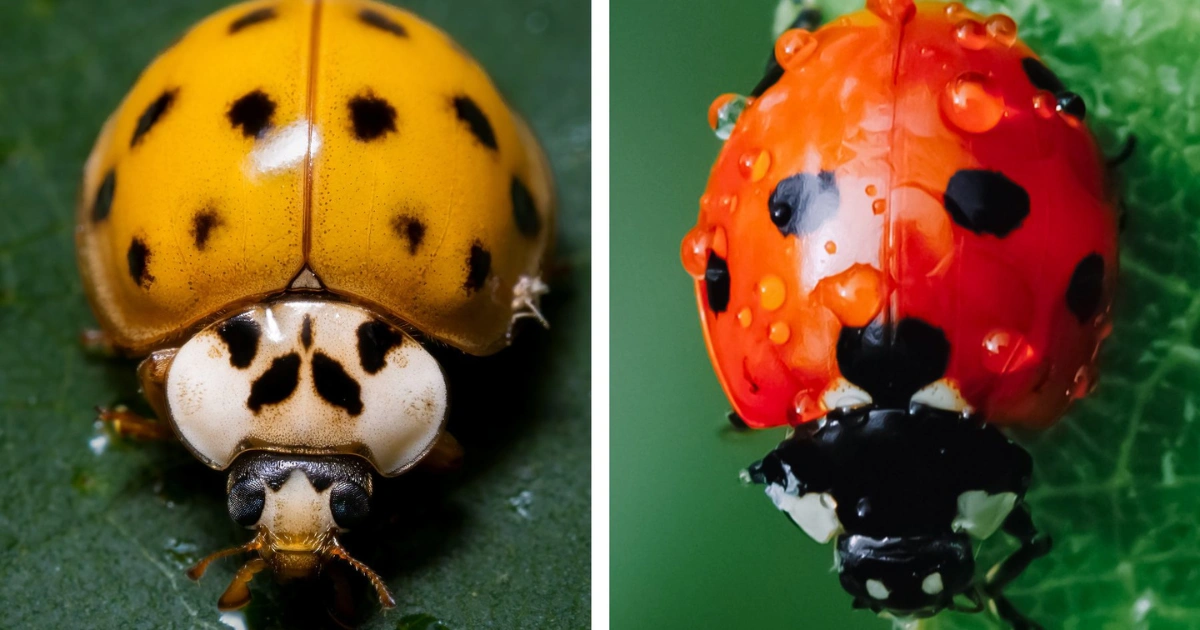
Ladybugs are widely celebrated as natural allies in pest control, but not every spotted beetle you see is harmless. In recent decades, the Asian lady beetle (Harmonia axyridis) has spread across many regions, displacing native ladybug species and creating problems in both gardens and homes. Learning how to distinguish between the native ladybug and its invasive counterpart is essential for protecting biodiversity and preventing issues.
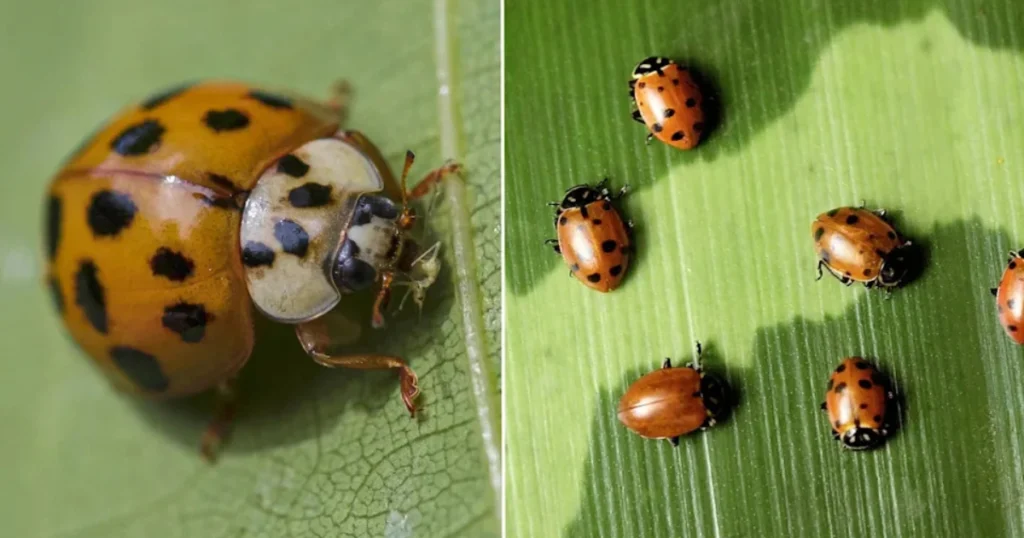
Native Ladybug (Coccinella septempunctata and other local species)
Key traits:
- Harmless and highly beneficial for plants
- Feeds on common garden pests such as aphids and scale insects
- Lives primarily outdoors in gardens, meadows, and agricultural areas
- Bright red or orange shells with a consistent number of round, well-defined black spots (often seven in the most common species)
Benefits:
- Plays an important role in maintaining ecological balance
- Does not pose a threat to people or pets
- Helps reduce the need for chemical pesticides by naturally controlling pests
Asian Lady Beetle (Harmonia axyridis)
Key traits:
- Can be aggressive and may bite humans
- Displays a wider range of colors, from yellow-orange to deep red, with variable or even no spots
- Releases a yellowish, foul-smelling fluid when threatened
- Seeks shelter indoors during cold weather, often gathering in large numbers
- Harmful to pets if ingested, especially dogs, potentially causing digestive irritation
Risks:
- Outcompetes native ladybug species for food and habitat
- Can damage ripe fruit crops by feeding on their juice
- Causes unpleasant odors and stains when infesting indoor spaces
How to Protect Your Garden and Home
- Encourage native ladybug populations by planting flowers such as marigolds, dill, and fennel, which attract beneficial insects.
- Avoid broad-spectrum pesticides that harm both harmful and beneficial species.
- Seal entry points such as cracks, window frames, and vents to prevent Asian lady beetles from entering your home.
- Identify before acting — protect native ladybugs, but take ethical measures to control invasive species.
Why Identification Matters
Confusing the two species can lead to unintended harm to beneficial insects. Native ladybugs are a gardener’s ally, while the Asian lady beetle can disrupt ecosystems and create household nuisances. By recognizing the differences and taking targeted action, you can safeguard your plants, reduce indoor pest problems, and contribute to biodiversity conservation.
Frequently Asked Questions
How can I quickly tell the difference between the two?
Asian lady beetles often have a distinctive white “M” or “W”-shaped marking on the area behind their head (the pronotum). Native ladybugs usually have a solid black area without this marking.
Are Asian lady beetles dangerous to humans?
They are not highly dangerous but can bite, causing mild skin irritation. Their defensive fluid can also trigger allergic reactions in sensitive individuals.
What should I do if Asian lady beetles enter my home?
Vacuum them up and empty the vacuum outside. Avoid crushing them indoors to prevent stains and odors.
Can I relocate native ladybugs?
Yes. If found indoors, gently place them back in your garden where they can continue controlling pests.
Do ladybugs live year-round?
Ladybugs are most active in warmer months. In winter, native species hibernate outdoors, while Asian lady beetles often seek warmth inside homes.
Internal Linking Suggestions from secretsofthegreengarden.com
- “How to Attract Beneficial Insects to Your Garden”
- “Natural Pest Control: A Complete Guide for Gardeners”
- “Top Flowers That Encourage Pollinators and Helpful Bugs”
External Link Suggestions
- University of Florida IFAS Extension: Asian Lady Beetle Identification and Management
- National Wildlife Federation: Supporting Native Ladybugs
- Royal Horticultural Society: Beneficial Insects in the Garden
Main keyword: Asian lady beetle identification
LSI/NLP keywords: native ladybug, invasive species, garden pest control, ladybug vs Asian beetle, beneficial insects, biodiversity, pest prevention, natural pest control