
Identifying whether a chick is male or female is one of the most common questions new chicken keepers ask. While it can be difficult to be 100% certain at a very young age, there are early visual clues that can help you make an educated guess, especially during the first one to two weeks.
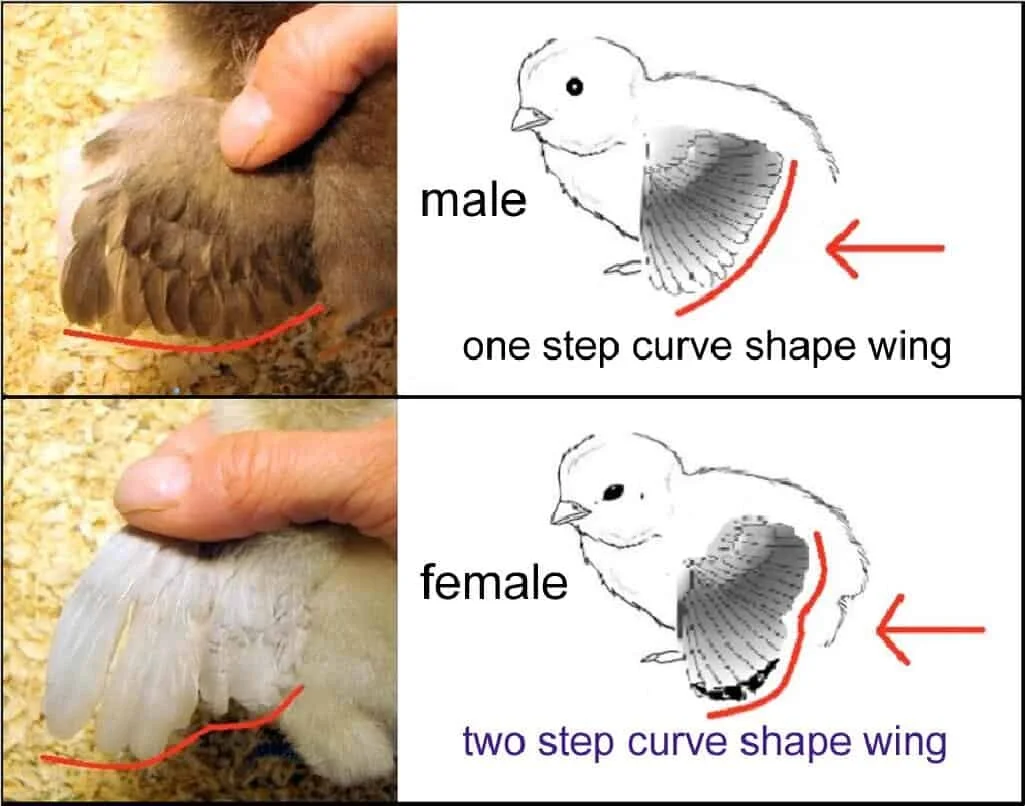
The image above highlights several of the most widely observed differences seen in young chicks, particularly in breeds where early development patterns are noticeable.

4
Wing Feather Shape: One of the Earliest Signs
One of the earliest indicators appears in the wings, often within the first few days.
- Female chicks (pullets) tend to show uneven or stepped wing feathers. The primary feathers are noticeably longer than the coverts, creating a layered look.
- Male chicks (cockerels) usually have more even, curved wing feathers, where the feathers grow at a similar rate.
This method works best in fast-feathering breeds and must be checked very early.
Tail Development Speed
Tail growth is another clue that can sometimes help during the first week.
- Pullets often develop tail feathers more quickly.
- Cockerels tend to have slower tail growth or little visible tail at the same age.
While not universal across all breeds, this difference is commonly observed and shown clearly in the comparison image.
Overall Growth and Body Shape
Subtle differences in posture and size may appear even at a young age.
- Female chicks often look slightly more refined and evenly proportioned.
- Male chicks may appear stockier, with thicker legs or a more upright stance.
These traits become more reliable as chicks get older but can offer hints early on.
Understanding Terms: Pullet vs Cockerel
- Pullet refers to a young female chicken that has not yet started laying eggs.
- Cockerel refers to a young male chicken that has not reached full maturity.
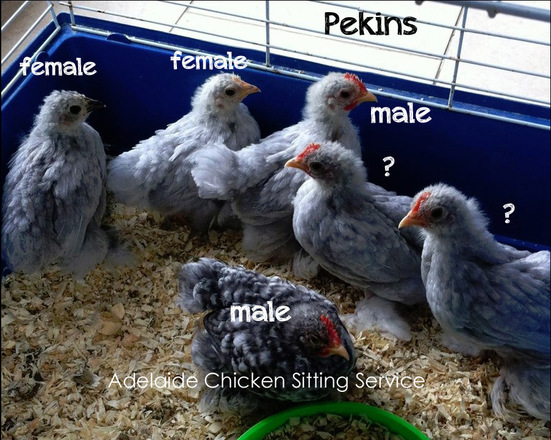
In the image, future hens and future roosters are labeled to help visualize how early differences develop over time.
What This Method Cannot Do
It’s important to keep expectations realistic.
These visual methods:
- Do not guarantee accuracy
- Are breed-dependent
- Are less reliable after the first week if feather growth evens out
For certainty, methods such as vent sexing by professionals, DNA testing, or waiting for adult traits (crow, comb size, egg laying) are more reliable.
Practical Tip for Backyard Chicken Keepers
If you are raising chicks at home:
- Observe several signs together rather than relying on just one
- Take photos weekly to compare growth changes
- Be patient—many differences become obvious by 6–8 weeks
Early clues are helpful, but time remains the most reliable indicator.
Final Thoughts
Telling male and female chicks apart at an early age is part observation and part patience. Wing feather shape and tail development can offer helpful hints during the first week, especially in fast-feathering breeds, but they are not foolproof.
The image provides a useful visual guide, reminding chicken keepers that early sexing is about probability, not certainty. With careful observation and time, the differences will become clear—and the mystery will solve itself naturally.