
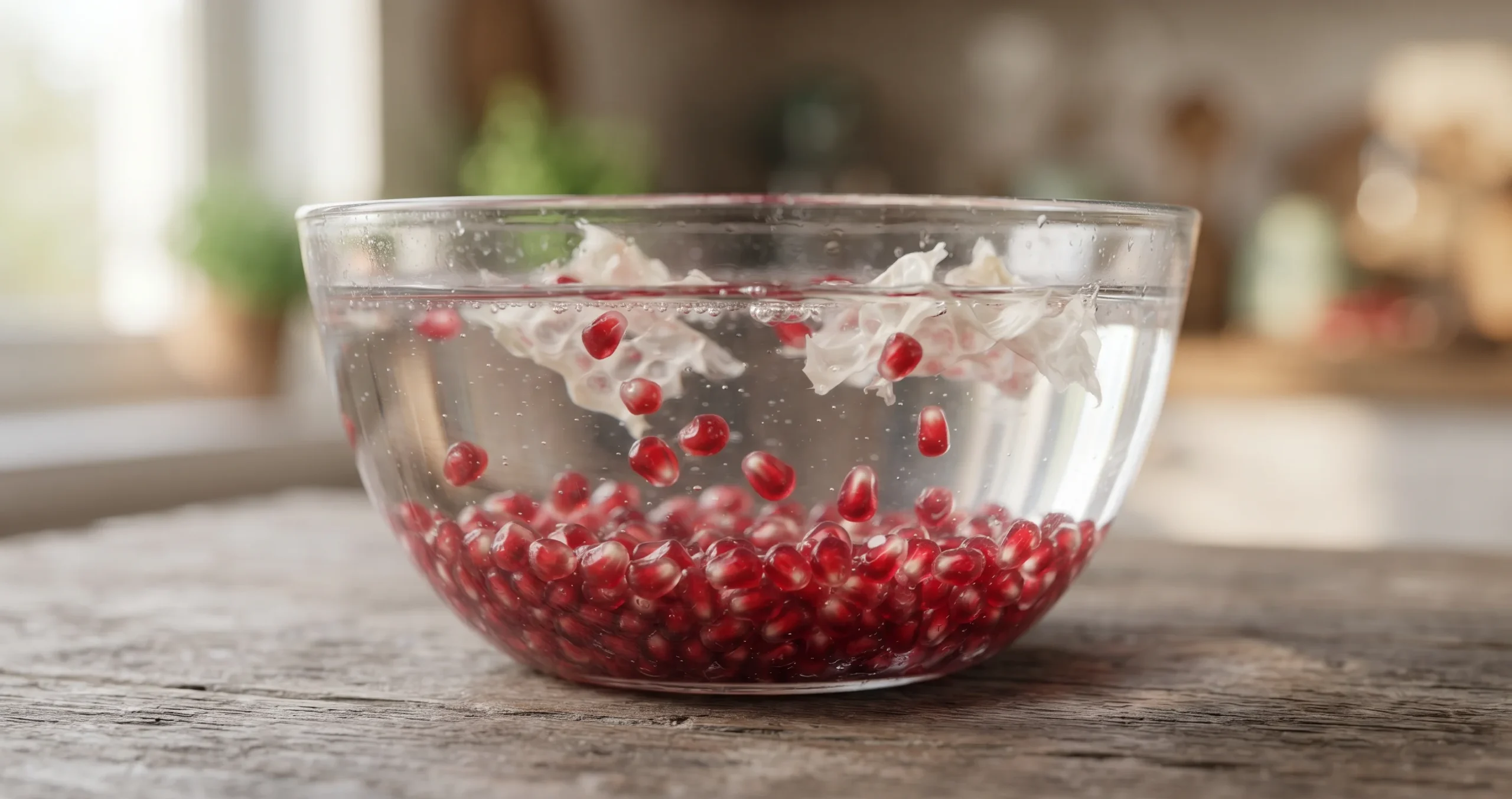
Something surprising happens when you open a pomegranate underwater: the ruby-red seeds sink to the bottom while most of the white membrane floats to the surface. What usually turns into a messy kitchen task becomes a surprisingly simple operation.
Learning how to seed a pomegranate using the underwater method can save time, reduce juice splatters, and help keep the delicate seeds intact.
Pomegranates are among the most beautiful fruits of late autumn and winter. However, their tough outer skin and complicated internal structure can make them intimidating to prepare.
Fortunately, all you need is a sharp knife, a bowl of water, and a few minutes to unlock this fruit’s colorful treasures.
Table of Contents
- Understanding the Unique Structure of a Pomegranate
- How to Seed a Pomegranate Using the Underwater Method
- The Science Behind the Underwater Method
- Five Benefits of Seeding a Pomegranate Underwater
- How to Choose a Ripe Pomegranate
- Common Mistakes When Opening a Pomegranate
- How to Store Fresh Pomegranate Seeds
- Creative Ways to Use Pomegranate Seeds
- In Your Own Yard: Growing a Pomegranate Tree
- Frequently Asked Questions
Understanding the Unique Structure of a Pomegranate
The pomegranate (Punica granatum) is an ancient fruit cultivated for thousands of years across regions with warm, relatively dry climates.
Today, it is commercially grown in parts of the United States, particularly California, and is increasingly popular among home gardeners in warmer regions.
Unlike apples or peaches, pomegranates contain numerous edible, juice-filled structures arranged within several internal compartments.
What Are Pomegranate Arils?
The colorful pieces commonly called pomegranate seeds are known in everyday culinary language as arils.
Each contains a seed surrounded by a juicy, translucent outer covering. Their color can range from pale pink to deep ruby red, depending on the variety and maturity of the fruit.
The juicy covering and the seed inside are both edible.
Why Pomegranates Are Difficult to Open
The interior of a pomegranate contains irregular compartments separated by thin, pale membranes.
These membranes surround clusters of tightly packed arils, making it difficult to remove them without crushing some of the fruit.
Cutting directly through the center can damage numerous arils and release juice onto countertops, clothing, and cutting boards.
The underwater method offers an elegant solution to this problem by combining careful cutting with a simple physical separation technique.
How to Seed a Pomegranate Using the Underwater Method
Learning how to seed a pomegranate underwater requires very little preparation. This technique is particularly useful when you want whole, attractive arils for salads, desserts, and other dishes.
Materials You Will Need
| Material | Purpose |
|---|---|
| One ripe pomegranate | The fruit to prepare |
| Sharp kitchen knife | Scoring the outer skin |
| Cutting board | Providing a stable surface |
| Large bowl | Holding water and fruit sections |
| Cool drinking water | Separating arils and membranes |
| Fine-mesh strainer | Draining the finished arils |
Step 1: Wash the Pomegranate
Rinse the whole fruit under cool, running water to remove surface dirt and debris.
Although the outer skin is not normally eaten, washing it helps reduce the transfer of contaminants from the surface to the edible interior when cutting.
Dry the fruit with a clean kitchen towel before placing it on your cutting board.
Step 2: Remove the Crown
Locate the small, crown-shaped structure at the top of the pomegranate.
Carefully make a shallow circular cut around it using a sharp knife. Lift away the top section to reveal the internal membranes and clusters of arils.
Try to cut only through the rind rather than deeply into the fruit.
Step 3: Score the Outer Skin
Look for the pale internal membranes visible from the top.
Following their approximate positions, make four to six shallow vertical cuts along the outside of the pomegranate.
These cuts create natural separation points and allow the fruit to open more easily.
There is no need to cut completely through the flesh.
Step 4: Open the Fruit Underwater
Fill a large bowl with cool drinking water, leaving enough room for the fruit and your hands.
Submerge the scored pomegranate and gently pull the sections apart using your fingers.
Opening the fruit underwater helps contain juice droplets that might otherwise splash onto surrounding surfaces.
Step 5: Release the Arils
Hold each section beneath the water and gently loosen the arils with your thumbs.
Slightly bending the rind backward can make the arils easier to release.
Work carefully to keep as many intact as possible.
As the edible arils separate from the fruit, they generally sink toward the bottom of the bowl, while many of the lightweight membrane fragments rise to the surface.
Step 6: Remove the Floating Membrane
Use your fingers or a small sieve to collect the pale membrane fragments floating on the water.
Inspect the arils at the bottom of the bowl and remove any remaining pieces of rind or membrane.
Step 7: Drain and Enjoy
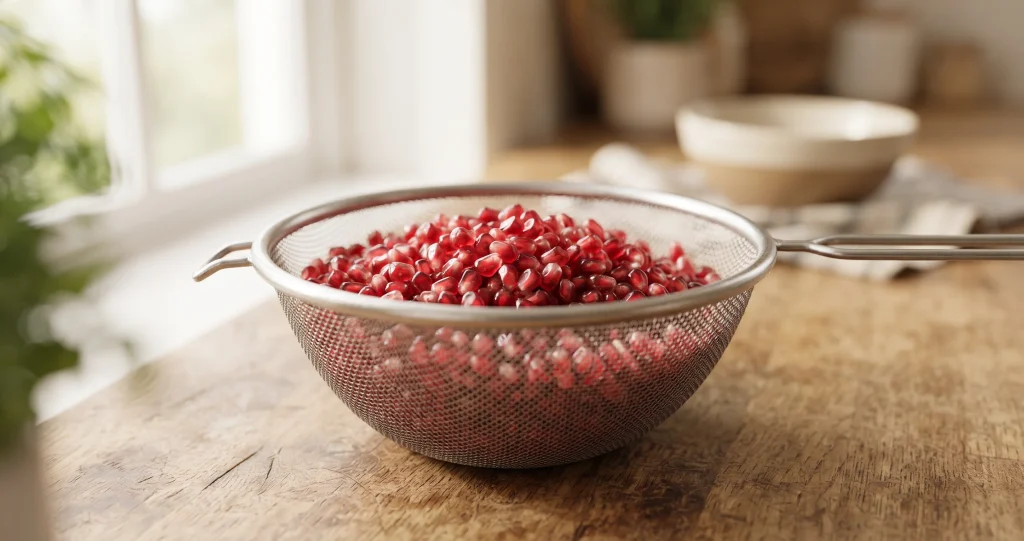
Pour the contents of the bowl through a fine-mesh strainer.
Allow excess water to drain thoroughly. If you plan to refrigerate or freeze the arils, gently pat them dry with a clean paper towel.
Your pomegranate is now ready to enjoy, with considerably less mess than many traditional preparation methods.
The Science Behind the Underwater Method
One of the most fascinating aspects of learning how to seed a pomegranate underwater is discovering how ordinary physical principles make the process easier.
Density and Natural Separation
Density describes the amount of mass contained within a given volume.
Objects that are denser than water generally sink, while objects with a lower average density tend to float.
Pomegranate arils contain juice, natural sugars, and an internal seed. Their overall density typically allows them to sink when released into water.
The pale membrane contains a different tissue structure. Its lower effective density often causes it to float.
Not every fragment behaves identically, but the difference is usually sufficient to make separation easier.
Water Contains Juice Splatters
When a pomegranate aril ruptures in open air, small droplets of deeply colored juice can travel across nearby surfaces.
Submerging the fruit helps contain those droplets within the bowl.
This is particularly useful because pomegranate juice contains natural pigments called anthocyanins, which contribute to its characteristic red and purple coloration.
These pigments can leave noticeable marks on light-colored fabrics and some kitchen surfaces.
Gentle Pressure Protects the Arils
Removing the arils with your fingers allows you to apply controlled pressure to their attachment points.
Combined with shallow scoring of the rind, this can help preserve their delicate outer covering.
The result is often a bowl of attractive, intact arils rather than crushed fruit mixed with bitter membrane fragments.
The underwater technique is also recommended by the University of Georgia Cooperative Extension and Utah State University Extension as a practical way to separate the edible seeds while minimizing juice stains. UGA Cooperative Extension+1
Five Benefits of Seeding a Pomegranate Underwater
Although several techniques exist for opening pomegranates, the underwater method offers some particularly useful advantages.
1. Fewer Juice Stains
Working underwater helps prevent red juice from splashing onto clothing, kitchen walls, and countertops.
2. More Intact Arils
Gentle separation helps preserve the appearance and texture of the juicy arils.
3. Easier Membrane Removal
The natural difference in density allows much of the unwanted white membrane to be skimmed away.
4. Less Food Waste
Carefully opening each compartment makes it easier to discover small clusters of arils that might otherwise remain attached to the rind.
5. No Specialized Equipment
A simple bowl, kitchen knife, and strainer are sufficient. There is no need to purchase a dedicated pomegranate deseeding tool.
How to Choose a Ripe Pomegranate
Selecting a good-quality fruit can make preparation easier and improve the flavor of your finished arils.
Look for a Heavy Fruit
Choose a pomegranate that feels heavy for its size. This often indicates that the interior contains plentiful juice.
Examine the Outer Skin
Look for firm skin without mold, deep cracks, or soft areas.
Minor superficial scratches are not necessarily a problem.
Pay Attention to Shape
Mature pomegranates sometimes develop a slightly angular shape as their internal compartments expand.
However, shape and skin color alone cannot reliably determine ripeness because these characteristics vary among cultivars.
Buy During the Natural Harvest Season
American-grown pomegranates are particularly common in grocery stores during fall and early winter.
Buying seasonal fruit can be an excellent way to enjoy pomegranates when they are widely available.
Common Mistakes When Opening a Pomegranate
Even when you know how to seed a pomegranate underwater, a few simple mistakes can make the process more difficult.
Cutting Too Deeply
Deep cuts can rupture numerous arils before the fruit reaches the water.
Use shallow cuts that penetrate the rind without slicing through the interior.
Using a Bowl That Is Too Small
A larger bowl allows you to move your hands freely and keep the fruit submerged.
Crushing the Arils
Excessive pressure releases juice into the water. Instead, gently roll the arils away from the membrane with your thumbs.
Leaving the Arils in Water Too Long
Once separation is complete, drain the arils promptly. There is little benefit to leaving them submerged for extended periods.
How to Store Fresh Pomegranate Seeds
Proper storage helps preserve the flavor, appearance, and texture of freshly separated arils.
Refrigerating Fresh Arils
Transfer drained arils into a clean, airtight food storage container.
Keep them refrigerated at 40°F (4°C) or below and aim to use them within three to four days.
Freezing Pomegranate Arils
Freezing is a convenient way to preserve extra fruit.
Spread clean, dry arils in a single layer on a parchment-lined baking sheet. Once frozen, transfer them into a freezer-safe container or resealable bag.
Label the container with the preparation date.
Frozen arils work particularly well in smoothies, sauces, and other dishes where a slightly softer texture is acceptable.
University extension food preservation guides also recommend freezing pomegranate arils for later use. USU+1
Creative Ways to Use Pomegranate Seeds
Pomegranate arils bring a delightful combination of sweetness, tartness, color, and crunch to everyday meals.
| Dish | Suggested use |
|---|---|
| Breakfast oatmeal | Sprinkle over warm oats |
| Greek yogurt | Combine with honey and walnuts |
| Winter salads | Mix with spinach and feta |
| Roasted vegetables | Scatter over roasted squash |
| Grain bowls | Combine with quinoa and fresh herbs |
| Chocolate desserts | Garnish with fresh arils |
| Fruit smoothies | Blend with bananas and strawberries |
| Holiday dishes | Add a colorful finishing touch |
Fresh arils are particularly attractive when added just before serving, allowing their vibrant appearance and juicy texture to stand out.
In Your Own Yard: Growing a Pomegranate Tree
For gardeners living in warmer parts of the United States, growing pomegranates can be a rewarding long-term project.
These attractive trees produce glossy foliage, striking orange-red flowers, and distinctive autumn fruits.
Choose a Sunny Location
Pomegranate trees thrive in warm, sunny environments.
Choose a location that receives at least six hours of direct sunlight daily and offers protection from severe winter conditions.
Provide Well-Drained Soil
Although established pomegranate trees tolerate relatively dry conditions, they generally benefit from consistent watering during establishment and fruit development.
Avoid locations where water regularly accumulates around the roots.
Select a Climate-Appropriate Variety
Many pomegranate varieties grow well in USDA hardiness zones 8–10, although cold tolerance varies considerably.
Gardeners in colder regions can consider suitable container-grown varieties that can be moved into a sheltered, frost-free location during winter.
Harvest Fully Mature Fruits
Pomegranates do not continue ripening substantially after harvest.
Allow the fruit to mature on the tree, using the characteristics and expected harvest period of your particular cultivar as a guide.
Growing your own pomegranates makes the underwater preparation method even more rewarding, connecting your kitchen directly with your garden.
Frequently Asked Questions
1. Can you seed a pomegranate without water?
Yes. You can open a scored pomegranate with your hands and remove the arils directly into a bowl. Another popular technique involves tapping the back of a halved fruit with a wooden spoon. However, the underwater method generally offers better control over juice splatters and membrane separation.
2. Can you eat the hard seed inside a pomegranate aril?
Yes. Both the juicy outer covering and the crunchy internal seed are edible. Some varieties have softer seeds than others, which can influence their eating texture.
3. Should you soak a pomegranate before removing its seeds?
Soaking a scored pomegranate in cool water for approximately five minutes is optional. You can also begin separating the arils immediately after submerging the fruit. Food Source Information
Conclusion
Watching ruby-red pomegranate arils sink while pale membrane fragments float is a wonderful example of everyday science at work.
Once you understand how to seed a pomegranate using the underwater method, preparing this beautiful seasonal fruit becomes a much simpler kitchen task.
With a few shallow cuts, gentle pressure, and a bowl of water, you can enjoy intact, flavorful arils with less mess and unnecessary waste.
Sometimes, the most effective kitchen tricks require nothing complicated at all—just a little knowledge of how nature works.
External Sources
1. The Science of Pomegranate Processing
Pomegranate arils can be extracted using three different manual techniques, including the underwater method. Commercial producers also use specialized extraction and packaging systems. Colorado State University. https://www.chhs.colostate.edu/fsi/food-articles/produce/pomegranates/
2. Pomegranates: Juicing, Freezing, and Making Molasses
Scoring the fruit along its internal membranes can leave fewer pieces of bitter white pith to remove compared with the tapping method. University of California. https://www.ucanr.edu/program/uc-master-food-preserver-program/article/pomegranates-juicing-freezing-and-making-molasses
3. How to Preserve Pomegranates
Twisting the fruit during juice extraction can release bitter tannins from the rind, affecting the finished juice’s flavor. Utah State University. https://extension.usu.edu/preserve-the-harvest/research/pomegranates?utm_source=chatgpt.com