
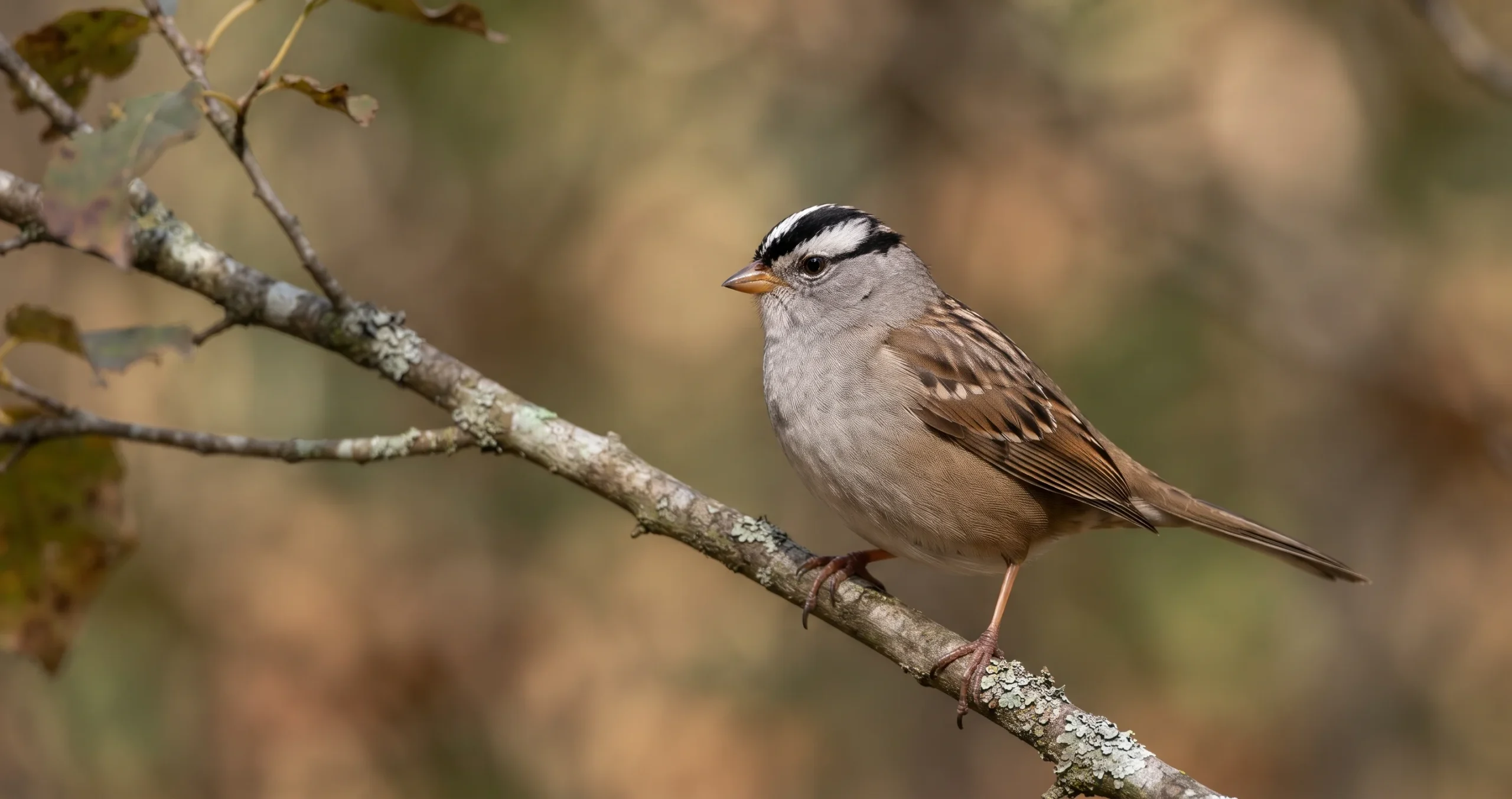
A tiny bird searching for seeds beneath your garden shrubs may have spent the summer thousands of miles away in the Arctic tundra.
The white-crowned sparrow (Zonotrichia leucophrys) is a remarkable North American songbird that brings both beauty and activity to the winter landscape. With its striking black-and-white crown, soft gray plumage, and energetic feeding behavior, it stands out among the many sparrows that visit American backyards.
These birds are particularly fascinating because of their seasonal migrations, regional song dialects, and ability to find food beneath seemingly ordinary garden debris.
By learning to recognize their markings and understanding their habitat preferences, you can make your backyard a welcoming place for these distinctive winter visitors.
Table of Contents
- Understanding the White-Crowned Sparrow
- How to Identify White-Crowned Sparrows in Winter
- Where White-Crowned Sparrows Spend the Winter
- The Science Behind Their Remarkable Winter Survival
- What Do White-Crowned Sparrows Eat?
- Seven Ways to Attract White-Crowned Sparrows
- White-Crowned Sparrow vs. White-Throated Sparrow
- Common Backyard Bird Feeding Mistakes
- In Your Own Yard: Creating a Winter Sparrow Habitat
- Frequently Asked Questions
Understanding the White-Crowned Sparrow
The white-crowned sparrow belongs to the family Passerellidae, a diverse group of native American sparrows.
Its geographic range extends from Alaska and northern Canada to parts of Mexico. Depending on the population, these birds inhabit tundra, mountain meadows, coastal shrublands, agricultural areas, and residential gardens.
Five Distinct Subspecies
Five subspecies of white-crowned sparrows are generally recognized across North America.
These populations differ slightly in bill coloration, head markings, habitat preferences, songs, and migratory behavior.
While northern populations undertake long seasonal migrations, some Pacific Coast populations remain relatively close to their breeding territories throughout the year.
A Sparrow With Regional Song Dialects
One of the most fascinating characteristics of white-crowned sparrows is their ability to learn regional song patterns.
Young males learn songs by listening to other birds during their early development. As a result, populations in different geographical areas may develop recognizable local dialects.
These variations provide a remarkable example of learned communication in the animal kingdom.
How to Identify White-Crowned Sparrows in Winter
White-crowned sparrows are relatively easy to recognize once you become familiar with their distinctive appearance. However, their plumage varies depending on age.
Adult White-Crowned Sparrows
Adult birds display several striking identification features:
- Bold black-and-white crown stripes.
- Smooth, grayish face and breast.
- Brown back with dark streaks.
- Two pale wing bars.
- Pinkish, yellowish, or orange bill.
- Relatively long tail.
- Upright posture when perched.
Both adult males and females have broadly similar plumage, making it difficult to distinguish their sex through appearance alone.
First-Winter White-Crowned Sparrows
Young birds lack the dramatic black-and-white crown pattern of adults.
Instead, their heads feature reddish-brown and buff-colored stripes. Their bodies generally retain the same grayish tones and characteristic shape.
This softer coloration often causes inexperienced birdwatchers to overlook them or mistake them for another sparrow species.
Size and Body Shape
White-crowned sparrows typically measure approximately 6–7 inches in length.
They are relatively large sparrows with rounded heads, substantial bodies, and long tails.
When feeding, they frequently hop across the ground, stopping briefly to investigate fallen leaves, scattered seeds, and patches of exposed soil.
Where White-Crowned Sparrows Spend the Winter
Seasonal migration plays an important role in the lives of many white-crowned sparrow populations.
As autumn progresses and conditions deteriorate across northern breeding grounds, migratory birds travel toward regions with more accessible food and favorable weather.
Winter Distribution in the United States
White-crowned sparrows winter across much of the western, central, and southern United States, with some populations reaching Mexico.
They are particularly familiar winter visitors in California, the Southwest, and parts of the central United States.
Their abundance in eastern regions varies considerably by location.
Preferred Winter Habitats
White-crowned sparrows favor environments where open feeding areas are located close to protective vegetation.
These include hedgerows, woodland edges, brushy fields, agricultural margins, coastal scrub, and suburban gardens.
A backyard containing native shrubs and undisturbed ground vegetation may offer many of the same resources found in their natural winter habitats.
The Science Behind Their Remarkable Winter Survival
For a small songbird, surviving winter requires more than simply finding a sheltered place to rest. Maintaining body temperature, locating food, and avoiding predators all demand energy.
White-crowned sparrows possess several adaptations that help them manage these challenges.
Feathers Create a Natural Insulating Layer
During cold weather, sparrows fluff their feathers to trap air close to their bodies.
This layer of air provides insulation, slowing heat loss to the surrounding environment.
A white-crowned sparrow perched beneath a shrub on a frosty morning may consequently appear much rounder than it does during warmer conditions.
The Double-Scratch Feeding Technique
One of the most entertaining behaviors to observe is the white-crowned sparrow’s distinctive ground-foraging technique.
Using both feet simultaneously, the bird makes a quick backward scratching movement that displaces fallen leaves and loose debris.
This action exposes small seeds and other food items hidden beneath the surface.
The technique is particularly useful during winter, when many natural food sources are scattered across the ground rather than attached to living plants.
Fat Reserves Provide Energy
Small birds lose heat relatively quickly because of their high surface-area-to-volume ratio.
White-crowned sparrows rely on energy obtained through feeding and stored body fat to help meet their metabolic demands.
Fat reserves are especially valuable during migration and overnight periods when birds cannot actively forage.
Finding reliable feeding locations can therefore be particularly important during cold weather.
Winter Flocks Provide Additional Advantages
White-crowned sparrows often gather into loose flocks outside the breeding season.
Feeding in groups can help birds detect approaching predators and take advantage of productive feeding areas.
However, competition also occurs within these gatherings. Individual birds may establish dominance relationships that influence access to food.
Shrubs Offer Protection From Wind
Dense vegetation creates sheltered microhabitats that can reduce exposure to cold winds.
For ground-feeding birds, nearby shrubs also offer a convenient escape route when danger approaches.
This explains why a garden with both open feeding spaces and protective vegetation can be more attractive than a large, exposed lawn.
What Do White-Crowned Sparrows Eat?
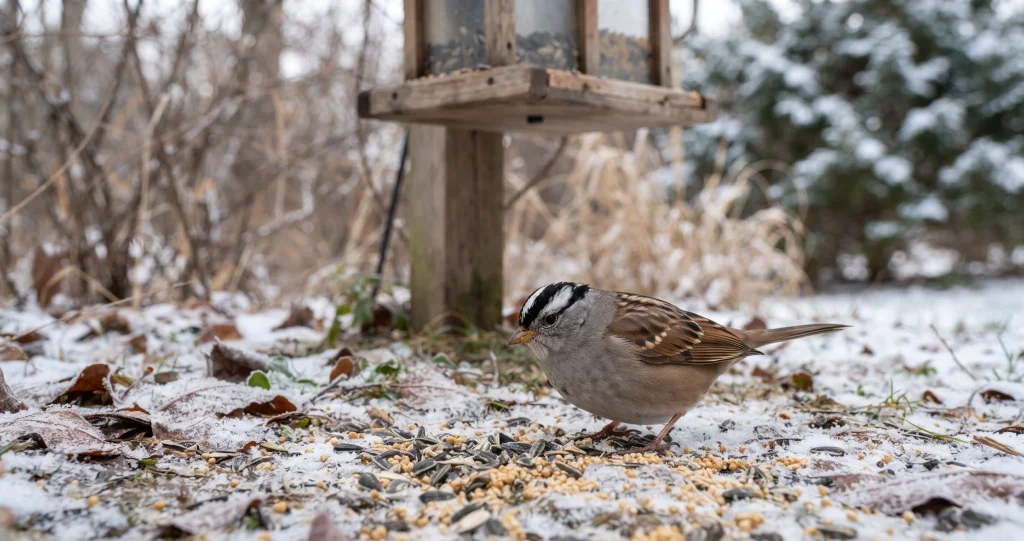
White-crowned sparrows are primarily seed eaters during winter, although their diet changes throughout the year.
During spring and summer, insects become an important part of their diet. In colder months, they rely more heavily on seeds and other readily available plant material. All About Birds
Natural Winter Food Sources
White-crowned sparrows may feed on grass seeds, ragweed seeds, amaranth, fallen grains, and seeds from various wildflowers.
Leaving these plants standing throughout winter can help maintain a natural food supply.
The Best Birdseed for White-Crowned Sparrows
| Birdseed | Suitability |
|---|---|
| White proso millet | Excellent |
| Hulled sunflower seeds | Excellent |
| Black oil sunflower seeds | Good |
| Cracked corn | Good |
| Bread crumbs | Not recommended |
| Salted nuts | Not recommended |
Unlike birds that regularly visit hanging feeders, white-crowned sparrows prefer searching for food near ground level.
Seven Ways to Attract White-Crowned Sparrows
Creating a welcoming winter habitat for these beautiful birds is easier than many gardeners realize.
1. Install a Low Platform Feeder
Place a shallow wooden or mesh feeder near ground level.
Choose a design with adequate drainage to prevent moisture from accumulating around the seeds.
2. Offer White Proso Millet
White proso millet is particularly suitable for ground-feeding native sparrows.
Offer small quantities at a time to reduce waste and prevent spoilage.
3. Leave Fallen Leaves Beneath Shrubs
A natural layer of fallen leaves creates excellent foraging opportunities.
Sparrows can search through the leaves for hidden seeds, while the decomposing material gradually contributes organic matter to the soil.
4. Grow Native Shrubs
Native shrubs provide protective cover and contribute to a more diverse backyard ecosystem.
Depending on your region, suitable choices include American hazelnut, common ninebark, golden currant, native viburnums, and sumac.
5. Build a Small Brush Pile
Collect fallen branches and untreated twigs in a quiet corner of your garden.
A loosely arranged brush pile provides natural shelter and convenient hiding places for small birds.
6. Provide Fresh Drinking Water
A shallow birdbath can become an important winter resource, especially when natural water sources freeze.
Refresh the water regularly and consider an outdoor-rated birdbath heater in regions with prolonged freezing temperatures.
7. Preserve Native Grasses and Seed Heads
Leave selected native grasses and wildflowers standing until late winter or early spring.
Their seeds provide natural feeding opportunities, while their stems add structure to the winter garden.
White-Crowned Sparrow vs. White-Throated Sparrow
White-crowned and white-throated sparrows share several physical similarities, but their facial markings provide reliable identification clues.
| Feature | White-Crowned Sparrow | White-Throated Sparrow |
|---|---|---|
| Crown | Black and white in adults | Black and white or tan |
| Throat | Mostly plain gray | Distinct white patch |
| Yellow markings near eyes | Absent | Usually present |
| Bill | Pink, orange, or yellowish | Generally grayish |
| Breast | Mostly plain gray | Grayish |
| Tail | Relatively long | Relatively long |
| Habitat | Brushy areas and open ground | Woodland edges and dense shrubs |
The most useful distinction is the white-throated sparrow’s combination of yellow facial markings and a clearly defined white throat patch. Audubon Field Guide
Common Backyard Bird Feeding Mistakes
Removing Too Much Natural Vegetation
A perfectly maintained lawn may look attractive to homeowners, but it offers relatively few natural feeding opportunities for sparrows.
Preserving selected areas of dense vegetation and fallen leaves creates a more diverse habitat.
Allowing Feeders to Become Dirty
Moisture, droppings, and spoiled seeds can contribute to the spread of disease among birds.
Clean feeding stations regularly and discard wet or moldy seeds promptly.
Providing Only Hanging Feeders
White-crowned sparrows may collect seeds that fall from hanging feeders, but low platforms better accommodate their natural feeding behavior.
Overlooking Domestic Cats
Ground-feeding birds are particularly vulnerable to predators.
Keeping domestic cats indoors or providing secure outdoor enclosures can help create a safer environment for backyard wildlife.
In Your Own Yard: Creating a Winter Sparrow Habitat
You do not need a large property to create a wildlife-friendly winter garden.
Start with a quiet corner that combines native plants, protective shrubs, fallen leaves, and open feeding areas.
Consider planting purple coneflowers, black-eyed Susans, little bluestem, switchgrass, and regionally appropriate native shrubs.
Leave their seed heads intact throughout the colder months and install a small, well-drained platform feeder nearby.
Over time, this simple habitat may attract white-crowned sparrows alongside dark-eyed juncos, finches, and other native songbirds.
The beauty of wildlife gardening is that even small changes can make ordinary outdoor spaces more valuable to nature.
Frequently Asked Questions
1. Do white-crowned sparrows migrate south for winter?
Many northern populations migrate south during autumn, spending winter across much of the United States and Mexico. However, some western populations remain relatively close to their breeding areas throughout the year.
2. What is the best food for attracting white-crowned sparrows?
White proso millet, sunflower seeds, and cracked corn are suitable options. Providing these foods in a clean, low platform feeder near protective shrubs can encourage visits.
3. Why do some white-crowned sparrows have brown crown stripes?
First-winter white-crowned sparrows have brown and buff crown markings instead of the characteristic black-and-white stripes of mature birds. These markings are related to age rather than sex.
Conclusion
The white-crowned sparrow is a beautiful reminder that even the smallest backyard visitors can have extraordinary stories.
From long-distance migrations and regional song dialects to sophisticated feeding techniques, these remarkable birds are wonderfully adapted to seasonal changes.
By preserving native vegetation, offering suitable seeds, and providing fresh water, you can help create a welcoming winter refuge.
That little striped bird beneath your garden shrubs may have traveled farther than you ever imagined.
External Sources
1. White-Crowned Sparrow
White-crowned sparrows living near the boundary between two regional song dialects sometimes learn both dialects. Cornell Lab of Ornithology. White-Crowned Sparrow Overview.
2. White-Crowned Sparrow
Research into white-crowned sparrow vocal development has revealed parallels with early language learning in humans. Missouri Department of Conservation. Missouri Wildlife Field Guide