
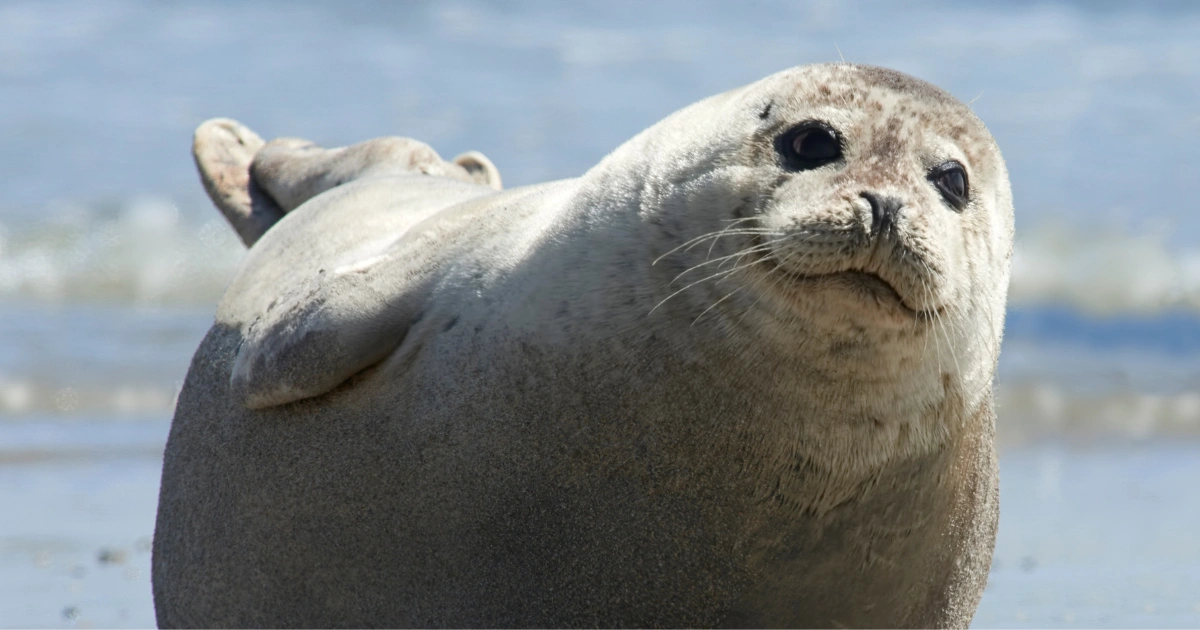
Seals are remarkable marine mammals, not just for their agility in water but also for their unique sleeping habits. Unlike humans, seals have adapted to thrive in aquatic environments while maintaining crucial survival mechanisms. One of the most fascinating aspects of their biology is how they manage to sleep in the open ocean without compromising awareness: the unihemispheric slow-wave sleep (USWS) strategy, or the half-brain solution.
What is Unihemispheric Sleep?
Unihemispheric sleep allows seals to rest one hemisphere of their brain while the other remains active. This adaptation ensures that the animal can maintain essential bodily functions, stay alert for predators, and surface to breathe when necessary. Unlike terrestrial mammals, seals cannot afford to be completely unconscious for long periods in a water environment.
Key Functions During Half-Brain Sleep:
- Predator vigilance: One brain hemisphere remains alert, detecting potential threats.
- Breathing regulation: Seals can float and surface periodically for oxygen without waking fully.
- Partial motor control: Certain muscles stay partially active, enabling positioning in water.
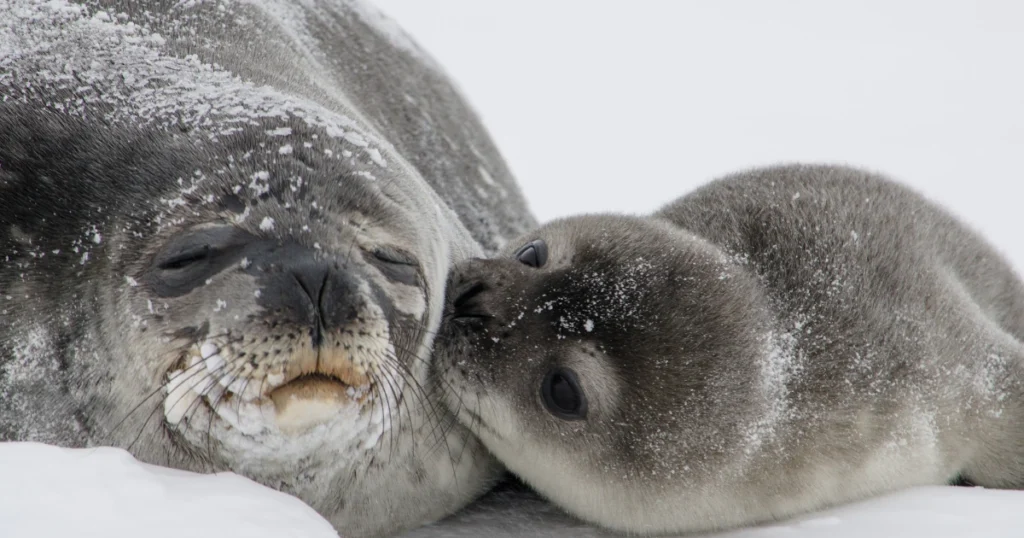
Bottling: A Floating Sleep Technique
Seals often use a technique known as bottling. In this behavior, the seal floats vertically in the water, resembling a bottle, with the nose pointing above the surface. This posture allows:
- Efficient breathing without full awakening.
- Minimal energy expenditure while maintaining buoyancy.
- Partial sensory awareness to detect nearby threats or other marine animals.
Sleeping Underwater: Drifting and Awareness
Seals can also sleep while drifting downward underwater. They descend slowly and surface intermittently to breathe. This ability demonstrates the balance between rest and survival instincts:
- They maintain awareness to prevent accidental drowning.
- Their cardiovascular system adjusts to intermittent oxygen supply.
- This strategy reduces predation risk by keeping some brain functions active.
REM Sleep on Land
Interestingly, seals show REM sleep only when on land. During REM, the brain exhibits patterns associated with dreaming, which is a rare phenomenon among marine mammals. This indicates:
- Cognitive flexibility between aquatic and terrestrial environments.
- The ability to consolidate memories and perform brain functions akin to other mammals during land-based rest.
- Evolutionary adaptation for complex behaviors, social bonding, and navigation.
EEG Patterns in Seals
Electroencephalography (EEG) studies reveal that during unihemispheric sleep:
- One hemisphere shows slow-wave sleep patterns.
- The other hemisphere exhibits low-amplitude, high-frequency activity, reflecting alertness.
- This split-brain activity enables simultaneous rest and environmental awareness.
Evolutionary Advantages
The half-brain sleeping strategy is a survival-driven adaptation that allows seals to:
- Avoid predators while resting in open waters.
- Optimize oxygen use during extended dives.
- Maintain social awareness in colonies, particularly during mating and pup rearing seasons.
Comparison With Other Marine Mammals
Other marine mammals, such as dolphins and certain whales, employ similar unihemispheric sleep strategies. However, seals are unique in combining:
- Bottling behavior at the surface.
- Underwater drifting while partially conscious.
- REM sleep during terrestrial rest.
Key Takeaways
Seals’ half-brain sleep strategy demonstrates:
- Evolutionary ingenuity in balancing rest and survival.
- Specialized brain functions that differ significantly from terrestrial mammals.
- Complex neural adaptations for life in water and on land.
FAQ
1. Can seals fully sleep underwater?
Seals cannot fully sleep underwater. They rely on unihemispheric sleep to remain partially conscious for breathing and predator awareness.
2. How long can a seal stay in the water while sleeping?
Seals can remain submerged for several minutes, surfacing intermittently to breathe without fully waking.
3. Do all seals use unihemispheric sleep?
Yes, this adaptation is common across most seal species, allowing them to survive in aquatic environments.
4. Why do seals only show REM sleep on land?
REM sleep requires more stable breathing and minimal environmental threats, conditions only available on land.
5. Is this sleep strategy found in other animals?
Yes, dolphins, whales, and some birds exhibit unihemispheric sleep, demonstrating convergent evolutionary solutions.