
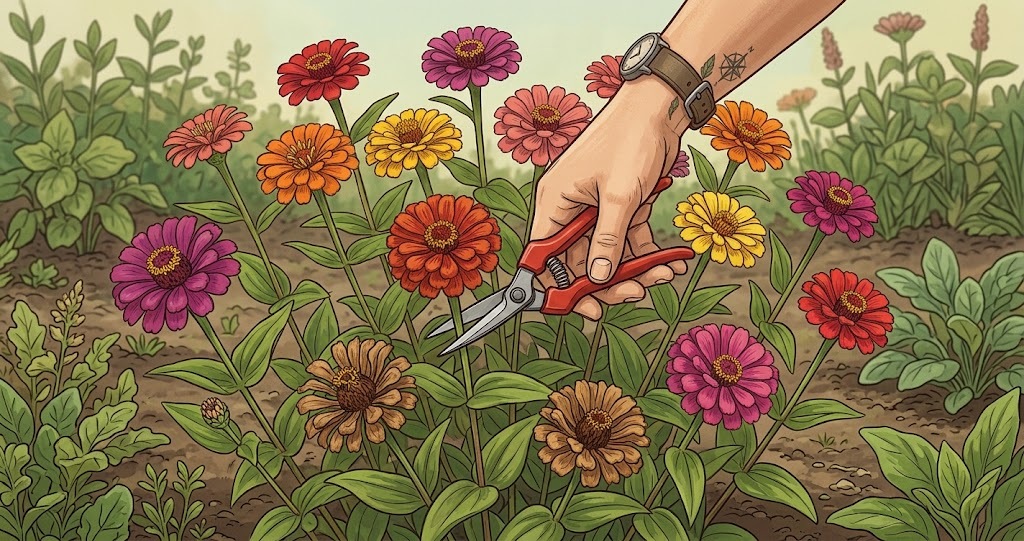
By August, many flower beds look noticeably different from the lush displays of early summer. Petunias may be stretched and uneven, marigolds are carrying brown flower heads, and zinnias are beginning to produce seeds. Fortunately, deadheading flowers late summer can encourage many plants to produce another flush of color rather than putting most of their resources into seed production.
Deadheading simply means removing spent flowers. It doesn’t make every plant bloom indefinitely, but when used on the right species and done correctly, it can extend flowering, improve appearance, and keep annual beds and containers productive well into fall.
The key is knowing what to remove, where to make the cut, and which flowers are better left alone.
Table of Contents
- What Deadheading Actually Does
- Why Removing Flowers Can Extend Blooming
- When to Deadhead in Late Summer
- How to Deadhead Flowers Correctly
- Where to Cut Different Flower Types
- Annuals That Respond Especially Well
- Petunias and Calibrachoa
- Marigolds
- Zinnias
- Cosmos
- Geraniums
- Snapdragons
- Perennials That Benefit From Deadheading
- Flowers That Don’t Need Deadheading
- When You Should Stop Deadheading
- Deadheading for Pollinators and Wildlife
- Common Deadheading Mistakes
- Frequently Asked Questions
- Final Thoughts
What Deadheading Actually Does
A flower isn’t the final goal of a flowering plant’s life cycle. Biologically, the flower is part of the plant’s reproductive system.
After pollination and fertilization, many flowers begin developing fruits or seed structures. Producing and maturing those seeds requires resources.
Removing a fading flower before seeds mature interrupts that process. For many repeat-blooming ornamentals, this can encourage the plant to continue vegetative growth and initiate additional flowers rather than completing reproduction through seed production.
Iowa State University Extension explains that deadheading improves a plant’s appearance and can promote additional blooms by preventing seed formation. The Extension specifically recommends the practice for many annuals and perennials. Iowa State University Extension — Deadheading Garden Flowers
That simple biological response is the foundation of deadheading flowers late summer.
Why Deadheading Can Extend Blooming
Imagine a zinnia that has successfully flowered and is now developing mature seed.
From the plant’s perspective, reproduction is progressing. There may be less biological advantage in continually producing new flowers once successful seed development is underway.
Remove that developing seed head early enough, however, and a repeat-blooming plant may continue producing new flowering shoots.
Deadheading doesn’t literally transfer a fixed packet of energy from a seed directly into a new flower. Plant growth is more complicated than that. Instead, removing developing reproductive structures changes how the plant allocates resources and can encourage continued flowering in species genetically capable of reblooming.
This distinction matters because deadheading cannot override a plant’s natural growth cycle.
A repeat-blooming annual may respond dramatically. A plant genetically programmed to flower once and finish its cycle may show little response.
Deadheading Flowers Late Summer: Timing Matters
Don’t wait until an entire flower bed is brown before getting started.
The ideal time to deadhead is generally when individual flowers begin fading, petals drop, or seed heads start developing. Removing flowers at this stage prevents the plant from investing heavily in mature seeds.
Late summer is particularly useful because many annuals still have considerable growing time remaining before frost.
In warmer regions, that window may extend for months. Northern gardeners have less time, so the value of encouraging another bloom cycle depends partly on the expected first frost.
A quick inspection once or twice a week is usually easier than performing one enormous cleanup.
Carry clean pruners or scissors through the garden and remove spent flowers as you find them.
How to Deadhead Flowers Correctly
One of the most common mistakes is removing only the petals.
The goal is generally to remove the entire spent flower, including the developing seed structure behind or beneath it.
Exactly where you cut depends on the plant.
For flowers carried individually on branching stems, trace the flower stem downward until you reach a healthy leaf, lateral shoot, or branching point. Make a clean cut just above that point.
This avoids leaving unattractive bare stems sticking above the foliage and often encourages growth from existing buds below the cut.
For flowers held in clusters, you may need to remove individual faded blossoms initially and eventually remove the entire flower cluster when most of it has finished.
Use your fingers for soft, easily pinched stems. For thicker or tougher stems, use clean, sharp garden snips or bypass pruners.
Where to Cut Different Flower Types
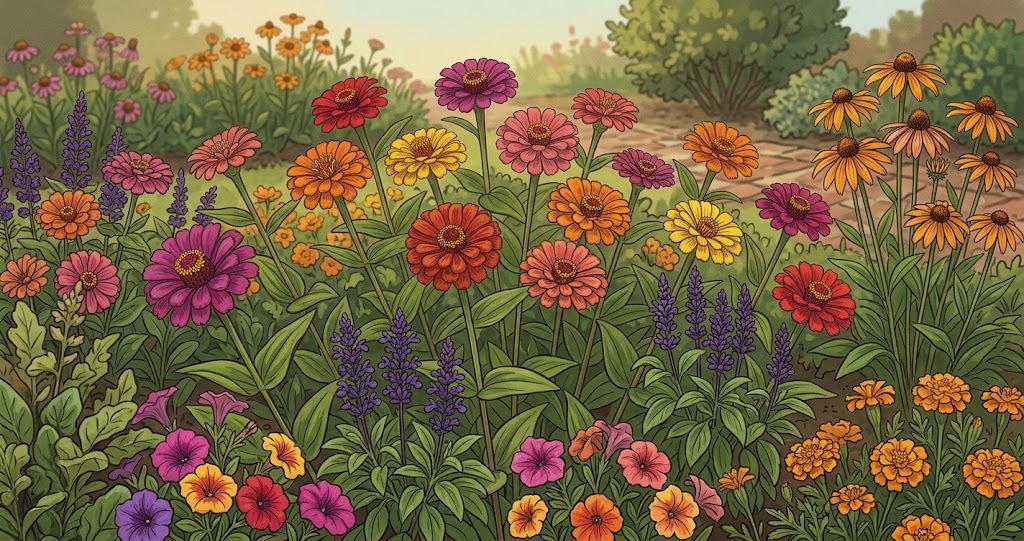
There’s no universal deadheading cut because flower architecture varies.
Single flowers on long stems
For zinnias, cosmos, coneflowers, and similar plants, follow the flower stem down rather than simply cutting immediately below the flower head.
Look for a healthy set of leaves or a lateral branch.
Cut just above it. This produces a cleaner plant and leaves viable growth points behind.
Flowers on spikes
Snapdragons, salvia, and similar plants produce multiple flowers along an elongated spike.
Individual spent flowers can sometimes be removed while lower or upper flowers are still attractive. Once most of the spike has finished, cut the entire spent stalk back to healthy foliage or a lateral shoot.
New side growth may produce additional flowers.
Flower clusters
Geraniums, also called pelargoniums in the commonly grown tender forms, carry multiple flowers in clusters.
When a cluster is finished, remove the whole flower stalk rather than picking off only the dry petals.
Bushy annuals with many small flowers
Some plants produce so many flowers that removing every bloom individually isn’t practical.
A light trim can sometimes replace individual deadheading. Cutting back the plant modestly can remove numerous spent flowers simultaneously and stimulate branching.
Avoid severe cutting during extreme heat or drought stress. Plants need adequate foliage for photosynthesis and recovery.
Annuals That Respond Especially Well
If your goal is maximizing late-season color, focus your effort where it produces noticeable results.
Many popular annuals are excellent candidates for deadheading flowers late summer.
Zinnias
Zinnias are among the easiest examples.
Harvesting fresh zinnias for bouquets effectively deadheads them, while removing old flower heads encourages the plants to continue developing flowering branches.
Trace each fading stem down to a strong leaf pair or branch and cut just above it.
There is one important exception: if you want to save zinnia seed, allow selected flower heads to mature completely rather than deadheading everything.
Marigolds
Marigolds can accumulate large numbers of faded flower heads by late summer.
Remove each finished bloom along with its developing seed head. Pinching often works, although scissors are useful on tougher stems.
Regular deadheading can help many marigolds continue blooming until frost.
Cosmos
Cosmos can produce an impressive late-season display when fading flowers are removed consistently.
Cut spent blooms back to a leaf or branching point. As the season advances, leave some heads intact if you want seeds to mature or want self-sown seedlings where appropriate.
Petunias
Traditional petunias can benefit greatly from grooming.
For varieties that require deadheading, remove the faded flower and the swollen seed-producing structure behind it rather than pulling away only the wilted corolla.
By late summer, petunias can also become leggy. A moderate cutback combined with appropriate watering and nutrition can encourage fresh branching and another round of flowers.
However, modern breeding has changed the rules for some petunias. Many newer cultivars and series are self-cleaning and don’t require routine deadheading to maintain bloom.
Check the cultivar information before spending an afternoon removing flowers unnecessarily.
Geraniums
Common garden geraniums respond well to removal of spent flower clusters.
Follow the finished flower stalk back toward its base and remove the whole stalk cleanly.
This keeps plants tidy and prevents unnecessary seed development.
Snapdragons
Snapdragons often appreciate deadheading after their first major flower display.
Once most flowers on a spike have faded, remove that spike above healthy foliage or a branching point.
Temperature matters, too. Snapdragons generally perform best under cooler conditions, so plants that struggle during intense summer heat may revive as late-summer temperatures moderate.
What About Calibrachoa?
Calibrachoa is a good example of why gardeners shouldn’t assume every flowering container plant needs constant deadheading.
Many modern calibrachoa cultivars are considered self-cleaning. Their spent flowers naturally fall away, and plants continue flowering without gardeners manually removing every bloom.
If a plant becomes stretched or uneven, trimming may still improve its shape and stimulate fresh branching.
That is different from routinely deadheading every individual flower.
Perennials That Can Benefit From Deadheading
Deadheading isn’t limited to annuals.
Many repeat-flowering perennials can produce additional flowers or remain attractive longer when spent blooms are removed. Depending on species and cultivar, examples can include coreopsis, salvia, yarrow, catmint, Shasta daisies, and some coneflowers.
University of Minnesota Extension recommends deadheading many flowering plants to improve appearance, prevent unwanted reseeding, and in some cases encourage additional flowering. University of Minnesota Extension — Maintaining Flower Gardens
Response varies considerably by plant.
Some perennials produce a substantial second flush. Others offer only scattered additional blooms. Still others will not rebloom significantly regardless of how carefully you remove old flowers.
Know the species rather than treating every perennial identically.
Flowers That Don’t Need Deadheading
Modern ornamental breeding has produced plants designed to flower continuously with minimal grooming.
Many newer petunia and calibrachoa cultivars are self-cleaning. Certain begonias and other bedding plants also shed old flowers effectively enough that deadheading provides little additional flowering benefit.
These plants may still need occasional shaping.
Removing damaged growth, trimming overly long stems, or lightly cutting back an uneven plant can improve appearance without individually removing hundreds of old flowers.
Always check the plant label or breeder information for a specific cultivar.
“Petunia,” for example, describes a large group of plants. One cultivar may benefit from regular deadheading while another was specifically bred to bloom freely without it.
When You Should Stop Deadheading
Keeping flowers blooming isn’t always the best end-of-season goal.
As fall approaches, there are good reasons to deliberately leave some seed heads standing.
Birds may feed on seeds from plants such as coneflowers and sunflowers. Hollow or standing stems can also contribute to overwintering habitat for insects when gardeners delay major cleanup.
You may also want seeds for next year’s garden.
If so, stop deadheading selected healthy flowers and allow their seed heads to mature fully.
This creates a useful compromise: deadhead aggressively earlier in the season when you want continuous color, then gradually leave more seed heads as autumn approaches.
Deadheading, Pollinators, and Fall Flowers
Late summer can be a transitional period for bees, butterflies, and other flower-visiting insects.
Keeping suitable plants flowering can maintain nectar and pollen resources as some early-summer plants decline. Deadheading repeat bloomers can contribute by encouraging additional flowers.
But deadheading alone isn’t a substitute for planting species that naturally bloom later.
Native asters, goldenrods, and other regionally appropriate fall flowers can provide important resources later in the season. Our guide to The Fall Pollinator Gap: Native Flowers explains how late-blooming native plants can help extend the garden’s flowering calendar.
The strongest strategy combines both approaches.
Encourage repeat-blooming ornamentals where appropriate while also growing plants whose natural flowering season occurs in late summer and fall.
Late-Summer Care After Deadheading
Removing old flowers is only part of keeping a garden productive.
Plants cannot generate strong new growth without adequate moisture, light, and nutrients.
During hot weather, monitor soil moisture rather than automatically watering on a fixed schedule. Containers can dry much faster than in-ground beds and may require more frequent attention.
Avoid assuming that more fertilizer always means more flowers.
Excessive nitrogen can promote lush leafy growth at the expense of flowering in some plants. Follow recommendations for the species and fertilizer product rather than repeatedly feeding stressed plants.
Also remove diseased foliage when appropriate. Deadheading won’t compensate for severe powdery mildew, root problems, or other health issues.
Common Deadheading Mistakes
Removing only the petals
Pulling off wilted petals may make a plant look cleaner, but the developing seed structure can remain behind.
Remove the entire spent flower when the goal is preventing seed production.
Cutting too high
Leaving several inches of bare flower stem above the foliage creates an untidy appearance.
Follow the stem down to a leaf, bud, or branch before cutting.
Cutting too much
Deadheading isn’t the same thing as cutting the entire plant to the ground.
Healthy leaves are photosynthetic machinery. Unless the species responds well to a deliberate rejuvenation cut, preserve plenty of healthy foliage.
Deadheading plants you want to reseed
Removing every flower means removing your future seeds.
Allow selected flowers to mature if you want to collect seed or encourage appropriate self-sowing.
Assuming every flower will rebloom
Deadheading encourages additional flowering only when the plant’s biology allows it.
It cannot turn a naturally once-flowering species into a continuous bloomer.
Ignoring plant stress
A severely drought-stressed plant may not respond strongly to deadheading because flowering is only one part of its problem.
Address moisture, disease, root conditions, and other stresses first.
Should You Deadhead During Extreme Heat?
Routine removal of individual spent flowers is generally fine, but major pruning during severe heat deserves more caution.
A plant already struggling with high temperatures and insufficient moisture may recover slowly from a heavy cutback.
If significant reshaping is necessary, water appropriately, avoid removing excessive foliage, and consider waiting for milder conditions.
A small amount of patience can produce stronger regrowth.
Deadheading vs. Cutting Back
These terms are related but aren’t identical.
Deadheading specifically targets spent flowers and developing seed structures.
Cutting back removes a larger portion of stems and foliage. It is useful when plants such as petunias, catmint, salvia, or other suitable ornamentals have become stretched, floppy, or untidy.
Late in summer, you may use both techniques.
A healthy compact plant may need only deadheading. A sprawling container plant may benefit more from a moderate cutback that removes old flowers while encouraging fresh branching.
Frequently Asked Questions
Does deadheading really make flowers bloom longer?
For many repeat-blooming annuals and perennials, yes. Removing spent flowers prevents or reduces seed development and can encourage continued flowering. Iowa State University Extension specifically recommends deadheading as a way to promote additional blooms in many garden flowers. Iowa State University Extension — How to Deadhead Flowers
How often should I deadhead flowers?
Check plants about once or twice a week during active flowering. You don’t need a rigid schedule; simply remove flowers as they fade and begin forming seeds.
Where should I cut when deadheading?
For many branching flowers, trace the flower stem downward and cut just above a healthy leaf, bud, or side branch. For flower spikes, remove the finished spike back to healthy foliage or lateral growth.
Which annual flowers respond best?
Zinnias, marigolds, cosmos, traditional petunias, geraniums, and snapdragons are common examples. The response varies by species and cultivar.
Do all petunias need deadheading?
No. Many modern petunia cultivars have been bred to be self-cleaning and continue flowering without routine removal of individual spent blooms.
Older or traditional types may benefit considerably from deadheading.
Should I deadhead coneflowers in fall?
You can deadhead earlier flowers if you want to encourage additional flowering, but consider leaving some late-season seed heads.
The seeds can provide food for birds, and standing plant material adds structure to the winter garden.
Is it too late to deadhead flowers in August?
Usually not.
For healthy repeat-blooming annuals with weeks of frost-free weather remaining, August deadheading can encourage additional flowers. The potential benefit depends on your climate, the species, and how much growing season remains.
Final Thoughts
Deadheading flowers late summer is one of the simplest ways to extend the productive life of many annual beds and containers.
The biology behind it is straightforward. Once pollinated flowers begin producing seeds, plants invest resources in reproduction. Removing those spent flowers can interrupt seed development and encourage repeat-blooming species to continue producing flowers.
The technique matters. Remove the entire spent flower rather than just its petals, and when possible cut back to a healthy leaf, bud, or lateral branch.
Focus your effort on plants that actually respond, including zinnias, marigolds, cosmos, many traditional petunias, geraniums, and snapdragons. Don’t waste time meticulously deadheading cultivars bred to be self-cleaning.
And as fall approaches, consider changing your goal.
Leaving selected seed heads provides food and habitat, while asters, goldenrods, and other late-blooming plants can take over as summer flowers slow down. A thoughtful garden doesn’t need to look exactly the same from June through October.
Deadheading simply helps you decide when summer’s flowers are truly finished.
ogy, Container Gardening
Internal Link Suggestions:
Which Perennials to Divide in Fall
External Dofollow Authoritative Sources:
Iowa State University Extension and Outreach — How to Deadhead Flowers in the Garden
https://yardandgarden.extension.iastate.edu/how-to/how-deadhead-flowers-garden
University of Minnesota Extension — Maintaining Flower Gardens
https://extension.umn.edu/planting-and-growing-guides/maintaining-flower-gardens
University of Illinois Extension — Deadheading Flowers
https://extension.illinois.edu/blogs/good-growing/2020-07-10-deadheading-flowers