
Introduction
Imagine swimming in water so pure that it feels like a mountain spring—no chlorine, no chemicals, just nature. A natural pool is more than a place to cool off. It’s an eco-friendly water feature that adds value to your home, attracts wildlife, and creates a peaceful retreat right in your garden.
Unlike traditional pools that rely on harsh treatments and synthetic maintenance, natural swimming ponds use plants, gravel, and beneficial bacteria to filter and clean the water. If you’re someone who loves the idea of self-sufficiency, wellness, and sustainability, you’ll love the step-by-step journey to build your own.
As you start planning, check out other backyard-friendly projects like how to create a pollinator-friendly garden or set up a gray water irrigation system—ideas you can explore at Secrets of the Green Garden.
Why Choose a Natural Pool?
Natural pools are increasingly popular among eco-conscious homeowners. Here’s why:
🌱 Chemical-free and safe for children and pets
🦋 Encourages biodiversity with frogs, dragonflies, and pollinators
💰 Lower long-term maintenance costs
🌊 Beautiful integration into the landscape
♻️ Works with nature, not against it
They are particularly ideal for those who want to swim without skin irritation, reduce their environmental footprint, and turn their backyard into a sanctuary.
Step-by-Step Guide to Building a Natural Swimming Pond
1️⃣ Define Your Zones
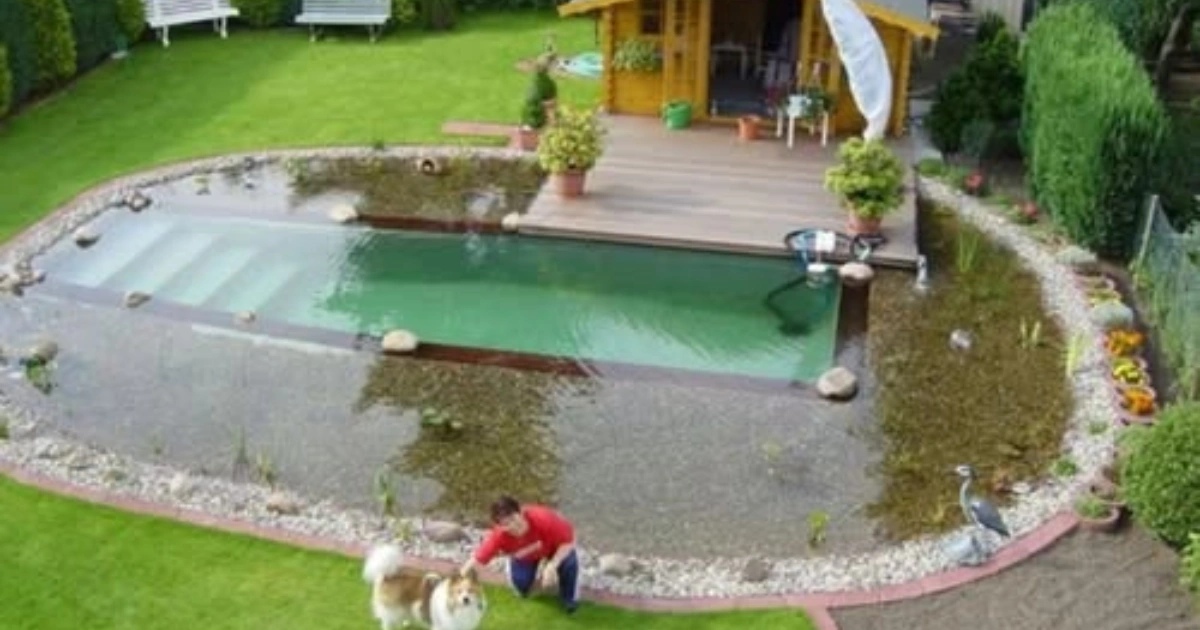
Every natural pool has two core areas:
Swimming zone: This is your swimming space, usually deeper and free of plants.
Regeneration zone: This shallow area contains aquatic plants and gravel that filter the water.
Keep both zones separated physically, but connected through gentle water circulation. Proper zoning ensures clean, balanced water all year.
2️⃣ Build the Base
Choose between a flexible pond liner or concrete:
Pond liner – easier to install, cost-effective, allows more organic shapes
Concrete – more permanent and customizable for those who want sleek lines
Design the depth: 1.2 m to 2 m is typical for the swimming area. Be sure to slope the base gently toward the regeneration zone.
Add a layer of underlayment to protect the liner, especially if your soil has sharp rocks or roots.
3️⃣ Install Gentle Circulation
Natural pools rely on soft movement, not jets.
Install a low-energy pump to move water slowly from the swimming zone into the regeneration area and back. This oxygenates the water and supports the life cycles of beneficial bacteria and plants.
Some homeowners also add small waterfalls or bubbling features to enhance flow and beauty.
4️⃣ Add Filter Plants and Gravel
Use a variety of native aquatic plants to clean the water naturally:
Reeds – absorb nitrates
Water irises – filter and provide color
Hornwort or anacharis – oxygenating underwater plants
Floating lilies – reduce algae by shading the surface
Cover the regeneration zone with layers of pea gravel to trap particles and offer surface area for microbial filtration.
Avoid using soil. It adds nutrients that could encourage algae.
5️⃣ Decorate and Blend into Your Landscape
Surround your pool with natural elements:
- Wooden decks or stone patios
- Shade trees and pergolas
- Rock borders and paths
- Native flower beds or edible plants
Choose features that match your style—rustic, minimalist, Mediterranean, or Zen.
Think of this area as a living sculpture that evolves with the seasons.
6️⃣ Let Nature Take Over
Once the structure is filled with water and planted, allow 4–6 weeks for nature to stabilize.
During this period:
- Plants root and start filtering
- Algae may bloom briefly before settling
- Microorganisms establish balance
Test water regularly for clarity and pH. You’ll know it’s ready when the water is clear, odorless, and stable.
Common Mistakes and How to Avoid Them
❌ Zones too close or poorly separated → leads to murky water
❌ No circulation system → stagnation and mosquito breeding
❌ Using non-native or invasive plants → can harm local ecosystems
❌ Overusing decorative stones in regeneration zones → blocks flow
✔️ Keep the design simple and functional
✔️ Use materials adapted to your climate
✔️ Maintain a balance of sun and shade
✔️ Introduce plants gradually and observe their growth
Benefits of a Natural Pool
Natural pools offer more than beauty:
✅ Zero chlorine = gentle on skin and eyes
✅ No more burning eyes, dry skin, or bleached swimsuits
✅ Boosts local wildlife, from frogs to bees
✅ Minimal mechanical maintenance
✅ Year-round visual appeal, even in winter
✅ Environmentally regenerative and cost-saving over time
It also gives you a space to relax, meditate, host gatherings, or simply listen to birds and water sounds.
Seasonal and Regional Tips
☀️ In hot climates: Use floating plants and partial shading to keep water cool
❄️ In cold regions: Go deeper (at least 2 m) to prevent freezing; add pond heaters if needed
🍂 In temperate zones: Skim leaves regularly and cut back plants in fall
🌵 In dry areas: Consider a gray water connection for topping off water levels
Also check our article on how to maintain a water feature in winter at Secrets of the Green Garden for seasonal maintenance ideas.
Tools and Materials Checklist 🧰
🧱 Pond liner or concrete mix
💧 Eco-friendly water pump
🌿 Aquatic plants (reeds, lilies, irises)
🪨 Pea gravel and filter stone
🪚 Wood for decking or patio
🌡️ Water testing kit (pH, clarity)
🧤 Gardening gloves, shovels, rakes
☀️ Optional: solar lights, pond heater, or UV filter
FAQs
Is a natural pool safe to swim in without chlorine?
Yes. The combination of gravel filtration, plants, and gentle circulation keeps water clean without chemicals.
Can I keep fish in my natural pool?
Small fish like mosquito fish or minnows can help control insects, but be careful not to overload the ecosystem.
How often does it need cleaning?
Just a seasonal trim of plants and occasional gravel cleaning. No daily chemical balancing required.
Does it attract bugs or mosquitoes?
If circulation is working and plant zones are healthy, mosquito breeding is minimal. Adding mosquito fish or dragonflies can help too.
How much space do I need?
Even small backyards can host a natural pool. Start with 5×5 meters and scale up as needed.
Conclusion
A natural swimming pool isn’t just a trend—it’s a lifestyle choice rooted in wellness, sustainability, and beauty. It invites nature back into your daily life while giving you a chemical-free escape just steps from your door.
Ready to dive in? Let us know in the comments what your dream natural pool looks like, and share this guide with friends who might love a chlorine-free backyard paradise. For more ideas, visit Secrets of the Green Garden and explore how to bring more nature into every corner of your outdoor space.