
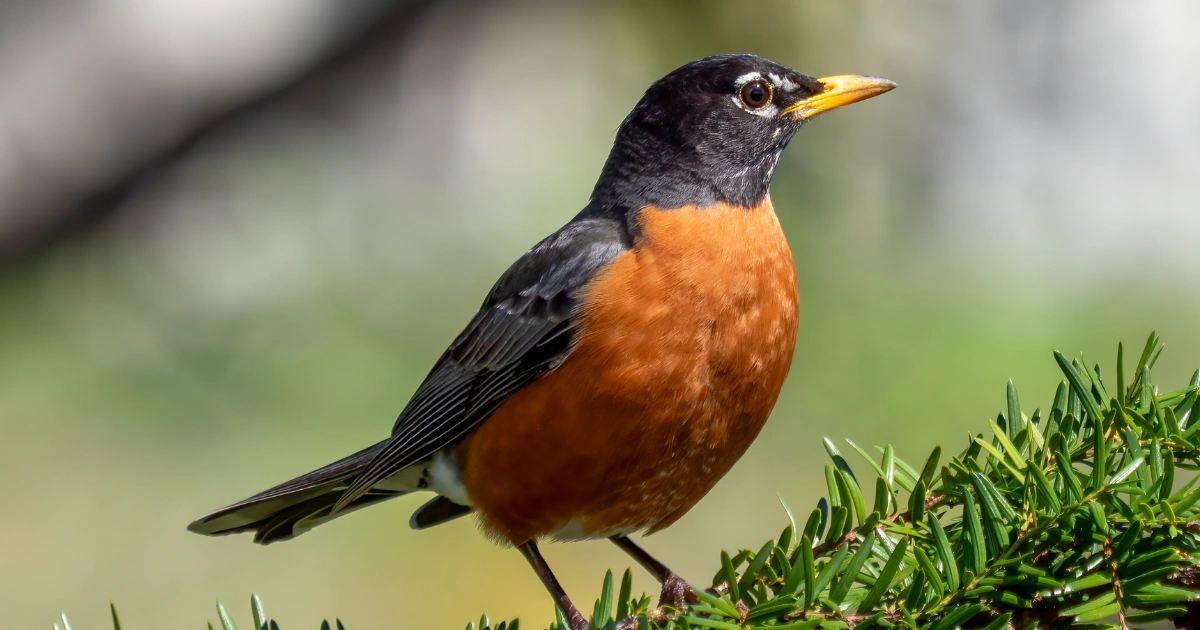
Discover the fascinating life cycle of the American robin, learn how nestlings become fledglings, and find out what to do if you discover a baby robin on the ground.
The American robin is one of North America’s most familiar songbirds, signaling the arrival of spring with its cheerful songs and distinctive orange-red breast. Behind this familiar sight is an incredible breeding cycle that transforms tiny blue eggs into confident young birds in just a few weeks.
Understanding each stage of a robin’s development helps bird lovers know when to admire from a distance and when intervention may truly be necessary. In most cases, young robins found on the ground are exactly where they should be.
This guide explains the complete life cycle of the American robin, from nest building to fledging, along with practical advice for helping baby robins safely.
Meet the American Robin
The American robin (Turdus migratorius) belongs to the thrush family and is one of the most widespread birds in North America.
It is easily recognized by its:
- Orange-red breast
- Gray-brown back
- Yellow bill
- White eye ring
- Upright posture
Robins thrive in:
- Gardens
- Parks
- Woodlands
- Farms
- Suburban neighborhoods
Their adaptable nature allows them to nest close to people while still raising healthy broods.
Stage 1: Nest Building
The breeding season begins when female robins construct a sturdy cup-shaped nest.
What Is a Robin’s Nest Made Of?
A typical nest contains:
- Mud
- Grass
- Twigs
- Fine plant fibers
The mud strengthens the nest, while soft grasses create a comfortable lining for the eggs.
Where Robins Build Nests
Robins commonly choose:
- Tree branches
- Shrubs
- Porch ledges
- Window sills
- Building eaves
- Outdoor light fixtures
A well-hidden location helps protect eggs and chicks from predators.
Stage 2: The Famous Blue Eggs
Few bird eggs are as recognizable as robin eggs.
Why Are Robin Eggs Blue?
The bright blue color comes from a pigment called biliverdin, which is deposited on the eggshell during formation.
A typical clutch contains:
- Three to five eggs
The female usually incubates the eggs while the male helps defend the nesting territory and may provide food.
Incubation Period
Robin eggs generally hatch after about two weeks, although timing can vary slightly depending on weather and local conditions.
Stage 3: Nestlings
Once the eggs hatch, the chicks enter the nestling stage.
What Do Nestlings Look Like?
Newly hatched robins are:
- Nearly featherless
- Unable to regulate body temperature well
- Blind or with partially closed eyes
- Completely dependent on their parents
They spend nearly all their time in the nest.
What Do Parent Robins Feed Their Chicks?
Adult robins provide a protein-rich diet that may include:
- Earthworms
- Beetles
- Caterpillars
- Insects
- Other small invertebrates
As chicks grow, their appetite increases rapidly, requiring frequent feeding throughout the day.
Stage 4: The Fledgling
After spending time in the nest, young robins leave before they become strong fliers.
This surprises many people who assume a bird on the ground has fallen from its nest.
How to Recognize a Fledgling
A healthy fledgling usually has:
- Most of its feathers
- A short tail
- Speckled breast instead of a solid orange-red chest
- Yellow flanges at the corners of the beak
- The ability to hop and flutter
Although flight skills are still developing, this is a normal stage of growth.
Why Fledglings Leave the Nest Early
Leaving the nest before becoming expert fliers actually improves survival.
Young robins spend several days hidden among vegetation while:
- Practicing flight
- Strengthening muscles
- Learning to forage
- Continuing to receive food from their parents
The adults remain nearby, even if they are not immediately visible.
What to Do If You Find a Baby Robin
Knowing whether the bird is a nestling or a fledgling is the most important first step.
If the Bird Has Few or No Feathers
This is a nestling.
If possible:
- Return it to its original nest.
- If the nest has been destroyed, place it in a small substitute nest secured close to the original location.
- Observe from a distance to allow the parents to return.
Contrary to a common myth, parent birds generally do not reject chicks because they have been touched by humans.
If the Bird Is Fully Feathered
A feathered young robin found hopping on the ground is usually a fledgling.
In most cases:
- Leave it where it is.
- Keep pets indoors or away from the area.
- Watch from a distance.
Its parents are likely still feeding and protecting it.
When Does a Baby Robin Need Help?
While most fledglings should be left alone, intervention may be appropriate if the bird is:
- Clearly injured
- Bleeding
- Trapped in an unsafe location
- Attacked by a cat or dog
- Surrounded by immediate danger such as traffic
If a bird requires assistance, contact a licensed wildlife rehabilitator for guidance.
How to Make Your Garden Robin-Friendly
Simple changes can encourage robins to thrive.
Plant Native Trees and Shrubs
Native vegetation provides:
- Nesting sites
- Shelter
- Food sources
- Protection from predators
Maintain Healthy Lawns Naturally
Robins search lawns for earthworms and insects.
Reducing unnecessary pesticide use helps preserve these natural food sources.
Provide Fresh Water
A shallow birdbath offers drinking and bathing opportunities throughout the year.
Leave Some Natural Areas
Leaf litter, shrubs, and dense vegetation provide safe cover for fledglings learning to fly.
Common Myths About Baby Robins
Myth 1: Every Baby Bird on the Ground Needs Rescue
Most feathered fledglings are in a normal developmental stage and should be left with their parents.
Myth 2: Parents Will Reject a Chick Touched by Humans
This widespread belief is false. Parent robins typically continue caring for their young after brief human contact.
Myth 3: Fledglings Should Be Fed by People
Young birds have specialized dietary needs. Feeding them without proper knowledge can cause harm.
Frequently Asked Questions
How many eggs does an American robin lay?
Most robin nests contain three to five blue eggs, although clutch size can vary.
How long do baby robins stay in the nest?
Nestlings generally remain in the nest for about two weeks before becoming fledglings.
Why does a young robin have spots on its chest?
Juvenile robins have speckled breasts that provide camouflage. The familiar solid orange-red breast develops as the bird matures.
Should I move a fledgling back into its nest?
No. Fledglings normally leave the nest before becoming strong fliers and continue receiving care from their parents on the ground.
What should I do if a baby robin is injured?
Place the bird in a safe container and contact a licensed wildlife rehabilitator as soon as possible for professional advice.
Final Thoughts
The life cycle of the American robin is a remarkable journey that transforms bright blue eggs into independent young birds in just a few weeks. Every stage—from nest construction and incubation to fledging—plays an important role in the bird’s survival.
For gardeners and bird enthusiasts, understanding these stages helps prevent unnecessary intervention and supports healthy robin populations. Most baby robins found outside the nest are simply taking the next step toward independence, with attentive parents watching nearby.
By protecting nesting habitats, reducing pesticide use, and giving fledglings the space they need, we can help these beloved songbirds continue to thrive in our neighborhoods for generations to come.
SEO Information
Primary Keyword: American robin life cycle
Related Keywords:
- Baby robin
- Robin nest
- Robin eggs
- Fledgling robin
- Nestling robin
- American robin nesting
- Bird life cycle
- Backyard birds
Internal Linking Suggestions (secretsofthegreengarden.com)
- How to Create a Bird-Friendly Backyard Habitat
- Native Shrubs That Feed Birds All Winter
- Why Beneficial Birds Are Essential for a Healthy Garden
External Linking Suggestions
- Cornell Lab of Ornithology – American Robin Guide
- National Audubon Society – American Robin Profile
- U.S. Fish & Wildlife Service – Living with Birds
Meta Description: Learn about the American robin life cycle, from blue eggs and nestlings to fledglings and adulthood. Discover when baby robins need help, how to identify each stage, and how to support these beloved backyard birds.