
As temperatures drop and the gardening season winds down, outdoor plumbing can easily become one of the most overlooked parts of winter preparation. A garden hose left connected to an outdoor faucet may seem harmless, but trapped water can freeze, expand, and damage both the faucet and the pipes supplying it.
If you’re looking for a winterize outdoor faucet garden hose checklist, several straightforward steps can help prevent expensive plumbing problems.
Disconnecting hoses, draining outdoor water lines, installing insulated faucet covers, and preparing irrigation systems before freezing weather can help protect your home and garden equipment throughout winter.
Table of Contents
- Why Freezing Water Damages Outdoor Pipes
- How Outdoor Faucets Freeze
- Winterize Outdoor Faucet Garden Hose: Step-by-Step Guide
- How to Store Garden Hoses During Winter
- How Insulated Faucet Covers Work
- Using Interior Shut-Off Valves
- Do Frost-Proof Faucets Need Winterizing?
- How to Winterize Garden Irrigation Systems
- Common Winter Plumbing Mistakes
- Warning Signs of Frozen or Damaged Pipes
- Frequently Asked Questions
Why Freezing Water Damages Outdoor Pipes
Water behaves differently from most liquids when it freezes. As it changes from liquid water into solid ice, its volume increases by roughly 9%.
Inside a closed pipe, this expansion can contribute to pressure buildup. An ice blockage may also trap liquid water between the frozen section and a closed valve, creating enough pressure to damage pipes and fittings.
Outdoor plumbing is particularly vulnerable because faucets, exposed pipes, hoses, and irrigation equipment are directly exposed to changing temperatures.
The damage may not become obvious immediately. A cracked pipe can remain temporarily blocked by ice, only beginning to leak when temperatures rise and the water starts flowing again.
Taking preventive measures before freezing weather arrives is generally easier and less expensive than repairing damaged plumbing afterward.
How Outdoor Faucets Freeze
An outdoor faucet, commonly called a hose bib, spigot, or sillcock, connects to a water supply pipe that passes through or near an exterior wall.
During freezing weather, the exposed metal faucet loses heat to the surrounding air. Depending on its design and installation, cold temperatures can also affect the water remaining inside the connecting pipe.
Leaving a garden hose attached makes the situation more problematic. Water trapped inside the hose or faucet assembly may prevent proper drainage, particularly when the hose contains a closed spray nozzle.
Several conditions increase the risk of freezing:
- Prolonged temperatures below 32°F.
- Poorly insulated exterior walls.
- Exposed plumbing in unheated spaces.
- Garden hoses left connected.
- Water trapped inside faucet attachments.
- Missing or damaged drainage valves.
Even homeowners living in relatively mild climates should prepare outdoor plumbing when freezing weather is forecast.
Winterize Outdoor Faucet Garden Hose: Step-by-Step Guide
Preparing your outdoor watering equipment does not necessarily require specialized tools. However, the correct procedure depends on the type of faucet and plumbing system installed at your home.
Complete these steps before the first significant freeze rather than waiting until the equipment is already frozen.
Step 1: Disconnect Every Garden Hose
Start by turning off the outdoor faucet and carefully removing the attached garden hose.
Remove additional accessories, including spray nozzles, hose splitters, quick-connect fittings, watering timers, and portable irrigation connections.
Even frost-resistant faucets can become vulnerable when attached equipment prevents water from draining correctly.
Step 2: Drain the Garden Hose
Stretch the hose across an open area, preferably on a slight slope. Remove both end attachments so trapped water can escape.
Gradually lift sections of the hose, working toward the lower end to encourage drainage. Avoid excessive bending or twisting, particularly when the hose material is already cold and stiff.
Once drainage is complete, inspect the hose for damaged fittings, cracks, and worn seals.
Step 3: Close the Dedicated Interior Water Valve
If your outdoor faucet has a separate interior shut-off valve, locate it and turn off the water supply.
These valves are often found in basements, utility rooms, or crawl spaces near the exterior faucet connection.
Confirm that the valve controls the outdoor faucet rather than another household water system.
Step 4: Drain the Outdoor Faucet
For conventional faucets with an interior shut-off valve, open the outdoor spigot after isolating the supply. Allow any remaining water to escape.
If the interior shut-off valve includes a drain port, follow the manufacturer’s instructions for emptying the isolated pipe.
The exterior faucet can generally remain open throughout winter once its water supply has been securely isolated.
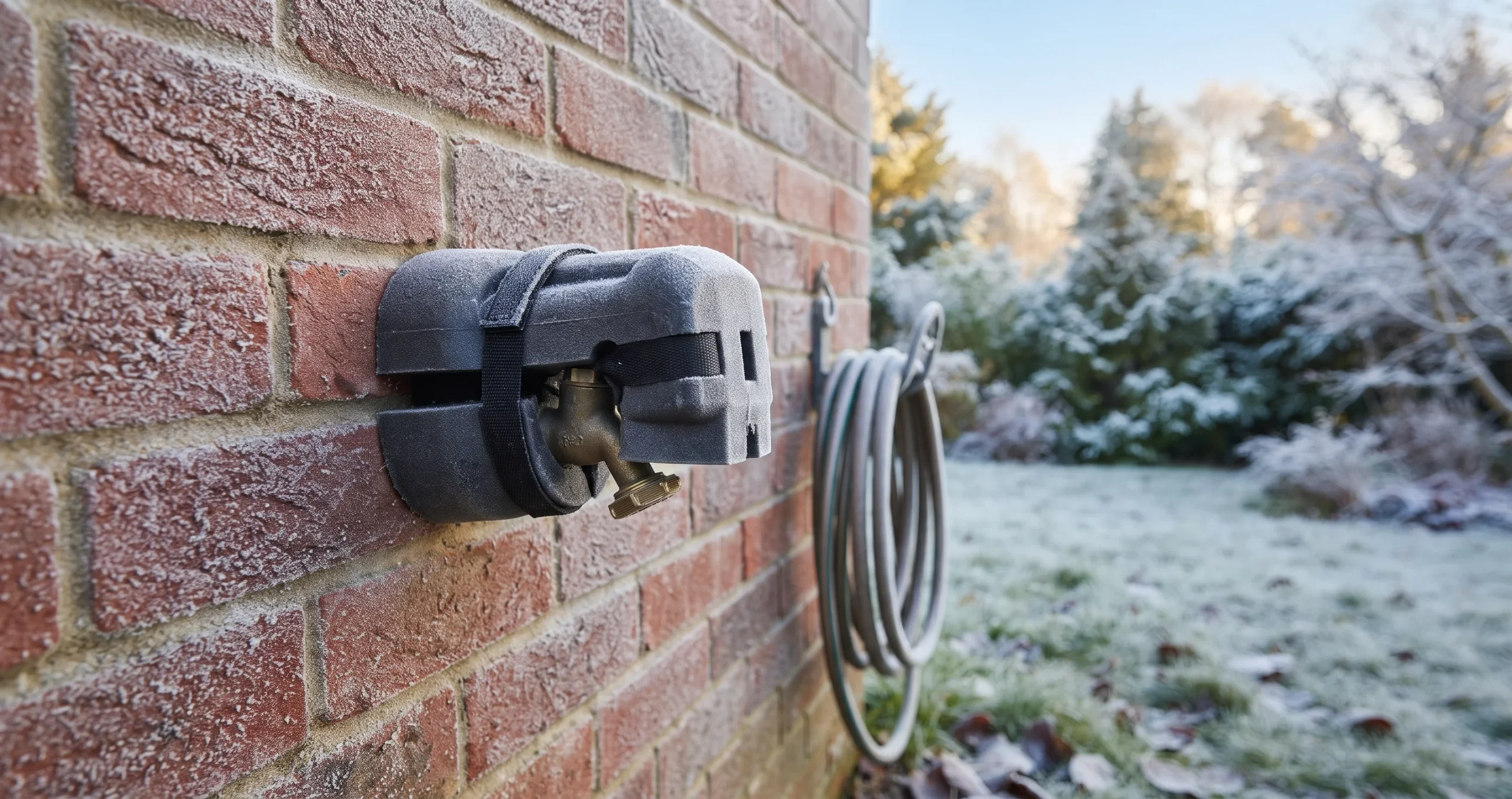
Step 5: Install an Insulated Faucet Cover
Fit an appropriately sized insulated cover over the outdoor faucet.
Make sure the cover sits securely against the exterior wall without large openings that allow cold air to circulate freely around the fixture.
This provides additional protection, although insulation alone cannot guarantee that a water-filled pipe will remain above freezing.
Step 6: Inspect the Surrounding Plumbing
Check accessible water pipes for damaged insulation, gaps around wall penetrations, and unnecessary exposure to cold air.
Appropriate pipe insulation can provide additional protection in vulnerable locations.
If you discover damaged valves, inaccessible plumbing, or uncertain drainage arrangements, consult a licensed plumber before severe weather arrives.
How to Store Garden Hoses During Winter
Garden hoses can deteriorate when exposed to repeated freezing, moisture, and extreme temperature changes.
Although some hoses are manufactured to tolerate cold conditions, storing them properly can reduce unnecessary wear.
Choose a Dry Storage Location
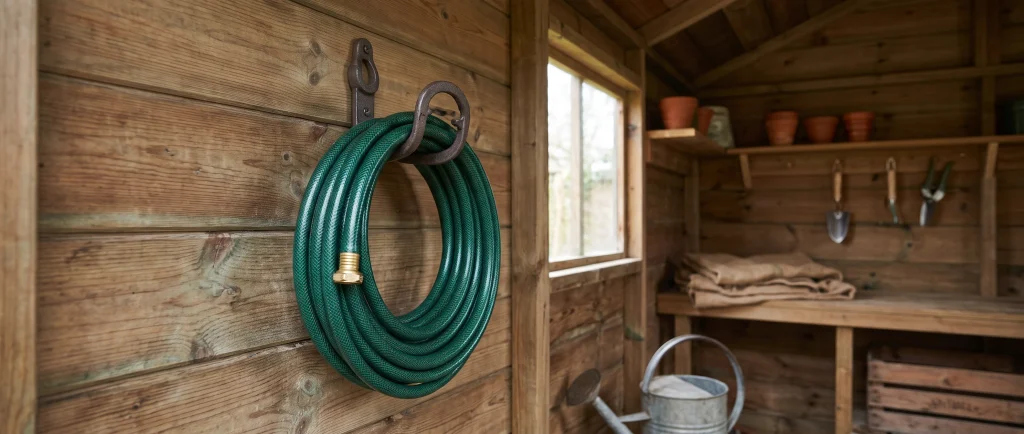
After draining the hose, store it in a dry garage, basement, utility room, or sheltered garden shed.
A frost-free storage area is preferable, particularly for hoses and accessories that may retain small amounts of water.
Avoid placing heavy gardening equipment on top of coiled hoses.
Coil the Hose Without Sharp Bends
Make broad, loose loops rather than tightly winding the hose around a small object.
Sharp bends can weaken the material and cause permanent kinks.
A wall-mounted hose hanger or suitable hose reel can keep the equipment organized and away from damp floors.
Protect Connectors and Accessories
Drain watering nozzles, hose timers, sprinklers, and detachable connectors before storing them.
Remove batteries from electronic watering timers when recommended by the manufacturer.
Keeping these accessories together also makes spring garden preparation considerably easier.
How Insulated Faucet Covers Work
Outdoor faucet covers are designed to reduce heat loss and limit direct exposure to cold air.
Most covers use rigid foam or weather-resistant insulating fabric. They help create a protected air space around the faucet, slowing the transfer of heat to the surrounding environment.
Choosing the Right Faucet Cover
| Cover type | Main advantage |
|---|---|
| Rigid foam cover | Simple installation and insulation |
| Insulated fabric pouch | Flexible fit around irregular fixtures |
| Weather-resistant insulated box | Suitable for larger faucet assemblies |
Choose a cover that fits your fixture securely and can withstand local winter weather.
Remember that faucet covers do not generate heat. They are best used as an additional protective measure rather than a replacement for proper drainage.
Using Interior Shut-Off Valves
An interior shut-off valve allows homeowners to isolate the water supply leading to an outdoor faucet without turning off water throughout the house.
Once the dedicated valve is closed, the exterior faucet can be opened to release residual water. This reduces the amount of water available to freeze inside the isolated plumbing.
If you cannot locate a dedicated shut-off valve, avoid assuming that an insulated cover provides complete protection.
A licensed plumber can identify the plumbing configuration and recommend appropriate improvements. Labeling confirmed shut-off valves also makes seasonal maintenance and emergency responses easier.
Do Frost-Proof Faucets Need Winterizing?
Despite their name, frost-proof faucets are not completely immune to freezing damage.
These fixtures typically use a longer valve assembly that shuts off the water farther inside the building, where temperatures are generally warmer.
When correctly installed with a slight downward slope toward the exterior, a conventional frost-proof faucet allows remaining water to drain after the handle is closed.
However, an attached garden hose can obstruct this drainage. Water remaining inside the faucet may freeze and damage the internal tube.
Unlike a conventional faucet isolated by an interior shut-off valve, a standard self-draining frost-proof faucet is normally left closed after removing its attachments.
Always follow the instructions for your specific model.
How to Winterize Garden Irrigation Systems
Underground sprinklers and drip irrigation systems also need attention before freezing temperatures arrive.
Simply switching off an irrigation controller does not remove water trapped inside pipes, valves, sprinkler heads, or backflow prevention devices.
Underground Sprinkler Systems
Close the dedicated irrigation water supply and follow the winter shutdown procedure recommended for your system.
Some installations use manual or automatic drainage valves, while others require compressed air to remove remaining water.
Improper compressed-air winterization can damage irrigation equipment. Pressurized air can also create safety hazards, making professional winterization preferable when a sprinkler blowout is necessary.
Drip Irrigation Systems
Disconnect removable drip irrigation equipment from its water supply and drain the tubing according to the manufacturer’s recommendations.
Filters, timers, pressure regulators, and other detachable components may benefit from frost-free storage.
Follow system-specific guidance for underground tubing and permanent valves.
Common Winter Plumbing Mistakes
Even homeowners who regularly prepare their gardens for winter can overlook small details that leave outdoor plumbing vulnerable.
Avoid these common mistakes:
- Leaving hoses connected to frost-proof faucets.
- Turning off the irrigation controller without draining the pipes.
- Relying entirely on faucet covers for freeze protection.
- Forgetting to drain hose splitters and watering timers.
- Leaving garden hoses tightly coiled with water inside.
- Assuming mild daytime temperatures eliminate overnight freezing risks.
Remember that winterization is about removing trapped water as well as reducing exposure to cold.
Warning Signs of Frozen or Damaged Pipes
Freeze-related plumbing damage can remain hidden until temperatures rise or the outdoor faucet is used again.
Recognizing warning signs early can help prevent additional property damage.
Reduced Water Flow
If an outdoor faucet produces unusually little water or no water at all during cold weather, ice may be blocking the supply.
Avoid forcing the faucet handle or attempting to remove frozen attachments.
Visible Cracks and Leaks
Inspect accessible fixtures for cracks, distorted fittings, dripping water, and unusual dampness around exterior walls.
A damaged frost-proof faucet may leak inside the building only when the outdoor faucet is opened.
Unexplained Indoor Moisture
Damp drywall, water stains, puddles near exterior walls, and unexpected water sounds can indicate a concealed plumbing leak.
If you suspect a burst pipe, close the appropriate water supply valve if it is safe to do so and contact a licensed plumber.
Never use a blowtorch or other open flame to thaw frozen plumbing. If the frozen section cannot be safely reached or you suspect damage, seek professional assistance.
Frequently Asked Questions
When should I winterize outdoor faucets and garden hoses?
Complete winterization before freezing temperatures arrive. Local forecasts are more useful than a fixed calendar date because freezing conditions vary considerably across the United States.
Is it necessary to disconnect garden hoses in winter?
Yes. Attached hoses can retain water and prevent outdoor faucets from draining properly, increasing the risk of freezing damage.
Can I leave a garden hose outside during winter?
A fully drained, cold-resistant hose may tolerate outdoor storage. However, a dry, protected location generally offers better protection against weather-related deterioration.
Should outdoor faucets remain open or closed in winter?
Conventional faucets with an isolated interior supply are generally left open after draining. Standard self-draining frost-proof faucets are normally closed after removing attachments, subject to manufacturer instructions.
Are foam faucet covers enough to prevent freezing?
Not always. Covers slow heat loss but cannot guarantee that trapped water will remain above freezing during prolonged cold weather.
Can a frost-proof faucet still burst?
Yes. Incorrect installation, obstructed drainage, attached hoses, or unusually cold conditions can compromise its protection.
Should I drain my garden pond before winter?
A pond containing fish generally requires different winter care from empty plumbing or decorative fountains.
What should I do before reconnecting hoses in spring?
Inspect fittings, restore isolated water supplies gradually, and check accessible plumbing for leaks while testing each faucet.
Stop using any fixture that shows signs of freeze damage.
Conclusion
Following a winterize outdoor faucet garden hose maintenance routine is a practical way to prepare your property for freezing weather.
Disconnecting and draining hoses, identifying interior shut-off valves, protecting vulnerable faucets, and properly winterizing irrigation systems can reduce the likelihood of damaged equipment and plumbing leaks.
The key is to understand how your particular outdoor plumbing system works rather than relying entirely on insulation or frost-resistant fixtures.
A little preparation before winter arrives can make your garden easier to maintain and help ensure your watering equipment is ready when spring returns.
External Sources
1. Preventing & Thawing Frozen Pipes
Provide reliable safety guidance on preventing frozen plumbing, disconnecting garden hoses, draining outdoor faucets, and responding to frozen pipes. https://www.redcross.org/get-help/how-to-prepare-for-emergencies/types-of-emergencies/winter-storm/frozen-pipes.html
2. Home Sprinkler Systems: Preparing Your Sprinkler System for Winter
Support technical information about irrigation drainage, sprinkler winterization, backflow prevention devices, and compressed-air safety. Colorado State University Extension. https://extension.colostate.edu/resource/home-sprinkler-systems-preparing-your-sprinkler-system-for-winter/
3. How to Winterize Outdoor Faucets, Sprinklers and Water Features
Provide practical recommendations for disconnecting garden hoses, insulating faucets, using shut-off valves, and preparing outdoor plumbing for freezing weather. Albemarle County Service Authority. https://serviceauthority.org/how-to-winterize-outdoor-faucets-sprinklers/