
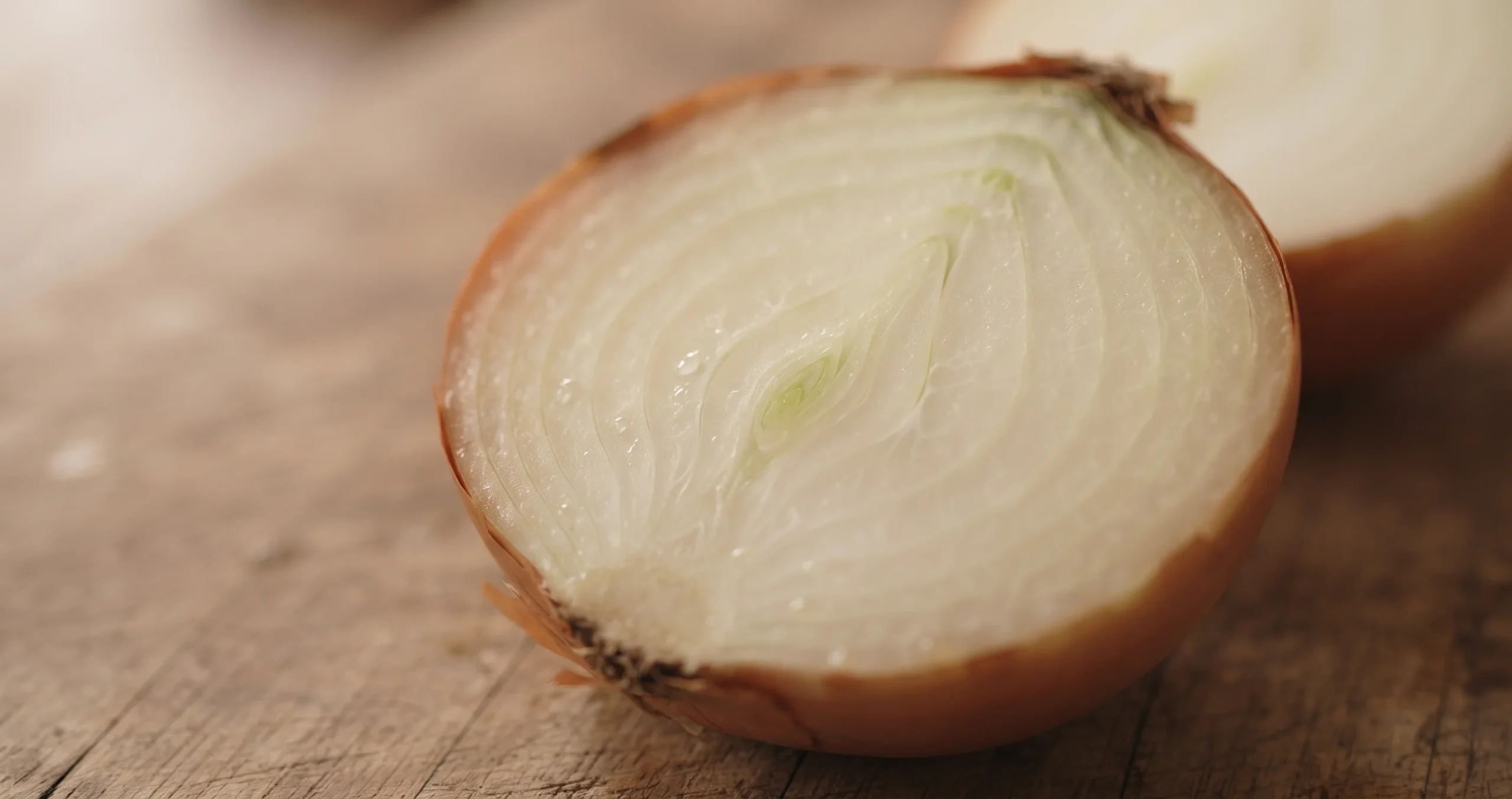
Understanding why onions make you cry reveals a fascinating example of chemistry hiding in an everyday kitchen ingredient. The moment you slice into an onion, a series of chemical reactions releases an airborne compound that irritates your eyes and triggers tears.
Although this reaction can be inconvenient when preparing dinner, it serves a biological purpose for the plant. Onions have developed chemical defenses that become active when their tissues are damaged.
Fortunately, several simple kitchen techniques may help reduce eye irritation. Choosing milder onion varieties, using a sharp knife, and improving ventilation can all make food preparation more comfortable.
Table of Contents
- Why Onions Make You Cry: The Science Behind the Tears
- What Happens Inside an Onion When You Cut It?
- Why Your Eyes Produce Tears
- Why Onions Have a Natural Chemical Defense
- Why Some Onions Make You Cry More Than Others
- 7 Practical Ways to Reduce Tears When Cutting Onions
- How to Grow Onions in Your Garden
- Planting Onions in Fall
- How to Harvest and Store Onions
- Frequently Asked Questions
Why Onions Make You Cry: The Science Behind the Tears
An intact onion bulb does not normally release enough irritating compounds to make your eyes water. Its chemical ingredients are stored within separate cellular compartments until the tissue is damaged.
When you slice, crush, or chop an onion, these compartments break open. Enzymes encounter sulfur-containing compounds, initiating a rapid series of chemical reactions.
One of the resulting substances is called syn-propanethial-S-oxide. This volatile compound, commonly known as the onion lachrymatory factor, travels through the air and irritates the surface of your eyes.
The word lachrymatory refers to something that stimulates tear production. This chemical reaction is the primary reason why onions make you cry, even when you are not experiencing any emotional response.
Interestingly, the reaction begins almost immediately after the onion’s cells are damaged.
What Happens Inside an Onion When You Cut It?

An onion bulb consists of layers of modified leaves that store water, carbohydrates, and other substances. These layers also contain naturally occurring sulfur compounds that contribute to the onion’s characteristic flavor and aroma.
Cutting an onion triggers three important stages of chemical activity.
1. Onion cells are damaged
A kitchen knife breaks through the onion’s cellular structures. This allows substances that were previously separated to mix together.
Crushing or aggressively chopping the onion can damage additional cells, potentially increasing the release of irritating compounds.
2. Enzymes become active
An enzyme called alliinase reacts with sulfur-containing amino acid derivatives stored within the onion. This reaction produces several chemical intermediates, including sulfenic acids.
These intermediates contribute to the distinctive chemistry associated with freshly cut onions.
3. An irritating airborne compound forms
Another enzyme, known as lachrymatory factor synthase, converts a particular sulfenic acid into syn-propanethial-S-oxide.
Because this compound is volatile, it can escape from the cut onion and travel toward your eyes.
Understanding these reactions explains why onions make you cry and why the intensity of the effect can vary depending on how the onion is prepared.
Why Your Eyes Produce Tears
The human eye is protected by a thin tear film that helps maintain moisture and remove foreign substances.
When airborne onion compounds reach the eye’s surface, they stimulate sensitive sensory nerves. The nervous system responds by signaling the tear-producing glands to release additional fluid.
These reflex tears help dilute and wash away the irritating substance.
This reaction differs from emotional crying, even though both processes involve tear production. Your eyes are responding to a chemical irritant rather than sadness or another emotion.
The irritation usually disappears after exposure ends. Moving away from the onion and allowing fresh air to circulate can help reduce discomfort.
Avoid rubbing your eyes with fingers that have recently handled chopped onions, as this may transfer additional irritating compounds.
Why Onions Have a Natural Chemical Defense
Plants cannot escape from animals that attempt to eat them. Instead, many species produce chemical compounds that discourage feeding or help defend damaged tissues.
Onions belong to the genus Allium, which also includes garlic, leeks, shallots, and chives. Members of this plant group are particularly well known for their sulfur-based chemistry.
When their tissues are damaged, chemical reactions produce substances with strong odors, flavors, and irritating properties. These compounds may discourage certain herbivores and contribute to the plant’s defense system.
However, this does not mean onions are protected against every garden pest. Onion maggots, thrips, and other specialized pests can still damage onion crops.
The biological explanation for why onions make you cry is therefore closely connected to the chemistry plants use to interact with their environment.
Why Some Onions Make You Cry More Than Others
Not every onion produces the same level of eye irritation. Some varieties have a noticeably sharp flavor, while others are mild enough to enjoy raw in salads and sandwiches.
Several factors influence these differences.
Onion variety
Different onion varieties naturally produce different concentrations of sulfur-containing compounds.
Sweet onions are generally less pungent than many standard storage onions. Their milder flavor can make them more comfortable to prepare, although they may still cause tears.
Soil sulfur availability
Onions absorb sulfur from the soil as they grow. The availability of this nutrient can influence the production of compounds associated with onion pungency.
Growing conditions, genetics, and nutrient management all contribute to the final characteristics of the bulb.
Growing and storage conditions
Temperature, water availability, maturity, and storage conditions can also influence onion chemistry.
Even onions belonging to the same variety may differ in flavor and tear-producing intensity.
Color alone is not a reliable indicator of pungency. Red, white, and yellow onions can all cause eye irritation, depending on their individual characteristics.
7 Practical Ways to Reduce Tears When Cutting Onions
Now that you understand why onions make you cry, it becomes easier to identify preparation methods that may reduce irritation. No technique guarantees completely tear-free chopping, but combining several approaches can make a noticeable difference.
1. Use a sharp knife
A sharp knife cuts through onion tissues more cleanly than a dull blade. This may reduce unnecessary crushing and limit the amount of irritating compounds released during preparation.
A properly sharpened knife also gives you better control while chopping.
2. Chill the onion before cutting
Place the onion in the refrigerator for about 30 minutes before preparing it. Lower temperatures may slow enzyme activity and reduce the release of volatile compounds.
There is no need to freeze the onion, which could negatively affect its texture.
3. Improve kitchen ventilation
Chop onions near an open window or beneath an effective kitchen extractor fan.
Moving air helps disperse airborne irritants before they reach your eyes. Position yourself so that the airflow carries the compounds away from your face.
4. Choose milder onion varieties
Sweet onions, such as Vidalia and Walla Walla, are often less pungent than conventional storage onions.
They are particularly suitable for dishes that require large quantities of raw onion.
5. Avoid leaning over the cutting board
Keeping your face farther from the freshly cut onion may reduce direct exposure to irritating vapors.
Maintain a comfortable, upright position while keeping the cutting board stable.
6. Use protective kitchen goggles
Well-fitting goggles can create a physical barrier between your eyes and airborne onion compounds.
Ordinary eyeglasses may offer limited protection because air can circulate around their edges.
7. Prepare onions shortly before cooking
Avoid leaving large amounts of freshly chopped onions uncovered near your face while preparing other ingredients.
Cooking also changes onion chemistry, reducing much of the sharpness associated with raw onions.
The Library of Congress explanation of onion-induced tears provides further background on the chemical compound responsible for this familiar kitchen experience.
How to Grow Onions in Your Garden
Learning why onions make you cry can make growing these versatile vegetables even more interesting. Onions are cool-season crops that can thrive in traditional vegetable beds, raised beds, and sufficiently large containers.
Successful cultivation begins with choosing varieties suited to your climate and daylight conditions.
Choose the right onion variety
Bulb onions are generally classified according to the amount of daylight required to initiate bulb formation.
| Onion type | Approximate daylight requirement |
|---|---|
| Short-day onions | 10–12 hours |
| Intermediate-day onions | 12–14 hours |
| Long-day onions | 14–16 hours |
Short-day varieties are generally suited to southern regions of the United States, while long-day onions perform better in northern regions. Intermediate-day varieties are useful across many areas between these regions.
Prepare the soil
Onions prefer fertile, well-drained soil with plenty of organic matter. Choose a location that receives full sunlight for most of the day.
Because onions develop relatively shallow roots, consistent moisture and careful weed management are particularly important.
For bulb production, space plants approximately 4–6 inches apart, adjusting according to the variety and desired harvest size.
Water consistently
Keep the soil evenly moist during active growth without allowing water to accumulate around the bulbs.
As mature onions approach harvest and their foliage begins falling naturally, reduce or stop watering to encourage drying.
Planting Onions in Fall
In regions with relatively mild winters, fall planting allows suitable onion varieties to establish roots before spring growth accelerates.
Short-day varieties are commonly planted during fall or early winter in warmer parts of the United States. Cold-tolerant overwintering varieties may also succeed in cooler regions with appropriate protection.
However, not every onion variety is suitable for overwintering. Prolonged cold exposure can encourage premature flower stalk development, particularly in susceptible plants that have already reached a substantial size.
Choose locally recommended varieties and planting dates rather than relying on a universal calendar.
A light layer of loose organic mulch can help moderate soil temperature and reduce moisture fluctuations. Avoid covering the plants with a thick, waterlogged layer that could encourage decay.
How to Harvest and Store Onions
Proper harvesting and storage help preserve your onion crop and reduce unnecessary food waste.
Harvest at maturity
Storage onions are generally ready to harvest when a substantial portion of their green tops have naturally fallen over and begun drying.
Lift the bulbs carefully to avoid bruising or damaging their protective outer layers.
Cure before storage
Allow mature storage onions to dry in a sheltered, airy location for roughly two to four weeks, depending on conditions.
The outer skins should become papery, and the necks should dry thoroughly before long-term storage.
Store in a suitable location
Keep cured onions in a cool, dry, ventilated space. Mesh bags, open baskets, and ventilated crates allow air to circulate around the bulbs.
Check stored onions regularly and remove any showing mold, soft spots, or decay. Sweet onions generally have a shorter storage life than pungent storage varieties.
Once an onion has been cut, refrigerate the remaining portion promptly in a clean, covered container.
Frequently Asked Questions
Why onions make you cry but garlic usually does not?
Although garlic and onions belong to the same botanical genus, their sulfur chemistry differs.
Damaged garlic tissues primarily produce other sulfur compounds, including allicin, rather than substantial amounts of the onion’s characteristic tear-inducing compound.
Does refrigerating onions prevent tears?
Chilling may reduce the amount of irritating vapor released during cutting. However, it does not completely prevent the chemical reaction.
Combining refrigeration with a sharp knife and good ventilation may produce better results.
Does cutting the root end last prevent crying?
Leaving the root end intact while chopping may help keep the onion stable and reduce unnecessary tissue damage.
However, tear-producing compounds occur throughout the bulb, so this technique alone cannot guarantee tear-free preparation.
Are red onions stronger than yellow onions?
Not necessarily. Pungency depends more on genetics, sulfur availability, and growing conditions than on skin color.
Both red and yellow onions can be either relatively mild or strongly pungent.
Why onions make you cry even when you are not cutting them?
The irritating compound travels through the air. Someone standing near another person chopping onions may therefore experience watering eyes without touching the vegetable.
Do cooked onions still make you cry?
Thoroughly cooked onions generally produce less eye irritation because heating changes their enzyme activity and sulfur compounds.
However, freshly cut onions may still release irritating vapors during the early stages of cooking.
Can you grow onions during winter?
Yes, in suitable climates and with appropriate varieties. Gardeners in regions with severe winters may need protected growing conditions or may achieve better results by planting in early spring.
Conclusion
The science behind why onions make you cry demonstrates how remarkable everyday vegetables can be. Damaged onion cells bring enzymes and sulfur-containing compounds together, producing an airborne irritant that triggers reflex tears.
Although this chemical reaction is part of the onion’s natural biology, practical preparation methods may reduce its effects. A sharp knife, chilled onions, effective ventilation, and milder varieties are all worth trying.
For home gardeners, onions also offer a rewarding opportunity to grow a versatile kitchen staple. Choosing suitable varieties, providing consistent moisture, and curing mature bulbs properly can help produce a harvest that lasts well beyond the growing season.
External Sources
1. Research on Onion Lachrymatory Factor Synthase
Peer-reviewed scientific research explaining the enzymes and sulfur chemistry responsible for tear production. Plant Physiology. Access the full scientific study
2. Growing Onions in Home Gardens
University-backed guidance on onion cultivation, soil preparation, watering, harvesting, curing, and storage. University of Minnesota Extension. Access the growing guide