
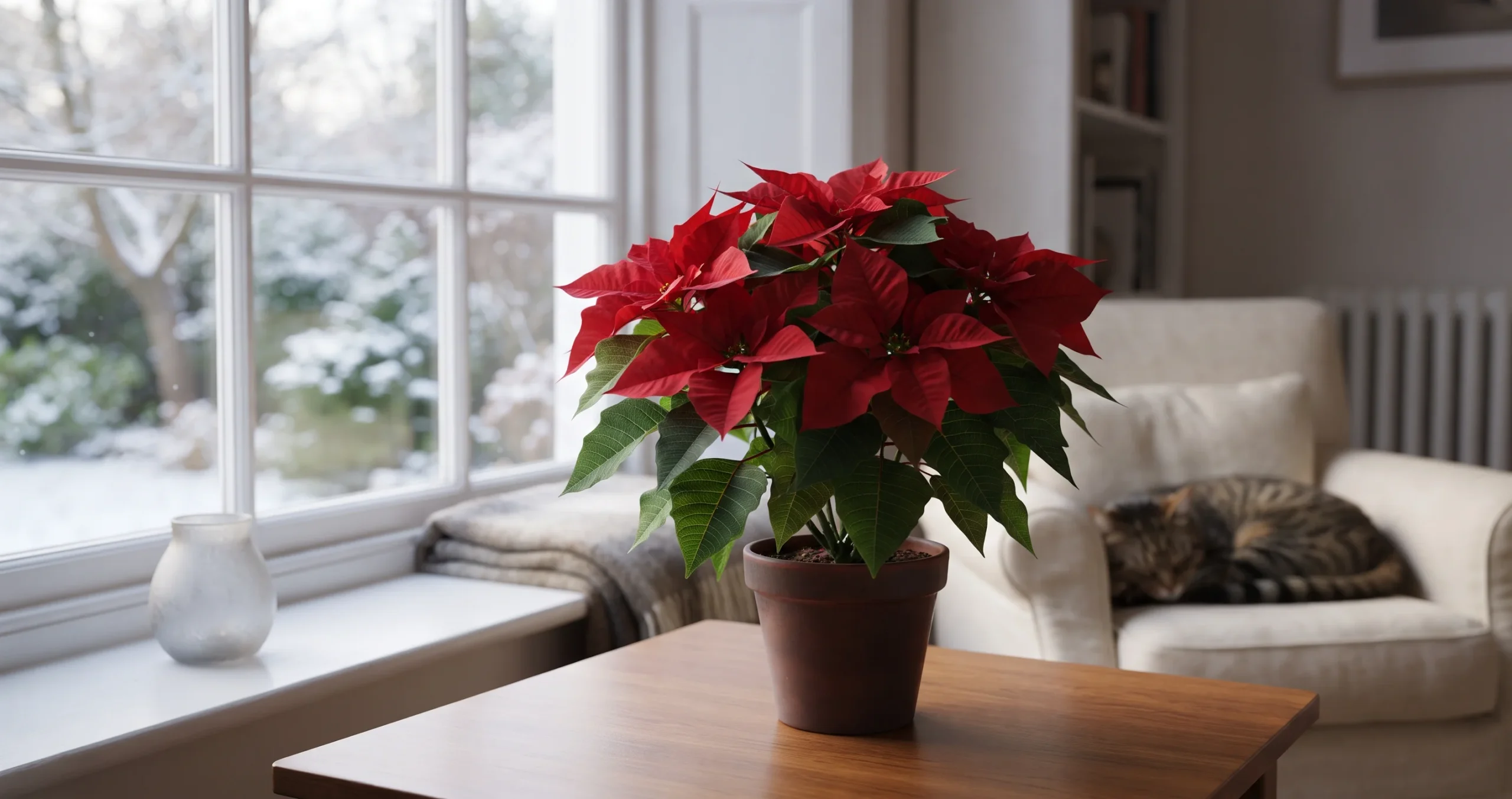
Few plants capture the festive spirit of the holiday season quite like poinsettias. Their brilliant red, pink, and creamy white foliage brings warmth to homes during the darkest months of the year. However, pet owners often hesitate before bringing one indoors because of its reputation for being dangerous.
So, are poinsettias poisonous to cats and dogs? Although these popular holiday plants contain an irritating milky sap, their reputation as highly poisonous plants is largely exaggerated. Most exposures cause relatively mild symptoms, while several other seasonal plants present considerably greater risks.
Understanding these differences can help you decorate your home responsibly while keeping your furry companions safe throughout the holiday season.
Table of Contents
- Are Poinsettias Poisonous to Cats and Dogs?
- The Origin of the Poinsettia Poison Myth
- What Veterinary Experts Say About Poinsettias
- Symptoms of Poinsettia Exposure in Pets
- What to Do if Your Pet Chews a Poinsettia
- Holiday Plants That Are More Dangerous to Pets
- Pet-Safe Alternatives to Traditional Holiday Plants
- How to Keep Pets Safe Around Holiday Plants
- Frequently Asked Questions
Are Poinsettias Poisonous to Cats and Dogs?
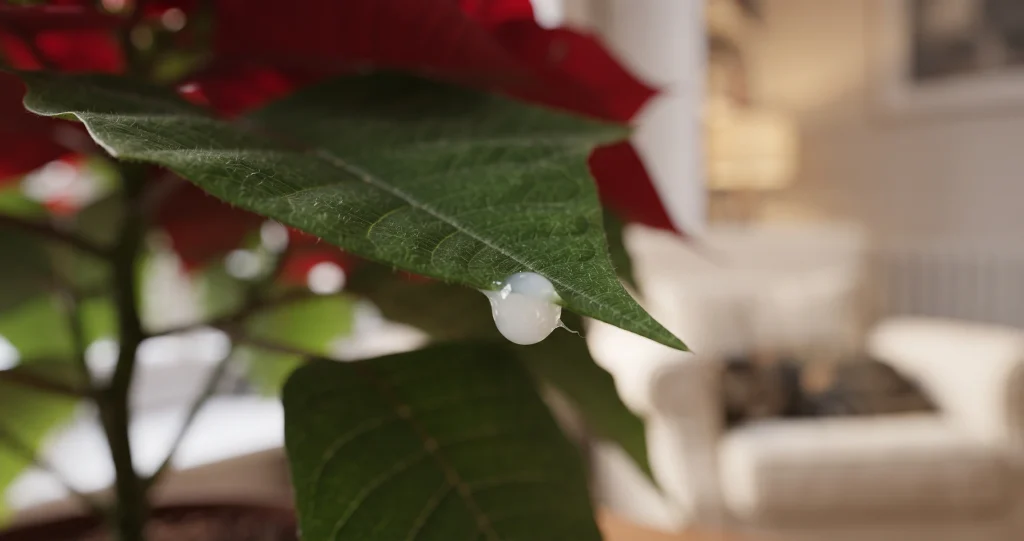
Poinsettias (Euphorbia pulcherrima) belong to the spurge family, a diverse group of plants known for producing a milky white sap when their leaves or stems are damaged.
This sap contains compounds that can irritate the mouth, digestive tract, skin, and eyes. However, poinsettias are generally considered mildly toxic to cats and dogs rather than highly poisonous.
Most pets that chew a small portion of the plant experience either minor discomfort or no noticeable symptoms.
Nevertheless, poinsettias are ornamental plants, not suitable food for animals. Keeping them away from curious pets remains a sensible precaution.
Understanding the Difference Between Toxicity and Irritation
A plant does not need to cause severe poisoning to be considered potentially harmful.
Some plants contain substances that produce localized irritation, while others contain toxins capable of damaging vital organs or interfering with normal heart function.
Poinsettias generally fall toward the milder end of this spectrum.
Their irritating sap can cause unpleasant symptoms, but serious poisoning from ordinary household exposure is uncommon.
The Origin of the Poinsettia Poison Myth
The belief that poinsettias are extremely poisonous has circulated for more than a century.
One frequently cited explanation traces the reputation to an early twentieth-century report involving a child’s death that was attributed to poinsettia consumption. The connection was never convincingly established.
Despite the lack of reliable evidence, the story continued to spread and eventually became part of popular holiday folklore.
Why the Myth Persists
The plant’s bright colors and milky sap may contribute to its intimidating reputation.
Many members of the spurge family contain irritating substances, and some species are considerably more hazardous than poinsettias.
Unfortunately, these differences are often overlooked when people discuss the safety of ornamental plants.
Today, veterinary toxicology organizations recognize that poinsettias generally present a relatively low risk of severe poisoning compared with many other holiday plants.
What Veterinary Experts Say About Poinsettias
Veterinary organizations, including the ASPCA and Pet Poison Helpline, identify poinsettias as plants that can cause irritation and mild gastrointestinal symptoms.
Their milky sap contains irritating compounds that may produce discomfort when an animal chews the leaves or stems.
The unpleasant taste and irritation may also discourage some pets from consuming large quantities.
Are Poinsettias Poisonous Enough to Cause Serious Illness?
Severe systemic poisoning from poinsettia ingestion is uncommon. However, the amount consumed, the animal’s size, existing health conditions, and individual sensitivity can influence the severity of symptoms.
Repeated vomiting or diarrhea can become concerning, particularly in young, elderly, or medically vulnerable animals.
Additional risks may arise from fertilizers, pesticides, decorative materials, or other substances associated with the plant.
For these reasons, pet owners should take any unexpected symptoms seriously rather than assuming that every exposure will be harmless.
Symptoms of Poinsettia Exposure in Pets
When a cat or dog chews a poinsettia, the irritating sap may come into contact with sensitive tissues inside the mouth.
Symptoms can vary from one animal to another, and some pets may show no obvious reaction.
Common signs of exposure include:
- Excessive drooling.
- Lip licking or pawing at the mouth.
- Mild vomiting.
- Occasional diarrhea.
- Redness or irritation around the mouth.
- Skin irritation following direct contact with the sap.
- Eye irritation if sap enters the eyes.
These symptoms are generally associated with irritation rather than severe systemic poisoning.
When Symptoms Require Veterinary Attention
Contact a veterinarian promptly if your pet develops repeated vomiting, persistent diarrhea, unusual weakness, significant discomfort, or difficulty eating or drinking.
Breathing difficulties, collapse, seizures, and severe lethargy require immediate emergency veterinary attention.
These serious symptoms are not typical of poinsettia exposure and could indicate another medical problem or ingestion of a more dangerous substance.
What to Do if Your Pet Chews a Poinsettia
Discovering that your pet has eaten part of a holiday plant can be unsettling. Identifying the plant and responding appropriately are the most important first steps.
Remove Access to the Plant
Move the poinsettia to a secure location where your pet cannot continue chewing it.
Remove any fallen leaves or broken stems from the surrounding floor.
If plant material remains around your pet’s mouth, gently remove it only if this can be done safely without causing distress or risking a bite.
Contact Your Veterinarian
Offer access to fresh drinking water, but avoid forcing your pet to drink.
Contact your veterinarian or an animal poison control service for guidance, particularly if the amount consumed is unknown or symptoms have developed.
Keep the plant’s identification label or take a clear photograph to help confirm the species.
Avoid Unapproved Home Remedies
Do not attempt to induce vomiting unless specifically instructed by a veterinary professional.
Milk, oils, salt, hydrogen peroxide, and other household substances should not be administered as improvised poisoning treatments.
If sap enters your pet’s eyes, gently flush them with clean lukewarm water or sterile saline if possible, and seek veterinary advice.
Prompt, appropriate guidance is more valuable than experimenting with home remedies.
Holiday Plants That Are More Dangerous to Pets
While many pet owners ask, “Are poinsettias poisonous?” other traditional holiday plants deserve equal or greater attention.
Some contain substances capable of causing serious illness, particularly if an animal consumes their bulbs, berries, flowers, or leaves.
1. Lilies: Especially Dangerous for Cats
True lilies (Lilium species) and daylilies (Hemerocallis species) are among the most dangerous plants for cats.
Even relatively small exposures can result in acute kidney failure. The flowers, leaves, stems, pollen, and water from a vase containing these lilies can all present a risk.
A cat may become exposed simply by grooming pollen from its fur after brushing against a flower.
If you suspect lily exposure, seek emergency veterinary treatment immediately, even if your cat appears completely healthy.
The safest approach is to exclude true lilies and daylilies entirely from homes with cats.
2. Holly: Attractive Berries With Hidden Risks
Holly is a traditional holiday decoration recognized by its glossy green leaves and bright red berries.
However, both its berries and foliage contain substances that can cause digestive discomfort in cats and dogs.
Possible symptoms include vomiting, diarrhea, drooling, and reduced activity. The sharp leaves may also irritate the mouth and digestive tract.
Artificial holly decorations can provide a similar festive appearance when positioned securely away from pets.
3. Mistletoe: A Holiday Tradition Worth Reconsidering
Mistletoe contains substances that may affect the digestive system and, in more serious cases, cardiovascular function.
The severity of exposure depends partly on the species of mistletoe and the quantity consumed.
Symptoms may include vomiting, diarrhea, weakness, and abnormal heart activity.
Because berries and leaves can fall from hanging decorations, placing mistletoe overhead does not completely eliminate the risk.
4. Amaryllis: Beautiful Flowers With Toxic Bulbs
Amaryllis produces impressive trumpet-shaped blooms that brighten indoor spaces during winter.
Despite its attractive appearance, the commonly sold holiday amaryllis (Hippeastrum species) contains toxic alkaloids, including lycorine.
The bulb contains particularly concerning concentrations of these compounds.
Ingestion can cause digestive upset, abdominal discomfort, excessive drooling, and, in more serious exposures, tremors or cardiovascular disturbances.
Pets that enjoy digging in plant containers may be especially vulnerable.
Holiday Plant Toxicity Comparison
| Holiday plant | Relative concern | Primary risk |
|---|---|---|
| Poinsettia | Generally low | Mouth and digestive irritation |
| True lilies | Critical for cats | Acute kidney failure |
| Holly | Usually low to moderate | Digestive upset and oral irritation |
| Mistletoe | Variable, potentially serious | Digestive and cardiovascular problems |
| Amaryllis | Potentially serious | Digestive and neurological symptoms |
| Christmas cactus | Generally low | Possible digestive upset if eaten |
These categories provide a general comparison rather than a diagnosis. Any suspected ingestion of a toxic plant should be discussed with a veterinary professional.
Pet-Safe Alternatives to Traditional Holiday Plants
Creating a festive home does not require filling every room with potentially harmful greenery.
Several attractive flowering plants are classified as non-toxic to cats and dogs and can provide seasonal color without the same toxicological concerns.
Christmas Cactus
The Christmas cactus (Schlumbergera species) is one of the most appealing alternatives to poinsettias.
Its arching green stems produce attractive pink, red, white, or purple flowers during the cooler months.
It is generally considered non-toxic to cats and dogs, although eating substantial amounts of plant material can still cause digestive discomfort.
African Violets
African violets produce delicate flowers in shades of purple, pink, blue, and white.
Their compact growth makes them suitable for windowsills, small tables, and indoor decorative arrangements.
They are classified as non-toxic to cats and dogs, making them a practical choice for pet-friendly households.
Phalaenopsis Orchids
Moth orchids offer elegant, long-lasting flowers and are widely available throughout the holiday season.
Their graceful flower stems create a sophisticated display without relying on traditional toxic holiday plants.
Phalaenopsis orchids are considered non-toxic to cats and dogs. However, decorative supports, fertilizers, and potting materials should remain inaccessible.
Boston Ferns
Boston ferns provide abundant green foliage and work beautifully in winter decorative arrangements.
Their arching fronds add texture to indoor spaces, and they are classified as non-toxic to cats and dogs.
They can be displayed in secure hanging containers or stable decorative pots.
Roses
Fresh roses offer another attractive alternative for holiday bouquets.
Red and white varieties complement traditional seasonal colors, and true roses are considered non-toxic to cats and dogs.
Remove or protect sharp thorns, and keep floral preservatives and chemically treated arrangements away from pets.
How to Keep Pets Safe Around Holiday Plants
Understanding the answer to “Are poinsettias poisonous?” is only one part of creating a pet-friendly home.
Thoughtful decorating habits can reduce the risk of accidental ingestion throughout the holiday season.
Display Plants in Secure Locations
Choose stable surfaces that your pets cannot easily access.
Remember that cats are excellent climbers and can reach shelves that might appear inaccessible.
For potentially dangerous plants, a room that pets cannot enter provides better protection than an elevated shelf. Highly toxic lilies should be excluded entirely from homes with cats.
Check Every Holiday Bouquet
Mixed floral arrangements may contain several plant species, some of which are difficult to recognize.
Ask the florist for a complete list of included flowers and decorative greenery before bringing an arrangement home.
This is particularly important when purchasing bouquets for households with cats.
Remove Fallen Leaves and Berries
Check the floor beneath decorations regularly.
Fallen berries, dried leaves, broken stems, and loose petals may attract curious animals even when the original plant is out of reach.
Keeping decorative areas clean reduces opportunities for accidental ingestion.
Keep Plant Care Products Away From Pets
Fertilizers, pesticides, decorative sprays, and floral preservatives may introduce additional risks.
Store these products securely and prevent pets from drinking water from plant saucers or flower vases.
Even non-toxic houseplants may become hazardous when combined with inappropriate chemicals or decorative materials.
Provide Appropriate Enrichment
Some pets chew plants because they are curious, bored, or attracted to moving foliage.
Interactive toys, scratching posts, play sessions, and appropriate enrichment can provide alternative activities.
For cats that enjoy nibbling greenery, commercially grown, untreated cat grass can offer a more suitable option when used in moderation.
Frequently Asked Questions
Are poinsettias poisonous to cats?
Poinsettias are mildly toxic to cats because their milky sap can irritate the mouth and digestive system. Severe poisoning is uncommon, but suspected ingestion should be discussed with a veterinarian.
Are poinsettias poisonous to dogs?
Yes, although their toxicity is generally mild. Dogs that chew poinsettias may experience drooling, vomiting, or digestive discomfort.
Can a poinsettia kill a pet?
Life-threatening poisoning from poinsettia ingestion is extremely uncommon. Nevertheless, persistent symptoms, substantial ingestion, or uncertainty about the plant’s identity require professional veterinary advice.
Are red poinsettias more poisonous than white ones?
The flower-like colored bracts do not determine toxicity. Red, white, pink, and other cultivated poinsettia varieties all contain potentially irritating sap.
Is Christmas cactus safer than poinsettia?
Yes. Christmas cactus is classified as non-toxic to cats and dogs, making it a preferable choice for households with curious pets.
What is the most dangerous holiday flower for cats?
True lilies and daylilies are particularly dangerous because exposure can cause acute kidney failure. Suspected ingestion or contact involving pollen should be treated as a veterinary emergency.
Can pets safely chew non-toxic houseplants?
Non-toxic does not mean edible or completely harmless. Consuming plant material can still cause digestive discomfort, and soil, fertilizers, or decorative accessories may introduce additional hazards.
Conclusion
So, are poinsettias poisonous to pets? The answer is yes, but their reputation as exceptionally dangerous holiday plants is largely undeserved.
Their milky sap typically causes localized irritation or mild digestive symptoms rather than severe systemic poisoning. True lilies, mistletoe, and amaryllis can present considerably more serious concerns.
Choosing non-toxic alternatives, identifying unfamiliar plants, and keeping potentially harmful decorations inaccessible can make holiday celebrations safer for cats and dogs.
With a little planning, your home can remain colorful, welcoming, and festive while providing a comfortable environment for every member of the family.
Internal Sources
1. 10 Common Garden Plants That Are Toxic to Pets and How to Keep Them Safe
Poinsettias are only one of several ornamental plants that can cause discomfort in pets. Explore our guide to 10 common garden plants that are toxic to pets and how to keep them safe.
External Sources
1. Poinsettia Toxicity
Confirms the irritating properties of poinsettia sap and explains why the plant’s toxicity is frequently exaggerated. ASPCA Poison Control . https://www.aspca.org/pet-care/aspca-poison-control/toxic-and-non-toxic-plants/poinsettia
2. Lovely Lilies and Curious Cats: A Dangerous Combination
Authoritative veterinary information about lily toxicity, kidney failure, exposure risks, and emergency treatment in cats. U.S. Food and Drug Administration. https://www.fda.gov/animal-veterinary/animal-health-literacy/lovely-lilies-and-curious-cats-dangerous-combination.
3. Toxic and Non-Toxic Flowers and Plants
Provides evidence-based guidance for identifying dangerous plants and selecting non-toxic alternatives for households with pets. ASPCA. https://www.aspca.org/news/do-you-know-which-flowers-and-plants-are-toxic-pets-our-experts-explain.