
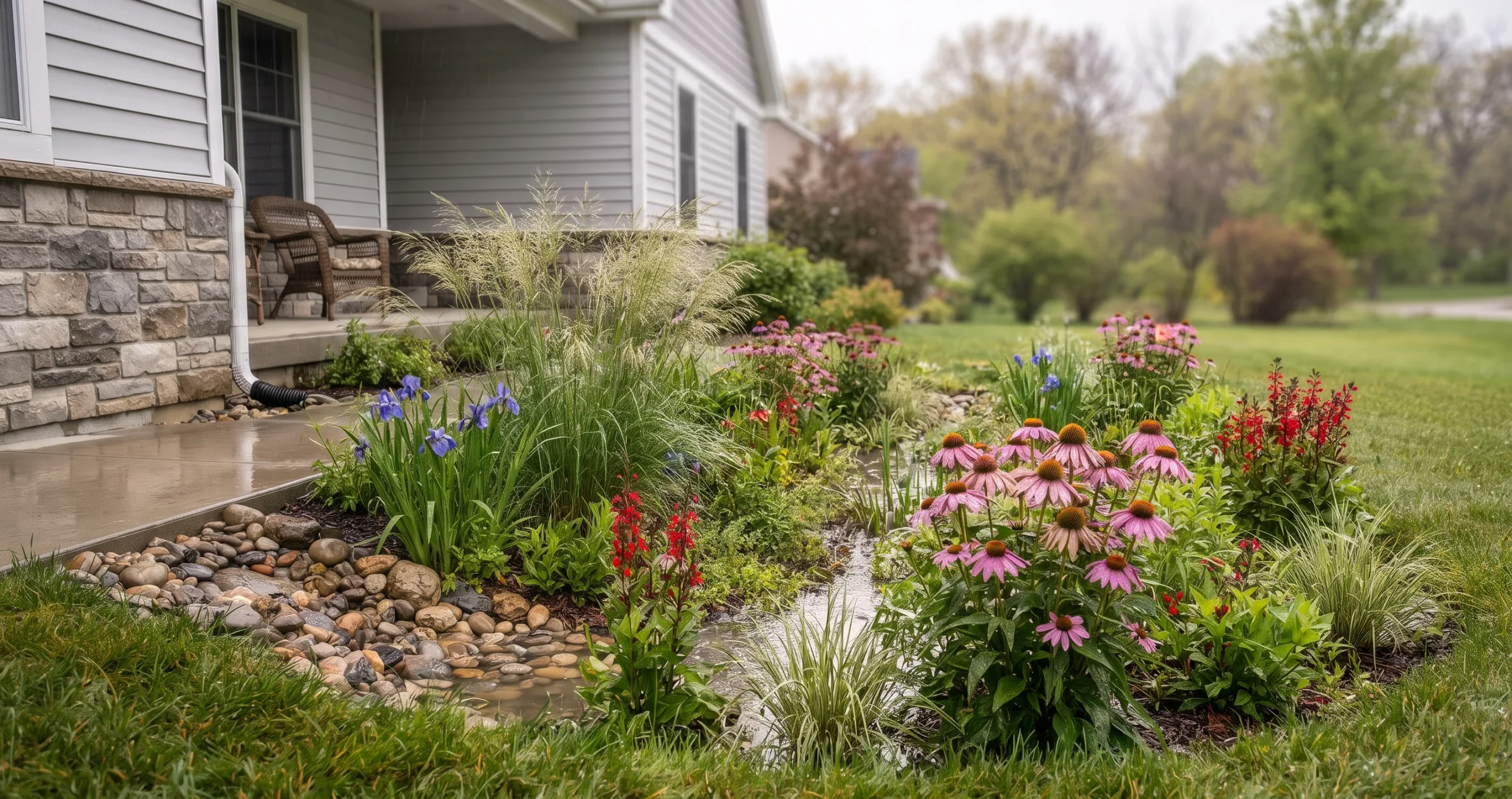
A heavy rain can turn an ordinary backyard into a maze of puddles, muddy patches, and overflowing gutters. But some of that runoff can become an opportunity. A rain garden is a shallow, planted depression that captures water from roofs, driveways, and other surfaces, allowing it to soak gradually into the soil.
Unlike a traditional flower bed, this type of garden is designed to handle changing moisture conditions. It may briefly hold water after a storm, then return to relatively dry soil between rainfall events.
With careful planning, a rain garden can help manage stormwater while creating an attractive habitat for pollinators, birds, and other backyard wildlife.
This beginner-friendly guide explains how to choose a suitable location, prepare the soil, select plants, and maintain a garden that works with natural rainfall.
Table of Contents
- What Is a Rain Garden?
- How Does a Rain Garden Work?
- Choosing the Best Rain Garden Location
- How to Size and Plan Your Rain Garden
- Testing Drainage Before You Dig
- Building a Rain Garden Step by Step
- Choosing the Best Rain Garden Plants
- How Long Should Water Stay in a Rain Garden?
- Maintaining Your Rain Garden
- Benefits for Pollinators, Birds, and Wildlife
- Common Rain Garden Mistakes
- Frequently Asked Questions
What Is a Rain Garden?
A rain garden is a landscaped depression designed to temporarily collect stormwater runoff and encourage it to infiltrate the ground.
Water usually enters from a roof downspout, driveway, walkway, or another nearby surface. Instead of flowing immediately into a storm drain, the runoff spreads across a planted basin.
The garden’s soil, mulch, and vegetation work together to slow the water and support infiltration.
A properly designed basin does not function as a permanent pond. It is intended to drain between storms, leaving plants growing in soil that alternates between wet and relatively dry conditions.
These gardens can be installed in residential yards, school landscapes, community spaces, and larger urban green areas.
They are especially useful where manageable amounts of runoff can be directed into a safe, well-draining location.
How Does a Rain Garden Work?
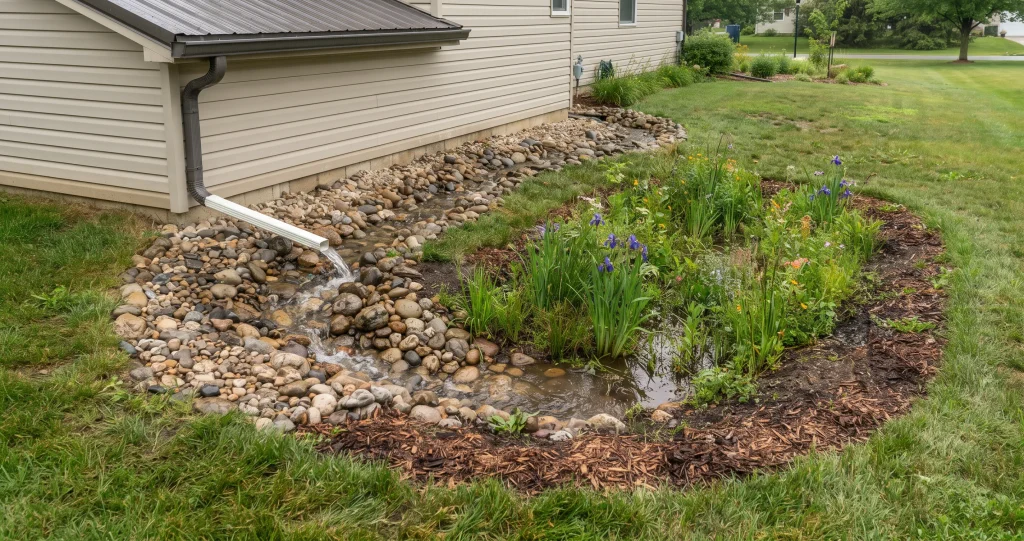
The basic principle is simple: capture runoff, slow its movement, and allow it to soak into the ground.
When rain falls on a roof or paved surface, much of the water flows away rather than infiltrating directly into soil.
A rain garden intercepts some of that runoff through a shallow channel, downspout extension, or gently sloping surface.
As water enters the basin, it temporarily pools above the soil. The water then infiltrates downward, while some moisture is absorbed by plant roots or returned to the atmosphere through evaporation and transpiration.
The Role of Soil and Plant Roots
Soil structure plays an important role in drainage.
Well-structured soil contains spaces between particles that allow water and air to move. Deep-rooted plants can help maintain soil structure over time, although roots alone cannot correct severe drainage problems.
Organic matter supports soil organisms and contributes to healthy plant growth.
Vegetation also slows surface flow, reducing the movement of sediment into the basin.
A rain garden can help retain certain pollutants associated with stormwater, but it should not be considered a treatment system that makes contaminated water safe to drink.
Choosing the Best Rain Garden Location
Location is one of the most important decisions in the entire project.
Choose an area that receives runoff naturally or can be reached by a short, gently sloping drainage route.
A downspout is often a convenient starting point because roof runoff can be redirected toward the garden.
However, the basin should be far enough from buildings to avoid increasing moisture near foundations.
Keep Water Away From Foundations
A commonly recommended starting point is to locate the garden at least about 10 feet from a building foundation, although local guidance and site conditions may require greater separation.
Never direct runoff toward a basement, neighboring property, retaining wall, or other vulnerable structure.
Avoid locations where water could undermine patios, sidewalks, or underground infrastructure.
Before digging, contact your local utility-location service to identify buried lines.
Look for a Gentle Slope
A slightly sloping yard can make it easier to guide runoff into the basin.
The ideal location allows water to enter gradually without creating a fast-moving channel that erodes soil.
Avoid steep slopes, which can complicate construction and increase the risk of unstable berms.
The garden should also have a safe overflow route for unusually heavy storms.
Avoid Unsuitable Areas
Do not install a conventional infiltration rain garden directly over a septic drain field, near a well, or in a location with persistently high groundwater.
Sites with contaminated soil or significant structural drainage problems require professional evaluation.
An existing low spot that stays wet for days may seem convenient, but it may indicate soil conditions unsuitable for a simple rain garden.
How to Size and Plan Your Rain Garden
The correct size depends on how much runoff the garden will receive and how quickly the soil can absorb it.
Start by identifying the contributing drainage area. This might include part of a roof, a driveway section, or a small paved patio.
A larger drainage area generally produces more runoff, requiring a larger basin or a more carefully engineered design.
Estimate the Runoff Area
Measure the length and width of the surface draining toward the proposed garden.
For a simple rectangular roof section, multiply length by width to estimate the area.
Remember that only the portion actually draining toward the garden should be included.
A common planning approach uses a fraction of the contributing drainage area as the initial garden size, but the appropriate ratio varies substantially with soil infiltration, rainfall patterns, and design depth.
For this reason, local extension guidance is more reliable than a universal sizing formula.
Plan a Shallow Basin
Many residential rain gardens use shallow depressions, often around 4–8 inches deep.
The exact depth depends on soil drainage, site slope, runoff volume, and local recommendations.
A deeper hole is not automatically better. Excessive depth can create standing-water problems and make the basin difficult to maintain.
The bottom should be relatively level so runoff spreads across the planted area rather than collecting in one corner.
Testing Drainage Before You Dig
A drainage test helps determine whether the proposed location can absorb water within a reasonable period.
Dig a small test hole in the intended basin area and observe how water drains through the existing soil.
For a more meaningful assessment, follow a locally recommended infiltration-test procedure, which may include saturating the soil before measuring the drainage rate.
Soil that drains extremely slowly may require a different location or a professionally designed system.
Heavy clay soil does not automatically make a rain garden impossible, but its infiltration rate and depth to restrictive layers must be considered.
The goal is to create a basin that empties after rainfall rather than remaining saturated for extended periods.
Building a Rain Garden Step by Step
Step 1: Mark the Garden Shape
Use a garden hose, rope, or marking paint to outline the proposed basin.
A gently curved kidney or oval shape often looks natural in residential landscapes, although rectangular designs can work in formal gardens.
Allow enough room for plants to spread as they mature.
Keep the planned inlet and overflow locations visible during layout.
Step 2: Remove Existing Vegetation
Remove turfgrass and unwanted vegetation from the marked area.
Set aside suitable topsoil if it can be reused during construction.
Avoid burying thick layers of grass beneath the basin, where decomposition and settling may create uneven surfaces.
Step 3: Excavate the Basin
Dig to the depth established by your drainage assessment and local design guidance.
On a slope, excavation may be deeper on the uphill side to create a level basin floor.
Keep machinery and heavy foot traffic away from the finished bottom whenever possible, because compaction reduces infiltration.
Check the grade as you work.
Step 4: Prepare the Soil
Examine the excavated soil before deciding whether amendments are needed.
Some sites can use the existing soil with minimal improvement. Others may require an engineered soil blend selected according to local stormwater design standards.
Avoid assuming that adding sand to clay will automatically improve drainage. Poorly chosen mixtures can create additional problems.
Compost may be appropriate in some planting soils, but excessive organic matter can contribute to settling or nutrient movement.
Step 5: Create a Stable Inlet and Overflow
Guide runoff into the garden using a downspout extension, shallow swale, or another suitable connection.
Place stones or another erosion-resistant material where concentrated water enters.
On sloping sites, a compacted soil berm may help retain runoff along the downhill edge.
Provide a stable overflow route that directs excess water away from structures and neighboring properties.
Step 6: Plant and Mulch
Install plants according to their expected mature sizes and preferred moisture conditions.
Water them thoroughly after planting to settle the soil around their roots.
Apply an appropriate layer of shredded hardwood mulch, often roughly 2–3 inches deep, while keeping it away from plant crowns.
Avoid lightweight mulch that easily floats away during storms.
Choosing the Best Rain Garden Plants
Plant selection should reflect both your local climate and the moisture differences within the basin.
The lowest area generally experiences the longest periods of wet soil. The edges may dry more quickly between storms.
Choose plants that tolerate these changing conditions rather than species that require permanently saturated ground.
Native Flowers and Perennials
Native plants are often excellent choices because they can support local insects and other wildlife.
Depending on the region, suitable options may include blue flag iris, swamp milkweed, cardinal flower, and certain native asters.
These plants have different moisture and sunlight requirements, so they should not automatically be placed together in every garden.
For a sunny basin, choose species adapted to full sun. Shaded locations require a different planting palette.
Grasses and Sedges
Native grasses and sedges can provide structure and help stabilize soil.
Their fibrous root systems may also support soil aggregation and reduce surface erosion.
Species selection should match the local region and the basin’s drainage conditions.
Shrubs for Larger Gardens
Larger rain gardens may accommodate shrubs such as winterberry holly, buttonbush, or other locally appropriate moisture-tolerant species.
However, some shrubs prefer consistently moist soil and may struggle in a rapidly draining basin.
Check mature height and spread before planting.
For more ideas about planning wildlife-friendly landscapes, explore the gardening resources at Secrets of the Green Garden.
How Long Should Water Stay in a Rain Garden?
A properly functioning rain garden should usually drain within roughly 24–48 hours after a typical storm.
This drainage period is important for plant health and for reducing conditions favorable to mosquito development.
The exact acceptable drainage time depends on local design standards and site conditions.
If water remains for several days after ordinary rainfall, investigate the cause.
Potential problems include compacted soil, a blocked outlet, an undersized basin, or an unexpectedly high groundwater level.
Do not automatically deepen the basin to solve persistent standing water. A deeper depression can make the problem worse.
Instead, reassess infiltration and runoff volume before making changes.
Maintaining Your Rain Garden
A rain garden requires the most attention during its first growing seasons.
New plants need regular watering while their roots establish, especially during dry periods.
Weeds should be removed before they spread aggressively and compete with desirable plants.
Check After Heavy Rain
Inspect the inlet for sediment accumulation, displaced stones, and signs of erosion.
Make sure runoff enters the garden as intended and that the overflow route remains clear.
Replace mulch that has washed away and repair exposed soil promptly.
Maintain Plant Health
Remove dead or diseased plant material when appropriate, but consider leaving some standing stems through winter to provide habitat for beneficial insects.
Divide crowded perennials when necessary and replace plants that consistently fail in particular moisture zones.
Avoid routine fertilizer applications unless soil testing or plant symptoms indicate a specific need.
Excess nutrients can be carried away in runoff, working against the garden’s water-quality goals.
Benefits for Pollinators, Birds, and Wildlife
A rain garden can serve two purposes at once: managing stormwater and creating habitat.
Native flowering plants may provide nectar and pollen for bees, butterflies, and other insects.
Seed-producing grasses and perennials can offer seasonal food for birds, while shrubs create cover and potential nesting opportunities.
The garden’s value depends on plant selection, habitat diversity, and maintenance practices.
A basin planted with a mixture of locally appropriate species often provides more ecological opportunities than one dominated by a single ornamental plant.
Avoid treating the garden as a permanent birdbath or pond. Its primary function is temporary stormwater storage and infiltration.
Common Rain Garden Mistakes
One frequent mistake is choosing a location simply because water already stands there for long periods.
Poorly draining ground may be unsuitable without additional design work.
Another mistake is placing the basin too close to a building foundation or directing overflow toward neighboring properties.
Incorrect sizing can also cause problems. A basin that receives too much runoff may overflow frequently or remain saturated.
Using plants that tolerate only wet conditions can lead to losses during dry weather.
Finally, neglecting the inlet and overflow allows sediment, leaves, and debris to interfere with the garden’s function.
A successful rain garden depends on the entire system, not just the plants growing inside it.
Frequently Asked Questions
Do rain gardens attract mosquitoes?
A properly designed garden that drains within roughly 24–48 hours generally does not provide the prolonged standing water mosquitoes need to complete their aquatic development. Persistent pooling should be investigated and corrected.
Can I build a rain garden in clay soil?
Possibly. Clay-rich soil may drain slowly, but its suitability depends on measured infiltration and site conditions. Some locations require specialized designs, while others are better suited to different stormwater solutions.
Does a rain garden need watering?
Yes, especially during establishment. Once plants are established, watering needs depend on rainfall, soil conditions, and species selection. Even drought-tolerant plants may require supplemental water during prolonged dry periods.
Can a rain garden handle every storm?
No. Residential gardens are generally designed to manage a selected amount of runoff, not every possible rainfall event. A safe overflow route is essential during storms that exceed the garden’s capacity.
Conclusion
Building a rain garden is a practical way to turn part of your yard into a landscape feature that manages runoff while supporting plant and wildlife diversity.
The most important steps are selecting a safe location, testing drainage, sizing the basin appropriately, and choosing plants suited to alternating wet and dry conditions.
With careful construction and routine maintenance, a rain garden can become a beautiful, functional part of your backyard for years to come.
External Sources
1. Soak Up the Rain: Rain Gardens
Explains how rain gardens capture runoff, encourage infiltration, and help reduce stormwater pollution. EPA Rain Garden Guide
2. Rain Gardens: A How-to Manual for Homeowners
Practical guidance covering site selection, sizing, excavation, planting, and maintenance.
University of Wisconsin–Extension. Wisconsin Rain Garden Resources
3. Rutgers Cooperative Extension Water Resources Program. Educational resources on rain garden design, stormwater management, and suitable planting strategies.
Rutgers Water Resources Program.