
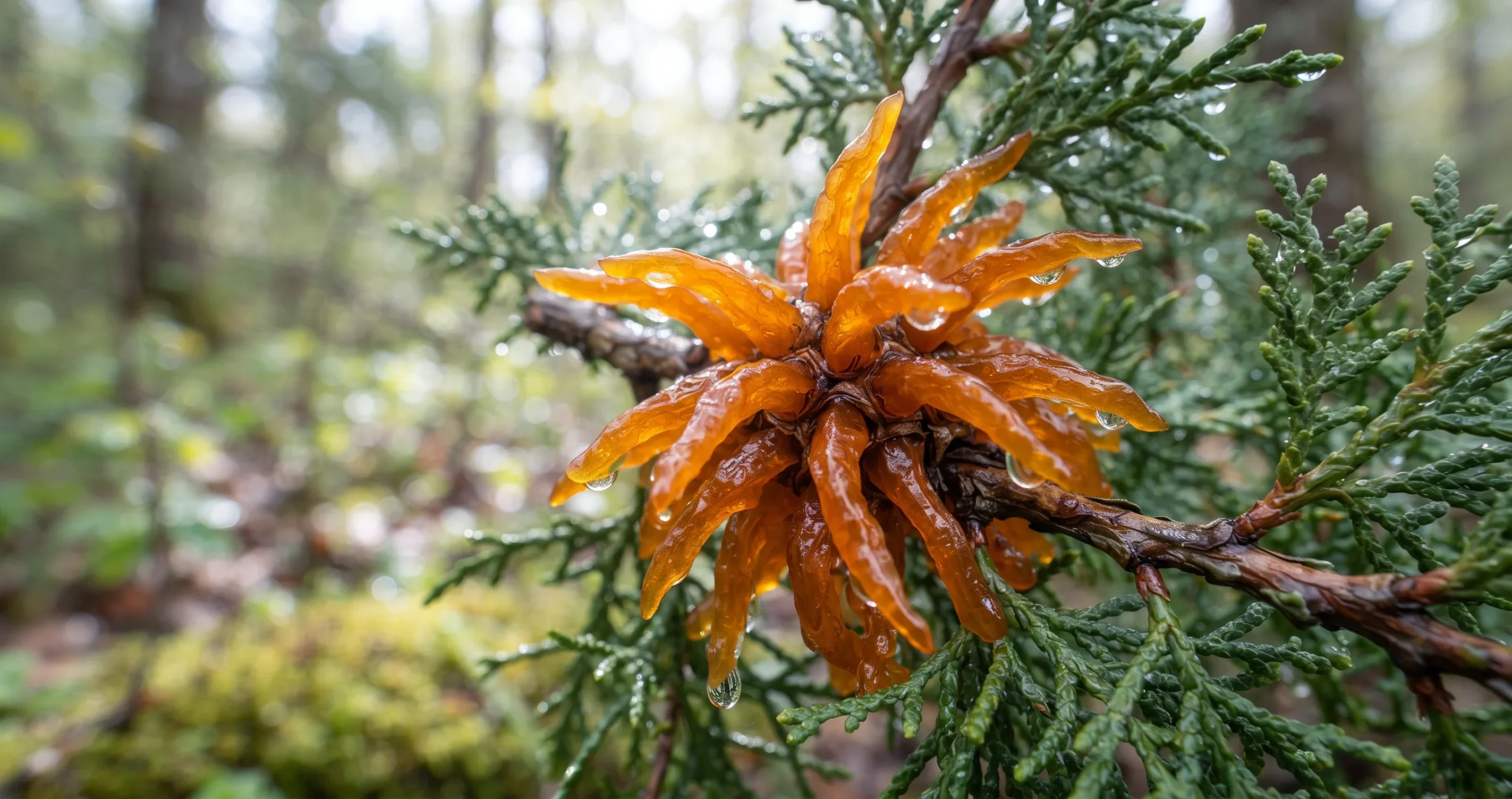
One spring morning, a cedar tree may appear to be growing bright orange, jelly-like tentacles. A few weeks later, nearby apple trees develop yellow-orange spots on their leaves. These strange symptoms are connected by cedar-apple rust, a fungal disease that needs two different kinds of trees to complete its life cycle.
The disease can look alarming, especially when orange growths suddenly appear after rainfall. Fortunately, understanding how the fungus moves between hosts makes prevention much easier.
For gardeners growing apples, crabapples, or eastern red cedars, recognizing the signs early can help protect tree health and reduce unnecessary treatments.
Table of Contents
- What Is Cedar-Apple Rust?
- The Cedar-Apple Rust Life Cycle Explained
- Symptoms on Eastern Red Cedar and Other Junipers
- Symptoms on Apple and Crabapple Trees
- How Serious Is Cedar-Apple Rust?
- How to Prevent Cedar-Apple Rust
- Resistant Apple and Crabapple Varieties
- Fungicide Timing and Safe Application
- Does Removing Cedar Galls Help?
- Cedar-Apple Rust Galls vs. Other Tree Growths
- Frequently Asked Questions
What Is Cedar-Apple Rust?
Cedar-apple rust is a fungal disease caused by Gymnosporangium juniperi-virginianae. It belongs to a group of rust fungi that require two different host plants to complete their development.
Despite its name, the disease does not involve true cedars such as Cedrus species. Its principal evergreen host is eastern red cedar (Juniperus virginiana), which is botanically a juniper.
Other susceptible junipers can also participate in the disease cycle. The alternate hosts are apples (Malus domestica) and certain crabapples (Malus species).
The fungus behaves differently on each host. On junipers, it produces woody galls that develop conspicuous orange spore-producing structures during wet spring weather.
On apples and crabapples, it primarily affects leaves, although fruit and young shoots may also become infected.
The disease is especially familiar in regions where susceptible apple trees grow near eastern red cedars.
The Cedar-Apple Rust Life Cycle Explained
The most fascinating feature of cedar-apple rust is its dependence on two hosts.
The fungus cannot complete its normal life cycle by moving only between apple trees or only between junipers. Instead, it alternates between the two groups, producing different types of spores along the way.
Stage 1: The Fungus Develops Inside Juniper Galls
The cycle begins on a susceptible juniper, where infection gradually develops into a rounded gall on a twig or small branch.
These galls are usually brown and woody, with small depressions visible on their surfaces. They can resemble miniature, irregular wooden balls.
The fungus develops within the gall over an extended period, commonly spanning roughly two growing seasons before the most noticeable spore-producing stage appears.
During winter, the gall may remain relatively inconspicuous.
Stage 2: Orange Gelatinous Horns Appear in Spring
When spring brings rain and suitable temperatures, mature galls absorb moisture and produce striking orange, gelatinous projections.
These structures are called telial horns.
They may look like soft orange fingers or tentacles emerging from the brown gall. During dry weather, the horns shrink and become much less noticeable.
The horns produce spores that germinate and ultimately generate airborne basidiospores capable of infecting susceptible apple and crabapple tissue.
This is the stage that makes the disease so visually recognizable.
Stage 3: Spores Travel to Apple and Crabapple Trees
Wind carries the infective spores from junipers toward susceptible apple and crabapple leaves.
Infection generally occurs during spring when young leaves are present and weather conditions provide enough moisture for fungal development.
The spores do not need to land directly beneath the infected cedar. Wind can transport them considerable distances, making complete separation of the two host types difficult.
Once infection occurs, visible symptoms usually develop after an incubation period rather than appearing immediately.
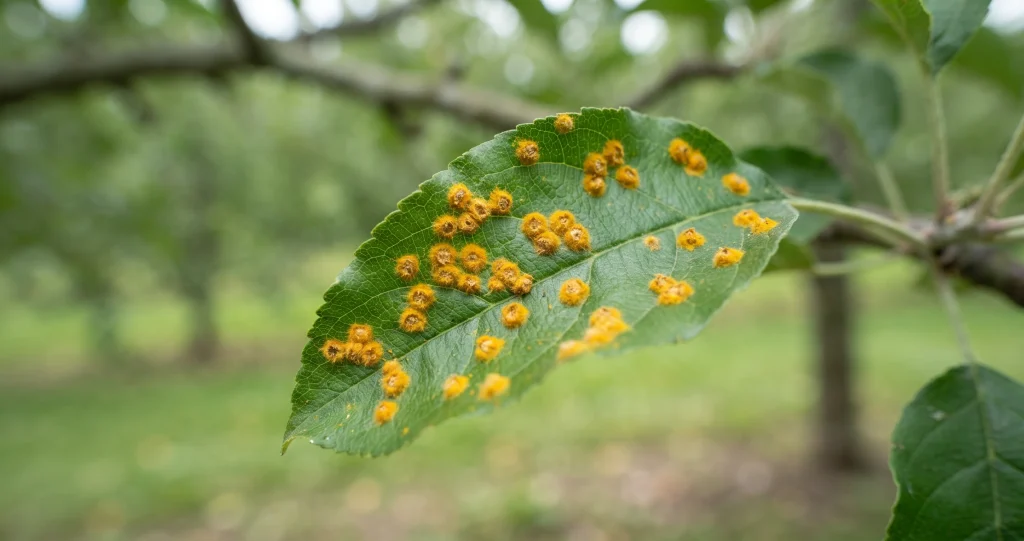
Stage 4: Rust Spots Develop on Apple Leaves
Infected apple leaves develop pale yellow spots that gradually become more orange.
Later, small dark structures may appear within the lesions. As the infection matures, the undersides of affected leaves develop tube-like structures called aecia.
These structures release a different type of spore.
Importantly, these spores are adapted to infect susceptible junipers, not to spread the same disease directly from one apple leaf to another.
Stage 5: Spores Return to Junipers
During the later part of the growing season, spores produced on infected apple or crabapple tissue can reach suitable juniper hosts.
They infect young, susceptible juniper tissues, beginning another period of gall development.
The complete cycle therefore extends across multiple seasons, with the most dramatic orange horns appearing on junipers during spring.
Understanding this sequence explains why treating visible apple leaf spots after they appear cannot reverse the infection that already occurred.
Symptoms on Eastern Red Cedar and Other Junipers
The most recognizable symptoms on eastern red cedar are rounded, brown galls attached to twigs.
Galls vary in size, sometimes reaching roughly an inch or more across. Their surfaces may contain numerous small pits or depressions.
In dry conditions, they can be mistaken for ordinary woody growths.
After spring rainfall, mature galls become dramatically different. Bright orange, jelly-like horns emerge and expand, sometimes giving the gall a flower-like or sea-anemone appearance.
These structures are temporary. They contract as conditions dry and may expand again during subsequent wet periods.
Most infected junipers remain relatively healthy. However, heavy gall development can occasionally contribute to twig damage or dieback.
The presence of a few galls does not necessarily mean the entire tree is seriously threatened.
Symptoms on Apple and Crabapple Trees
On apple and crabapple trees, the disease is most noticeable on leaves.
Early lesions usually appear as small yellow or yellow-orange spots on the upper leaf surface. Over time, they can enlarge and develop a brighter orange appearance.
Some spots show tiny dark dots near their centers. Later, the underside of the leaf may develop raised, tube-like fungal structures.
Infected leaves sometimes become distorted, yellow prematurely, or drop before autumn.
Fruit infections are also possible. Affected apples may develop abnormal yellow-orange lesions and distorted areas that reduce their appearance and marketability.
Young shoots can occasionally show symptoms as well.
The severity varies according to the apple cultivar, infection timing, weather, and disease pressure.
For an identification guide with photographs and regional management advice, see the University of Minnesota Extension’s cedar-apple rust resource.
How Serious Is Cedar-Apple Rust?
Cedar-apple rust is not equally damaging to both hosts.
Eastern red cedars and other susceptible junipers usually tolerate limited infections without major long-term consequences.
Apple trees can experience more significant problems, especially when susceptible cultivars develop numerous infections during wet spring weather.
Heavy disease pressure may cause premature leaf loss, reducing the tree’s ability to produce energy through photosynthesis.
Repeated severe defoliation can weaken growth and affect future productivity. Fruit infections may also reduce the usable harvest.
However, a few isolated leaf spots generally do not justify aggressive treatment.
Home gardeners should consider the extent of symptoms, the tree’s overall vigor, and whether the fruit is being grown primarily for household use or commercial production.
A healthy, established apple tree may tolerate light infection while continuing to grow and produce fruit.
How to Prevent Cedar-Apple Rust
Prevention is more effective than attempting to repair infected leaves after symptoms appear.
Choose Resistant Trees
The most practical long-term strategy is to plant apple and crabapple varieties with documented resistance to cedar-apple rust.
Resistance reduces the likelihood of severe symptoms and may lower the need for repeated fungicide applications.
Because resistance varies among cultivars, local recommendations are especially valuable.
Improve General Tree Health
Healthy apple trees are better equipped to tolerate moderate disease pressure.
Provide appropriate sunlight, maintain consistent soil moisture during dry periods, and avoid unnecessary injury to roots or branches.
Proper pruning can improve canopy structure and air circulation, although it cannot prevent windborne rust spores from arriving.
Avoid excessive nitrogen fertilization that encourages weak, overly vigorous growth.
Monitor Spring Weather
Wet spring conditions favor the development of orange telial horns on juniper galls and infection of susceptible apple leaves.
Begin monitoring nearby junipers before and during apple bud development.
If orange horns appear after rain, the fungus may be releasing spores capable of infecting apple trees under suitable conditions.
This observation helps gardeners understand local disease activity, although it does not replace regional disease forecasts.
Understand the Limits of Tree Separation
Removing susceptible junipers from the immediate vicinity may reduce local inoculum, but it cannot guarantee protection.
Spores can travel from trees beyond a property boundary.
Removing mature native junipers solely because a few galls are present may also eliminate valuable wildlife habitat.
In many home landscapes, choosing resistant apple cultivars is a more practical approach.
Resistant Apple and Crabapple Varieties
Apple varieties differ substantially in their susceptibility to cedar-apple rust.
Several disease-resistant cultivars developed for home orchards have been selected for resistance to multiple apple diseases.
Examples commonly recognized for cedar-apple rust resistance include ‘Liberty’, ‘Freedom’, and ‘Enterprise’.
Their suitability still depends on regional climate, fruit preferences, and other disease concerns.
Resistance is not the same as complete immunity. Disease performance can vary with local conditions and the pathogen population.
Crabapple cultivars also differ widely. Some ornamental selections maintain healthy foliage even where rust pressure is substantial, while susceptible varieties develop conspicuous orange spotting.
Before purchasing, consult regional extension recommendations and confirm the cultivar’s current disease-resistance ratings.
Selecting a suitable tree at planting time can prevent years of recurring frustration.
Fungicide Timing and Safe Application
Fungicides may be useful for susceptible apple trees where cedar-apple rust repeatedly causes significant damage.
However, timing is critical.
Protective fungicides are generally applied during the period when young apple tissue is vulnerable to infection, beginning around early spring growth stages when recommended by local guidance.
The appropriate schedule depends on the product, weather, tree development, and local disease pressure.
Once orange lesions are visible, the original infection is already established. A fungicide cannot restore damaged leaf tissue or erase existing spots.
Always use a product specifically labeled for the intended plant and disease, and follow its instructions for application timing, rates, intervals, protective equipment, and harvest restrictions.
Products approved for ornamental crabapples are not necessarily approved for edible apples.
Avoid spraying during unsuitable weather or when drift could affect neighboring plants, people, or wildlife.
Because pesticide registrations and recommendations vary by location, consult a local cooperative extension service before choosing a treatment.
For many home gardeners, resistant cultivars and routine monitoring provide a better long-term solution than annual spraying.
Does Removing Cedar Galls Help?
Removing visible galls from nearby junipers can reduce the number of local spore-producing structures.
If a small tree has only a few accessible galls, carefully pruning affected twigs before spring spore release may be reasonable.
Use clean pruning tools and avoid removing excessive healthy growth.
However, gall removal has important limitations.
Small galls can be overlooked, and spores may arrive from infected junipers elsewhere in the neighborhood.
The fungus can also be present in developing infections that are not yet obvious.
Consequently, removing galls does not guarantee that nearby apple trees will remain disease-free.
For large junipers or trees with numerous galls, extensive pruning may create more problems than it solves.
Cedar-Apple Rust Galls vs. Other Tree Growths
Not every lump on a juniper branch is caused by cedar-apple rust.
Other rust fungi in the genus Gymnosporangium can produce related symptoms. Cedar-hawthorn rust and cedar-quince rust, for example, have different host relationships and may produce distinctive galls or branch swellings.
Cedar-apple rust typically produces rounded, woody galls that develop orange gelatinous horns during wet spring weather.
Cedar-quince rust more often causes elongated swellings on twigs and branches rather than the classic rounded cedar-apple rust gall.
Insect-related growths, wounds, and abnormal plant tissue can also resemble fungal galls when dry.
The combination of host identity, gall shape, season, and orange spore-producing structures provides stronger evidence than a single photograph of a brown lump.
If the diagnosis remains uncertain, submit clear photographs or a sample to a local plant diagnostic clinic.
Accurate identification matters because different problems require different management approaches.
Frequently Asked Questions
Can cedar-apple rust spread directly from one apple tree to another?
No. The fungus requires an alternate juniper host to complete its normal life cycle. Spores produced on infected apple tissue are adapted to infect susceptible junipers rather than causing new apple infections directly.
Will cedar-apple rust kill my apple tree?
Light infections rarely threaten an otherwise healthy, established tree. Severe, repeated infections can contribute to premature leaf loss, reduced vigor, and lower fruit quality, particularly on highly susceptible varieties.
Should I cut down eastern red cedars near my orchard?
Usually, removing every nearby cedar is neither practical nor necessary. Spores can arrive from farther away, and native junipers provide habitat and food for wildlife. Resistant apple cultivars, monitoring, and targeted management are often more effective.
Can I compost infected apple leaves?
Ordinary garden composting is not a reliable way to destroy every plant pathogen. However, infected apple leaves are not the source of new apple infections in the following spring because the fungus must pass through a susceptible juniper host. Collecting leaves may improve garden tidiness, but it is not a primary cedar-apple rust prevention method.
Conclusion
Cedar-apple rust is one of the more unusual fungal diseases found in North American gardens. Its orange gelatinous horns, spotted apple leaves, and dependence on two unrelated-looking hosts make it both visually striking and biologically fascinating.
The most useful approach is to understand the disease cycle rather than react to every orange spot. Resistant varieties, healthy growing conditions, careful spring monitoring, and correctly timed treatments when necessary can substantially reduce problems.
For gardeners who appreciate both productive fruit trees and native wildlife habitat, thoughtful prevention offers a practical balance. Cedar-apple rust can often be managed without sacrificing every juniper in the landscape.
External Sources
1. Cedar-Apple Rust and Related Rust Diseases. Covers the two-host life cycle, identification, susceptible plants, and management.
University of Minnesota Extension
2. Cedar-Apple Rust. Research-based guidance on symptoms, fungal development, and disease management. Penn State Extension
3. Cedar-Apple Rust. Educational information on host plants, characteristic galls, and prevention. Missouri Botanical Garden