
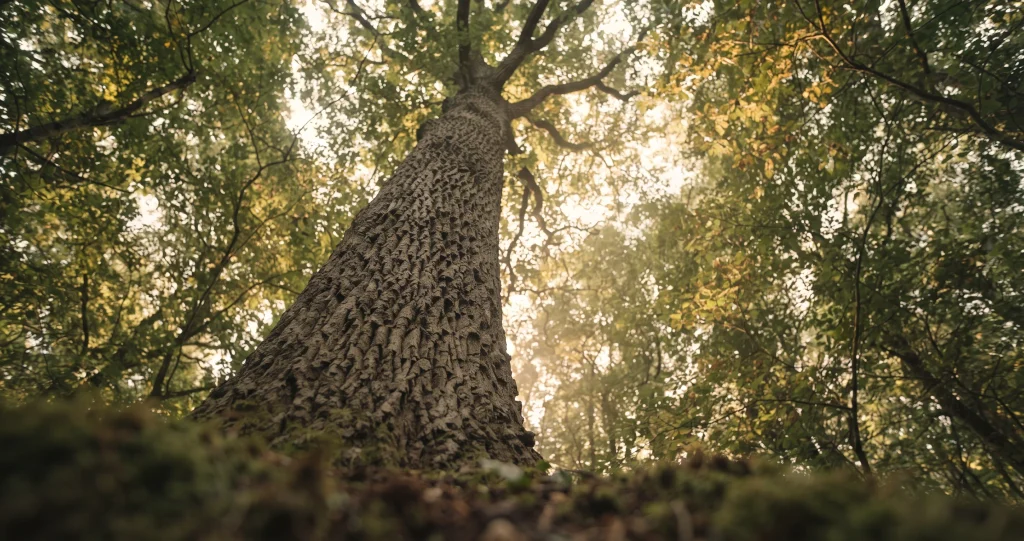
A towering tree can lift water from its roots to leaves high above the ground without a mechanical pump or a beating heart. Understanding how trees move water reveals one of the most remarkable processes in plant biology: transpiration.
Every growing season, water travels through microscopic tubes inside trunks and branches. Much of that water eventually evaporates from leaf surfaces, creating the pulling force that helps move more water upward.
This process also explains why trees sometimes struggle during drought, why evergreens can lose moisture in freezing weather, and why late-fall watering matters in cold climates.
For gardeners, understanding transpiration makes it easier to recognize water stress, protect young trees, and avoid common winter-care mistakes.
Table of Contents
- What Is Transpiration?
- How Trees Move Water From Roots to Leaves
- How Water Reaches the Tops of Tall Trees
- What Drives Transpiration?
- What Happens to Transpiration During Winter?
- Why Evergreens Can Dry Out in Winter
- How and When to Water Evergreens in Late Fall
- Why Mulching Helps Trees Manage Water
- Common Tree-Watering Mistakes
- How to Recognize Water Stress
- Frequently Asked Questions
What Is Transpiration?
Transpiration is the movement of water through a plant and its eventual release into the atmosphere as water vapor.
Trees absorb water from the soil through their root systems. That water moves upward through specialized conducting tissues until it reaches branches and leaves.
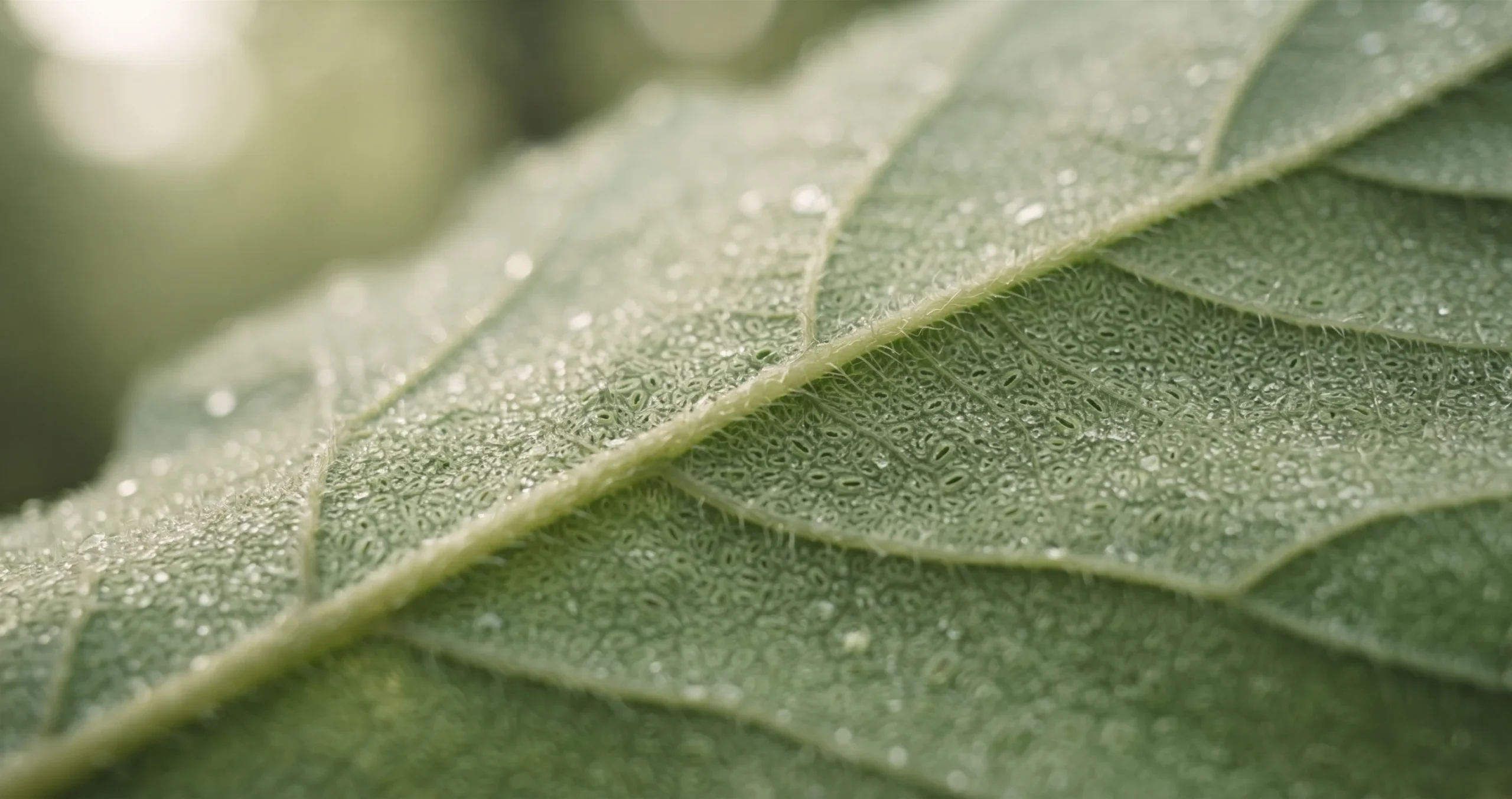
Inside leaves, water evaporates from moist cell surfaces into internal air spaces. Much of this vapor then exits through microscopic pores called stomata.
Stomata are especially important because they allow trees to exchange gases with the atmosphere. Carbon dioxide enters for photosynthesis, while oxygen and water vapor can leave.
Why trees lose water through their leaves
Water loss is closely connected to the process of obtaining carbon dioxide.
When stomata open, carbon dioxide can enter the leaf, but water vapor can also escape.
Trees regulate their stomata to balance photosynthesis against the risk of excessive dehydration.
The amount of water lost depends on temperature, humidity, wind, soil moisture, sunlight, and the species involved.
Transpiration is therefore not simply an accidental leak. It is part of the physical and physiological system that allows trees to grow and function.
How Trees Move Water From Roots to Leaves
The journey begins underground, where fine roots absorb water from spaces between soil particles.
Water moves through root tissues and eventually enters the xylem, the plant’s main water-conducting tissue.
Xylem: The tree’s internal plumbing
Xylem consists of specialized cells that form pathways for water transport.
In many flowering trees, vessel elements connect to create long conducting channels. Conifers primarily use narrower conducting cells called tracheids.
These cells are dead at maturity, but their reinforced walls help them withstand the forces associated with water transport.
Xylem also provides structural support, making it an essential component of wood.
Water moves along a pressure gradient
Water does not travel upward because tree roots continuously pump it to the crown.
Instead, movement is largely driven by differences in water potential between the soil, roots, stems, leaves, and atmosphere.
Water tends to move from regions of higher water potential toward regions of lower water potential.
During active transpiration, evaporation from leaves helps establish the gradient that draws water upward through the xylem.
The role of root pressure
Some plants can generate positive pressure in their roots, especially under particular soil and atmospheric conditions.
Root pressure can contribute to sap movement and may explain why certain plants release droplets from leaf edges.
However, it is not sufficient to explain water transport to the crowns of very tall trees.
The principal explanation for upward water movement in tall trees is the cohesion-tension mechanism.
How Water Reaches the Tops of Tall Trees
The most fascinating part of how trees move water is that the process can work over enormous vertical distances.
Trees do not need a series of internal pumps positioned along the trunk.
Instead, water molecules remain connected within the xylem, allowing tension generated near the leaves to influence the water column below.
Cohesion: Water molecules stick together
Water molecules attract one another through hydrogen bonding.
This attraction is called cohesion.
Inside xylem, cohesion helps maintain continuous columns of water that can transmit tension through the conducting system.
Adhesion: Water interacts with xylem walls
Water also interacts with the surfaces of xylem cells.
This attraction, called adhesion, contributes to the physical behavior of water inside narrow conducting pathways.
However, adhesion and capillary action alone cannot explain the ascent of water in the world’s tallest trees.
Transpiration creates the pull
As water evaporates from moist surfaces inside leaves, it creates tension in the connected water transport system.
That tension helps pull additional water upward from the roots.
The mechanism is known as the cohesion-tension theory, and it provides the central explanation for long-distance water transport in trees.
The taller the tree, the greater the physical challenges involved in moving water upward. Gravity, friction within the xylem, and the risk of air entering conducting pathways all influence water transport.
Why air bubbles matter
When water in xylem experiences strong tension, the conducting system can become vulnerable to cavitation.
Cavitation involves the formation of gas-filled spaces that can interrupt water transport. The resulting blockage is called an embolism.
Trees have evolved anatomical and physiological strategies that help limit these problems.
Different species vary in their resistance to drought-related hydraulic failure, which helps explain why some trees tolerate dry conditions better than others.
What Drives Transpiration?
Several environmental factors influence the rate at which trees lose water.
Sunlight
Sunlight supports photosynthesis and often encourages stomatal opening when water is available.
It can also warm leaves, affecting evaporation.
However, extremely bright, hot conditions may cause stomata to close if the tree experiences water stress.
Temperature
Warm conditions generally increase the atmosphere’s capacity to hold water vapor.
When other factors remain favorable, this can increase transpiration.
Temperature also influences tree metabolism and seasonal activity.
Humidity
Dry air usually creates a stronger gradient for water vapor to leave the leaf.
Humid air reduces that gradient.
This is why trees can lose moisture rapidly during hot, dry weather, particularly when wind is also present.
Wind
Wind removes humid air from around leaf surfaces.
Moderate airflow can increase transpiration, while strong drying winds may contribute to water stress.
The effect depends on temperature, humidity, stomatal behavior, and the tree’s water supply.
Soil moisture
Roots need access to available soil water to replace moisture lost through leaves.
When soil becomes excessively dry, trees may close their stomata to conserve water.
This reduces water loss but can also restrict carbon dioxide uptake and photosynthesis.
What Happens to Transpiration During Winter?
Winter changes how trees move water because temperature, sunlight, soil conditions, and leaf activity all shift.
Deciduous trees typically lose their leaves in autumn, greatly reducing transpiration through foliage.
However, they do not become completely inactive in every biological sense.
Living tissues continue to function at reduced rates when conditions permit, and water movement may still occur.
Deciduous trees conserve water by losing leaves
Dropping leaves reduces the surface area available for water loss.
This is especially useful when frozen soil limits the ability of roots to absorb moisture.
Leaf loss also reduces exposure to winter wind and snow loading.
Evergreens retain their foliage
Evergreen trees keep needles or leaves through winter, although individual leaves are eventually replaced.
Many evergreen species have adaptations that reduce water loss, including protective cuticles and stomatal structures.
Their stomata often remain largely closed during cold conditions.
Nevertheless, evergreens can still lose water through their foliage, particularly during sunny, windy periods.
That creates an important winter gardening problem.
Why Evergreens Can Dry Out in Winter
Winter drying, sometimes called winter desiccation, occurs when foliage loses more moisture than roots can replace.
This is especially likely when the ground is frozen or soil water is otherwise unavailable.
Frozen soil limits water uptake
Tree roots generally absorb little or no water from deeply frozen soil.
If needles continue losing moisture while the root zone remains frozen, the tree may experience dehydration.
Young evergreens are particularly vulnerable because their root systems are still establishing.
Sun and wind increase the risk
Bright winter sunlight can warm foliage and increase the potential for water loss.
Wind can remove humid air surrounding needles and leaves.
South- and southwest-facing foliage may experience greater exposure, although damage patterns depend on local conditions.
Winter burn symptoms
Affected evergreen needles may turn bronze, yellow-brown, or reddish-brown.
Damage often becomes most noticeable toward late winter or early spring.
However, discoloration can also result from salt exposure, disease, root damage, or other environmental stresses.
Accurate diagnosis requires considering the tree species, weather, soil conditions, and location of symptoms.
How and When to Water Evergreens in Late Fall
Understanding how trees move water helps explain why late-fall watering is an important part of winter preparation.
The objective is to enter winter with adequately moist soil rather than a dry root zone.
Water before the ground freezes
In cold climates, water evergreen trees during dry autumn periods while the soil remains unfrozen.
This is particularly important for recently planted conifers, broadleaf evergreens, and shrubs with limited root systems.
The ideal timing depends on rainfall, soil conditions, and local weather rather than a fixed date.
Water deeply, not constantly
Apply water slowly enough to soak into the root zone.
The goal is to moisten the soil where active roots are growing, not simply wet the surface.
Check moisture several inches below the surface before watering again.
Avoid keeping the soil continuously saturated because waterlogged conditions can restrict oxygen availability to roots.
Remember newly planted trees
Recently planted trees often need closer monitoring than established specimens.
Their roots initially occupy a relatively limited volume of soil.
Even a tree planted in autumn may require supplemental water when rainfall is insufficient.
Water during suitable winter thaws
In some climates, supplemental watering during prolonged winter dry spells may be helpful.
Only water when the soil is thawed enough to absorb moisture and temperatures are suitable.
Avoid applying water to frozen ground, where it may run off or create hazardous ice.
Why Mulching Helps Trees Manage Water
Mulch is one of the simplest ways to improve moisture conditions around trees.
An organic mulch layer helps reduce evaporation from the soil surface and moderates soil temperature changes.
Choose suitable mulch
Shredded leaves, wood chips, and other appropriate organic materials can work well.
Apply a relatively even layer over the root zone, following recommendations for the tree and site.
A layer roughly 2–3 inches deep is commonly appropriate for established landscape trees, although soil conditions and mulch type matter.
Keep mulch away from the trunk
Avoid piling mulch directly against the bark.
Excessive moisture around the trunk can contribute to bark deterioration and other problems.
Instead, leave a small clear space around the trunk and root flare.
Mulch supports roots, not just foliage
Healthy roots are essential for replacing water lost through transpiration.
By reducing soil moisture fluctuations and moderating temperature changes, mulch can support root function.
However, mulch cannot compensate for prolonged drought without adequate watering.
Common Tree-Watering Mistakes
Watering only the trunk
Absorbing roots often extend well beyond the immediate base of a tree.
Concentrating all water against the trunk may leave much of the active root zone dry.
Apply water over an appropriate area of soil, particularly around the root ball of newly planted trees.
Overwatering
Too much water can displace oxygen from soil pores.
Roots need oxygen for respiration, so prolonged saturation can damage them even when water is abundant.
Check soil moisture rather than watering automatically on a fixed schedule.
Ignoring winter drought
Gardeners sometimes assume that cold weather eliminates the need for water.
Evergreens may continue losing moisture during winter, especially when conditions are sunny and windy.
Adequate autumn soil moisture helps reduce this risk.
Using mulch incorrectly
A thick mound of mulch against the trunk can trap moisture and conceal bark problems.
Spread mulch outward rather than piling it upward.
How to Recognize Water Stress
Water stress can appear differently depending on the species and season.
During summer, symptoms may include wilting, leaf curling, premature leaf drop, or browning along leaf margins.
Evergreens may show needle discoloration, browning at shoot tips, or branch decline.
However, these symptoms are not unique to drought.
Root disease, poor drainage, transplant shock, salt exposure, and pests can produce similar effects.
Before increasing irrigation, check soil moisture and inspect the tree’s growing conditions.
Understanding how trees move water is most useful when combined with careful observation rather than relying on leaf appearance alone.
Frequently Asked Questions
Do trees use energy to pump water upward?
Most long-distance upward water movement in trees is driven by physical forces associated with transpiration and water potential gradients. Trees use metabolic energy for many processes, including regulating stomata and maintaining living cells, but they do not operate a mechanical pump that lifts water through the trunk.
Can trees move water when their leaves are gone?
Yes, water movement can still occur in leafless trees under suitable conditions, although transpiration is greatly reduced. Roots, stems, and living tissues may continue exchanging water as environmental conditions allow.
Why do evergreen needles turn brown in winter?
Winter browning can result from moisture loss when roots cannot replace water, particularly during frozen soil conditions. However, salt injury, disease, and other stresses can also cause discoloration. The pattern of damage and local conditions help determine the cause.
Conclusion
Understanding how trees move water reveals an elegant natural system powered largely by evaporation, molecular cohesion, and differences in water potential.
Water enters through roots, travels through xylem, and reaches leaves where transpiration helps maintain the upward pull.
In winter, this process slows, but evergreen foliage may continue losing moisture when roots have limited access to water.
For gardeners, the practical lessons are clear: monitor soil moisture, water evergreens during dry autumn weather, mulch appropriately, and recognize that winter browning can have several causes.
The same process that allows a towering tree to supply its highest leaves also explains why careful seasonal watering can make such a difference in the garden.
External Sources
1. Evapotranspiration and the Water Cycle
Support the scientific explanation of transpiration, water movement through plants, and the return of water vapor to the atmosphere. USGS — Evapotranspiration and the Water Cycle
2. Protecting Trees and Shrubs in Winter
Explain winter drying, vulnerable evergreens, late-fall watering, mulching, and protection from cold-weather damage. University of Minnesota — Winter Tree Protection