
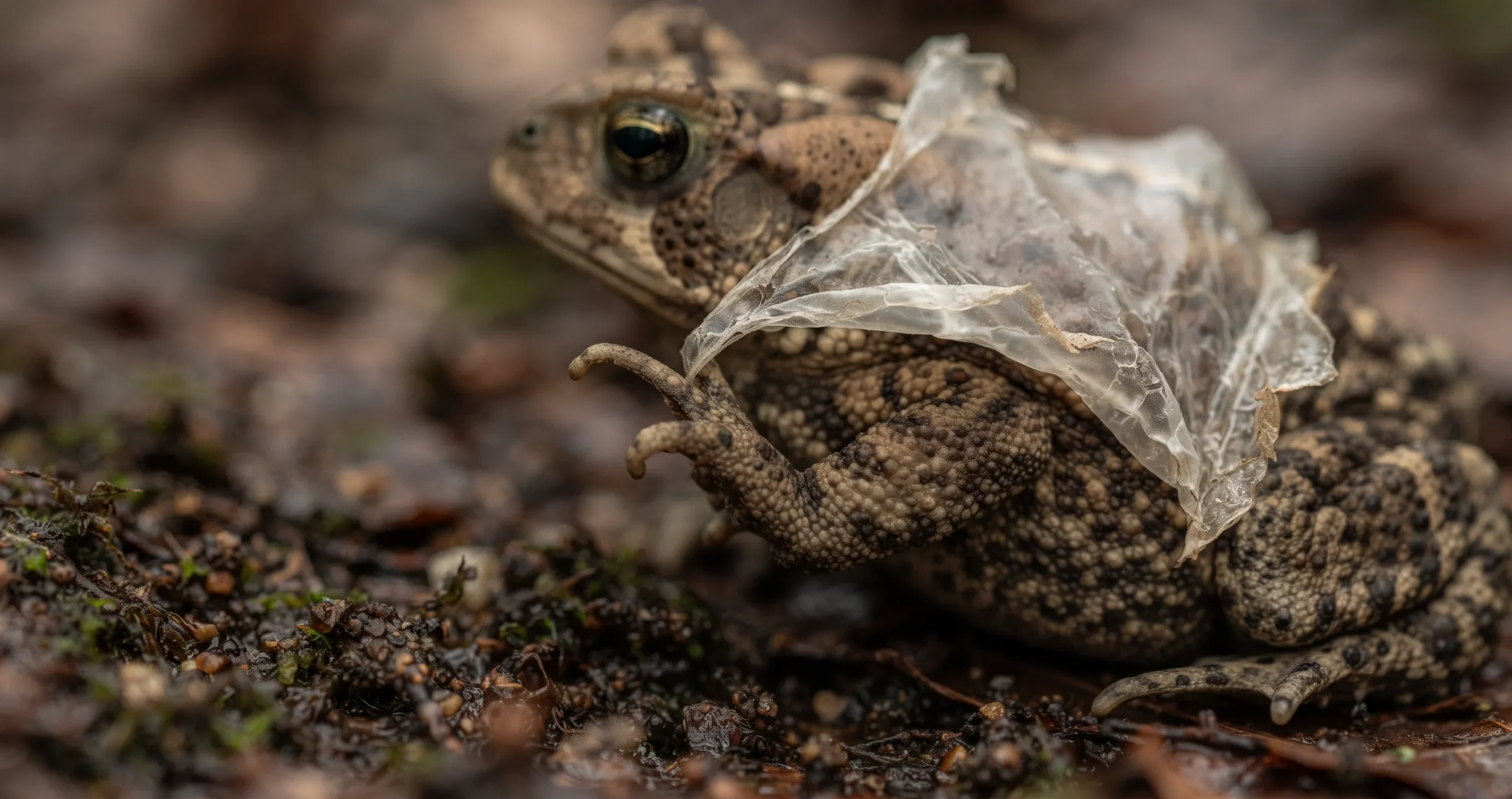
A toad sits quietly beneath a garden plant, then suddenly begins twisting its body, rubbing its face, and making unusual swallowing movements. Within minutes, something remarkable happens: the animal appears to eat its own skin. Understanding why toads eat their skin reveals one of the most fascinating aspects of amphibian biology.
Unlike humans, who continuously shed tiny flakes of dead skin, toads periodically remove an outer layer of skin in a more coordinated process. They often swallow the loosened material instead of leaving it behind.
Scientists understand how this shedding process works, but some explanations for why amphibians consume the discarded skin remain hypotheses. Nutrient recovery is a plausible benefit, while reducing detectable traces that might attract predators is another possibility that requires more evidence.
For gardeners, this unusual behavior is also a reminder that toads are living parts of the backyard ecosystem, not simply creatures that appear after rainfall.
Table of Contents
- How Toads Shed Their Skin
- Why Toads Eat Their Skin
- How Often Do Toads and Frogs Shed?
- What Happens During the Shedding Process?
- Differences Between Toads and Frogs
- Is Eating Shed Skin Normal?
- What Toads Eat and How They Help Gardens
- How to Create a Toad-Friendly Garden Corner
- Common Myths About Toad Skin
- Frequently Asked Questions
How Toads Shed Their Skin
Toads belong to the amphibian order Anura, which also includes frogs. Their skin is a living, specialized organ involved in water balance, chemical defense, and, to varying degrees, gas exchange.
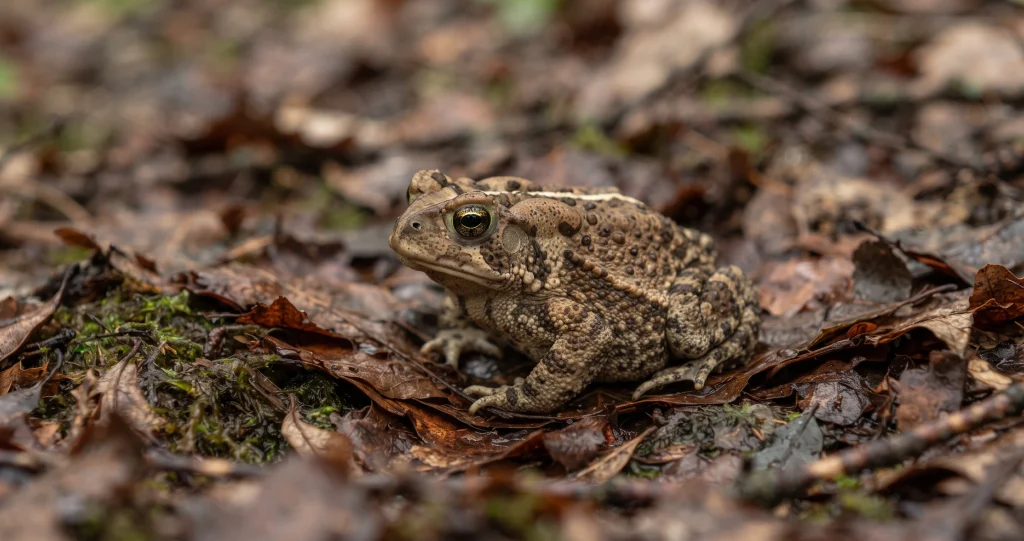
The outermost layer of the epidermis gradually ages and is replaced by newer cells developing beneath it. During shedding, the older outer layer separates from the skin underneath.
This process is called ecdysis. Although the term is also used for molting in other animals, amphibian shedding differs from the dramatic removal of an insect’s exoskeleton.
Why amphibian skin needs renewal
Amphibian skin is continually exposed to moisture, soil particles, microorganisms, and environmental substances.
Replacing its outer layer helps maintain the skin’s surface. Shedding may also remove some organisms attached to the old layer, although it does not guarantee protection against disease.
Toad skin contains mucus-producing glands that help maintain suitable surface conditions. Many toads also possess specialized defensive glands that produce substances unpleasant or harmful to potential predators.
These adaptations make amphibian skin very different from the dry, heavily keratinized skin of most reptiles.
Why the old skin is difficult to see
A toad’s shed skin is often thin, translucent, and flexible.
Rather than dropping off in large, obvious pieces, it may remain close to the animal’s body as it loosens.
Because toads commonly consume the material during the process, a gardener may never find evidence that shedding occurred.
This explains why the behavior can seem surprising even to people who frequently observe frogs and toads outdoors.
Why Toads Eat Their Skin
The question of why toads eat their skin has several possible biological explanations.
The behavior itself is well documented, but the relative importance of its proposed benefits has not been established for every species.
Recovering nutrients from old skin
Amphibian skin contains proteins and other biological materials.
Swallowing the discarded layer may allow an animal to recover some nutrients rather than losing them to the environment.
This explanation is biologically plausible, especially for animals that must carefully balance energy intake and expenditure.
However, the amount of nutrition recovered through skin consumption varies or remains poorly quantified across species. It would be misleading to claim that scientists have established a precise nutritional benefit for all toads.
Reducing traces left for predators
Another proposed explanation is that consuming shed skin may reduce the visible or chemical evidence left behind after molting.
A discarded skin fragment could potentially provide information to predators or other animals capable of detecting chemical cues.
Eating the material removes that fragment from the immediate surroundings.
Nevertheless, direct evidence showing that this behavior measurably reduces predation in wild toads is limited. Predator avoidance should therefore be presented as a hypothesis, not a proven universal reason.
A convenient part of the shedding process
There may also be a simpler explanation.
The old skin often moves toward the mouth as the toad rubs, stretches, and pulls it away from the body. Swallowing it may be an efficient way to dispose of material already being gathered near the head.
These explanations are not mutually exclusive. A behavior can have several possible benefits, and its evolutionary history may be more complicated than any single explanation suggests.
How Often Do Toads and Frogs Shed?
There is no universal shedding schedule that applies to every frog and toad.
Frequency varies with species, age, temperature, environmental conditions, and individual physiology.
Some frogs have been observed shedding frequently, sometimes around daily or every few days. Other species may shed at longer intervals.
Temperature and activity matter
Amphibians are ectothermic animals, meaning their body temperatures are strongly influenced by their surroundings.
Temperature affects many physiological processes, including skin renewal.
During periods of reduced activity or cooler conditions, shedding patterns may differ from those observed in warm, active animals.
Humidity and access to suitable moisture are also important because amphibian skin must maintain its normal function.
Why exact schedules are unreliable
A claim that all toads shed once a week or all frogs shed every day would be inaccurate.
Researchers studying particular species may document specific intervals under controlled conditions, but those results should not automatically be applied to unrelated amphibians.
Shedding can also happen when people are not watching.
For practical backyard observation, the most reliable conclusion is that skin renewal is normal and recurring, while its timing depends on the animal and its environment.
What Happens During the Shedding Process?
The process can look dramatic, but ordinary shedding is usually a natural part of amphibian life.
A toad may become relatively still before beginning a sequence of movements that loosen the old outer layer.
Step 1: The outer layer separates
As a new epidermal surface develops beneath the old one, the outer layer begins to detach.
The separation may be difficult to see because the skin is thin and closely follows the contours of the body.
Step 2: The toad stretches and rubs
The animal may arch its back, flex its body, or use its limbs to loosen the skin.
Its front and hind feet can help move the old layer forward.
These movements sometimes make the toad appear uncomfortable, even when shedding is proceeding normally.
Step 3: The skin gathers near the mouth
As the loosened layer moves forward, it may collect around the head.
The toad uses mouth and body movements to take in the material.
To an observer, this can resemble repeated yawning, gulping, or chewing.
Step 4: The toad swallows the skin
The discarded layer is usually swallowed rather than left on the ground.
Afterward, the animal may resume normal behavior, such as resting, moving through vegetation, or hunting small invertebrates.
Differences Between Toads and Frogs
The distinction between frogs and toads is useful in everyday conversation, although it is not a perfect scientific division.
True toads belong to the family Bufonidae, while many animals commonly called frogs belong to other families.
Both are members of the order Anura.
Skin texture and appearance
Many familiar toads have relatively dry-looking, bumpy skin.
Numerous frogs have smoother, more moist-looking skin, although exceptions exist.
These differences reflect adaptations to different habitats and lifestyles rather than a rule that all frogs are smooth and all toads are warty.
Movement and habitat
Many toads have comparatively short hind legs and spend substantial time walking or making short hops.
Some frogs have longer hind legs suited to powerful jumping or swimming.
However, both groups include species with diverse movement patterns and habitat preferences.
Do both groups eat shed skin?
Yes. Skin consumption has been documented in frogs and toads.
The general process is similar, although shedding frequency and specific movements can differ among species.
The explanation of why toads eat their skin therefore overlaps with broader research into amphibian skin renewal.
Is Eating Shed Skin Normal?
For a healthy toad, consuming its shed skin is generally normal behavior.
It is not automatically a sign of hunger, illness, or nutritional deficiency.
However, problems can arise when amphibians experience abnormal shedding, skin damage, or disease.
When shedding may indicate a problem
Warning signs include persistent abnormal skin changes, unusual redness, ulcers, severe lethargy, loss of normal coordination, or repeated difficulty removing skin.
These symptoms can have many causes, including environmental stress and infectious disease.
One important amphibian pathogen is the chytrid fungus Batrachochytrium dendrobatidis, which can disrupt normal skin function in susceptible species.
Shedding behavior alone cannot diagnose chytridiomycosis or any other disease.
Why handling should be limited
Amphibian skin is sensitive to substances transferred from human hands.
Soap residues, sunscreen, insect repellent, and other chemicals may cause harm.
The safest approach is generally to observe wild toads without touching them, particularly during shedding.
What Toads Eat and How They Help Gardens
Toads are opportunistic predators that consume a variety of small animals.
Depending on the species and available prey, their diets may include beetles, ants, flies, caterpillars, spiders, worms, and slugs.
Natural participants in garden food webs
A toad hunting beneath vegetables or shrubs may consume organisms that gardeners consider pests.
This makes toads useful members of a diverse garden ecosystem.
However, they also eat harmless and beneficial invertebrates. They are generalist predators rather than specialized pest-control agents.
Their ecological value is broader than simply reducing the number of slugs or insects.
Toads are prey, too
Toads also provide food for certain snakes, birds, and mammals, although their defensive skin secretions discourage many predators.
This predator-prey relationship helps connect small garden animals to larger wildlife communities.
A garden supporting toads is often one that provides shelter, moisture, and a varied supply of invertebrates.
Understanding why toads eat their skin adds another layer to this ecological picture: even the animal’s outer covering is part of its ongoing biological maintenance.
How to Create a Toad-Friendly Garden Corner
A toad-friendly garden does not require an elaborate pond or expensive wildlife structure.
A small sheltered area with appropriate moisture, vegetation, and minimal chemical disturbance can provide valuable habitat.
Provide shade and shelter
Leave a section of the garden with dense plants, leaf litter, or naturally positioned stones.
A partially buried clay flowerpot placed on its side can also create a simple shelter.
Make sure the opening remains accessible and the structure cannot collapse or trap the animal.
Maintain suitable moisture
Toads need access to conditions that prevent excessive drying.
Mulch, groundcover, and shaded soil can help retain moisture.
A shallow water dish with gently sloping sides may be useful in some gardens, but it must be cleaned regularly and positioned so animals can enter and leave safely.
Reduce pesticide use
Amphibians can be vulnerable to environmental contaminants because their skin is permeable and their life cycles often involve both land and water.
Avoid routine applications of insecticides, herbicides, and other garden chemicals where toads shelter or hunt.
Use preventive gardening practices, hand removal of pests when appropriate, and targeted nonchemical methods.
Reducing pesticide use also helps preserve the invertebrates that toads rely on for food.
Preserve natural hiding places
Avoid removing every fallen leaf, log, or patch of groundcover.
Small sheltered spaces provide daytime refuges and can help protect animals from temperature extremes.
Common Myths About Toad Skin
Myth: Touching a toad causes warts
Human warts are caused by certain human papillomaviruses, not by touching toads.
The bumps on a toad’s skin are natural anatomical features, including glands.
Nevertheless, handling wild amphibians should be minimized for their protection.
Myth: Toads shed only when they are sick
Healthy toads shed their outer skin regularly.
Shedding is a normal biological process, although unusual skin symptoms can sometimes indicate health problems.
Myth: Toads eat their skin because they are starving
Skin consumption is a routine behavior in many amphibians.
It should not be interpreted as evidence of starvation without additional information.
Myth: All toads shed on the same schedule
Shedding frequency varies among species and environmental conditions.
There is no reliable universal timetable for every toad.
Frequently Asked Questions
Does it hurt a toad to shed its skin?
Normal shedding is not generally considered an injury. The animal removes an outer layer that is being replaced by newer skin. However, abnormal shedding associated with infection or environmental stress may require veterinary attention in captive amphibians.
Can you see a toad eating its skin?
Yes, although the process may be easy to miss. A shedding toad can make stretching, rubbing, and swallowing movements as it pulls the thin outer layer toward its mouth. The material is often swallowed quickly.
Should I help a wild toad remove its skin?
Usually not. Pulling at the skin can injure delicate tissue, and handling may expose the animal to contaminants. Observe from a distance and allow normal shedding to proceed. If an amphibian appears seriously injured or ill, contact an appropriate wildlife professional rather than attempting treatment.
Conclusion
The answer to why toads eat their skin begins with a normal process called ecdysis. Toads periodically replace the outer layer of their skin, loosen it through body and limb movements, and often swallow the discarded material.
Recovering nutrients is one plausible benefit, while reducing traces that might attract predators remains a less-established explanation. Scientists continue to investigate how shedding affects amphibian physiology, health, and survival.
For gardeners, the best response is simple: appreciate the behavior, avoid unnecessary handling, reduce pesticide exposure, and provide shaded, sheltered habitat.
A quiet corner of the garden may reveal one of nature’s most unusual recycling behaviors.
External Sources
1. Frogs Can Shed Their Skin Every Day—or Every 20 Days
Explain why frogs and toads have different shedding schedules. Phylogenetic Investigation of Skin Sloughing Rates in Frogs
2. Shedding Can Remove Microbes From Frog Skin
Add a section explaining how shedding influences the microscopic organisms living on amphibian skin. First Line of Defence: Skin Shedding and Microbes
3. Sick Frogs May Stop Eating Their Shed Skin
Explain the difference between normal shedding and shedding associated with disease. Skin Sloughing Rate Increases With Chytrid Infection