
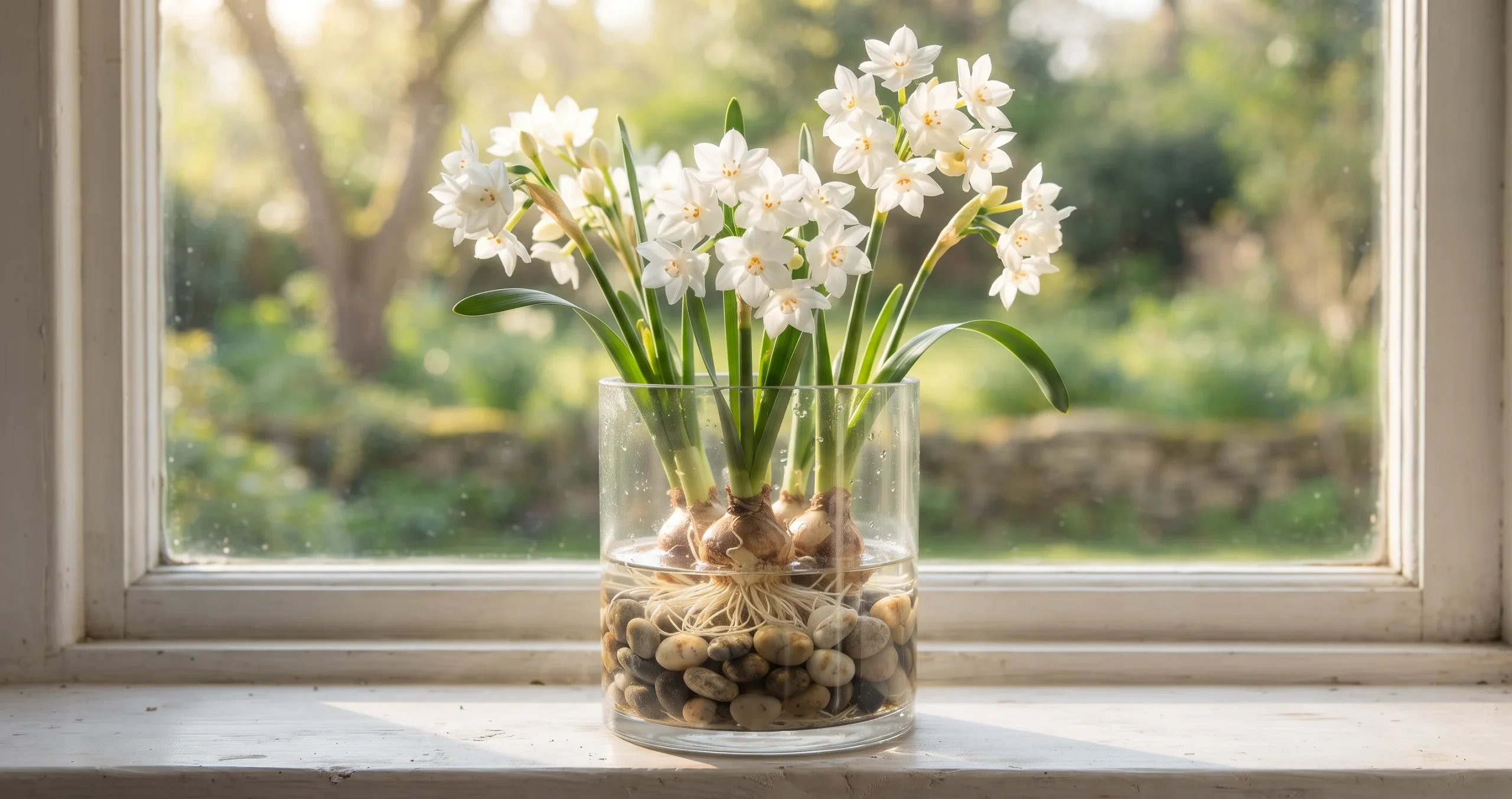
A handful of ordinary-looking bulbs can transform a winter windowsill into a display of delicate white flowers. While much of the outdoor garden is dormant, paperwhites can produce clusters of star-shaped blooms without waiting for spring.
Learning to grow paperwhites indoors is surprisingly straightforward. Unlike many spring-flowering bulbs, paperwhites generally need no artificial chilling period before flowering. With a suitable container, a little water, and bright light, you can enjoy their flowers in roughly three to six weeks.
Their elegant appearance makes them popular for winter decorating, but successful growing depends on a few details, especially moisture, temperature, and stem support.
Table of Contents
- What Are Paperwhites?
- Why Paperwhites Are Perfect for Winter Indoor Gardening
- How to Grow Paperwhites Indoors in Pebbles and Water
- How to Plant Paperwhites in Potting Soil
- How Long Do Paperwhites Take to Bloom?
- The Best Light and Temperature for Paperwhites
- How to Keep Paperwhite Stems From Flopping
- Why Paperwhites Have Such a Strong Fragrance
- Paperwhite Safety Around Cats, Dogs, and Children
- What to Do With Paperwhites After Blooming
- Common Paperwhite Growing Mistakes and Myths
- In Your Own Home: Creating a Winter Flower Display
- Frequently Asked Questions
What Are Paperwhites?
Paperwhites are a type of narcissus, most commonly associated with Narcissus papyraceus and related cultivars sold for indoor forcing.
They belong to the same genus as familiar garden daffodils, although their growing requirements are different.
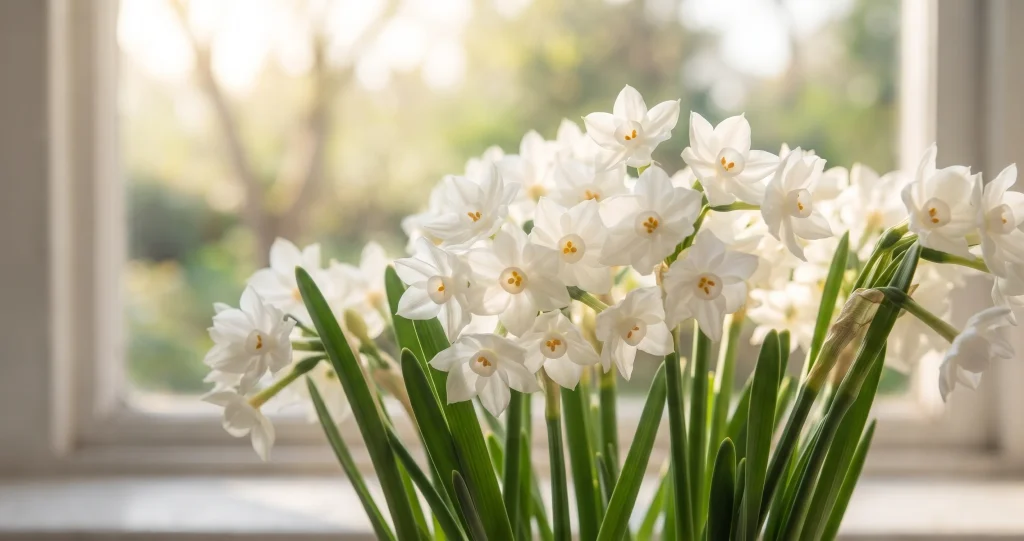
Paperwhites produce clusters of small white flowers on upright green stems. Their narrow leaves and delicate blooms create a fresh, elegant appearance during the colder months.
One of their most distinctive characteristics is their fragrance. Some varieties produce a particularly strong scent that can fill a room.
Why They Bloom Without Chilling
Many spring-flowering bulbs, including numerous tulips and daffodils, require an extended period of cold temperatures before they flower properly.
Paperwhites are different.
These narcissus varieties originate from regions with relatively mild winters, and commercially prepared bulbs can generally flower indoors without a prolonged chilling treatment.
That makes them especially convenient for winter gardening.
Instead of refrigerating the bulbs for weeks, you can plant them soon after purchase and allow them to grow under suitable indoor conditions.
Why Paperwhites Are Perfect for Winter Indoor Gardening
Paperwhites offer an easy way to enjoy living flowers when outdoor gardening opportunities may be limited.
They grow well in relatively small containers and can be displayed on windowsills, shelves, and tables with adequate natural light.
Their bulbs already contain stored energy and nutrients that support the initial growth and flowering process.
This explains why paperwhites can bloom in containers filled with decorative stones and water rather than traditional potting soil.
A Simple Project for Small Spaces
You do not need a greenhouse or a large indoor garden to grow paperwhites indoors.
A shallow bowl, clean pebbles, and several healthy bulbs are enough to begin.
The project also provides an opportunity to observe root growth, leaf development, and flower formation over several weeks.
Because the bulbs are relatively quick to flower, they are particularly appealing for seasonal displays.
How to Grow Paperwhites Indoors in Pebbles and Water
Growing paperwhites in pebbles is one of the most popular methods because it combines practical growing conditions with an attractive display.
A clear glass bowl allows you to see the roots developing among the stones, while a ceramic container creates a more traditional arrangement.
Step 1: Choose Healthy Bulbs
Select firm, plump paperwhite bulbs without soft spots, mold, or obvious damage.
Larger, healthy bulbs often have greater stored reserves, although flowering performance also depends on cultivar and bulb quality.
Avoid bulbs that feel unusually soft or have a strong rotten odor.
Step 2: Prepare the Container
Choose a shallow, stable container without drainage holes.
Add approximately two to three inches of clean decorative pebbles, gravel, or small stones.
The stones provide physical support for the bulbs and help keep them upright as roots develop.
A wider, heavier container is often more stable than a narrow vase once the stems become tall.
Step 3: Position the Bulbs
Place the bulbs on top of the pebbles with their pointed ends facing upward.
Arrange them close together for a full floral display, but avoid forcing them tightly against one another.
The broad, flattened base of each bulb should rest securely on the stones.
Add a few more pebbles around the lower portions if additional support is needed.
Step 4: Add Water Carefully
Pour clean water into the container until the water level reaches just below the bases of the bulbs.
The bulbs themselves should not sit submerged in water.
Roots will grow downward toward the moisture and eventually extend into the water among the pebbles.
Keeping the bulb bases above the water helps reduce the risk of rot.
Check the water level regularly, especially during the early rooting period.
Step 5: Encourage Root Growth
Place the container in a cool location with bright, indirect light while roots begin developing.
As the bulbs establish roots and green shoots appear, move them into a brighter position.
Avoid placing the container directly beside a heating vent or radiator.
Excessively warm conditions can encourage rapid, weak growth.
Step 6: Maintain the Display
Continue checking the water level throughout growth.
Keep the roots supplied with moisture while maintaining the waterline below the bulb bases.
Replace stagnant or unpleasant-smelling water when necessary.
As flower buds develop, rotate the container occasionally to encourage more even growth toward the light.
How to Plant Paperwhites in Potting Soil
Paperwhites can also be grown in ordinary potting mix.
This method is useful when you prefer a traditional flowerpot or want the growing medium to provide more support for the stems.
Choosing the Right Pot
Select a container with drainage holes and enough depth to accommodate the roots.
Use a well-draining indoor potting mix rather than dense garden soil.
A pot that is too lightweight may become unstable when the foliage and flower stems reach their full height.
Planting the Bulbs
Fill the lower portion of the pot with slightly moist potting mix.
Position the bulbs upright, with their pointed tips facing upward.
Add more mix around them, leaving the upper tips or shoulders exposed.
Gently firm the mix to stabilize the bulbs without compacting it excessively.
Watering Soil-Grown Paperwhites
Water thoroughly after planting and allow excess water to drain away.
During growth, keep the potting mix lightly moist rather than constantly saturated.
Check moisture with your finger before watering again.
Standing water in a decorative outer pot can encourage bulb rot, so empty any accumulated drainage water.
Soil-grown paperwhites generally do not require additional fertilizer for their initial indoor flowering display because the bulbs contain stored nutrients.
How Long Do Paperwhites Take to Bloom?
Paperwhites commonly flower approximately three to six weeks after planting.
However, this is an estimate rather than a guaranteed schedule.
The exact timing depends on bulb maturity, cultivar, storage history, and growing conditions.
Temperature Influences Growth
Warmer conditions generally encourage faster development, while cooler conditions can slow growth.
Very warm rooms may also produce taller, less sturdy stems.
A moderately cool environment can therefore help balance flowering speed with plant quality.
Planning for a Winter Display
If you want paperwhites flowering throughout winter, plant small groups of bulbs at intervals.
Starting another container every week or two can extend the period when flowers are available.
Because individual bulbs develop at different rates, avoid depending on an exact flowering date for an important event.
The Best Light and Temperature for Paperwhites
Paperwhites need sufficient light to produce healthy, attractive growth.
A bright windowsill is often suitable, especially during winter when daylight is weaker.
Bright Light Encourages Stronger Stems
After roots have established and shoots begin growing, provide plenty of bright natural light.
A sunny window can work well if the plants are not exposed to excessive heat.
Insufficient light often encourages stems to stretch toward the brightest available area.
This can result in leaning or floppy growth.
Cooler Conditions Help
Paperwhites generally perform well in cool indoor conditions, often around 55–65°F during active growth.
They can tolerate somewhat warmer rooms, but excessive warmth may encourage rapid stem elongation.
Keeping plants away from heating vents and unusually hot windows can improve their appearance.
If your home is warm, a bright, cooler room may be the better location.
How to Keep Paperwhite Stems From Flopping
Tall paperwhite stems are beautiful, but they can become top-heavy when flower clusters open.
Leaning is one of the most common complaints among indoor growers.
Fortunately, several practical methods can help.
Start With Cool Temperatures and Bright Light
Good lighting and moderate temperatures are the simplest ways to encourage sturdier growth.
Place established plants where they receive bright light without excessive heat.
Rotate the container periodically to reduce pronounced leaning toward a window.
Choose a Stable Container
A wide, heavy bowl provides better support than a narrow, lightweight container.
You can also use decorative twigs or a discreet plant support if stems begin to bend.
For soil-grown plants, adequate pot depth and firm planting help stabilize the bulbs.
The Cornell University Alcohol Research
Cornell University researchers investigated an unusual method for reducing excessive stem elongation in paperwhites.
Their work found that carefully diluted alcohol solutions could reduce stem height under controlled forcing conditions.
The treatment is sometimes called pickling paperwhites.
However, the concentration, timing, and growing method are important. Strong solutions can damage plants, and the technique should not be treated as a substitute for proper light and temperature.
For most home gardeners, cooler conditions, bright light, and suitable containers are simpler first choices.
Cornell’s Flower Bulb Research Program reports that a 4–6% alcohol solution, introduced after roots form and shoots reach about one to two inches, can reduce stem height by roughly one-third to one-half without substantially affecting the flowers. Higher concentrations can harm the bulbs. Flower Bulb Research Program
This is a documented horticultural experiment, not a requirement for successful flowering. Because alcohol solutions introduce additional handling and safety considerations, particularly around children and pets, ordinary water and appropriate growing conditions remain the preferred approach for a household display.
Why Paperwhites Have Such a Strong Fragrance
Paperwhites are famous for their fragrance, but reactions to it vary considerably.
Some gardeners enjoy the rich floral scent, while others find it overpowering, especially in small rooms.
The intensity depends partly on the variety, the number of open flowers, room temperature, and ventilation.
Choosing a Comfortable Location
If strong floral scents bother you, place paperwhites in a well-ventilated room rather than a bedroom or small enclosed space.
Growing fewer bulbs in each container can also reduce the concentration of fragrance.
Some commercially available cultivars have milder scents than others, so checking cultivar descriptions before purchasing can be helpful.
Moving a flowering container to a cooler, ventilated location may make the display more comfortable while preserving its appearance.
Paperwhite Safety Around Cats, Dogs, and Children
Paperwhites are beautiful, but they are not edible plants.
Like other narcissus, they contain toxic compounds, including lycorine and related alkaloids.
The bulbs are particularly hazardous if swallowed, although other parts of the plant also present risks.
Keeping Pets Safe
The ASPCA identifies paperwhites as toxic to cats and dogs and warns that ingestion can cause vomiting, diarrhea, and potentially more serious symptoms. ASPCA
Keep bulbs, plants, and any growing solutions securely out of reach of pets and young children.
Avoid leaving loose bulbs on accessible tables, and wash your hands after handling planting materials.
If a pet swallows part of a paperwhite, contact a veterinarian or animal poison-control service promptly rather than waiting for symptoms.
What to Do With Paperwhites After Blooming
Paperwhite flowers eventually fade, usually after providing a display lasting several days to a couple of weeks, depending on conditions.
Remove spent flowers to keep the arrangement tidy.
The next step depends on how the bulbs were grown.
Paperwhites Grown in Pebbles
Bulbs forced in water and stones often exhaust much of their stored energy during flowering.
Because they have limited opportunities to replenish their reserves, reliable reblooming is unlikely.
For most indoor growers, replacing these bulbs the following season is the practical choice.
Paperwhites Grown in Soil
Soil-grown bulbs may have a better opportunity to rebuild their reserves if the leaves remain healthy and receive sufficient light.
After flowering, remove spent flower stems but allow the green foliage to continue growing.
In suitable warm climates, some paperwhites can be planted outdoors after the danger of damaging cold has passed.
However, outdoor survival and future flowering depend on the cultivar, climate, and growing conditions.
Gardeners in cold regions should not assume paperwhites will overwinter like hardy daffodils.
Common Paperwhite Growing Mistakes and Myths
Myth: Paperwhites Need Refrigeration Before Planting
Unlike many tulips and traditional spring daffodils, commercially prepared paperwhite bulbs generally flower without a chilling treatment.
Myth: The Bulbs Must Be Submerged in Water
Submerging the bulbs increases the risk of decay.
Keep the waterline just below the bulb bases so the roots can access moisture.
Myth: More Fertilizer Produces Better Indoor Flowers
Healthy bulbs already contain the energy needed for their initial flowering.
Adding fertilizer to a pebble-and-water arrangement is generally unnecessary.
Myth: Warm Rooms Always Produce Better Flowers
Warmth may accelerate growth, but it can also encourage excessively tall, weak stems.
Bright light and moderately cool conditions usually produce a sturdier display.
Myth: Every Paperwhite Bulb Will Bloom Again
Reblooming is not guaranteed, particularly for bulbs forced in water.
The chances depend on how much energy the bulb retains and whether it can rebuild its reserves afterward.
In Your Own Home: Creating a Winter Flower Display
A simple arrangement can make paperwhites an attractive part of seasonal decorating.
Choose a broad glass bowl, smooth natural pebbles, and several firm bulbs. Position the arrangement near a bright window where it receives adequate light without excessive heat.
For a more natural appearance, combine containers of different heights rather than overcrowding one large bowl.
Planting several groups at different times can create a succession of winter flowers.
Paperwhites are particularly rewarding because the entire process is visible, from emerging roots to unfolding flowers.
Frequently Asked Questions
Can paperwhites grow indoors without soil?
Yes. Paperwhites can flower in containers filled with clean pebbles and water because their bulbs contain stored nutrients. Keep the waterline just below the bulb bases to support root development without submerging the bulbs.
How many weeks does it take for paperwhites to bloom?
Most commercially prepared paperwhite bulbs flower in approximately three to six weeks under suitable conditions. Temperature, bulb quality, and cultivar can influence the timing.
Why are my paperwhites falling over?
Tall, weak stems commonly develop when paperwhites receive insufficient light or grow in excessively warm conditions. Moving them to a brighter, cooler location and providing discreet support can help maintain an attractive display.
Conclusion
Few indoor gardening projects offer such a satisfying transformation in a relatively short time.
When you grow paperwhites indoors, ordinary-looking bulbs develop roots, fresh green leaves, and clusters of fragrant white flowers without requiring the prolonged chilling treatment needed by many spring bulbs.
The essentials are simple: healthy bulbs, careful watering, bright light, and moderate temperatures.
Whether planted in decorative pebbles or potting soil, paperwhites bring a welcome reminder of the growing season into the middle of winter.
External Sources
Cornell’s original horticultural research explains the use of diluted alcohol solutions to reduce excessive paperwhite stem growth. It documents the 4–6% concentration, treatment timing, and potential harm from stronger solutions. Flower Bulb Research Program. Cornell University.
Authoritative veterinary safety information confirming that paperwhites are toxic to cats and dogs, with the bulbs presenting particular concern. ASPCA.
Practical extension guidance discussing paperwhite forcing, stem-height management, and what to expect from bulbs after flowering. Paulding Vine. University of Georgia Extension.