
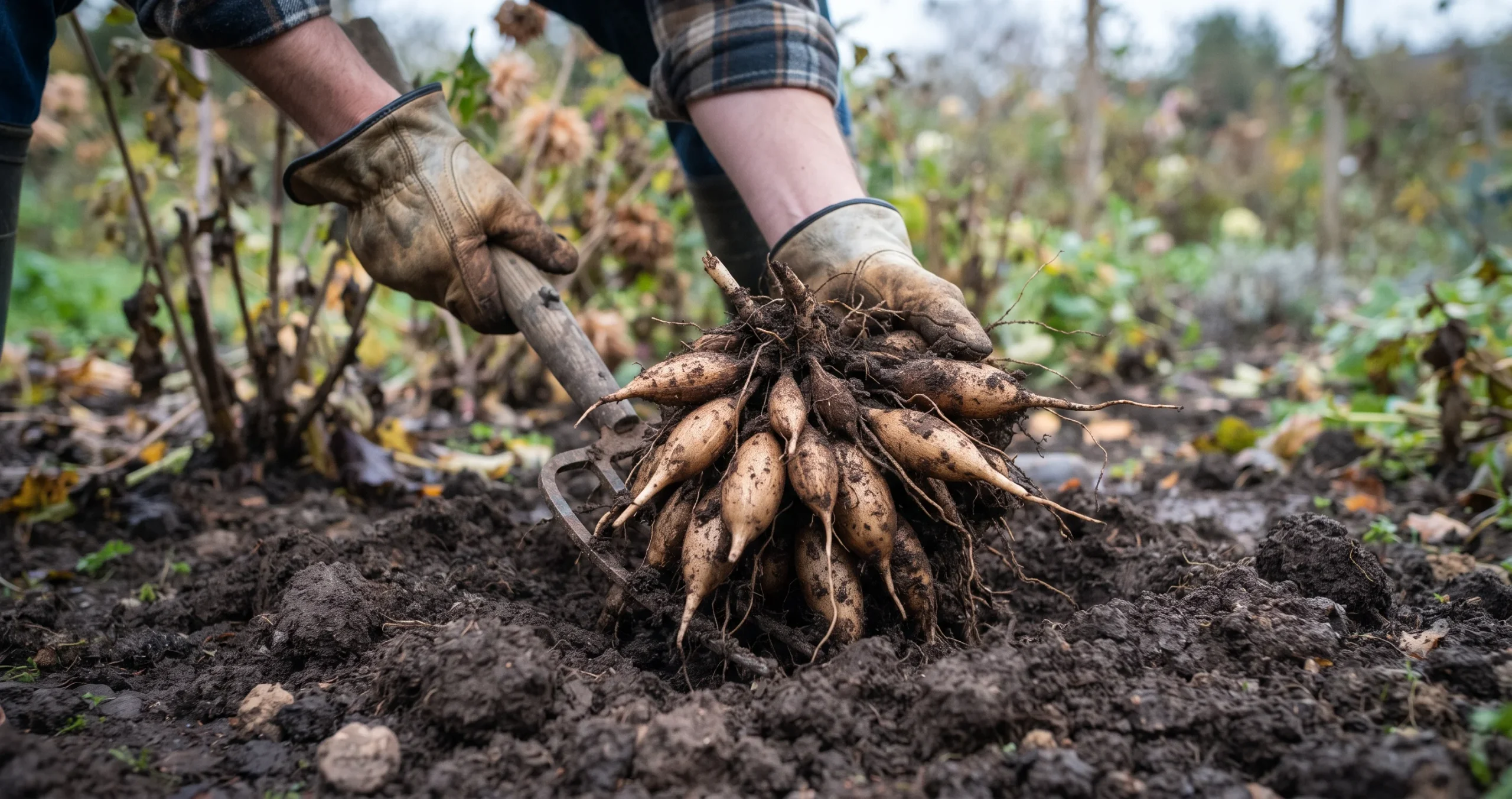
A dahlia can produce spectacular flowers from midsummer until the first hard frost, then disappear almost overnight when freezing weather arrives. The leaves turn black, the stems collapse, and the garden suddenly looks empty. Yet beneath the soil, the plant may still hold everything it needs to grow again next year.
Learning how to store dahlia tubers allows gardeners in colder climates to protect their favorite varieties through winter instead of replacing them every spring.
The process involves digging the tuber clumps at the right time, allowing them to dry appropriately, and keeping them in a cool, frost-free environment. With regular inspections and a little attention to moisture, healthy tubers can survive until planting season returns.
Table of Contents
- Why Dahlia Tubers Need Winter Protection
- How to Store Dahlia Tubers: The Essential Steps
- When to Dig Dahlia Tubers in Fall
- How to Lift Dahlia Tubers Without Damage
- Cleaning and Drying Dahlia Tubers Before Storage
- The Best Materials for Storing Dahlia Tubers
- Ideal Winter Storage Temperature and Humidity
- How to Check Dahlia Tubers Throughout Winter
- Can You Leave Dahlias in the Ground Over Winter?
- How to Divide Dahlia Tubers in Spring
- Common Dahlia Storage Mistakes and Myths
- In Your Own Garden: A Practical Winter Storage Plan
- Frequently Asked Questions
Why Dahlia Tubers Need Winter Protection
Dahlias are tender herbaceous perennials native to Mexico and Central America. Although they can live for several years, their underground storage organs are vulnerable to prolonged freezing.
The swollen structures gardeners commonly call dahlia tubers store carbohydrates and other resources that support new shoots during the following growing season.
Unlike many hardy spring bulbs, dahlias generally cannot tolerate frozen soil around their tubers.
Understanding Dahlia Hardiness
Dahlias are often considered reliably perennial in USDA Hardiness Zones 8–11, although actual winter survival depends on the variety, drainage, temperature, and local conditions.
In colder zones, gardeners commonly lift the tubers after the growing season and store them indoors.
Even in relatively mild climates, persistently wet winter soil can cause decay.
USDA hardiness zones describe average annual extreme minimum temperatures, but they do not account for every local factor. Soil drainage, snow cover, winter rainfall, and exposure can all affect survival.
For this reason, adjust your storage approach to your growing zone and the conditions in your own garden.
How to Store Dahlia Tubers: The Essential Steps
Successful winter storage is based on preventing two opposite problems: freezing and excessive drying.
Tubers must remain cool enough to stay dormant while retaining sufficient moisture to avoid severe shriveling.
The basic process includes waiting until frost has damaged the foliage, lifting the clumps carefully, cleaning and drying them, packing them in suitable materials, and inspecting them throughout winter.
A Quick Overview
Begin by labeling each dahlia variety before removing the foliage.
Cut back the stems, lift the tuber clumps with a garden fork, and remove loose soil without damaging the narrow necks connecting the tubers to the crown.
Allow the clumps to dry in a sheltered location, then place them in a suitable storage container.
Maintain cool, dark, frost-free conditions, ideally around 40–50°F, and check the tubers periodically until spring.
When to Dig Dahlia Tubers in Fall
Timing is one of the most important parts of the process.
Many gardeners wait until the first significant frost blackens the foliage before digging.
This frost damage signals that the aboveground growing season has ended.
Why Waiting for Frost Helps
Dahlias continue growing and storing energy in their tubers as the season progresses.
Allowing the plants to mature through autumn can help produce well-developed storage organs.
Once frost damages the leaves, the plant’s active growth largely stops.
However, waiting too long after frost can expose the underground clumps to freezing conditions.
Watch the Weather Forecast
The first light frost may damage the foliage without freezing the soil.
That usually provides an opportunity to dig the tubers before more severe weather arrives.
If a hard freeze is forecast, prioritize lifting vulnerable plants promptly.
In areas where damaging frost is rare, gardeners may lift dahlias when seasonal growth slows or when wet winter conditions threaten the tubers.
How to Lift Dahlia Tubers Without Damage
Dahlia tubers are more fragile than they appear.
The swollen storage portions connect to the crown through narrower necks, which can break during digging or handling.
A detached tuber without viable crown tissue and a growth eye generally cannot produce a new plant.
Step 1: Label the Plant
Attach a weather-resistant label identifying the variety before digging.
Once the foliage has been removed, different cultivars can be difficult to distinguish.
Labels are particularly useful when storing several varieties together.
Step 2: Cut Back the Stems
Use clean, sharp pruning shears to shorten the stems to approximately four to six inches above the soil.
Leaving a short stem helps identify the crown during handling.
Avoid using the remaining stem as a handle to pull the clump from the ground.
Pulling can damage the crown or break the tuber necks.
Step 3: Loosen the Soil
Insert a garden fork several inches away from the main stem.
Work around the plant, gently loosening the soil from different directions.
Begin roughly 8–12 inches from the stem when space allows, adjusting for the size of the clump.
The goal is to lift the entire root mass without slicing through the tubers.
Step 4: Lift the Clump
Carefully raise the loosened clump from beneath.
Support it with your hands or the fork rather than lifting it by the stem.
Brush away large amounts of loose soil and inspect the clump for obvious damage.
Handle the tubers gently because small cracks can become entry points for decay.
Cleaning and Drying Dahlia Tubers Before Storage
Cleaning and drying prepare the tubers for several months of dormancy.
However, there is no single preparation method that works best in every climate or storage environment.
Some gardeners store relatively intact clumps with a little dry soil remaining, while others wash them before inspection and packing.
Removing Excess Soil
Start by gently brushing off loose soil.
If the clump is heavily coated with wet clay or you need to inspect individual tubers, rinsing with water can help.
Avoid aggressive scrubbing, which may damage the outer skin.
Remove obviously rotten or severely damaged material using clean tools.
Washing or Not Washing
Both approaches can work.
Washing makes it easier to identify damage, pests, and unhealthy tissue, but it introduces additional moisture that must be managed before storage.
Leaving a little dry soil on the clumps can reduce handling damage and may help limit moisture loss.
Choose the approach that suits your storage conditions and allows you to inspect the tubers adequately.
Allowing Tubers to Dry
After lifting or washing, place the tubers in a cool, sheltered, well-ventilated area away from direct sunlight and freezing temperatures.
Allow surface moisture to evaporate before packing.
This may take a day or several days, depending on humidity, temperature, and whether the clumps were washed.
Avoid leaving tubers in warm, dry conditions long enough to become noticeably shriveled.
The purpose of this short drying period is to remove excess surface moisture, not to dehydrate the tubers.
The Best Materials for Storing Dahlia Tubers
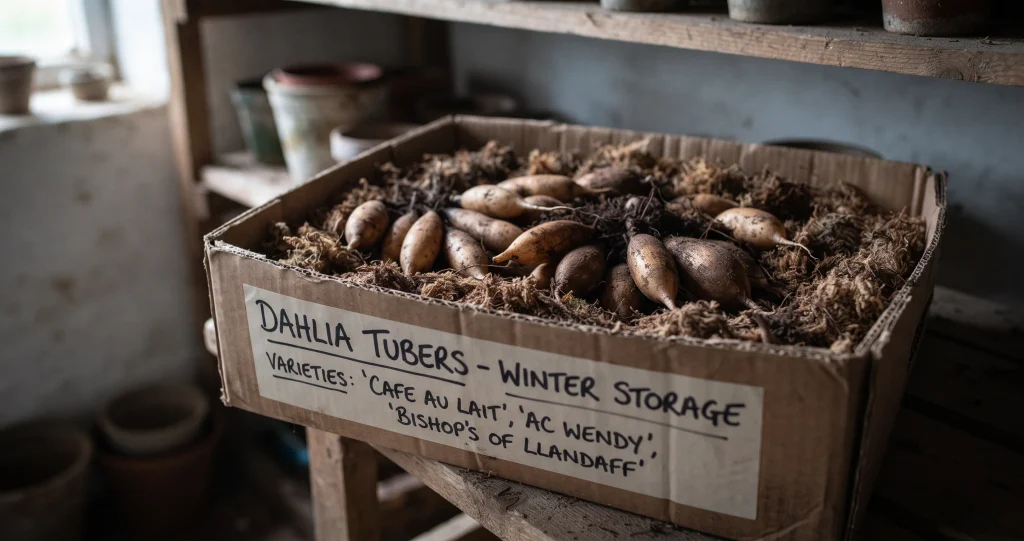
The storage medium helps buffer moisture changes and protects tubers from drying excessively.
Several materials are commonly used, but each requires appropriate moisture management.
Peat Moss
Dry to barely moist peat moss has traditionally been used to surround stored dahlia tubers.
It can help moderate moisture loss, but overly wet peat encourages decay.
Because peat extraction has environmental impacts, gardeners may prefer alternatives where suitable.
Sawdust and Wood Shavings
Clean, untreated sawdust or fine wood shavings can provide a lightweight packing medium.
Avoid materials contaminated with paint, preservatives, or other chemicals.
Very dry material may draw moisture from the tubers, so inspect them regularly.
Vermiculite
Vermiculite is a lightweight mineral-based growing medium that can help moderate moisture around stored tubers.
It is easy to handle and does not introduce the same organic decomposition concerns as some plant-based materials.
However, excessive moisture can still encourage rot.
Choosing a Storage Container
Cardboard boxes, ventilated plastic containers, and other suitable storage boxes can work.
The ideal container depends on the storage medium and surrounding humidity.
A container that is too airtight may trap condensation, while one that is too open can encourage drying.
Arrange the tubers so that they can be inspected without unnecessary handling.
Ideal Winter Storage Temperature and Humidity
Temperature control is essential for maintaining dormancy.
A common target range is approximately 40–50°F, or 4–10°C.
The storage area should remain frost-free, relatively dark, and protected from large temperature fluctuations.
Why Cool Temperatures Matter
Warm storage conditions can encourage premature sprouting and moisture loss.
Freezing temperatures can damage the tubers and reduce their ability to regrow.
A cool basement, insulated garage, or suitable cellar may provide appropriate conditions.
However, garages can experience freezing temperatures during severe weather, so monitor the actual storage environment.
Managing Moisture
Tubers need enough moisture to remain firm without becoming wet.
Very dry air can cause severe shriveling.
Excessively humid conditions, especially with condensation, may encourage fungal or bacterial decay.
A thermometer and periodic visual inspections are often more useful than relying on the room’s general appearance.
How to Check Dahlia Tubers Throughout Winter
Stored dahlias should not be forgotten until spring.
Inspect them approximately once a month, or more frequently if the storage environment is unstable.
Look for changes in firmness, color, smell, and surface condition.
Signs of Rot
Soft, mushy tissue, an unpleasant odor, or spreading decay can indicate a problem.
Remove affected tubers promptly to reduce the chance of deterioration spreading through the container.
If only a small section of a clump is damaged, healthy portions may sometimes be saved by cutting away diseased tissue with a sanitized tool.
Discard material showing extensive decay.
Signs of Excessive Drying
Some wrinkling is normal during storage.
However, tubers that become severely shriveled, lightweight, or brittle may have lost too much moisture.
Review the storage medium and container ventilation.
If the packing material is excessively dry, a slight adjustment in moisture may help, but avoid wetting the tubers directly or creating soggy conditions.
Early Sprouting
Small shoots may appear if storage temperatures become too warm.
Move the container to a cooler, frost-free location if possible.
Handle emerging shoots carefully because they can break easily.
Can You Leave Dahlias in the Ground Over Winter?
In mild climates, some gardeners successfully overwinter dahlias outdoors.
This is most practical where the soil rarely freezes deeply and winter drainage is good.
Warmer Growing Zones
In suitable parts of USDA Zones 8–11, dahlias may survive in the ground with little intervention.
A layer of organic mulch can help moderate soil temperature and reduce exposure to brief cold periods.
However, even relatively warm locations may experience occasional damaging freezes.
The Importance of Drainage
Winter wetness can be as damaging as cold.
Dahlia tubers left in saturated soil are vulnerable to rot.
Raised beds or naturally well-drained planting areas may improve the chances of survival.
When Digging Is Safer
Gardeners in colder zones should generally plan to lift and store their dahlias.
Even in borderline climates, digging valuable or difficult-to-replace varieties provides additional protection.
The safest decision depends on your local growing zone, winter rainfall, soil conditions, and willingness to accept potential losses.
How to Divide Dahlia Tubers in Spring
Spring is often a convenient time to divide stored dahlia clumps because emerging growth points may become easier to identify.
Each viable division needs a healthy tuber connected to a section of crown containing at least one growth eye.
Finding the Growth Eyes
Dahlia eyes develop near the crown, where the tubers connect to the old stem.
They are not usually found along the swollen body of an individual tuber.
Inspect the crown carefully and look for small buds or emerging shoots.
If the eyes are difficult to identify, allow the clump to begin waking in a slightly warmer, protected location before dividing.
Making Clean Divisions
Use a sharp, sanitized knife to separate the clump into viable sections.
Preserve the narrow neck connecting each tuber to its piece of crown.
Remove badly damaged or rotten material and allow fresh cut surfaces to dry before planting or temporary storage.
The Royal Horticultural Society’s dahlia growing guide recommends keeping clumps intact during winter storage and dividing them in spring to reduce the risk of rot entering through fresh wounds. RHS
Common Dahlia Storage Mistakes and Myths
Myth: Dahlia Tubers Must Be Completely Dried Out
Tubers should be free of excess surface moisture before storage, but their interiors must retain enough moisture to remain viable.
Severely dehydrated tubers may fail to grow in spring.
Myth: Every Dahlia Tuber Can Grow a New Plant
An isolated storage tuber without an eye-bearing crown section usually cannot produce new shoots.
This is why careful division matters.
Myth: A Warm Basement Is Always Suitable
Some basements remain too warm for reliable dormancy.
Monitor actual temperatures rather than assuming that every basement provides ideal conditions.
Myth: Dahlias Always Survive Outdoors in Zone 8
Winter survival depends on more than the USDA zone.
Poor drainage, unusual freezes, and prolonged wet conditions can kill tubers even in comparatively mild climates.
Mistake: Ignoring Stored Tubers Until Spring
Regular inspections help identify rot, drying, and premature sprouting before problems become severe.
A few minutes of attention each month can protect an entire collection.
In Your Own Garden: A Practical Winter Storage Plan
Before the first frost, identify the dahlia varieties you want to preserve and prepare labels, containers, and a suitable storage location.
Once frost damages the foliage, dig carefully and allow the clumps to dry in a sheltered place. Pack healthy tubers in a suitable medium and monitor storage temperatures throughout winter.
Keep a simple record of the varieties, storage conditions, and any losses.
Over several seasons, these observations can help you identify the method that works best in your climate.
Frequently Asked Questions
What is the best temperature for storing dahlia tubers?
A commonly recommended range is approximately 40–50°F (4–10°C). Keep tubers cool, dark, and frost-free, while avoiding excessive drying or condensation.
Can I store dahlia tubers in a cardboard box?
Yes. Cardboard boxes can work when paired with an appropriate packing material and a storage location that maintains suitable temperature and moisture conditions. Inspect the contents regularly because cardboard can absorb moisture or allow excessive drying.
Should I wash dahlia tubers before storing them?
Washing is optional. Some gardeners rinse tubers to inspect them thoroughly, while others remove loose soil by hand and store intact clumps. If you wash them, allow the surfaces to dry properly before packing.
Conclusion
The flowers may disappear after the first frost, but healthy dahlia tubers can preserve the potential for another colorful growing season.
Understanding how to store dahlia tubers means protecting them from freezing, preventing excessive moisture loss, and checking their condition throughout winter.
Dig carefully, dry appropriately, choose a suitable packing medium, and maintain cool, frost-free conditions.
Most importantly, adapt the method to your USDA growing zone, winter weather, and available storage space.
With thoughtful care, the tubers you lift in autumn can become the foundation of next summer’s dahlia display.
External Sources
1. Dahlia Growing and Storage Guide (PDF)
This detailed guide discusses drying tubers, packing them in vermiculite, coconut coir, or wood shavings, keeping storage containers ventilated, and inspecting for condensation and rot. It recommends approximately 34–40°F for storage.orage, spring division, and outdoor overwintering in mild climates. Oregon State University Extension.
2. Fall in Love With Colorful, Dazzling Dahlias
This article specifically explains what to do after frost, how to cut stems and lift tubers, drying them for approximately 24 hours, and storing them in vermiculite or sawdust. Oregon State University Extension.
3. Royal Horticultural Society — How to Store Dahlia Tubers Inside
Open the section titled How to overwinter dahlias. It contains specific instructions for digging, drying, storing, checking for rot, and dividing tuber clumps in spring. Royal Horticultural Society.