
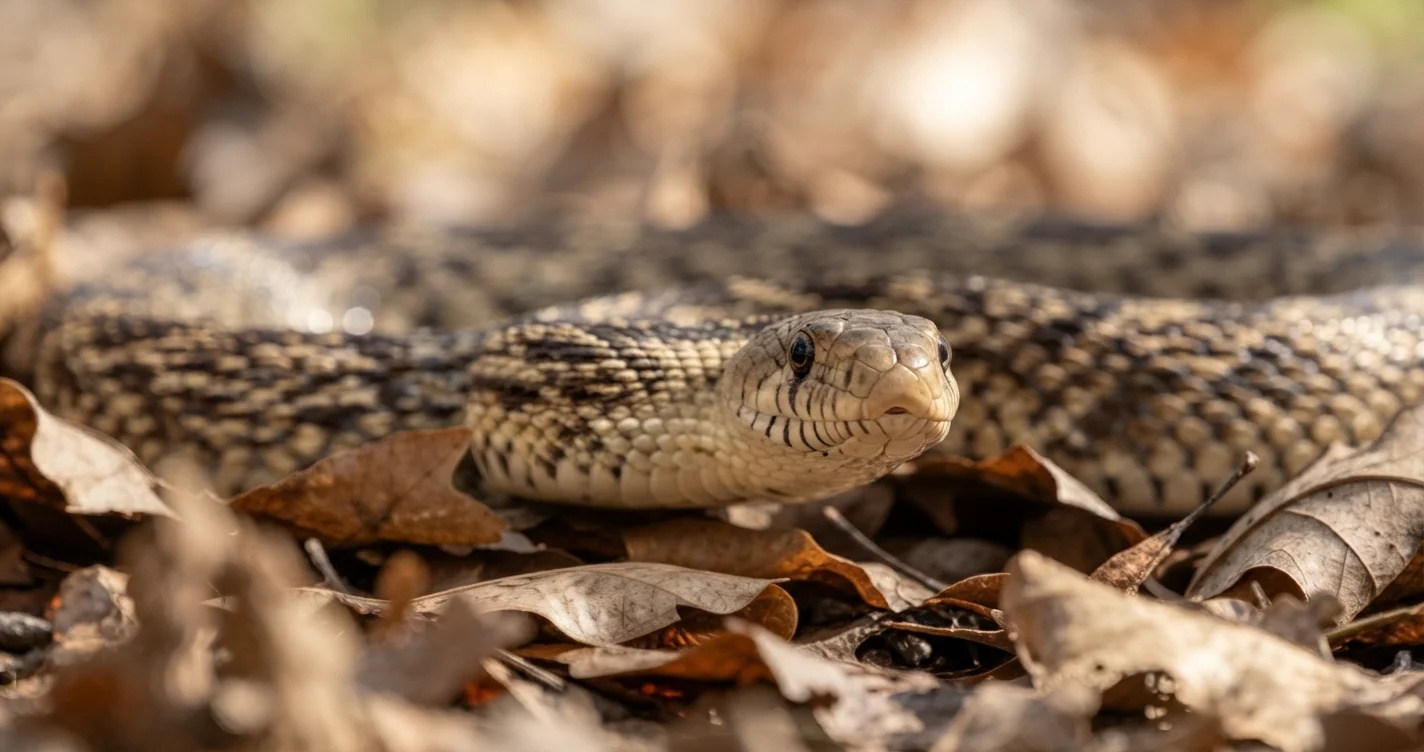
A snake coils defensively on a dusty garden path, flattens its head, releases a loud hiss, and rapidly vibrates its tail. Everything about its behavior suggests a rattlesnake, yet this remarkable reptile has neither venomous fangs nor a rattle.
This fascinating example of gopher snake rattlesnake mimicry reveals how a nonvenomous animal can discourage potential predators by resembling a more dangerous species.
The gopher snake (Pituophis catenifer) is one of North America’s most adaptable native reptiles. Found in grasslands, deserts, agricultural fields, and suburban gardens, it plays an important role in controlling small mammal populations.
Its dramatic defensive behavior is not an attempt to hunt or attack people. Instead, it is a survival strategy that may help the snake escape dangerous encounters.
Table of Contents
- What Is a Gopher Snake?
- Gopher Snake Rattlesnake Mimicry: The Science Behind the Bluff
- Four Ways Gopher Snakes Resemble Rattlesnakes
- How to Tell a Gopher Snake From a Rattlesnake
- Where Gopher Snakes Live in North America
- What Gopher Snakes Eat
- Why Gopher Snakes Are Valuable to Gardeners
- How Gopher Snakes Survive Winter
- In Your Own Yard: Living Alongside Native Snakes
- Frequently Asked Questions
What Is a Gopher Snake?
The gopher snake is a large, nonvenomous reptile belonging to the family Colubridae.
Native to western and central North America, it occupies a remarkably diverse range of environments, from dry desert landscapes to productive agricultural regions.
Its common name reflects its habit of hunting pocket gophers and other small mammals.
Size and Physical Characteristics
Adult gopher snakes commonly measure between 3 and 6 feet long, although some individuals grow considerably larger.
Their bodies typically display several distinctive features:
- Cream, yellowish, or light brown background coloration.
- Dark brown or reddish-brown blotches along the back.
- Smaller markings along the sides.
- Keeled scales that create a slightly rough appearance.
- A gradually tapering tail without a rattle.
Their natural coloration provides effective camouflage among dry grasses, exposed soil, rocks, and fallen leaves.
Gopher Snakes and Bullsnakes
The bullsnake (Pituophis catenifer sayi) is generally recognized as a subspecies of the gopher snake.
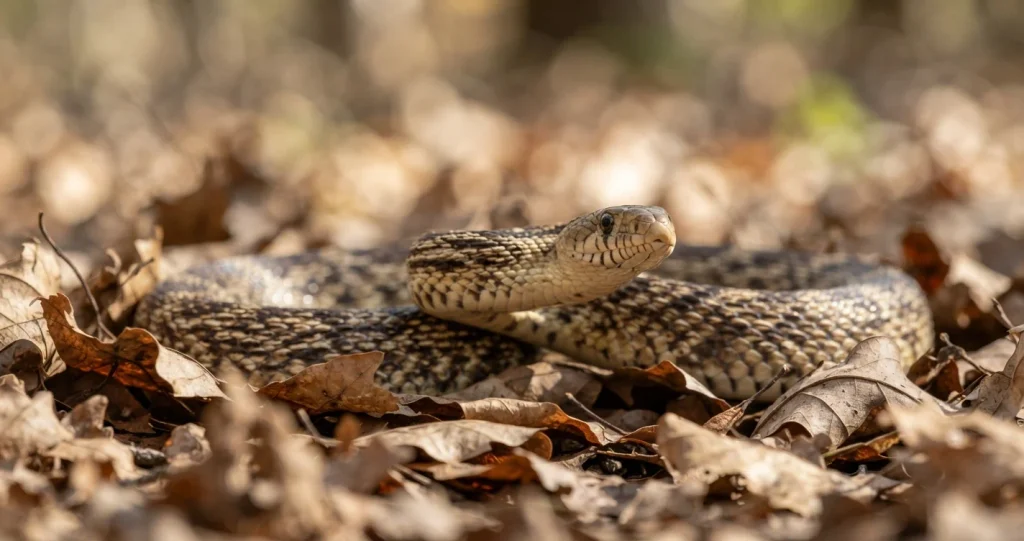
Bullsnakes are particularly associated with the Great Plains, while other gopher snake populations inhabit western coastal regions, deserts, and inland valleys.
Their appearance varies geographically, but many share similar feeding habits and dramatic defensive displays.
Gopher Snake Rattlesnake Mimicry: The Science Behind the Bluff
Nature is filled with animals whose appearance or behavior resembles that of more dangerous creatures.
For gopher snakes, several defensive characteristics can create a convincing resemblance to rattlesnakes.
Understanding Batesian Mimicry
Batesian mimicry occurs when a relatively harmless species resembles a dangerous or undesirable species, potentially gaining protection from predators.
A familiar example involves harmless hoverflies that resemble stinging bees or wasps.
Gopher snakes are often discussed in the context of this evolutionary strategy because their markings, defensive posture, and tail vibrations resemble those of venomous rattlesnakes.
However, certain defensive behaviors, particularly tail vibration, are widespread among snakes. Some may have evolutionary origins that predate the development of the rattlesnake’s specialized rattle.
Why Predators May Avoid the Display
Predators must balance the potential nutritional rewards of capturing prey against the risk of injury.
An encounter with a venomous rattlesnake can carry considerable risks.
When a gopher snake produces similar visual and auditory warning signals, a predator may hesitate or abandon its attack.
This hesitation can give the nonvenomous snake an opportunity to escape.
A Survival Strategy Rather Than a Conscious Trick
Gopher snakes do not need to understand what a rattlesnake is to produce a similar defensive display.
Their responses are natural behaviors shaped by evolutionary processes.
The effectiveness of these behaviors may vary depending on the predator, surrounding habitat, and local presence of venomous snakes.
What Island Gopher Snakes Reveal About Mimicry
A particularly fascinating study published in Ethology Ecology & Evolution compared gopher snakes from mainland California with nearby island populations that live without rattlesnakes.
Researchers discovered that mainland gopher snakes vibrated their tails for longer periods than their island counterparts.
However, they did not find significant differences in vibration speed or the likelihood of performing the behavior.
These findings lend support to the idea that acoustic mimicry may gradually weaken in environments where rattlesnakes are absent. Taylor & Francis Online
Four Ways Gopher Snakes Resemble Rattlesnakes
The gopher snake’s defensive performance combines several visual and auditory signals.
1. Rapid Tail Vibration
Although gopher snakes lack an actual rattle, they can rapidly vibrate their tails against dry leaves, gravel, and other natural materials.
The resulting buzzing sound can resemble a rattlesnake’s warning.
In dry environments, where fallen vegetation is abundant, this imitation can be particularly convincing.
2. Flattening the Head
When threatened, a gopher snake may flatten its head, creating a triangular shape resembling that of a pit viper.
This temporary change makes its appearance more intimidating.
It also demonstrates why head shape alone is an unreliable method of distinguishing venomous snakes from nonvenomous species.
3. Producing a Powerful Hiss
Gopher snakes can produce surprisingly loud defensive hisses.
Air passing through specialized structures in their respiratory system creates an intimidating sound that may further discourage approaching predators.
4. Coiling Into a Defensive Position
A frightened gopher snake may coil its body, raise its head, and prepare to strike.
Combined with its patterned scales, flattened head, and vibrating tail, this posture creates a convincing defensive display. National Park Service
How to Tell a Gopher Snake From a Rattlesnake
Although the resemblance can be striking, several anatomical differences distinguish these reptiles.
| Feature | Gopher snake | Rattlesnake |
|---|---|---|
| Scientific group | Colubridae | Viperidae |
| Venom | Nonvenomous | Venomous |
| Tail | Gradually tapering | Usually ends in a rattle |
| Pupils | Round | Typically vertical |
| Heat-sensing facial pits | Absent | Present |
| Defensive sound | Hissing and tail vibration | Rattling and sometimes hissing |
| Hunting technique | Constriction | Venom injection |
The Tail Offers an Important Clue
Gopher snakes have gradually tapering tails without specialized rattling segments.
However, rattlesnakes can lose or damage their rattles, so the absence of a visible rattle does not guarantee that a snake is nonvenomous.
Keep a Safe Distance
Never approach an unidentified snake to examine its pupils, facial markings, or tail.
Use binoculars or a camera’s zoom function from a safe distance if identification is necessary.
When uncertain, allow the snake to move away naturally or contact a qualified wildlife professional.
Where Gopher Snakes Live in North America
Gopher snakes are widely distributed across western and central parts of North America, extending from southern Canada into Mexico.
Their adaptability allows them to occupy numerous environments.
Deserts and Rocky Landscapes
In arid regions, gopher snakes often use rock crevices and abandoned animal burrows for shelter.
During particularly hot weather, they may become more active after sunset.
Grasslands and Agricultural Fields
Open grasslands and farmland provide productive hunting grounds where rodents are frequently abundant.
The snake’s patterned body blends naturally into dry vegetation and exposed soil.
Suburban Gardens
Gopher snakes occasionally appear in residential landscapes, particularly near undeveloped land and areas with established rodent populations.
Garden sheds, retaining walls, and spaces beneath outdoor structures may provide temporary shelter.
What Gopher Snakes Eat
Despite their impressive defensive displays, gopher snakes spend much of their active lives searching for food.
Natural Rodent Hunters
Their diet commonly includes pocket gophers, mice, rats, voles, and other small mammals.
They may also consume birds, eggs, and occasionally other small animals.
Gopher snakes frequently investigate underground tunnels and existing animal burrows while hunting.
Hunting Without Venom
Gopher snakes capture prey through constriction.
After grasping an animal, the snake wraps its muscular body around the prey and applies pressure that disrupts circulation.
This hunting technique allows gopher snakes to capture relatively large prey without venom. National Park Service
Why Gopher Snakes Are Valuable to Gardeners
Finding a large snake near a vegetable garden can be unsettling, but native nonvenomous snakes are important members of healthy ecosystems.
Natural Rodent Population Control
Pocket gophers and other rodents can damage plant roots, vegetable crops, and young trees.
Gopher snakes help regulate these populations through natural predation.
Although a single snake cannot eliminate an entire rodent infestation, its presence contributes to a more balanced garden ecosystem.
Reducing Secondary Poisoning Risks
Rodenticides can expose wildlife to harmful chemicals when predators consume poisoned rodents.
Using physical exclusion, secure food storage, and other appropriate pest management techniques can reduce unnecessary risks to native predators.
Supporting Local Biodiversity
Gopher snakes are both predators and prey.
Hawks, eagles, coyotes, foxes, and other animals may hunt them, connecting these reptiles to the wider terrestrial food web.
How Gopher Snakes Survive Winter
As cold weather arrives, gopher snakes become considerably less active.
Like other reptiles, they depend on environmental warmth to regulate their body temperature.
Entering Brumation
During winter, gopher snakes in colder regions enter a period of reduced activity known as brumation.
They may seek shelter beneath rocks, inside underground burrows, or within protected crevices where temperatures remain more stable.
Sharing Winter Shelter With Rattlesnakes
Perhaps surprisingly, gopher snakes sometimes share winter dens with rattlesnakes and other snake species.
The National Park Service documents this behavior among gopher snakes inhabiting the Grand Canyon.
Although their defensive behavior may resemble that of rattlesnakes, both species can benefit from the same protected winter shelter. National Park Service
In Your Own Yard: Living Alongside Native Snakes
Gardeners living within the gopher snake’s natural range can adopt several practices that support wildlife while maintaining a safe residential environment.
Keep Garden Pathways Clear
Remove unnecessary debris from frequently used pathways and maintain good visibility around outdoor structures.
Wear sturdy footwear when working in areas where snakes may occur.
Secure Animal Feed and Birdseed
Store pet food, chicken feed, and birdseed in tightly sealed containers.
Reducing readily available food for rodents can help limit unwanted wildlife activity near buildings.
Choose Wildlife-Friendly Pest Management
Consider appropriate alternatives to chemical rodent poisons.
Avoid loose plastic garden netting that can accidentally entangle reptiles and other small animals.
Give Snakes Space
If you encounter a snake in your garden, remain calm, move away slowly, and keep children and pets at a safe distance.
Most snakes prefer to avoid unnecessary confrontations when given an opportunity to retreat.
Contact a qualified local wildlife removal service if a snake needs to be removed from an occupied building or another unsafe location.
Frequently Asked Questions
1. Are gopher snakes venomous?
Gopher snakes are nonvenomous constrictors. However, they can bite when threatened or handled. Wild snakes should always be observed from a safe distance.
2. Why do gopher snakes shake their tails like rattlesnakes?
Tail vibration is a defensive behavior that can produce a rattling sound when the tail strikes surrounding vegetation or other surfaces. This resemblance may discourage predators, although tail vibration itself has deeper evolutionary origins.
3. Are gopher snakes beneficial to gardens?
Yes. Gopher snakes consume pocket gophers, mice, voles, and other small mammals that may damage garden plants. They contribute to natural predator-prey relationships and support local biodiversity.
Conclusion
The next time a snake vibrates its tail among dry autumn leaves, remember that its intimidating performance may conceal a very different animal from the one you initially imagined.
Gopher snake rattlesnake mimicry illustrates how coloration, sound, posture, and evolutionary adaptation can work together to discourage predators.
Beyond their remarkable defensive abilities, these native reptiles contribute to natural rodent control and healthy ecosystems.
Sometimes, one of nature’s most effective defenses is the appearance of danger itself.
External Sources
1. A Snake That Mimics a Rattlesnake Without a Rattle
Gopher snakes combine loud hissing, head flattening, defensive coiling, and tail vibration to resemble venomous rattlesnakes. National Park Service. https://www.nps.gov/para/learn/nature/gopher-snake.htm.
2. Mimicry May Weaken on Islands Without Rattlesnakes
Researchers found that mainland California gopher snakes vibrated their tails for longer than island populations living without rattlesnakes. Ethology Ecology & Evolution. https://doi.org/10.1080/03949370.2020.1837962
3. Tail Vibration May Be Older Than the Rattlesnake’s Rattle
A scientific study examining 56 snake species suggests that the rattlesnake’s specialized rattle may have evolved from an ancestral defensive tail-vibration behavior. The American Naturalist. https://pubmed.ncbi.nlm.nih.gov/27622880/