
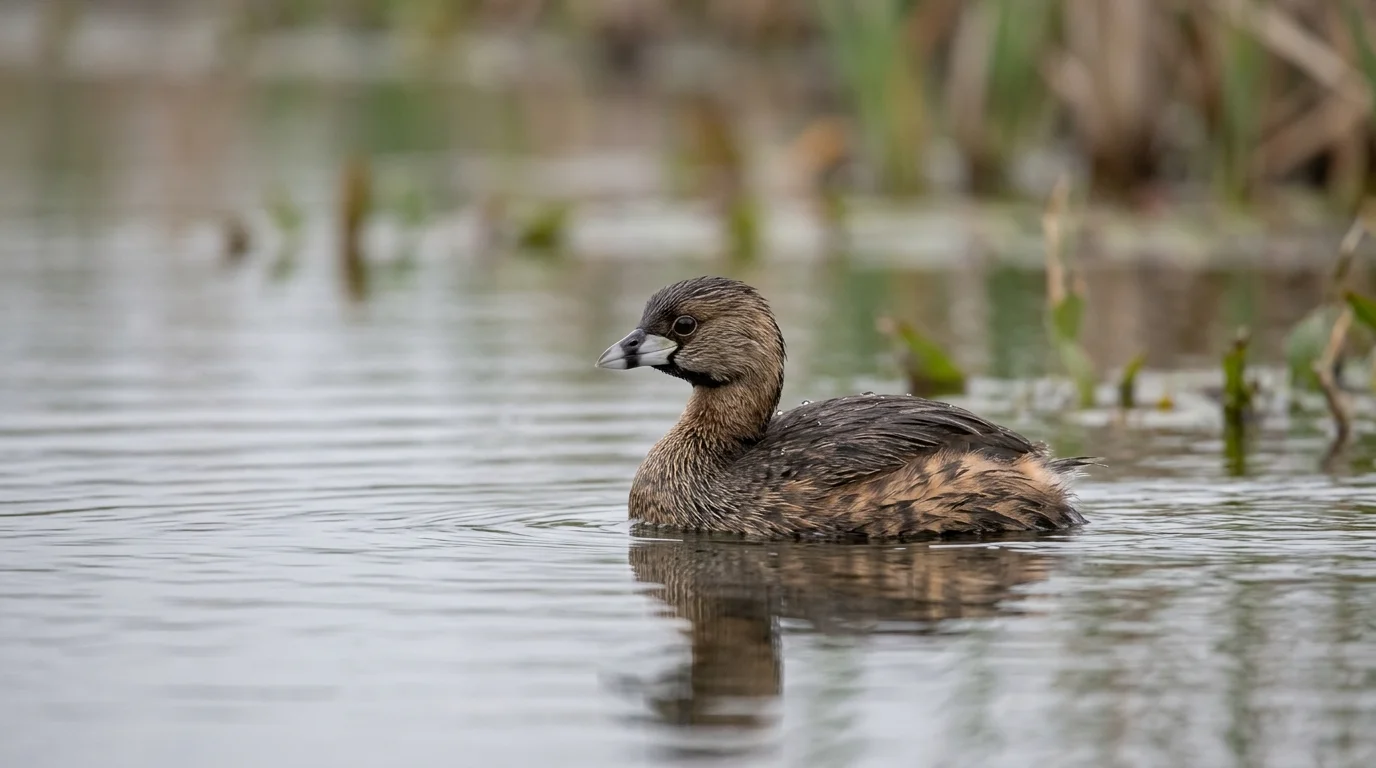
Most waterbirds make a noticeable splash when they dive beneath the surface. But one small freshwater bird can disappear almost silently, sinking into the water as though someone has opened a hidden trapdoor beneath it.
The pied-billed grebe (Podilymbus podiceps) possesses a remarkable ability to control its buoyancy, allowing it to gradually submerge without performing a conventional dive.
Sometimes, only its eyes and nostrils remain visible above the water.
During winter, these fascinating birds can be found in sheltered ponds, reservoirs, marshes, and other wetlands where open water provides access to underwater prey.
Their unusual swimming techniques, secretive behavior, and specialized physical adaptations make them among North America’s most intriguing freshwater birds.
Table of Contents
- What Is a Pied-Billed Grebe?
- How to Identify Pied-Billed Grebes in Winter
- Pied-Billed Grebe Buoyancy: The Science Behind Silent Sinking
- Where Pied-Billed Grebes Spend the Winter
- What Pied-Billed Grebes Eat During Winter
- Why Pied-Billed Grebes Swallow Their Own Feathers
- Pied-Billed Grebes vs. Other Diving Waterbirds
- The Ecological Importance of Winter Wetlands
- In Your Own Yard: Supporting Freshwater Wildlife
- Frequently Asked Questions
What Is a Pied-Billed Grebe?
The pied-billed grebe is a small aquatic bird belonging to the grebe family, Podicipedidae.
Although it resembles a small duck, it belongs to an entirely different group of waterbirds.
Its compact body, short neck, rounded head, and thick bill give it a distinctive appearance among North American grebes.
The species occurs throughout much of the Americas, occupying freshwater wetlands, sheltered lakes, ponds, and occasionally brackish coastal environments.
A Bird With Several Unusual Nicknames
Pied-billed grebes have historically been known by names such as water witch and hell-diver.
These nicknames reflect their seemingly mysterious ability to disappear beneath the water when disturbed.
A bird floating peacefully near a patch of reeds can vanish within seconds, leaving little evidence of its departure.
Built for Life on the Water
Unlike many birds that divide their time between land and water, pied-billed grebes are highly specialized for aquatic life.
Their legs are positioned far back on their bodies, providing effective underwater propulsion.
This arrangement makes swimming remarkably efficient but walking on land rather awkward.
Consequently, these birds spend most of their lives on or beneath the water.
How to Identify Pied-Billed Grebes in Winter
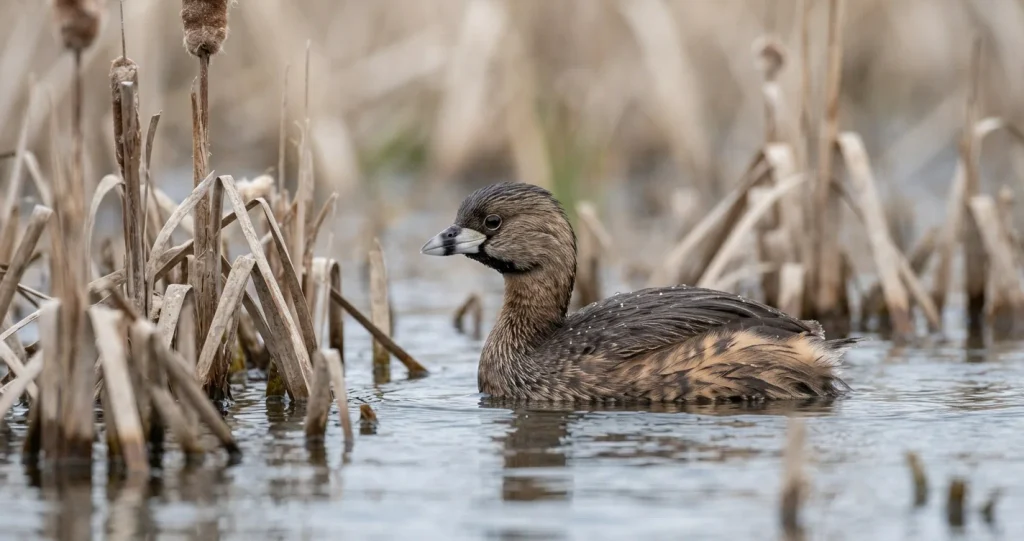
Winter plumage is generally more subdued than breeding plumage, but several distinctive characteristics make pied-billed grebes recognizable.
Five Important Identification Features
- A compact, rounded body covered in brownish-gray feathers.
- A relatively thick, short bill.
- A rounded head and comparatively short neck.
- A pale throat and whitish rear feathers.
- A low position on the water, especially when alert.
Adults generally measure approximately 12–15 inches in length.
Their small size and neutral coloration can make them difficult to notice among dormant reeds and winter reflections.
The Missing Black Bill Band
During the breeding season, adult pied-billed grebes develop a distinctive black band across their pale bills.
This marking gives the species its common name.
In winter, however, the band generally disappears or becomes much less noticeable, and the bill may appear pale yellowish or brownish.
For this reason, winter identification should rely on overall body shape and behavior rather than the bill marking alone.
Watch How the Bird Disappears
A pied-billed grebe may gradually lower itself until only its head remains visible.
This unusual behavior is one of the most useful clues when observing an unidentified waterbird from a distance.
Pied-Billed Grebe Buoyancy: The Science Behind Silent Sinking
Imagine a bird that can behave almost like a submarine, adjusting how much of its body remains above the water.
For the pied-billed grebe, this remarkable ability is an important part of everyday survival.
How Grebes Control Their Buoyancy
Most waterbirds have feathers that trap air, helping their bodies remain afloat.
Pied-billed grebes can adjust the amount of air held within their plumage by compressing their feathers. They can also retain water within their plumage, giving them considerable control over their buoyancy.
These adjustments allow the birds to lower themselves gradually beneath the surface without making a conventional headfirst dive. All About BirdsNJ.gov
A Natural Defense Against Predators
When a potential threat approaches, immediately taking flight may not always be the most effective escape strategy.
By sinking quietly, a grebe can reduce its visibility while avoiding unnecessary disturbance at the water’s surface.
It may swim underwater before emerging near protective aquatic vegetation.
This behavior is particularly useful in wetlands where reeds and other plants provide natural hiding places.
Specialized Feet for Underwater Swimming
Unlike ducks, which have webbed feet, grebes possess individually lobed toes.
These flexible lobes provide propulsion as the bird pushes against the water.
Combined with the rearward position of its legs, this adaptation gives the grebe excellent underwater maneuverability.
Silent Sinking vs. Emergency Diving
Pied-billed grebes do not always disappear quietly.
When suddenly frightened, they may perform a rapid, forceful dive that sends water splashing into the air.
The ability to switch between gradual submersion and rapid diving allows them to respond to different situations.
Where Pied-Billed Grebes Spend the Winter
Winter distribution largely depends on the availability of unfrozen water and suitable feeding grounds.
While some populations remain in the same general area throughout the year, others migrate when colder conditions arrive.
Northern Populations Move Toward Milder Regions
Grebes breeding in northern areas often migrate south as lakes and ponds begin freezing.
Populations in warmer southern regions may remain year-round.
Interestingly, much of their migration is believed to occur at night, which helps explain why people rarely see them flying between wetlands. Audubon Field Guide
Southern and Coastal Wintering Grounds
Across the United States, productive winter habitats include freshwater wetlands in the Southeast, lakes throughout the southern states, and suitable water bodies along the Pacific Coast.
Some individuals also occupy brackish estuaries and protected coastal bays.
Promising Places to Look
During winter, concentrate your observations on:
- Unfrozen freshwater lakes.
- Sheltered reservoirs and farm ponds.
- Quiet river backwaters.
- Marshes bordered by cattails.
- Protected estuaries and coastal wetlands.
- Larger ponds in public parks and wildlife refuges.
Wintering birds sometimes occupy more exposed water than they do during the breeding season.
When searching larger water bodies, scan the surface several times. A grebe may be underwater during your first observation.
What Pied-Billed Grebes Eat During Winter
Beneath the apparently quiet surface of a winter pond lies a diverse community of aquatic organisms.
Pied-billed grebes are skilled at exploiting these hidden food resources.
Crayfish and Other Crustaceans
Their unusually thick bills are particularly useful for capturing and crushing crustaceans, including crayfish.
Unlike birds with narrow, delicate bills, pied-billed grebes possess a sturdy feeding tool capable of handling relatively hard prey.
Small Fish and Aquatic Insects
Their diet also includes small fish, aquatic beetles, insect larvae, snails, leeches, and other aquatic organisms.
The proportions of these foods vary according to location, season, and prey availability.
Hunting Beneath the Surface
Grebes pursue swimming prey underwater and search around submerged vegetation and lake bottoms.
Their ability to change direction quickly helps them navigate these complex environments.
Winter feeding success depends partly on access to productive, unfrozen aquatic habitats.
Why Pied-Billed Grebes Swallow Their Own Feathers
Among the many unusual behaviors of grebes, feather eating may be the most surprising.
These birds deliberately swallow some of their own feathers while preening.
A Natural Digestive Protection System
Researchers suggest that swallowed feathers help retain hard, potentially harmful food fragments within the stomach.
This may reduce the likelihood of sharp fish bones and other indigestible material entering the intestines.
Feathers may also help collect these materials into pellets that the bird can later regurgitate.
An Extraordinary Stomach Composition
The California Department of Fish and Wildlife reports that feathers have been documented accounting for up to 52% of pied-billed grebe stomach contents.
Adults may even feed feathers to their young, suggesting that this unusual behavior serves an important biological function. nrm.dfg.ca.govAudubon Field Guide
Pied-Billed Grebes vs. Other Diving Waterbirds
Several small aquatic birds can resemble pied-billed grebes, particularly during winter when breeding colors are absent.
| Feature | Pied-billed grebe | Horned grebe | American coot |
|---|---|---|---|
| Winter plumage | Brownish-gray | Gray, black, and white | Dark gray |
| Bill | Short and thick | Straight and pointed | Prominent white bill |
| Head shape | Rounded and blocky | Rounded with flatter crown | Rounded |
| Toes | Lobed | Lobed | Lobed |
| Typical winter behavior | Diving and gradual sinking | Frequent diving | Surface feeding and occasional diving |
| Common habitat | Ponds and sheltered wetlands | Lakes and coastal waters | Lakes, ponds, and marshes |
Look Beyond Plumage
The thick bill and compact silhouette are particularly useful for identifying pied-billed grebes.
Their behavior offers additional clues, especially when individuals gradually sink until only part of the head remains visible.
The Ecological Importance of Winter Wetlands
A pond that appears lifeless during winter may still support an active underwater ecosystem.
Pied-billed grebes depend on the continued availability of these ecological communities.
A Connection Between Birds and Aquatic Food Webs
By consuming fish, insects, and crustaceans, grebes participate in the natural predator-prey relationships of freshwater environments.
Their presence illustrates how aquatic biodiversity supports wildlife throughout the year.
Why Aquatic Vegetation Matters
Cattails, bulrushes, and other native aquatic plants create valuable habitat for invertebrates, fish, amphibians, and birds.
Areas containing both open water and emergent vegetation offer feeding opportunities alongside protective cover.
Challenges Facing Freshwater Birds
Wetland drainage, pollution, shoreline development, and human disturbance can reduce the quality of suitable habitats.
Protecting existing wetlands and maintaining healthy waterways are important steps toward conserving aquatic wildlife.
In Your Own Yard: Supporting Freshwater Wildlife
Although pied-billed grebes rarely visit ordinary backyard ponds, gardeners can still contribute to healthier freshwater ecosystems.
Plant Native Vegetation Around Large Ponds
If your property contains a substantial pond, preserve suitable native shoreline plants.
Vegetated buffers can provide wildlife habitat, reduce erosion, and help limit nutrient runoff.
Reduce Garden Runoff
Apply fertilizers only when necessary and consider using rain gardens to slow stormwater movement.
Responsible garden management can help protect nearby streams, lakes, and wetlands.
Plan a Winter Birdwatching Visit
Bring binoculars to a nearby wetland reserve or public lake during the colder months.
Look carefully along the edges of aquatic vegetation and across sheltered stretches of open water.
Remain in one location for several minutes rather than immediately moving on.
Watch Without Disturbing the Birds
Allow grebes to continue their natural feeding and resting activities.
Repeatedly approaching them can interrupt feeding and increase unnecessary energy expenditure during cold weather.
With patience, you may witness their extraordinary ability to disappear almost silently beneath the surface.
Frequently Asked Questions
1. How does a pied-billed grebe sink without diving?
Pied-billed grebes adjust their buoyancy by controlling air and water within their plumage. This allows them to gradually lower their bodies beneath the water without relying on a conventional headfirst dive.
2. Where can I find pied-billed grebes in winter?
Look for them in unfrozen ponds, lakes, reservoirs, quiet rivers, marshes, and sheltered coastal wetlands. Southern regions often provide suitable habitats throughout winter.
3. Why do pied-billed grebes eat their own feathers?
Swallowed feathers are thought to help protect the digestive system from hard prey fragments, including fish bones and crustacean shells. They may also assist with the formation of regurgitated pellets.
Conclusion
The next time you visit a quiet winter pond, pay attention to the small brown birds floating near the reeds.
One of them may suddenly disappear without leaving more than a gentle ripple.
The pied-billed grebe demonstrates how remarkable physical adaptations, flexible feeding habits, and specialized survival techniques allow wildlife to thrive in aquatic environments.
Even the most ordinary winter pond can conceal extraordinary examples of nature’s ingenuity.
Sometimes, the greatest surprises are waiting just beneath the surface.
External Sources
1. A Bird That Controls Its Buoyancy Like a Submarine
Pied-billed grebes can retain water within their feathers to control how much of their bodies remains above the surface. This adaptation may also help reduce underwater drag. Cornell Lab of Ornithology. https://www.allaboutbirds.org/guide/Pied-billed_Grebe/overview
2. A Secretive Waterbird That Migrates at Night
Despite rarely being observed in flight, pied-billed grebes from northern populations migrate seasonally, apparently traveling primarily at night. During winter, they may also occupy coastal bays and estuaries. National Audubon Society. https://www.audubon.org/field-guide/bird/pied-billed-grebe.