
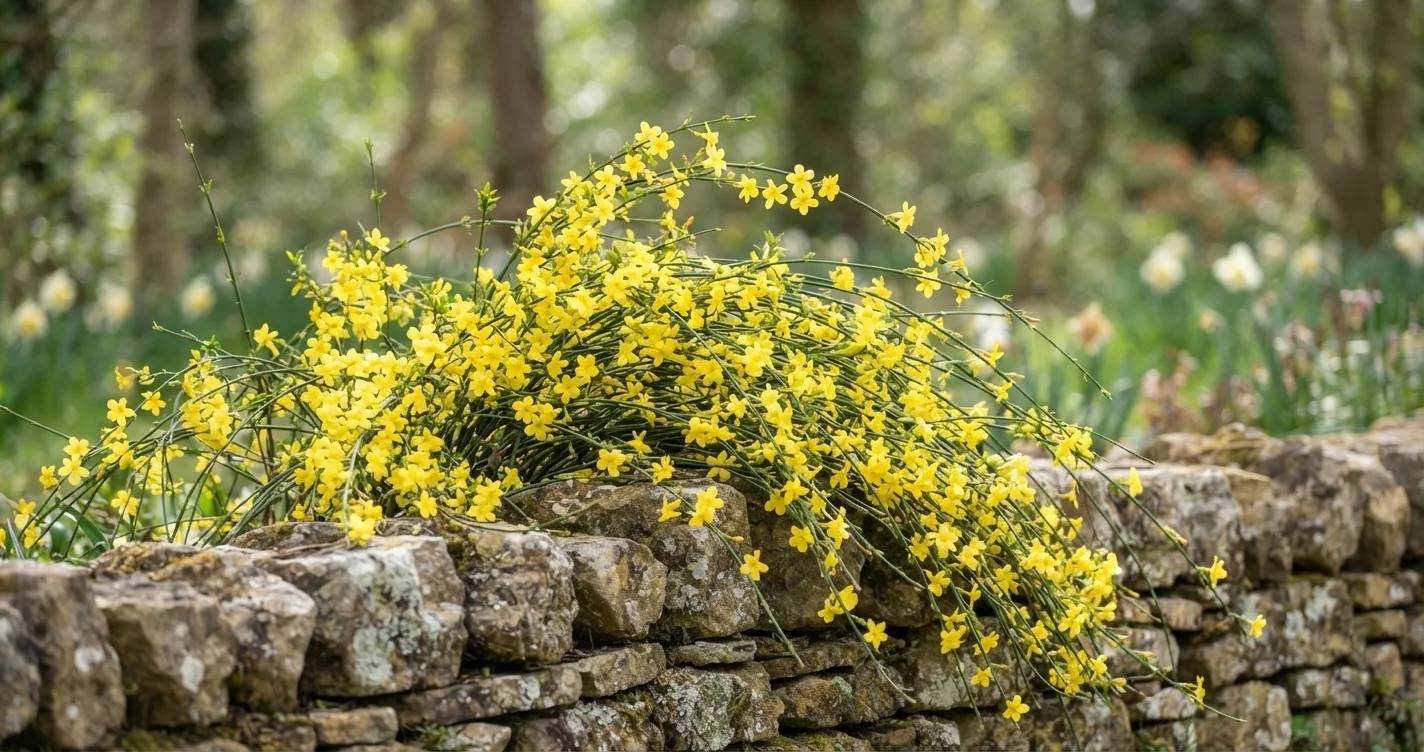
Even when frost covers the garden and most deciduous shrubs stand bare, bright yellow flowers can appear along slender green branches. There are hardly any leaves in sight, yet the plant looks as though spring has already arrived.
This is winter jasmine (Jasminum nudiflorum), a remarkable flowering shrub that brings unexpected color to the garden during its quietest season.
Native to China, winter jasmine is admired for its cheerful yellow blossoms, arching stems, and ability to flower during the colder months. Unlike many familiar garden plants, it reaches its ornamental peak when much of the surrounding landscape is dormant.
It can cascade over retaining walls, brighten garden slopes, or grow against a trellis.
Its unusual flowering schedule also reveals a fascinating example of how plants adapt to seasonal changes.
With the right location and a little maintenance, this resilient shrub can become one of the most rewarding features of a winter garden.
Table of Contents
- What Is Winter Jasmine?
- Winter Jasmine: The Science Behind Its Cold-Season Flowers
- When Does Winter Jasmine Bloom?
- How Large Does Winter Jasmine Grow?
- The Best Growing Conditions for Winter Jasmine
- How to Plant and Care for Winter Jasmine
- How to Prune and Propagate Winter Jasmine
- Wildlife Benefits and Ecological Considerations
- Common Winter Jasmine Growing Problems
- In Your Own Yard: Designing With Winter Jasmine
- Frequently Asked Questions
What Is Winter Jasmine?
Winter jasmine belongs to the olive family, Oleaceae, which also includes lilacs, forsythias, and olive trees.
It is a deciduous shrub with slender, arching branches and small green leaves divided into three leaflets.
However, its most distinctive characteristic is its ability to produce bright yellow flowers on largely leafless stems.
A Shrub That Looks Like a Climber
Winter jasmine naturally develops long, flexible branches that spread outward and downward.
Although it can be trained against walls and trellises, it does not climb by twining or attaching itself to surfaces.
Its stems require support and occasional tying when grown vertically.
Without support, the plant forms a spreading mound or cascades over nearby edges.
Bright Flowers With Little Fragrance
Many gardeners associate jasmine with intensely fragrant flowers.
Winter jasmine is different. Its yellow blossoms are generally considered nonfragrant.
The plant is primarily valued for its winter color rather than its scent.
Its botanical name, nudiflorum, refers to the flowers appearing on bare or nearly bare stems.
Winter Jasmine: The Science Behind Its Cold-Season Flowers
Winter jasmine seems to ignore the seasonal rhythm followed by many garden shrubs.
However, its flowering behavior reflects a different pattern of development rather than an absence of sensitivity to winter conditions.
Flower Buds Develop Before Winter
Winter jasmine primarily flowers on growth produced during the previous growing season.
Its flower buds develop before the colder months arrive and remain ready to open when conditions become favorable.
This allows the shrub to produce blossoms before substantial new leaf growth begins.
It also explains why pruning at the wrong time can reduce flowering.
How Temperature Influences Flowering
Winter jasmine can open its flowers during relatively mild winter weather.
Periods of warmer temperatures may encourage additional blossoms to emerge, while severe cold can interrupt flowering or damage open blooms.
Not every flower opens simultaneously.
This gradual flowering pattern can extend the ornamental display across several weeks or longer, depending on local weather.
Why the Stems Remain Green
An interesting feature of winter jasmine is its green young stems.
These contain chlorophyll, the pigment involved in photosynthesis.
Green stems in woody plants can contribute to carbon assimilation when environmental conditions permit, including periods when leaves are absent.
However, this does not mean winter jasmine grows actively throughout freezing weather or that its stems fully replace the function of leaves.
Why Winter Blooms Are Still Vulnerable to Frost
Cold-season flowering does not make individual flowers immune to freezing.
Open blossoms may become discolored or damaged during a hard frost.
Unopened buds can sometimes survive and produce additional flowers when milder weather returns.
This is one reason winter jasmine often blooms in intermittent waves rather than maintaining a perfectly continuous display.
When Does Winter Jasmine Bloom?
Flowering time varies considerably across the United States.
In milder climates, blossoms may begin appearing as early as November or December.
In colder regions, flowering is often more noticeable during late winter or early spring.
A Long Seasonal Display
Winter jasmine typically produces individual flowers gradually along its branches.
Instead of opening all at once, the buds respond to changing seasonal conditions.
This can create an extended display of scattered yellow blossoms.
Winter Jasmine vs. Forsythia
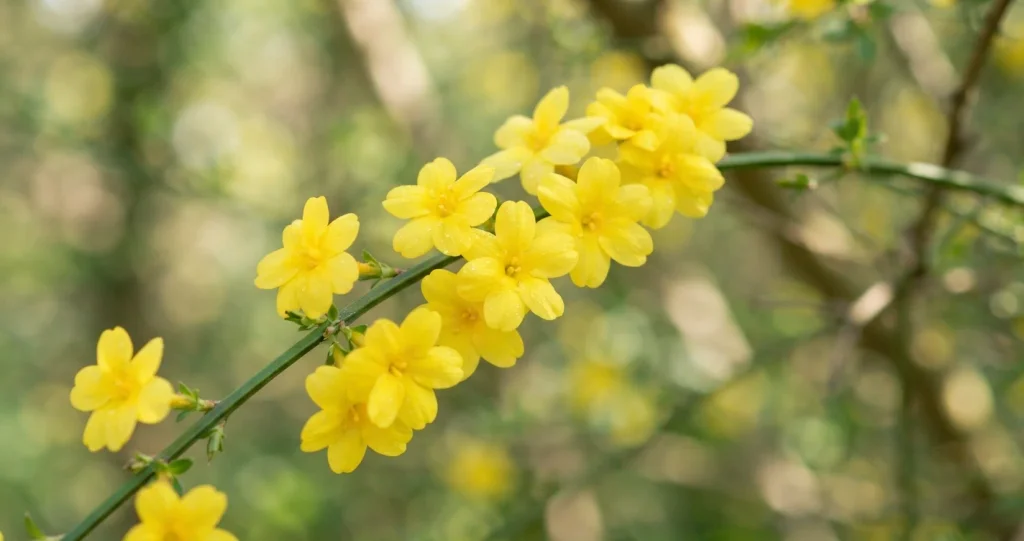
Winter jasmine is sometimes mistaken for forsythia because both produce yellow flowers before their leaves fully develop.
Forsythia generally blooms in spring and has flowers with four prominent lobes.
Winter jasmine typically flowers earlier, features green arching stems, and has blossoms that commonly display six lobes.
Its cascading growth habit also helps distinguish it from many upright forsythia varieties.
How Large Does Winter Jasmine Grow?
When grown as a freestanding shrub, winter jasmine commonly reaches approximately 3–4 feet in height and 4–7 feet in width.
Individual plants can become wider as their stems spread and root where they touch the ground.
With suitable vertical support, the branches may extend upward to 10–15 feet.
A Natural Groundcover
The shrub’s arching stems make it useful for covering slopes and large planting areas.
Branches touching moist soil may develop roots, allowing the plant to gradually spread.
This characteristic can be useful in spacious landscapes but requires monitoring in smaller gardens.
Growing Against a Wall
Winter jasmine can create a beautiful curtain of green stems and yellow flowers when trained along a wall.
A trellis or horizontal support wires help maintain the desired shape.
Regular maintenance prevents the branches from becoming excessively tangled.
The Best Growing Conditions for Winter Jasmine
Although winter jasmine is relatively adaptable, choosing the right planting location can make a noticeable difference in flowering and overall growth.
Sunlight
Winter jasmine grows in full sun or partial shade.
Sunny locations generally encourage more abundant flowering, while heavily shaded areas may produce fewer blossoms.
A south-facing wall can provide a favorable microclimate, particularly in regions with colder winters.
Soil and Drainage
The shrub adapts to several soil types, including sandy, loamy, and clay soils with adequate drainage.
Moderately fertile soil with regular moisture is generally suitable.
Avoid locations where water accumulates around the roots for extended periods.
USDA Hardiness Zones
Winter jasmine is generally recommended for USDA Hardiness Zones 6–10.
Although established plants tolerate freezing temperatures, their flowers may become damaged during particularly severe cold spells. Plant Finder
Watering Requirements
Newly planted shrubs benefit from consistent moisture during establishment.
Mature plants can tolerate occasional dry periods, although prolonged drought may reduce their vigor.
Water according to rainfall, soil moisture, and seasonal conditions.
How to Plant and Care for Winter Jasmine
Winter jasmine is relatively easy to establish when its basic growing requirements are met.
Choose the Right Planting Season
Spring and fall are generally suitable for planting.
These seasons often provide moderate temperatures that allow roots to establish before more challenging weather arrives.
In colder regions, spring planting may give young shrubs additional time to develop before winter.
Prepare the Planting Area
Dig a hole wider than the root ball and approximately equal to its depth.
Position the shrub at its original growing depth, backfill with soil, and water thoroughly.
Allow sufficient space for its spreading branches.
Apply Organic Mulch
Spread 2–3 inches of organic mulch around the root zone, leaving a small gap around the base of the stems.
Mulch helps retain moisture, moderate soil temperatures, and limit weed competition.
Fertilize Moderately
Winter jasmine generally requires little supplemental fertilizer when growing in suitable garden soil.
Excessive nitrogen may encourage leafy growth rather than flowering.
A soil test can help determine whether additional nutrients are necessary.
How to Prune and Propagate Winter Jasmine
Correct pruning helps maintain an attractive shape without sacrificing the following winter’s flowers.
Prune Immediately After Flowering
Because winter jasmine blooms on older growth, pruning in fall can remove developing flower buds.
The preferred time to prune is shortly after the flowering season ends.
Remove dead, damaged, crowded, or excessively long branches as needed.
Older, tangled specimens can also tolerate substantial rejuvenation pruning, although flowering may temporarily decrease. extension.uga.edu
Propagate Through Natural Layering
One of the most fascinating characteristics of winter jasmine is its ability to produce new plants from branches touching the ground.
Gardeners can take advantage of this process through layering.
Select a flexible lower stem, bend part of it onto the soil, and secure it in place while leaving the growing tip exposed.
Keep the soil moderately moist. Once sufficient roots have developed, separate the new plant from its parent and transplant it.
This method allows gardeners to multiply established shrubs without starting from seed.
Wildlife Benefits and Ecological Considerations
Winter jasmine provides structural cover and seasonal flowers in gardens where relatively few plants are blooming.
On mild winter days, some active insects may investigate its blossoms.
However, its value to North American pollinators varies by location and should not be overstated.
Combine It With Native Plants
Winter jasmine is not native to North America.
Gardeners who prioritize biodiversity can combine it with regionally native flowering shrubs, trees, and perennials.
American witch hazel and vernal witch hazel, where locally appropriate, offer native alternatives with interesting cold-season flowering habits.
Prevent Unwanted Spreading
Because winter jasmine can reproduce through rooted stems, it may spread beyond its intended planting area.
Inspect the edges of established plants regularly and remove unwanted rooted branches.
Check regional invasive plant recommendations before introducing nonnative shrubs into your landscape.
Common Winter Jasmine Growing Problems
Winter jasmine is generally considered relatively trouble-free, but occasional problems can affect its appearance.
Few or Missing Flowers
Insufficient sunlight, poorly timed pruning, and severe winter weather can all contribute to reduced flowering.
Review the plant’s location and maintenance history before applying fertilizer.
Excessive Branch Growth
Unmanaged shrubs may develop dense, tangled branches.
Selective pruning after flowering helps maintain an open, attractive structure.
Insects and Root Problems
Aphids, mealybugs, and Japanese beetles may occasionally affect winter jasmine. North Carolina Extension Gardener Plant Toolbox
Poor drainage can also contribute to root stress.
Regular observation and appropriate growing conditions are often sufficient to prevent minor problems from becoming serious.
In Your Own Yard: Designing With Winter Jasmine
Winter jasmine is particularly effective when planted where its flowers can be appreciated during colder weather.
Brighten a Retaining Wall
Allow the flexible stems to cascade naturally over a stone or brick retaining wall.
The yellow blossoms create a striking contrast against neutral surfaces.
Create a Winter Garden Border
Combine winter jasmine with evergreen shrubs, ornamental grasses, and other cold-season flowering plants.
Different textures and flowering periods can maintain visual interest throughout winter.
Decorate a Bare Trellis
Train the branches along a sturdy trellis using soft garden ties.
The green stems provide an attractive framework even before flowering begins.
Plant Near a Frequently Used Window
Winter gardens are often enjoyed from indoors.
Positioning winter jasmine within view of a kitchen or living room window allows its cheerful flowers to be appreciated even on the coldest days.
Frequently Asked Questions
1. Does winter jasmine flower in freezing temperatures?
Winter jasmine can bloom during mild periods throughout winter. However, hard freezes may damage open flowers. Additional blossoms can emerge from surviving buds when more favorable temperatures return.
2. Is winter jasmine evergreen or deciduous?
Winter jasmine is deciduous, meaning it typically loses its leaves during the colder months. Its young green stems remain visually attractive throughout winter, sometimes giving the impression of evergreen growth.
3. Can winter jasmine grow in pots?
Yes, winter jasmine can grow in large containers with suitable drainage. Container-grown plants require regular moisture monitoring, occasional pruning, and additional root protection during severe winter weather.
Conclusion
On a quiet February morning, when frost still covers the lawn and most garden plants remain dormant, a handful of golden flowers can completely transform the landscape.
That is the remarkable appeal of winter jasmine.
Its bright yellow blossoms, graceful branches, adaptable growing habits, and unusual flowering season make it a distinctive addition to many gardens.
With adequate sunlight, well-drained soil, and pruning after flowering, this shrub can provide seasonal beauty for years.
And while the rest of the garden waits for spring, winter jasmine offers a gentle reminder that nature follows more than one calendar.
Sometimes, sunshine arrives in the form of a flower.
External Sources
- Oregon State University — Jasminum nudiflorum Botanical characteristics, winter flowering, and natural propagation.
- NC State Extension — Winter Jasmine Growing conditions, identification, and maintenance.
- Missouri Botanical Garden — Winter Jasmine Hardiness zones, pruning, and landscaping recommendations.