
Imagine walking through a quiet woodland in the middle of winter. Most flowering plants have disappeared beneath fallen leaves, and the forest floor seems almost lifeless. Yet, tucked among mosses and decaying logs, tiny green vines remain vibrant, sometimes decorated with brilliant red berries.
This remarkable little plant is partridgeberry (Mitchella repens), a native North American evergreen that offers year-round beauty in places where many garden plants struggle.
With its delicate white flowers, glossy leaves, and unusual red fruits, partridgeberry is more than an attractive woodland plant. It is also a fascinating example of how native species adapt to shaded environments.
For gardeners hoping to create a natural woodland landscape, this slow-growing groundcover offers an opportunity to combine ornamental beauty with ecological value.
Its most intriguing feature, however, may be hidden in its flowers: two blossoms can contribute to the formation of what appears to be a single berry.
Table of Contents
- What Makes Partridgeberry So Special?
- Where Partridgeberry Grows Naturally
- Partridgeberry: The Science Behind Its Unusual Flowers and Berries
- Why Partridgeberry Makes an Excellent Shade Groundcover
- How to Grow Partridgeberry in Your Garden
- Soil, Water, and Seasonal Care
- Partridgeberry and Its Role in Woodland Ecosystems
- Common Growing Problems and Their Solutions
- In Your Own Yard: Creating a Native Woodland Corner
- Frequently Asked Questions
What Makes Partridgeberry So Special?
Partridgeberry is a low-growing, evergreen perennial belonging to the coffee family, Rubiaceae.
Unlike upright shrubs or tall woodland flowers, it spreads horizontally along the ground through slender, creeping stems.
These stems can root at nodes where they contact suitable soil, gradually forming small patches of greenery.
Tiny Leaves With Distinctive Patterns
One of partridgeberry’s most recognizable features is its foliage.
The leaves are small, rounded to oval, and arranged in opposite pairs along the stems.
They are usually dark green with a pale central vein and lighter branching veins that create an attractive pattern.
Because the leaves remain evergreen, they provide visual interest even after surrounding deciduous plants have lost their foliage.
In colder regions, exposed leaves may develop darker or purplish tones during winter.
Flowers That Look Like Miniature Stars
During late spring or summer, depending on location, partridgeberry produces small, white, tubular flowers.
The flowers often have four spreading lobes and a delicate, slightly fuzzy appearance.
They typically occur in pairs.
Although individual blossoms are small, their unusual structure makes them especially interesting when viewed closely.
Bright Red Berries That Last Into Winter
Following successful pollination, the plant can produce rounded red fruits.
These fruits may remain visible through autumn and into winter, depending on weather conditions and wildlife activity.
Their bright color contrasts beautifully with the dark evergreen leaves.
The berries are an important part of the plant’s ecological story, but their formation is even more unusual than their appearance suggests.
Where Partridgeberry Grows Naturally
Partridgeberry is native to a broad area of eastern North America.
Its natural distribution extends from parts of eastern Canada through much of the eastern United States, including areas of the Southeast.
It is commonly associated with woodland habitats where shade, organic matter, and relatively stable soil moisture create favorable growing conditions.
A Plant of Forest Floors
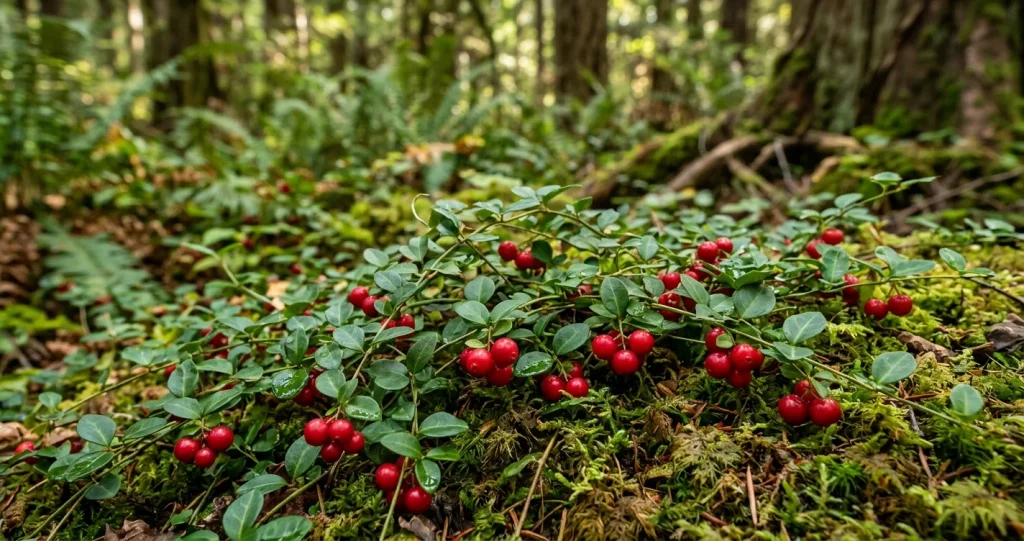
In nature, partridgeberry often grows beneath trees in deciduous, mixed, and coniferous forests.
It may appear along shaded slopes, beside decaying logs, or among mosses and fallen leaves.
These locations frequently provide a loose layer of organic material that helps retain moisture.
The plant generally favors acidic soils, although exact growing conditions vary across its natural range.
Why Woodland Shade Matters
Forest canopies reduce the amount of direct sunlight reaching the ground.
Partridgeberry is adapted to these lower-light conditions.
Its evergreen leaves allow it to retain photosynthetic tissue throughout the year, potentially taking advantage of favorable light and temperature conditions when they occur.
However, evergreen does not mean continuously active.
Photosynthesis and growth still depend on environmental conditions, including temperature, moisture, and available light.
This ability to persist beneath trees helps explain why partridgeberry can succeed in garden locations that are challenging for many sun-loving groundcovers.
Partridgeberry: The Science Behind Its Unusual Flowers and Berries
Perhaps the most fascinating feature of partridgeberry is its reproductive biology.
What appears to be one ordinary red berry actually develops from a pair of flowers.
This distinctive process sets the plant apart from many familiar garden species.
Two Flowers, One Fruit
Partridgeberry flowers usually develop in pairs, with their ovaries closely associated at the base.
After successful fertilization, the paired ovaries develop together into a single fleshy fruit-like structure.
Botanically, this is commonly described as a double fruit.
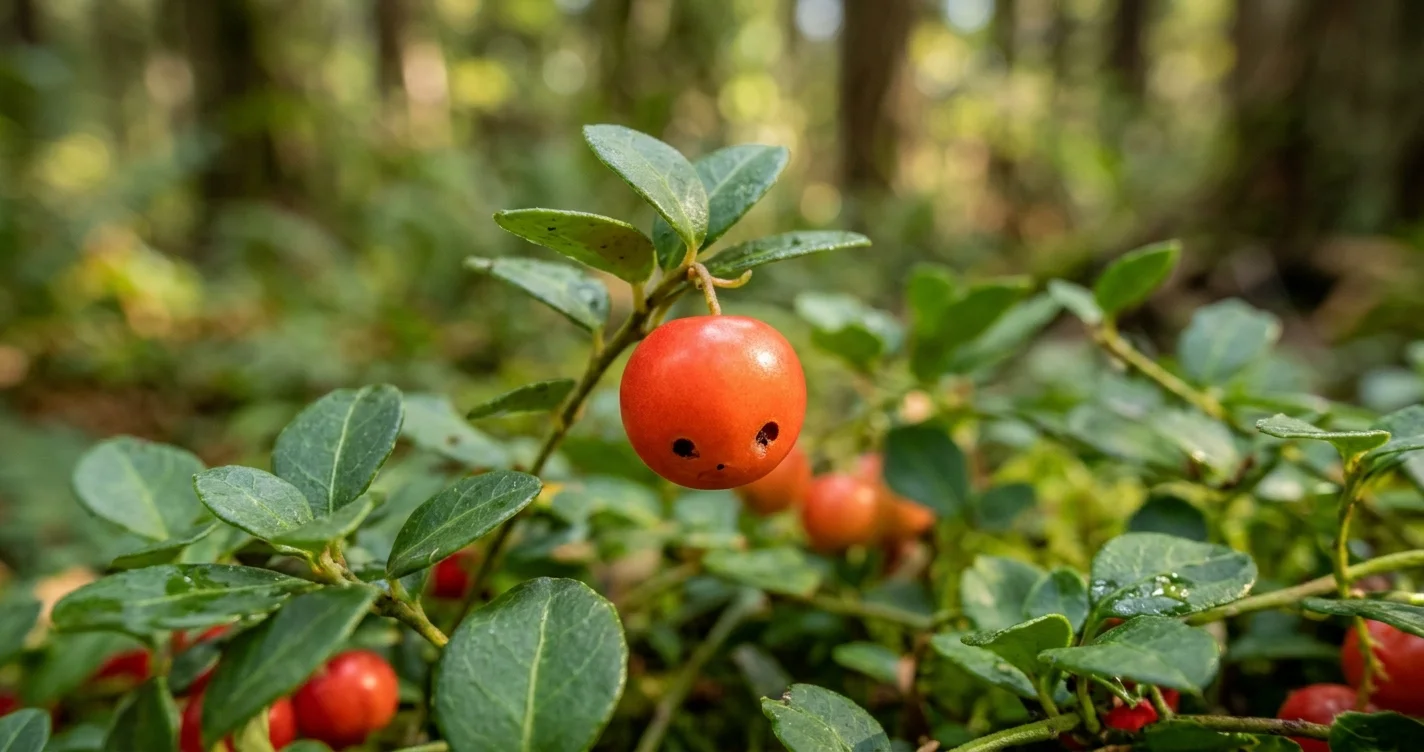
A close examination of the mature red fruit often reveals two small marks near its upper surface.
These marks correspond to the two flowers involved in its formation.
This is one of the easiest ways to recognize the plant’s unusual reproductive structure.
Why Its Flowers Have Different Forms
Partridgeberry also exhibits a floral characteristic called distyly.
In distylous plants, flowers occur in two forms with different arrangements of reproductive structures.
One form has a relatively long style and shorter stamens.
The other has a shorter style and longer stamens.
These differences influence how pollen is transferred between flowers.
In many distylous species, successful seed production is favored by pollen exchange between compatible floral forms.
Partridgeberry’s reproductive system is therefore more complicated than simply producing flowers and waiting for insects to visit.
How Pollinators Help
Small bees and other flower-visiting insects may transfer pollen as they move between blossoms.
The exact pollinator community varies with region, habitat, and seasonal conditions.
Pollination is important because the development of mature fruits and viable seeds depends on successful reproduction.
A garden planting consisting of a single floral form may have limited fruit production if compatible pollen is unavailable.
This is one reason why obtaining plants from genetically diverse, responsibly propagated sources can be beneficial when berry production is a goal.
Why the Red Fruit Matters
The red fruits provide a potential food resource for certain woodland birds and other wildlife.
Their persistence into colder months can make them particularly noticeable when other colorful fruits are scarce.
However, wildlife use varies across habitats.
Partridgeberry is not necessarily a major food source everywhere it grows.
Its ecological importance is better understood as part of a diverse woodland plant community rather than as a single species supporting an entire ecosystem.
Why Partridgeberry Makes an Excellent Shade Groundcover
Many gardeners struggle with bare soil beneath mature trees.
Grass often grows poorly in deep shade, while some ornamental groundcovers require more sunlight or regular maintenance.
Partridgeberry offers a native alternative in suitable locations.
A Naturally Low-Growing Habit
Partridgeberry typically remains only a few inches tall.
Instead of producing upright stems, it spreads across the soil surface.
This makes it especially attractive along woodland paths, beneath shrubs, and around naturalistic planting areas.
Its compact growth habit creates a delicate appearance without obscuring neighboring plants.
Evergreen Beauty Across the Seasons
The foliage remains present through winter in many climates.
Spring and summer may bring small white flowers, while autumn and winter can reveal red fruits.
This combination provides several seasons of visual interest.
Unlike some rapidly spreading groundcovers, however, partridgeberry generally establishes slowly.
It is best suited to gardeners who appreciate gradual, natural-looking growth.
A Gentle Alternative to Aggressive Groundcovers
Some introduced groundcover species can spread aggressively and displace native vegetation.
Partridgeberry is generally less vigorous.
In appropriate native habitats, it can contribute to a layered woodland planting without the rapid expansion associated with certain invasive ornamentals.
Still, its slow growth means it may struggle against dense weeds or highly competitive plants.
Successful establishment usually requires patience and careful site preparation.
How to Grow Partridgeberry in Your Garden
Growing partridgeberry successfully begins with understanding its natural habitat.
Rather than treating it like a conventional bedding plant, gardeners should aim to reproduce the conditions of a healthy woodland floor.
Choose a Shaded Location
Partridgeberry generally performs best in partial to full shade.
Filtered light beneath deciduous trees can be particularly suitable.
In warmer regions, protection from intense afternoon sunlight is especially important.
Excessive direct sun may contribute to leaf stress, particularly when soil moisture is limited.
Prepare Organic-Rich Soil
A loose, well-drained soil containing organic matter is usually ideal.
Partridgeberry commonly grows in acidic woodland soils.
Before making major soil amendments, consider testing your soil to understand its existing pH and drainage characteristics.
Leaf mold and other well-decomposed organic materials can help create a woodland-like planting environment.
Avoid excessive fertilizer applications, which are generally unnecessary for this modest-growing native plant.
Plant Carefully
Container-grown partridgeberry should be installed at approximately the same depth at which it was growing in its nursery container.
Gently loosen tightly circling roots if necessary.
Water the planting area thoroughly after installation.
Maintain appropriate moisture during establishment, while allowing excess water to drain away.
Because the stems spread close to the soil surface, avoid burying the foliage beneath thick mulch.
Soil, Water, and Seasonal Care
Once established in a suitable location, partridgeberry often requires relatively little intensive maintenance.
However, it is not completely maintenance-free.
Keep Moisture Consistent
Partridgeberry generally prefers evenly moist, well-drained conditions.
Prolonged drought may cause stress, especially during establishment.
At the same time, continuously saturated soil can create unfavorable conditions for roots.
A thin layer of natural leaf litter may help conserve moisture and moderate soil temperatures.
Protect the Woodland Soil Surface
Forest soils contain complex communities of fungi, microorganisms, and small invertebrates.
Avoid unnecessary digging or repeated disturbance around established plants.
Allowing some fallen leaves to remain can help maintain a more natural woodland environment.
However, thick, matted layers that completely smother the small foliage may need gentle adjustment.
Limit Pruning and Fertilization
Partridgeberry rarely needs significant pruning.
Occasional removal of dead or damaged stems is usually sufficient.
Routine heavy fertilization is generally unnecessary in suitable soil.
The priority should be maintaining appropriate light, moisture, and soil structure rather than encouraging rapid growth.
Partridgeberry and Its Role in Woodland Ecosystems
Native groundcovers contribute to woodland biodiversity in ways that are not always immediately visible.
Partridgeberry is one small component of these ecological relationships.
Supporting Woodland Wildlife
Its flowers can provide resources for visiting insects.
Its fruits may be consumed by certain birds and other animals.
Wildlife interactions vary with region and season, so it is best to view partridgeberry as one element within a larger native plant community.
Maintaining Ground-Level Plant Diversity
A healthy woodland floor contains multiple layers of vegetation.
Mosses, ferns, wildflowers, seedlings, and creeping plants occupy different spaces and respond to different environmental conditions.
Partridgeberry contributes to this diversity through its evergreen foliage and low-growing habit.
It may also provide small-scale cover at ground level.
Why Native Plant Communities Matter
Plants native to a region have developed ecological relationships with local organisms over long periods.
Including regionally appropriate native species in gardens can help maintain habitat diversity.
However, native status alone does not guarantee success.
The plant must also match the garden’s soil, light, moisture, and climate conditions.
For partridgeberry, a shaded woodland-style planting is usually much more appropriate than an exposed, dry landscape bed.
Common Growing Problems and Their Solutions
Partridgeberry is relatively resilient in suitable conditions, but several problems can limit its success.
Leaves Turning Brown
Brown or scorched foliage may indicate excessive sunlight, drought stress, winter exposure, or another environmental problem.
Check soil moisture and light conditions before making changes.
In hot climates, additional afternoon shade may help.
Slow or Limited Growth
Slow growth is normal for partridgeberry.
However, poor establishment can also result from compacted soil, inadequate moisture, unsuitable soil chemistry, or competition from nearby plants.
Avoid trying to force rapid growth with large fertilizer applications.
Instead, improve the growing environment gradually.
Few Flowers or Berries
Limited flowering may reflect plant age, environmental conditions, or inadequate light.
Poor fruit production may also result from insufficient pollination or a lack of compatible floral forms.
Because partridgeberry has a specialized reproductive system, adding genetically distinct nursery-propagated plants may improve the chances of successful fruiting.
Results are not guaranteed, particularly when the floral forms of purchased plants are unknown.
In Your Own Yard: Creating a Native Woodland Corner
A small shaded garden can become an inviting space for native plants and wildlife.
Partridgeberry fits naturally into this type of design.
Start With a Small Planting Area
Choose a sheltered location beneath trees or beside shrubs where the soil remains reasonably moist.
Remove aggressive weeds before planting.
Incorporate suitable organic matter only when needed, and avoid damaging established tree roots.
Begin with several nursery-propagated partridgeberry plants rather than expecting one plant to cover a large area quickly.
Combine It With Other Native Woodland Plants
Depending on your region, partridgeberry may grow alongside suitable native ferns, woodland sedges, or shade-tolerant wildflowers.
Choose companion plants with similar moisture and soil preferences.
Avoid placing partridgeberry directly beneath vigorous plants that could overwhelm its slow-growing stems.
Leave Room for Natural Processes
Allow some leaves to decompose naturally.
Preserve small pieces of decaying wood where practical and safe.
These materials can contribute to a woodland-like environment and provide habitat for decomposers and other small organisms.
A naturalistic garden does not need to look neglected.
Thoughtful plant placement, defined paths, and selective maintenance can create an attractive space while preserving ecological functions.
Buy Responsibly Propagated Plants
Partridgeberry may be available from nurseries specializing in native woodland plants.
Choose nursery-propagated stock rather than plants collected from wild populations.
Wild collection can disturb sensitive woodland habitats, and local regulations may restrict removing plants from natural areas.
Purchasing responsibly grown plants helps protect existing populations while supporting native plant cultivation.
Frequently Asked Questions
1. Does partridgeberry stay green during winter?
Yes. Partridgeberry is an evergreen perennial, and its leaves generally remain on the plant throughout winter. However, exposed foliage may become darker, purplish, or weathered under harsh conditions. Snow cover and local climate can influence how the plant looks during the coldest months.
2. Can partridgeberry grow in full shade?
Partridgeberry can grow in substantial shade, particularly in woodland environments. However, extremely low light may reduce growth or flowering. Partial shade and filtered woodland light often provide favorable conditions, especially when soil remains moist and well-drained.
3. How quickly does partridgeberry spread?
Partridgeberry is generally a slow-growing groundcover. Its creeping stems can root where they contact suitable soil, gradually expanding into small patches. Growth rates vary with climate, moisture, soil conditions, and competition. It is better suited to patient woodland gardening than to projects requiring rapid ground coverage.
Conclusion
Return to that quiet winter woodland where the forest floor appears almost empty.
Beneath the trees, tiny green leaves still shine among fallen branches and mosses. Here and there, bright red fruits add unexpected color to the muted landscape.
This is the understated beauty of partridgeberry.
Its creeping evergreen stems, delicate paired flowers, and unusual double fruits make it one of the more intriguing native groundcovers of eastern North America.
For gardeners with shaded, woodland-like conditions, partridgeberry offers a way to introduce year-round greenery while supporting a more diverse native planting.
It may never grow as quickly as conventional ornamental groundcovers, but that is part of its appeal.
Sometimes the most fascinating plants are not the tallest, brightest, or fastest-growing.
They are the quiet species that reward careful observation, revealing extraordinary natural details just a few inches above the forest floor.
Internal Sources
1. How Cranberries Are Harvested: Why Farmers Flood the Bog and Why Berries Float
Understanding how cranberries are harvested and why farmers flood the bog to make the berries float reveals one of the most fascinating techniques in North American agriculture.
External Sources
1. Maine Department of Agriculture — Nature Note: Twins, Partridgeberry
A single red partridgeberry fruit develops from two flowers. The two tiny dimples visible on the fruit are remnants of those blossoms.
2. Scientific Study (2024) — Floral Volatile Organic Compounds of Mitchella repens
Partridgeberry produces two different flower forms, and successful reproduction requires pollen transfer between compatible forms. Researchers also investigated the floral scents involved in attracting pollinators.
3. Georgia Native Plant Society — Partridgeberry
Partridgeberry is a creeping vine that stays close to the ground rather than climbing. Its bright red fruits can persist through winter, and its evergreen leaves provide year-round interest.