
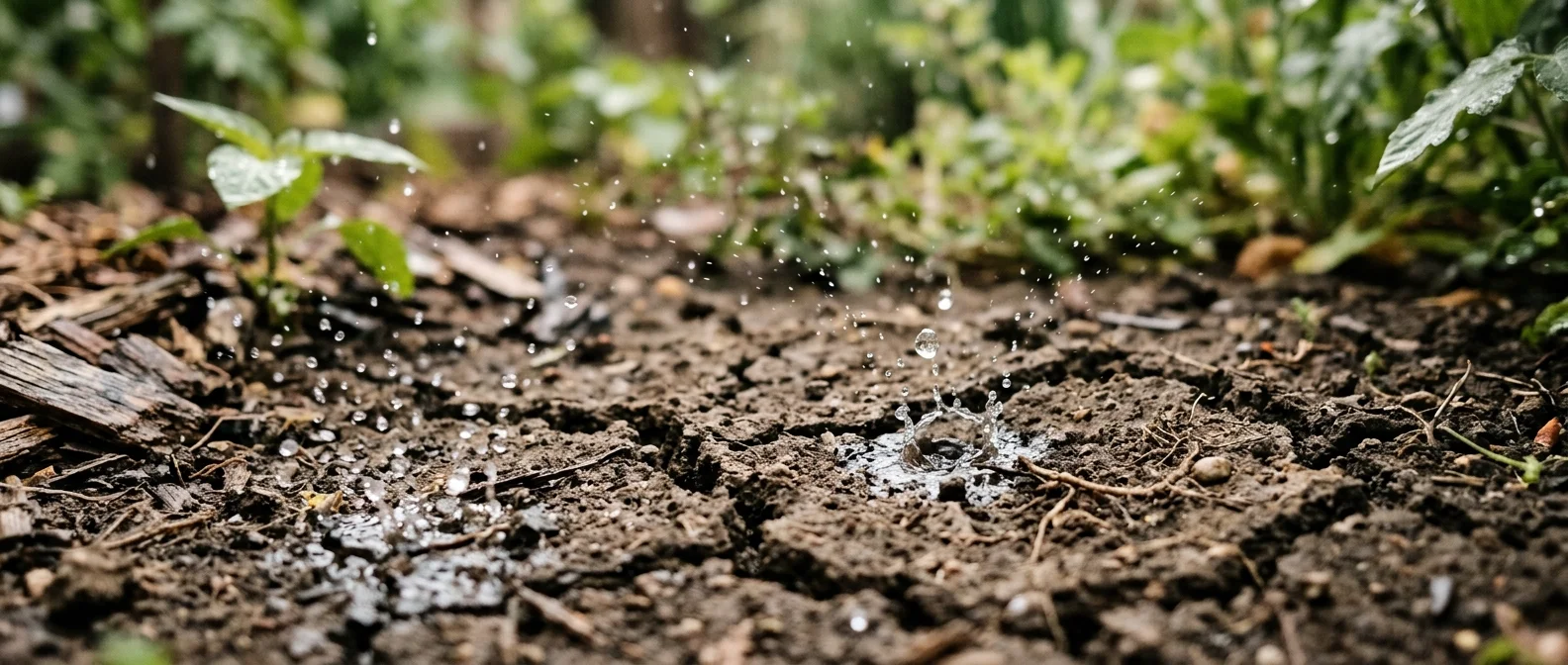
Sometimes, you can smell the rain before a single drop reaches the ground.
The sky darkens, a breeze moves through the trees, and suddenly the air carries a familiar earthy fragrance. It smells like damp soil, fresh leaves, and the beginning of something new. For many people, that scent brings back memories of summer storms, childhood gardens, or quiet walks through the woods.
That unmistakable aroma has a name: petrichor.
But the smell of rain is not simply the smell of water. It comes from a fascinating interaction between soil, plants, microorganisms, and the atmosphere. Tiny particles released when raindrops strike the ground help carry natural compounds into the air, creating one of nature’s most recognizable fragrances.
Understanding petrichor reveals something surprising about the ground beneath our feet. Even ordinary garden soil contains a complex biological world capable of influencing the air we breathe.
Table of Contents
- What Is Petrichor?
- The Science Behind Petrichor: How and Why Rain Creates That Earthy Smell
- Petrichor, Ozone, and the Different Smells of Rain
- Why Petrichor Often Seems Stronger After a Dry Spell
- Why the Smell of Rain Feels So Memorable
- Petrichor and the Living Soil Beneath Your Garden
- In Your Own Yard: Experience the Science of Petrichor
- Frequently Asked Questions About Petrichor
- Conclusion
What Is Petrichor?
Petrichor is the distinctive earthy smell commonly associated with rain falling on dry ground, particularly after a warm or dry period.
The word comes from two Greek roots: petra, meaning stone, and ichor, a substance associated with the gods in Greek mythology.
Australian researchers Isabel Joy Bear and Richard G. Thomas introduced the term in 1964 while investigating the characteristic odor released when rain wets dry surfaces.
Their research helped establish that the fragrance was associated with substances that accumulate on rocks and soil during dry conditions and become noticeable when moisture arrives.
Today, scientists understand that the familiar smell of rain can involve several different compounds and processes.
Some originate from microorganisms living in soil. Others come from plants or chemical reactions in the atmosphere.
Together, they create the complex sensory experience we call petrichor.
Petrichor Is Not the Smell of Water
Pure water has little to no odor.
When rain falls onto a clean, odorless surface, it does not automatically create the rich earthy fragrance associated with a garden after a storm.
The characteristic scent appears when water interacts with materials already present in the environment.
Dry soil, fallen leaves, rocks, plant residues, and microbial communities can all influence the compounds released into the surrounding air.
This explains why rain smells different depending on where it falls.
A wooded backyard may smell rich and earthy, while a dry desert landscape may release a sharper, more herbal fragrance.
The Science Behind Petrichor: How and Why Rain Creates That Earthy Smell
The science of petrichor involves a remarkable sequence of events, beginning long before the first raindrop falls.
To understand the process, we need to look at soil microorganisms, plant compounds, and the behavior of tiny water droplets.
1. Soil Microorganisms Produce Geosmin
One of the best-known compounds associated with the earthy smell of rain is geosmin.
Geosmin is an organic compound produced by certain microorganisms, including some bacteria in the genus Streptomyces.
These bacteria are common members of soil microbial communities and play important roles in breaking down organic material.
As they grow and carry out their normal biological activities, some species produce geosmin.
The compound has an exceptionally recognizable earthy odor.
Humans can detect geosmin at very low concentrations, which helps explain why a relatively small amount can create such a noticeable smell.
Geosmin is not exclusive to rainy weather. It can also contribute to earthy odors in freshly disturbed soil, certain foods, and some freshwater environments.
In gardens, geosmin-producing microorganisms may live among decomposing leaves, organic matter, and soil particles.
When rain arrives, the compound can become airborne and reach our noses.
2. Plants Leave Aromatic Compounds on Dry Surfaces
Microorganisms are only part of the story.
Plants also release natural chemical compounds into their surroundings.
Some plant-derived oils and other substances can accumulate on dry soil, stones, and nearby surfaces.
During dry weather, these materials may remain on or within the upper layers of the ground.
When rain wets those surfaces, some compounds can be released into the air.
Their contribution varies with vegetation, soil conditions, temperature, and the length of the preceding dry period.
This helps explain why petrichor does not smell exactly the same everywhere.
A garden filled with aromatic herbs may have a different post-rain fragrance from a grassy field or an oak woodland.
In many cases, the familiar earthy smell is a blend of microbial and plant-derived compounds rather than one chemical acting alone.
3. Raindrops Release Tiny Aerosols
One of the most fascinating discoveries about petrichor concerns what happens when a raindrop strikes a porous surface.
Researchers at the Massachusetts Institute of Technology investigated how falling raindrops interact with surfaces such as soil.
They found that when certain raindrops hit porous materials, tiny air bubbles can become trapped beneath the spreading water.
These bubbles may rise and burst, releasing microscopic droplets called aerosols.
Those aerosols can carry substances from the surface into the surrounding air.
Imagine a raindrop landing on dry garden soil.
The impact spreads water across the soil, trapping tiny pockets of air. As bubbles escape, microscopic droplets can be ejected upward.
Some of these droplets may contain compounds responsible for the earthy fragrance.
Air movement then helps distribute them beyond the exact spot where the rain landed.
This mechanism helps explain how soil-related odors become noticeable during rainfall.
4. Rainfall Intensity Changes the Process
A gentle shower and a heavy downpour do not necessarily release the same amount of airborne material.
Laboratory research suggests that raindrops striking porous surfaces under certain conditions can generate particularly effective aerosol release.
Light to moderate impacts may allow bubbles to form and burst efficiently, while more forceful impacts can behave differently.
However, the outcome depends on several factors, including soil texture, surface moisture, rainfall intensity, and the compounds present.
This means the relationship between rainfall and petrichor is not as simple as more rain producing more smell.
A gentle shower following a dry spell may produce a noticeable earthy fragrance, while a powerful storm on already saturated ground may smell quite different.
5. Wind Carries the Fragrance
Once odor-producing compounds enter the air, local weather conditions influence where they travel.
Wind can transport airborne particles and volatile compounds away from the wet ground.
Humidity and temperature can also influence how people experience outdoor odors.
Sometimes, a breeze carries the fragrance from an area where rain has already started toward a nearby location that remains dry.
That is one reason people occasionally notice an earthy smell before rain reaches them.
However, not every smell that precedes a storm is petrichor.
Other atmospheric compounds may be involved.
Petrichor, Ozone, and the Different Smells of Rain
Rain does not have one universal fragrance.
The smell before a thunderstorm may differ from the earthy aroma that develops when water reaches the ground.
The Sharp Smell Before a Storm
Some people notice a sharp, clean, slightly metallic odor before or during thunderstorms.
This can sometimes be associated with ozone, a form of oxygen containing three oxygen atoms.
Electrical activity during thunderstorms can contribute to atmospheric chemical reactions involving ozone and other reactive compounds.
Air movement may also bring ozone-rich air from higher levels toward the surface under certain conditions.
However, detecting a sharp odor before a storm does not prove that ozone is present or that a storm is imminent.
Outdoor smells are complex, and their sources can be difficult to identify without measurements.
The Earthy Smell After Rain Begins
Petrichor is more closely associated with moisture interacting with soil and other dry surfaces.
Its fragrance is commonly described as earthy, fresh, or reminiscent of damp stone.
Geosmin often contributes strongly to this experience.
Plant-derived compounds and local environmental conditions can add other aromatic notes.
The result is a scent that may feel familiar while changing subtly from one location to another.
Why Petrichor Often Seems Stronger After a Dry Spell
One of the most recognizable experiences of petrichor occurs when rain finally arrives after days or weeks without precipitation.
Several factors may contribute to this effect.
During dry periods, some plant-derived substances can accumulate on exposed surfaces. Soil microorganisms continue to influence the chemical environment, although their activity depends on moisture and other conditions.
Dry, porous surfaces may also interact with incoming raindrops differently from already wet ground.
When the first shower arrives, it can release a noticeable burst of odor-bearing compounds.
As rain continues and surfaces become saturated, the conditions for aerosol generation may change.
This is why the first minutes of a shower can sometimes seem especially fragrant.
Still, the intensity of petrichor varies considerably. Soil composition, vegetation, microbial communities, and recent weather all matter.
A dry spell does not guarantee a stronger smell in every garden.
Why the Smell of Rain Feels So Memorable
Petrichor is more than an interesting chemical phenomenon.
For many people, it is closely connected to memory.
The human sense of smell has strong connections with brain systems involved in emotion and memory.
A familiar odor can bring back experiences that seemed long forgotten.
The scent of wet soil might remind someone of helping a grandparent plant vegetables, playing outside after a summer storm, or walking through a forest after rainfall.
These associations help explain why the smell of rain can feel comforting or nostalgic.
But the emotional response is not universal.
People develop different associations with odors based on personal experience, culture, and environment.
Someone who associates heavy rainfall with flooding or difficult weather may respond differently.
There is no single emotional meaning built into petrichor itself.
Its chemistry is shared, but the memories it evokes are personal.
Petrichor and the Living Soil Beneath Your Garden
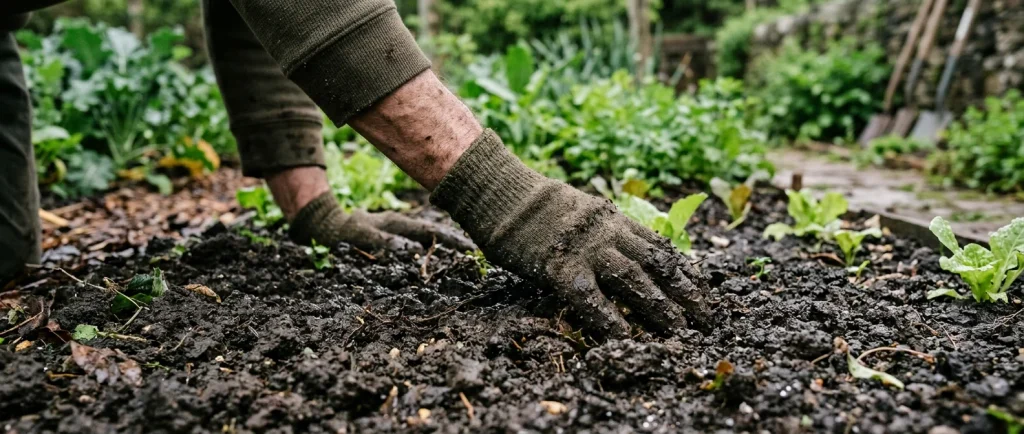
The smell of rain offers a small reminder that garden soil is biologically active.
Healthy soil can contain bacteria, fungi, microscopic organisms, insects, and other living creatures interacting with roots and decomposing organic material.
Some soil microorganisms help recycle nutrients from dead leaves and plant residues.
Others form relationships with plants or influence the availability of nutrients.
Geosmin-producing bacteria are one part of this broader underground community.
However, a strong earthy smell does not automatically prove that soil is healthy.
Different soils can produce different odors for many reasons.
Similarly, the absence of a noticeable petrichor scent does not mean a garden lacks beneficial microorganisms.
Soil health is better assessed through several characteristics, including structure, drainage, organic matter, plant growth, and biological activity.
Petrichor is a fascinating clue to natural processes, not a reliable soil-quality test.
In Your Own Yard: Experience the Science of Petrichor
You do not need laboratory equipment to appreciate the processes behind the smell of rain.
A backyard, vegetable garden, or even a few outdoor containers can offer opportunities to observe how moisture changes the environment.
Notice the First Rain After Dry Weather
After a dry period, pay attention to the air when a light shower begins.
Stand somewhere sheltered and safe, away from lightning and hazardous weather.
Notice whether the earthy fragrance appears immediately or becomes stronger after the soil gets wet.
Compare the smell near a garden bed, lawn, or mulched area.
The differences may reflect local vegetation, soil materials, and moisture conditions.
Compare Mulch, Soil, and Stone
Different surfaces can release different odors when moistened.
Try observing a mulched flower bed, a patch of bare soil, and a clean stone path after rainfall.
Leaf mulch may contribute organic, woodland-like notes.
Bare soil may produce a more distinctly earthy smell.
Stone surfaces can smell different depending on accumulated dust, organic residues, and surrounding conditions.
These observations are informal rather than controlled scientific tests, but they can make the chemistry of rain more tangible.
Try a Simple Watering Observation
On a dry day, gently water a small patch of garden soil using a watering can.
Stand nearby and notice whether an earthy smell develops.
Repeat the observation in another part of the yard with a different soil or mulch surface.
Use ordinary water and avoid disturbing moldy material or deliberately inhaling dust.
You may notice differences, or you may detect very little fragrance.
Both outcomes are normal.
The experiment illustrates how water interacts with materials already present in the soil.
Support a Living Garden Soil
Rather than trying to make your garden smell stronger, focus on maintaining good growing conditions.
Add suitable finished compost when needed, protect exposed soil with organic mulch, and avoid unnecessary compaction.
Water according to plant needs and local conditions.
Growing a variety of plants can also support a more diverse garden environment.
These practices benefit soil structure and biological activity, although they do not guarantee a particular petrichor scent.
The real reward is a garden that supports plants and the many organisms living beneath them.
Frequently Asked Questions About Petrichor
Sometimes, wind carries earthy compounds from nearby areas where rain has already begun. Other pre-storm odors may involve atmospheric chemicals or local environmental sources. Smelling rain does not reliably predict exactly when precipitation will arrive.
1. Why can I smell rain before it starts?
Sometimes, wind carries earthy compounds from nearby areas where rain has already begun. Other pre-storm odors may involve atmospheric chemicals or local environmental sources. Smelling rain does not reliably predict exactly when precipitation will arrive.
2. Is petrichor harmful to breathe?
The ordinary earthy smell of rain is generally not considered harmful at the concentrations people encounter outdoors. However, rain-related aerosols can sometimes carry soil particles or microorganisms, and people with respiratory sensitivities may need to avoid dusty or moldy environments.
3. Does petrichor happen in cities as well as forests?
Yes. Petrichor-related odors can occur wherever rain interacts with suitable surfaces containing soil, dust, plant residues, or other organic materials. Urban areas may produce a different mixture of smells because pavement, buildings, traffic-related compounds, and limited vegetation influence the local environment.
Conclusion
The next time you smell rain before you see it, remember that the fragrance is telling a story.
Beneath your feet, microorganisms produce aromatic compounds. Plants contribute their own chemical traces. Raindrops strike the ground, releasing tiny aerosols that carry those substances into the air.
Together, these processes create petrichor, the unmistakable earthy smell that often accompanies the arrival of rain.
What feels like a simple moment of freshness is actually the result of a remarkable interaction between biology, chemistry, and weather.
And perhaps that is the most wonderful part of petrichor: an ordinary shower can reveal just how much is happening in the natural world around us.