
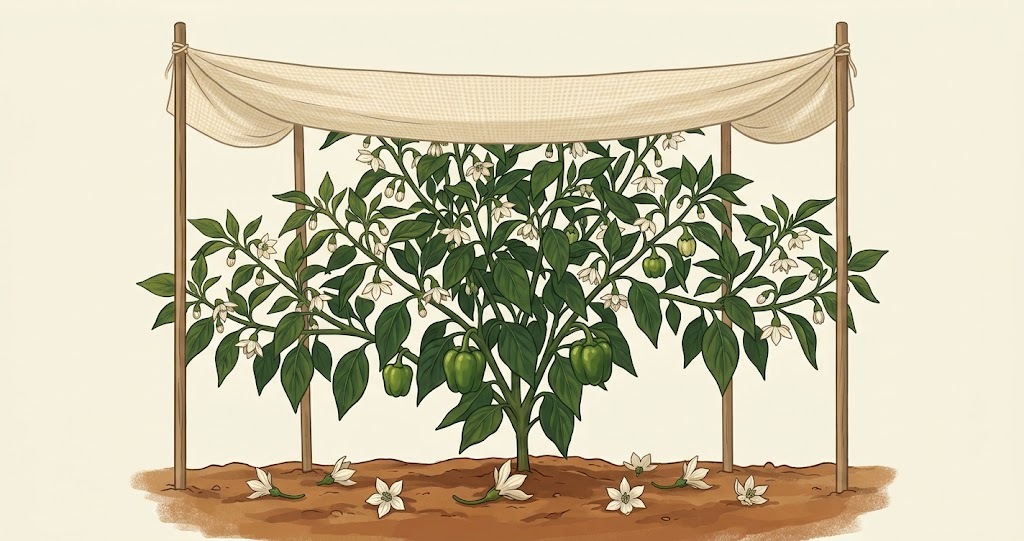
A pepper plant can look perfectly healthy in midsummer—deep green leaves, vigorous stems, and plenty of flowers—yet produce almost no peppers. When gardeners see pepper plants flowering no fruit heat is often the missing piece of the puzzle. Peppers love warmth, but there is a difference between warm growing weather and temperatures high enough to interfere with pollination and fruit set.
During prolonged heat, pepper flowers may drop before producing fruit, pollen performance can decline, and the plant may temporarily prioritize survival over reproduction. Hot nights can be especially important because the plant gets less relief from daytime heat.
The encouraging part is that this problem is often temporary. With steady moisture, moderate shade, appropriate varieties, and patience, healthy pepper plants frequently begin setting fruit again when temperatures become more favorable.
Table of Contents
- Why Pepper Flowers Don’t Always Become Peppers
- Pepper Plants Flowering No Fruit: Heat Explained
- What Temperatures Interfere With Pepper Fruit Set?
- Why Hot Nights Matter
- How Extreme Heat Causes Blossom Drop
- Heat and Pepper Pollination
- How to Recognize Heat-Related Blossom Drop
- Keep Soil Moisture Consistent
- Using Shade Cloth During Extreme Heat
- Can Hand Pollination Help?
- Avoid Overfertilizing During Heat
- Choosing Peppers for Hot Climates
- Timing Pepper Crops Around Extreme Heat
- Container Peppers and Heat
- Other Reasons Pepper Flowers Drop
- Frequently Asked Questions
- Final Thoughts
Why Pepper Flowers Don’t Always Become Peppers
Pepper flowers contain both male and female reproductive structures and are generally self-pollinating. A flower still needs viable pollen to reach the stigma and successfully complete fertilization before a fruit can develop.
Under favorable conditions, vibration from wind, insects, or movement of the plant helps transfer pollen within the flower. Fertilization follows, the flower’s ovary begins enlarging, and eventually you have a pepper.
Extreme temperatures can disrupt this sequence.
Flowers may develop but fail to set fruit. Others may be fertilized poorly, while some simply detach from the plant.
Gardeners usually describe all of these outcomes as “blossom drop.”
Pepper Plants Flowering No Fruit Heat: What’s Happening?
Peppers are warm-season vegetables, so it seems contradictory that summer heat could stop them from fruiting.
The distinction is between vegetative growth and successful reproduction.
A pepper plant may continue producing leaves and stems under conditions that aren’t favorable for pollination or fruit set. That’s why a healthy-looking plant isn’t proof that temperatures are suitable for fruit production.
University of Maryland Extension notes that blossom drop can occur when temperatures become too high or too low, and that poor pollination can prevent fruit development. University of Maryland Extension — Growing Peppers in a Home Garden
When gardeners encounter pepper plants flowering no fruit heat, therefore, the flowers themselves may be telling you more than the foliage.
What Temperatures Interfere With Pepper Fruit Set?
Peppers generally perform best with warm days and somewhat cooler nights.
Extension recommendations vary slightly depending on species, cultivar, humidity, and growing conditions, but the overall pattern is consistent: prolonged daytime temperatures around or above the low-to-mid 90s°F can interfere with fruit set, particularly when nights remain very warm.
The University of Minnesota Extension notes that peppers may drop blossoms when daytime temperatures exceed about 90°F and that high nighttime temperatures can also interfere with fruit set. University of Minnesota Extension — Growing Peppers
This isn’t a switch that flips at one exact temperature.
A single afternoon at 91°F doesn’t mean every flower will fall. Plant response depends on how long the heat lasts, nighttime temperatures, soil moisture, humidity, cultivar, root health, and the developmental stage of individual flowers.
Think in terms of sustained stress rather than one thermometer reading.
Why Hot Nights Matter
Gardeners naturally focus on afternoon highs, but nighttime temperatures deserve just as much attention.
Plants normally experience some relief after sunset. When nights stay unusually warm, respiratory demands remain high and reproductive processes can continue to experience heat stress.
University of Maryland Extension identifies excessively high nighttime temperatures as one factor associated with pepper blossom drop. University of Maryland Extension — Pepper Problems
That explains a frustrating situation common during heat waves.
You may provide afternoon shade and maintain good soil moisture, yet flowers continue dropping because nighttime conditions remain unfavorable.
Shade cloth can reduce daytime stress. It cannot make a hot night cool.
Sometimes the best treatment is simply keeping the plant healthy until the weather changes.
How Extreme Heat Causes Blossom Drop
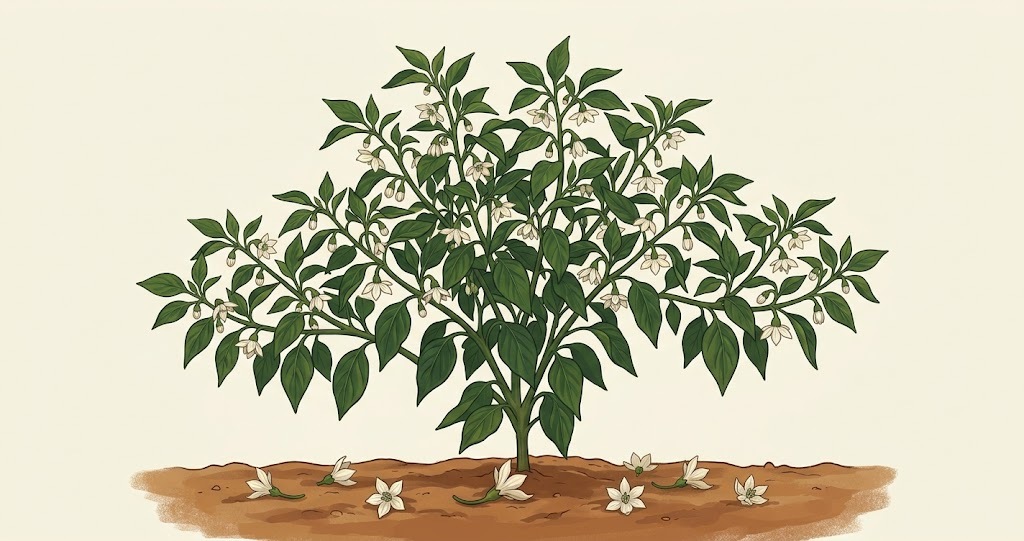
A pepper plant’s flowers are temporary structures.
If conditions prevent successful reproduction, maintaining them indefinitely offers little benefit to the plant. Stressed flowers may eventually develop an abscission layer and detach.
High temperature can interfere with several steps leading to fruit set.
Pollen viability can decline. Pollen release and germination can be affected, and successful fertilization becomes less reliable.
Heat often occurs alongside other stresses as well.
Soil dries faster. Leaves lose more water through transpiration. Containers heat rapidly. Roots may experience both high temperature and moisture fluctuations.
The combined stress can increase flower loss.
This is why addressing only pollination sometimes doesn’t solve the problem.
Heat and Pepper Pollination
Pepper flowers don’t normally require complicated hand pollination.
They are largely self-pollinating, and ordinary movement from wind and pollinating insects is often enough to release pollen.
But heat can reduce the quality of the pollen itself.
If pollen has already been damaged by temperature stress, manually moving more of it around won’t necessarily restore fruit set.
This is an important distinction.
When pepper plants flowering no fruit heat occurs during a severe heat wave, a lack of bees isn’t automatically the problem.
Look at temperature conditions first.
How to Recognize Heat-Related Blossom Drop
Heat-related problems often follow a recognizable pattern.
Plants appear generally healthy and continue flowering, but individual flowers yellow at the stem, shrivel, or drop. Tiny fruits either never form or stop developing very early.
Check recent weather.
If daytime temperatures have repeatedly climbed into the 90s°F and nights have remained unusually warm, heat becomes a strong suspect.
Also examine watering.
A plant experiencing extreme heat plus repeated wilting is dealing with more than reproductive heat stress.
If temperatures become milder and new flowers begin setting fruit normally, that’s another strong indication that weather was responsible.
Keep Soil Moisture Consistent
You cannot control outdoor air temperature, but you can prevent drought stress from making the situation worse.
Pepper roots perform best when soil moisture remains reasonably consistent rather than cycling repeatedly between very dry and saturated.
Water deeply enough to moisten the active root zone, then allow the soil to drain normally.
Don’t compensate for extreme heat by keeping the soil permanently soggy. Waterlogged roots create an entirely different set of problems.
A layer of organic mulch can help moderate soil temperature and slow evaporation.
Apply mulch around plants while leaving some space immediately around the stems.
The same principle of moisture consistency matters with other fruiting vegetables. Our guide to Blossom End Rot on Tomatoes explains why irregular soil moisture can disrupt calcium movement and contribute to that common tomato disorder.
Using Shade Cloth During Extreme Heat
Temporary shade can be useful when peppers are exposed to relentless afternoon sun during a severe heat wave.
The goal isn’t to turn a sunny vegetable garden into deep shade.
Peppers still need substantial light for photosynthesis and fruit production. Instead, moderate shade during the hottest portion of the afternoon can reduce leaf and fruit temperature and lower overall plant stress.
Use purpose-made shade cloth rather than opaque plastic or a heavy tarp.
A moderate shade percentage—often around 30%—is commonly suitable for vegetables because it reduces solar intensity without eliminating too much useful light.
Position the material above the plants with enough space for airflow.
Don’t wrap pepper plants tightly in fabric. Good ventilation remains important, particularly where heat is accompanied by high humidity.
Once extreme conditions pass, shade can be reduced or removed as appropriate.
Can Hand Pollination Help?
Sometimes.
If conditions are only marginally stressful and pollination is limited by still air or low insect activity, gently vibrating flowers can help release pollen.
The simplest method requires no brush.
Around late morning, when flowers are dry, gently tap flowering branches or lightly shake the plant. You can also touch the flower stem with an electric toothbrush for a second or two to create vibration without damaging the bloom.
A small artist’s brush can be used to move pollen between flowers, but this is usually unnecessary for peppers.
Don’t aggressively manipulate the blossoms.
And remember the limitation: hand pollination cannot repair heat-damaged pollen.
If daytime and nighttime temperatures remain well outside the favorable range for fruit set, you may successfully shake every flower and still see blossom drop.
Avoid Overfertilizing During Heat
When peppers aren’t producing, adding fertilizer can feel like the obvious response.
It can also make matters worse.
Excessive nitrogen encourages vigorous vegetative growth. You may end up with an enormous green pepper plant that still doesn’t set much fruit.
If plants already have healthy green foliage and strong growth, don’t assume they need additional nitrogen simply because flowers are dropping.
Follow soil-test recommendations where available and use fertilizer according to crop needs.
More fertilizer cannot correct heat-induced pollen problems.
Choosing Peppers for Hot Climates
Cultivar selection matters when gardening in regions with long, hot summers.
Different pepper cultivars vary in their ability to set fruit under challenging conditions. Gardeners in hot climates should look for varieties described by reputable seed suppliers or regional Extension programs as heat tolerant or adapted to local conditions.
Local recommendations are especially valuable.
A cultivar that performs beautifully in Minnesota may not be the best choice for a long, humid Gulf Coast summer or an extremely hot, dry Southwestern climate.
Contact your local Cooperative Extension office or review regional vegetable variety trials.
Hot-climate gardeners can also experiment with several cultivars instead of depending on a single variety.
If one consistently stops setting fruit during your normal summer temperatures while another continues producing, that information is valuable for future seasons.
Timing Pepper Crops Around Extreme Heat
Planting time can be as important as variety.
In northern climates, peppers need enough summer warmth to mature before frost. In regions with very hot summers, the challenge can be establishing plants early enough for a strong fruit set before the most intense heat arrives.
Some warm-climate gardeners can also take advantage of late-summer or fall production once temperatures moderate.
The correct schedule depends entirely on region.
Rather than following a national planting calendar, use your local Cooperative Extension’s vegetable planting recommendations.
The objective is to align flowering with temperatures that favor successful pollination whenever your growing season allows it.
Container Peppers Need Extra Attention
Container-grown peppers can experience more severe heat stress than plants growing in garden soil.
A pot has a limited volume of soil surrounded by air. In direct summer sun, both the container and root zone can become very warm, while moisture can disappear rapidly.
Check container moisture frequently during heat waves.
That doesn’t automatically mean watering every container several times per day. Test the growing medium first and water thoroughly when needed.
Moving containers where they receive morning sun and some afternoon protection can also help during extreme heat.
Avoid leaving dark pots against heat-reflecting walls or on extremely hot paved surfaces when alternatives are available.
The root system needs protection too.
Other Reasons Pepper Flowers Drop
Temperature is common, but it isn’t the only explanation for flowers without fruit.
Water stress
Both severe drought and poorly drained, saturated soil can stress peppers enough to interfere with flowering and fruit set.
Too much nitrogen
Excessive nitrogen can favor leaves and stems over reproductive growth.
Low temperatures
Peppers dislike cold conditions as well as extreme heat. Cool nights can also interfere with fruit set.
Poor pollination conditions
Although peppers are self-pollinating, environmental conditions that interfere with pollen release and fertilization can reduce fruit development.
Root problems
Compacted soil, root damage, poor drainage, and undersized containers can limit plant performance.
Pest or disease stress
A heavily stressed plant may drop flowers regardless of temperature.
Don’t diagnose a pepper problem from one symptom alone. Look at the entire plant, recent weather, soil moisture, fertilization history, and evidence of pests or disease.
Should You Remove Flowers During a Heat Wave?
Usually, you don’t need to spend time removing every pepper flower.
If conditions are too hot for successful fruit set, many flowers will drop naturally.
Your priority should be maintaining plant health.
Keep moisture reasonably consistent, protect plants from exceptional afternoon heat when practical, avoid excessive fertilizer, and monitor for pests.
Once temperatures improve, new flowers may perform much better.
This is one reason patience is such an important tool when dealing with pepper plants flowering no fruit heat.
What Happens When Temperatures Cool?
Healthy pepper plants can recover remarkably well.
As a heat wave breaks and nighttime temperatures become more favorable, newly developing flowers may produce viable pollen and successfully set fruit.
Gardeners sometimes interpret this sudden production as evidence that a fertilizer, pollination trick, or spray finally worked.
Often, the weather simply changed.
Keep observing the plants rather than making multiple treatments at once.
If fruit set resumes soon after temperatures moderate, heat stress was probably an important factor.
Frequently Asked Questions
Why are my pepper plants flowering but producing no peppers?
Extreme temperatures are one common cause. Sustained daytime heat around the 90s°F and very warm nights can interfere with pollination and fruit set, leading flowers to drop.
Water stress, excessive nitrogen, unusually cool temperatures, and plant-health problems can also contribute.
What temperature is too hot for pepper flowers?
There isn’t one exact cutoff for every pepper cultivar.
Extension guidance commonly identifies temperatures around 90°F and above, particularly when combined with warm nights, as potentially disruptive to fruit set. Duration, humidity, variety, and plant condition influence the response.
Will peppers start producing again after a heat wave?
Often, yes.
If the plant remains healthy, new flowers can begin setting fruit once temperatures return to a more favorable range.
Does shade cloth help peppers set fruit?
Moderate shade can reduce daytime heat stress, especially during intense afternoon sun.
It cannot correct excessively warm nighttime temperatures, however, so think of shade cloth as stress reduction rather than a guaranteed cure.
Should I hand-pollinate pepper flowers?
You can gently shake or vibrate flowers to encourage pollen movement.
However, peppers are normally self-pollinating, and hand pollination won’t overcome pollen that has lost viability because of excessive heat.
Should I water peppers every day during hot weather?
Water according to soil moisture rather than the calendar.
The goal is consistent moisture without waterlogging. Containers and sandy soils may need water more frequently than heavier garden soils.
For a deeper explanation, see Deep Watering vs. Daily Watering.
Should I fertilize peppers when flowers keep dropping?
Not automatically.
If plants are already vigorous and green, additional nitrogen may encourage even more leafy growth without solving the fruit-set problem.
Final Thoughts
Seeing flowers repeatedly fall from healthy pepper plants can be frustrating, but pepper plants flowering no fruit heat is often a temporary environmental problem rather than a sign that the crop has failed.
Peppers thrive in warmth, but successful reproduction has limits. Extended daytime temperatures in the 90s°F, especially when nights remain very warm, can interfere with pollen performance, fertilization, and fruit set.
Focus on what you can control.
Maintain consistent soil moisture. Mulch the root zone. Provide moderate afternoon shade during severe heat when appropriate. Avoid excessive nitrogen, and gently vibrate flowers if pollination assistance seems useful.
In consistently hot regions, cultivar choice and planting time become even more important. Look for peppers with a track record of performing under your local summer conditions and use regional Cooperative Extension recommendations rather than relying solely on generic planting calendars.
Most importantly, don’t give up on a healthy plant simply because it stops setting peppers during the hottest part of summer.
Sometimes the best thing you can do is keep it healthy and wait. When cooler nights return, those frustrating empty flowers may finally start turning into peppers.e
Internal Link Suggestions:
Deep Watering vs. Daily Watering
External Dofollow Authoritative Sources:
University of Minnesota Extension — Growing Peppers
https://extension.umn.edu/vegetables/growing-peppers
University of Maryland Extension — Growing Peppers in a Home Garden
https://extension.umd.edu/resource/growing-peppers-home-garden/
University of Maryland Extension — Key Common Problems of Peppers
https://extension.umd.edu/resource/key-common-problems-peppers/