Table of Contents
- What Is the Fall Pollinator Gap?
- Why Late-Season Flowers Matter
- The Importance of Native Plants
- Fall Blooming Native Pollinator Plants by Region
- Northeast
- Midwest
- Southeast
- Great Plains
- Pacific Northwest
- California
- Why Goldenrods and Native Asters Are Fall Superstars
- Avoiding Non-Native Invasive Alternatives
- Designing a Garden That Blooms Into Fall
- Practical Tips
- Common Mistakes
- Frequently Asked Questions
- Conclusion
The Fall Pollinator Gap: Native Flowers That Bloom When Your Garden Stops
Many gardens reach their peak in early summer, overflowing with blossoms that attract bees, butterflies, and hummingbirds. By late August and September, however, the picture often changes dramatically. Annual flowers begin fading, vegetable gardens slow down, and many ornamental plants stop producing nectar altogether. This seasonal shortage is known as the fall pollinator gap, and planting fall blooming native pollinator plants is one of the best ways to help fill it.
Late-season flowers provide critical nectar and pollen when many insects are preparing for winter or migration. Native bees are provisioning the last brood of the year, butterflies are building energy reserves, and migratory species such as monarch butterflies rely on abundant nectar to fuel long journeys. By extending your garden’s bloom season with regionally appropriate native plants, you can support wildlife long after many landscapes have gone quiet.
Rather than choosing flowers simply because they bloom in autumn, it’s important to select species that are native to your specific region. A plant that is native in one state may be introduced—or even invasive—in another. Regional selection helps local pollinators while protecting native ecosystems.
What Is the Fall Pollinator Gap?
The fall pollinator gap refers to the period when flowering plants become scarce while pollinating insects still require abundant food.
Unlike spring, when many trees, shrubs, and wildflowers bloom together, late summer and fall often provide fewer nectar sources in managed landscapes.
Natural habitats usually contain a succession of flowering species that continue blooming well into autumn.
Modern gardens, however, sometimes emphasize spring bulbs, summer annuals, or ornamental plants with little value to wildlife after midsummer.
The result is a temporary shortage of nectar and pollen just when many pollinators need them most.
Why Late-Season Flowers Matter
Fall flowers support a wide variety of beneficial insects.
Native Bees
Many native bee species remain active well into autumn.
Although some complete their life cycles earlier, others continue collecting nectar and pollen until cold weather arrives.
These late-season food sources help females provision nests and prepare future generations.
Monarch Butterflies
Monarch butterflies migrating south rely heavily on nectar during their journey.
Rather than feeding caterpillars, autumn flowers provide fuel for migrating adults.
This is one reason fall nectar plants are considered an important component of monarch conservation.
For more on this remarkable migration, read our guide:
https://secretsofthegreengarden.com/the-monarch-super-generation/
Bumble Bees
Late-season blooms are especially valuable for newly produced bumble bee queens.
Before entering winter dormancy, queens must build sufficient energy reserves to survive until spring.
Abundant autumn nectar improves their chances of success.
Other Beneficial Insects
Hoverflies, beneficial wasps, moths, beetles, and numerous other insects also visit late-blooming flowers.
Supporting these species strengthens the overall ecological balance of the garden.
The Importance of Native Plants
Native plants have evolved alongside local pollinators for thousands of years.
Many insects recognize native flowers more readily and depend on them for nectar, pollen, or larval food.
Native plants also tend to be well adapted to local soils, rainfall, and climate.
However, “native” should always be interpreted regionally.
A species naturally occurring in New England may not be native to the Southwest, while a prairie wildflower from Kansas may be inappropriate for coastal forests.
Before planting, verify regional native status using your state’s native plant society, university Extension service, or state natural heritage program.
The Lady Bird Johnson Wildflower Center provides an outstanding native plant database searchable by state:
https://www.wildflower.org/
H2: Fall Blooming Native Pollinator Plants by Region
Because native plant communities differ across North America, the following examples should be treated as starting points rather than universal recommendations.
Always confirm that a species is native to your local area before planting.
Northeast
Common fall-blooming natives may include regionally appropriate:
- New England asters (Symphyotrichum novae-angliae)
- Blue wood asters (Symphyotrichum cordifolium)
- Native goldenrods (Solidago species)
- Joe-Pye weeds (Eutrochium species)
These species often provide abundant nectar during migration season.
Midwest
Prairies support many outstanding autumn bloomers.
Examples include regionally native:
- Smooth aster
- Aromatic aster
- Showy goldenrod
- Stiff goldenrod
- Prairie blazing star (where locally native)
Many prairie restorations rely heavily on these species because of their exceptional value for pollinators.
Southeast
Native fall flowers vary considerably across the Southeast.
Depending on location, gardeners may consider locally native:
- Swamp sunflower
- Mistflower
- Native asters
- Coastal goldenrod species
Again, local native status should always be verified.
Great Plains
Many prairie communities continue flowering well into autumn.
Common examples include:
- Native goldenrods
- Native asters
- Maximilian sunflower
- Gayfeathers (where locally native)
These species support numerous late-season insects.
Pacific Northwest
Regional native choices differ substantially from eastern North America.
Gardeners should focus on locally native composites and flowering shrubs recommended by regional native plant organizations rather than importing eastern species.
California
California contains extraordinary botanical diversity.
Because native plant communities vary dramatically between coastal regions, valleys, mountains, and deserts, gardeners should choose species native to their specific ecological region rather than relying on statewide lists.
Why Goldenrods and Native Asters Are Fall Superstars
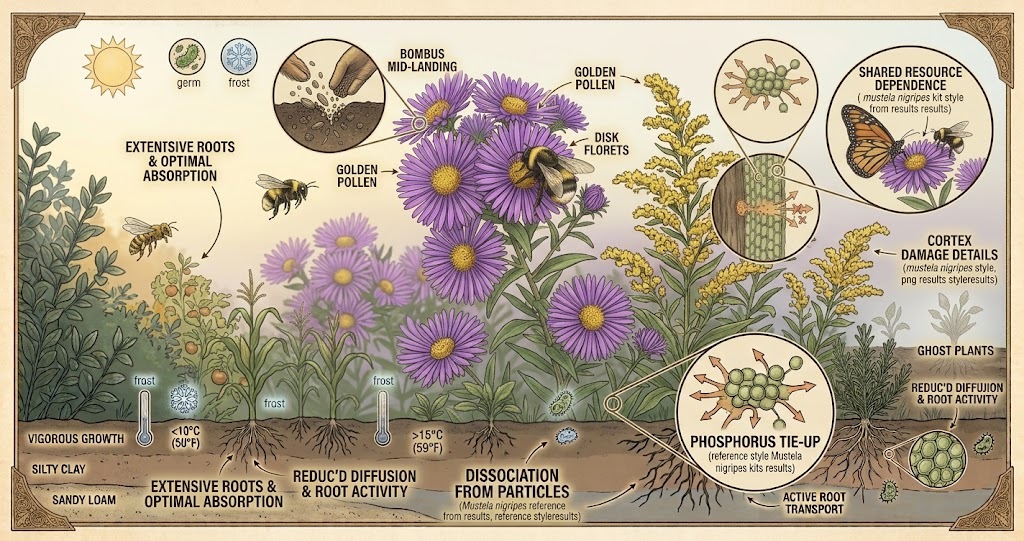
If two groups of plants define the autumn pollinator season across much of North America, they are native asters and goldenrods.
Native Asters
Native asters produce large numbers of small composite flowers that remain attractive to pollinators well into autumn.
Many species support numerous native bee species while also providing nectar for butterflies.
Goldenrods
Goldenrods are sometimes mistakenly blamed for seasonal allergies.
In reality, their pollen is relatively heavy and primarily insect-pollinated.
Wind-pollinated ragweed—which blooms at roughly the same time—is responsible for much of the seasonal allergy confusion.
Goldenrods produce abundant nectar that attracts bees, butterflies, beneficial wasps, hoverflies, and numerous other insects.
Avoiding Non-Native Invasive Alternatives
Not every attractive autumn flower belongs in every landscape.
Some non-native ornamentals have escaped cultivation and become invasive in certain regions.
Invasive plants may:
- Outcompete native vegetation.
- Reduce habitat quality.
- Alter ecosystem processes.
- Provide lower ecological value than native alternatives.
Before purchasing plants, check your state’s invasive plant list.
Local native plant societies and Cooperative Extension offices provide excellent guidance.
Choosing regionally native species is usually the safest and most beneficial option.
Designing a Garden That Blooms Into Fall
The best pollinator gardens provide flowers from early spring until frost.
Rather than concentrating blooms into one season, plan for continuous succession.
A simple approach includes:
- Spring flowering trees and shrubs.
- Early summer perennials.
- Mid-summer native wildflowers.
- Late-season asters and goldenrods.
- Autumn seed heads left standing for birds.
Avoid excessive fall garden cleanup.
Standing stems and seed heads provide shelter and food for many beneficial insects and birds during winter.
Practical Tips
- Plant species native to your specific region.
- Include flowers that bloom from spring through fall.
- Leave some seed heads standing over winter.
- Minimize pesticide use whenever possible.
- Group native flowers in clusters to make them easier for pollinators to locate.
- Consult your state’s native plant society before purchasing unfamiliar species.
Common Mistakes
Assuming Every Native Plant Is Native Everywhere
Native status varies greatly by region.
Removing Every Flower in Late Summer
Late-season blooms are often among the most valuable nectar sources of the year.
Confusing Goldenrod with Ragweed
Goldenrod is insect-pollinated and is not the primary cause of seasonal pollen allergies.
Planting Known Invasive Ornamentals
Always verify whether a species is considered invasive in your state before planting.
Frequently Asked Questions
Why is the fall pollinator gap important?
Many pollinators remain active after summer flowers fade and still require nectar and pollen before winter or migration.
Is goldenrod good for pollinators?
Yes. Native goldenrod species are among the most valuable late-season nectar plants across much of North America.
Should I plant asters or goldenrods?
Ideally, both—provided they are native to your specific region.
Are all asters native?
No. Some ornamental asters are non-native cultivars. Verify regional native status before planting.
How can I find native plants for my area?
Your state’s native plant society, Cooperative Extension office, or the Lady Bird Johnson Wildflower Center database are excellent places to start.
Conclusion
The end of summer doesn’t have to mean the end of your garden’s ecological value. By filling the fall pollinator gap with fall blooming native pollinator plants, gardeners provide essential nectar and pollen precisely when bees, butterflies, and many other beneficial insects need it most.
Choosing regionally native asters, goldenrods, and other locally adapted species creates landscapes that support wildlife while preserving the unique character of local ecosystems. Combined with thoughtful garden design, reduced pesticide use, and leaving some habitat intact through winter, these late-season blooms transform an ordinary autumn garden into an important refuge for pollinators preparing for the challenges ahead.