
Table of Contents
- Why Fall Is the Best Time to Overseed Many Lawns
- Why Soil Temperature Matters More Than the Calendar
- Understanding Cool-Season vs. Warm-Season Grasses
- Overseed Lawn Fall Timing by Region
- Northern States
- Midwest
- Transition Zone
- Southern States
- Preparing Your Lawn Before Overseeding
- Mow the Lawn
- Dethatch if Necessary
- Aerate Compacted Soil
- How to Overseed Successfully
- Watering After Overseeding
- Common Mistakes to Avoid
- Frequently Asked Questions
- Conclusion
When to Overseed Your Lawn in Fall (By Region, Not the Calendar)
Many homeowners assume there’s a single “best week” every autumn to overseed a lawn. In reality, successful overseed lawn fall timing depends far more on soil temperature and your grass type than on the calendar. A lawn in northern Minnesota reaches ideal growing conditions weeks before one in Tennessee, while southern warm-season grasses follow a very different schedule altogether.
University turfgrass specialists consistently recommend focusing on environmental conditions instead of fixed planting dates. Soil temperature, air temperature, and the amount of growing time remaining before winter all influence how well new grass seedlings establish. By understanding these factors—and how they vary by region—you can dramatically improve germination, reduce weed pressure, and develop a healthier lawn that performs well the following spring.
Why Fall Is the Best Time to Overseed Many Lawns
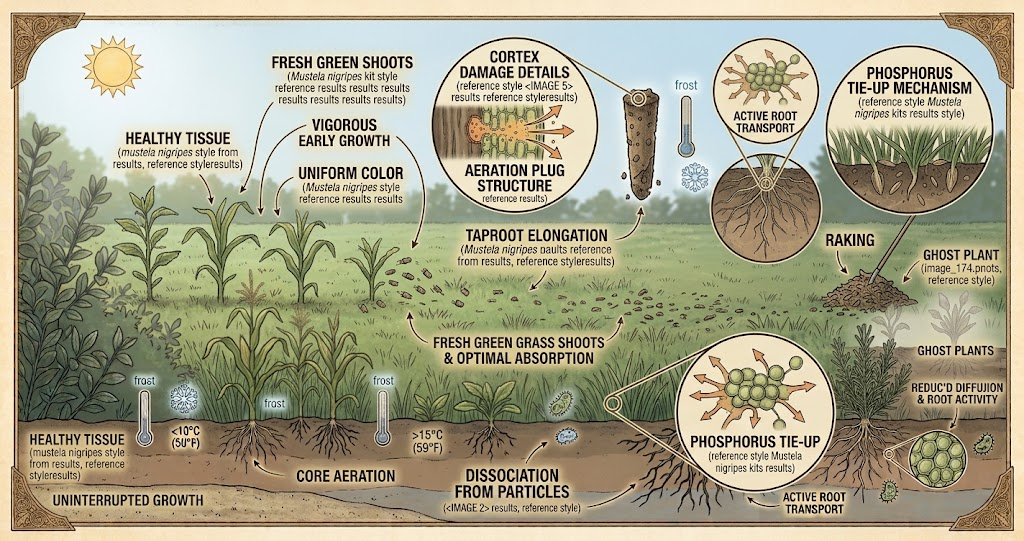
For cool-season turfgrasses, fall generally offers the most favorable growing conditions of the year.
The intense heat of summer has passed, nights become cooler, and soil remains warm enough to encourage rapid root development. At the same time, many annual weeds become less competitive than they are during spring.
These conditions give young grass seedlings an excellent opportunity to establish before winter dormancy.
However, “fall” does not mean the same thing everywhere. The correct timing depends on local climate rather than the date on your calendar.
Why Soil Temperature Matters More Than the Calendar
One of the biggest misconceptions about overseeding is that every homeowner should begin as soon as September arrives.
Professional turfgrass recommendations focus instead on soil temperature.
Grass seed germinates within specific temperature ranges, and soil—not air—is what determines whether seeds begin growing efficiently.
For most cool-season lawn grasses, soil temperatures that have cooled from summer highs into the favorable germination range provide the best opportunity for successful establishment.
If soil remains excessively hot, germination may become uneven, seedlings experience greater stress, and watering demands increase substantially.
Conversely, waiting until soils become too cool may leave seedlings without enough time to establish before winter.
Many Cooperative Extension turfgrass programs recommend monitoring local soil temperatures along with expected frost timing.
Excellent science-based guidance is available from Penn State Extension’s turfgrass resources:
https://extension.psu.edu/
Understanding Cool-Season vs. Warm-Season Grasses
Before purchasing seed, it’s important to know which type of lawn you have.
Cool-Season Grasses
Cool-season grasses dominate much of the northern United States.
Common examples include:
- Kentucky bluegrass
- Perennial ryegrass
- Tall fescue
- Fine fescues
These grasses grow most actively during the cooler temperatures of spring and fall.
For this reason, autumn is usually the preferred overseeding season.
Warm-Season Grasses
Warm-season grasses perform best across much of the southern United States.
Examples include:
- Bermudagrass
- Zoysiagrass
- St. Augustinegrass
- Centipedegrass
- Bahiagrass
These species grow most vigorously during warm weather.
Unlike cool-season lawns, they are generally established or overseeded during their active growing season rather than late fall.
Some southern homeowners overseed dormant warm-season lawns with annual or perennial ryegrass for winter color, but this is a separate practice from repairing permanent warm-season turf and should be planned according to local Extension recommendations.
H2: Overseed Lawn Fall Timing by Region
Northern States
In northern climates, cooling temperatures often arrive relatively early.
Cool-season grasses benefit from being seeded while soil remains warm enough for rapid germination but with enough growing time remaining before prolonged freezing conditions.
Because growing seasons are shorter, delaying overseeding too long can reduce establishment success.
Midwest
Much of the Midwest offers excellent conditions for fall overseeding.
Warm summer soil transitions gradually into ideal germination temperatures, allowing cool-season grasses to establish strong root systems before winter.
Rainfall patterns often become more favorable than during midsummer, although supplemental irrigation may still be necessary.
Transition Zone
The transition zone presents unique challenges because both cool-season and warm-season grasses may be grown.
Choosing the correct seed mix depends on the existing lawn.
Timing also requires careful attention because summers remain hot while winters can still become cold enough to stress newly established turf.
Local Cooperative Extension recommendations are especially valuable in this region.
Southern States
Many southern lawns consist primarily of warm-season grasses.
Routine fall overseeding of permanent warm-season turf is generally not recommended because these grasses are preparing for dormancy rather than active growth.
Where winter overseeding for seasonal green color is practiced, timing varies considerably by climate and grass species.
Consult your local Extension office before overseeding southern lawns.
Preparing Your Lawn Before Overseeding
Proper preparation is often more important than the seeding itself.
Seed that cannot contact the soil rarely establishes successfully.
Mow the Lawn
Reduce mowing height slightly before overseeding.
Shorter existing grass allows seed to reach the soil more easily while increasing sunlight available to young seedlings.
Avoid removing excessive leaf tissue in a single mowing.
Dethatch if Necessary
Thatch is the layer of dead stems, roots, and organic material that accumulates between the soil surface and living grass.
A thin layer is normal.
However, excessive thatch can prevent seed from reaching the soil.
If thatch becomes excessive, dethatching before overseeding improves seed-to-soil contact.
Aerate Compacted Soil
Compacted soil limits oxygen movement, water infiltration, and root development.
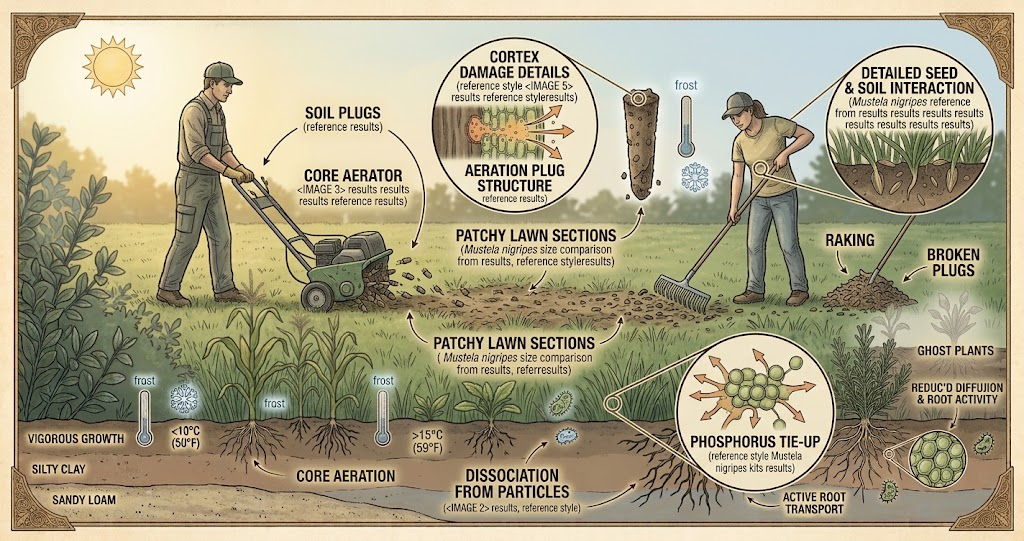
Core aeration removes small plugs of soil, improving:
- Air exchange
- Water movement
- Root penetration
- Seed-to-soil contact
Aerating immediately before overseeding is widely recommended for compacted lawns.
How to Overseed Successfully
Once the lawn is prepared, spread seed evenly according to label recommendations.
Avoid applying more seed than recommended.
Overseeding too heavily creates excessive competition among seedlings and may increase disease risk.
After spreading seed:
- Lightly rake if necessary to improve soil contact.
- Leave aeration cores on the lawn to break down naturally.
- Apply starter fertilizer only if recommended by a recent soil test or local Extension guidance.
- Avoid heavy foot traffic while seedlings establish.
“
Watering After Overseeding
Water management changes throughout establishment.
During Germination
The goal is keeping the upper layer of soil consistently moist.
Light, frequent irrigation is usually more effective than occasional heavy watering during this stage.
Avoid allowing the surface to dry completely between watering.
After Seedlings Emerge
Once seedlings begin developing roots, gradually transition toward deeper, less frequent watering.
This encourages stronger root growth and improves drought tolerance.
Continue adjusting irrigation according to rainfall and local weather conditions.
Common Mistakes to Avoid
Planting by Calendar Alone
Ideal overseeding conditions vary greatly between regions.
Always consider soil temperature and local climate.
Ignoring Grass Type
Cool-season and warm-season grasses follow different growth cycles.
Applying the wrong schedule often leads to disappointing results.
Skipping Aeration
Compacted soil reduces germination and limits healthy root development.
Applying Too Much Seed
Overcrowded seedlings compete for light, nutrients, and water.
Letting Seed Dry Out
Consistent moisture during germination is essential.
Even brief drying can reduce germination success.
Frequently Asked Questions
What is the best temperature for overseeding?
Rather than focusing only on air temperature, Extension specialists recommend monitoring soil temperature because it directly affects seed germination.
Can I overseed without aerating?
Yes, but aeration often improves seed-to-soil contact and establishment, especially on compacted lawns.
Should I fertilize after overseeding?
A soil test provides the best guidance. In some situations, a starter fertilizer may be appropriate, but unnecessary fertilizer applications should be avoided.
How often should I water newly seeded grass?
Initially, keep the soil surface consistently moist with light, frequent watering. After seedlings establish, gradually shift toward deeper watering.
Can warm-season lawns be overseeded in fall?
Some are overseeded with cool-season grasses for temporary winter color, but recommendations vary by region and grass species. Consult your local Cooperative Extension office.
Conclusion
Successful lawn renovation begins with understanding that overseed lawn fall timing depends on environmental conditions rather than the date on a calendar. Soil temperature, grass type, local climate, and available growing time all influence whether new seedlings establish successfully before winter.
By preparing the lawn properly through mowing, dethatching when needed, and core aeration, then maintaining consistent moisture during germination, homeowners give new grass the strongest possible start. Combined with guidance from your local Cooperative Extension office, this science-based approach helps create thicker, healthier lawns that perform better throughout the following growing season.
For more lawn maintenance advice throughout the year, explore our lawn care guides:
https://secretsofthegreengarden.com/lawn-care/