
Table of Contents
- What Is Deer Antler Velvet?
- Why Deer Grow New Antlers Every Year
- The Science Behind Deer Antler Velvet Shedding
- Hormones, Daylight, and Seasonal Timing
- Why Velvet Shedding Can Look Bloody
- When Does Velvet Shedding Happen?
- What Bucks Do After Velvet Is Shed
- Watching Deer During Velvet Season
- Practical Tips for Wildlife Watching
- Common Mistakes
- Frequently Asked Questions
- Conclusion
Why Deer Antlers “Shed Their Skin” in Late Summer (And What Velvet Actually Is)
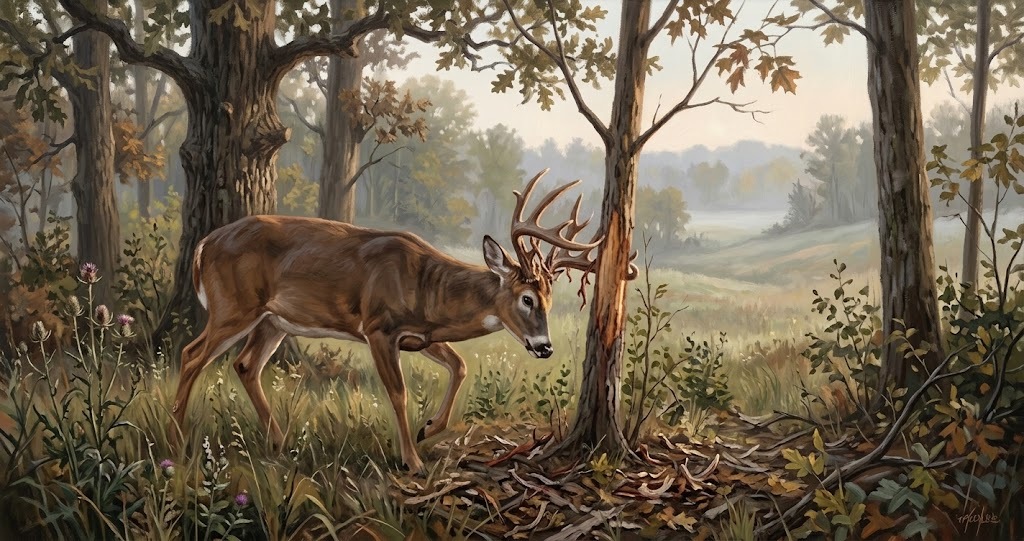
If you’ve ever spotted a white-tailed deer in late summer with what appears to be peeling skin hanging from its antlers, the sight can be startling. At first glance, it may even look like the animal has suffered a serious injury. In reality, deer antler velvet shedding is one of the most remarkable and completely natural events in the annual life cycle of bucks.
Every year, male deer grow an entirely new set of antlers. During their rapid growth, the antlers are covered in a specialized tissue called velvet. Once the antlers finish developing, this living covering is no longer needed. It dries, peels away, and is rubbed off against trees and shrubs, revealing the hard bone beneath.
Although the process can appear dramatic—sometimes even bloody—it is usually a normal part of healthy antler development. Understanding why velvet exists, what causes it to shed, and how the timing varies across North America helps explain one of the most fascinating seasonal changes in wildlife.
What Is Deer Antler Velvet?
Despite its name, velvet is not fur.
Antler velvet is a soft, living layer of skin that covers growing antlers while they develop during spring and summer.
This specialized tissue contains:
- Blood vessels
- Nerves
- Fine hair
- Connective tissue
Its primary purpose is to nourish the rapidly growing antler underneath.
Antlers are among the fastest-growing bone structures found in mammals. To support that rapid growth, they require an extensive blood supply during development.
Velvet acts as the delivery system that transports oxygen and nutrients to the growing bone.
Without velvet, antlers could not develop properly.
Why Deer Grow New Antlers Every Year
Unlike horns, which remain attached throughout an animal’s life, antlers are temporary structures.
Most male members of the deer family—including white-tailed deer, mule deer, elk, and moose—grow and shed their antlers annually.
After the breeding season ends, declining hormone levels eventually cause mature antlers to detach from the skull.
Over the following months, entirely new antlers begin growing again beneath fresh velvet.
Each year’s antlers are new bone, not repaired versions of the previous year’s rack.
The Science Behind Deer Antler Velvet Shedding
Growing antlers remain soft throughout most of their development.
As summer progresses, mineralization gradually transforms the soft internal tissue into hard bone.
Once growth is complete, the velvet no longer serves a purpose.
Blood flow to the velvet decreases dramatically.
The tissue begins drying, shrinking, and eventually separating from the hardened antler underneath.
Bucks instinctively rub their antlers against trees, shrubs, fence posts, and other objects to remove the dead velvet.
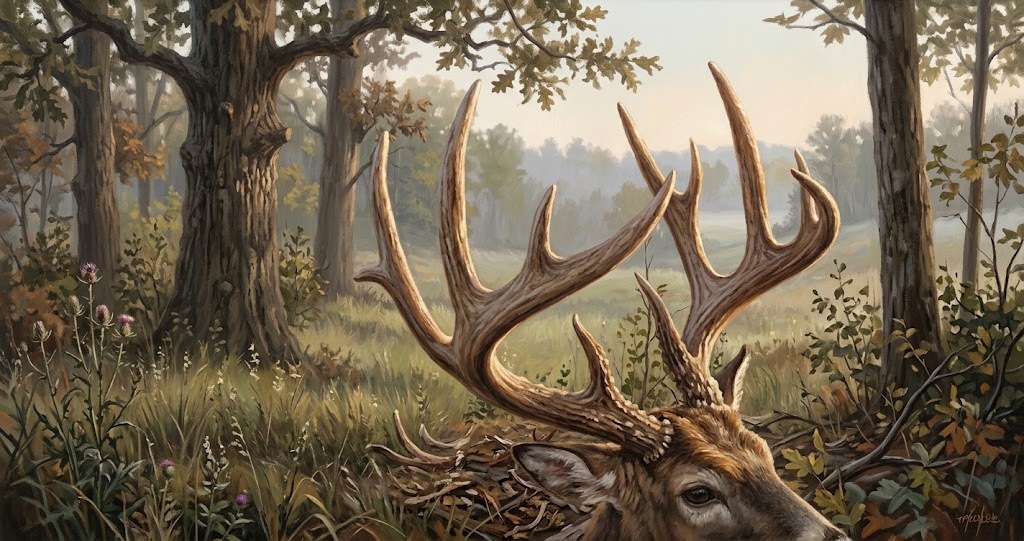
Within a relatively short period, the bright white or reddish antlers become polished, exposing the darker hard bone beneath.
This rubbing behavior also helps prepare bucks for the upcoming breeding season by strengthening neck muscles and establishing rubbing sites.
Hormones, Daylight, and Seasonal Timing
The timing of antler growth and velvet shedding is not random.
It is controlled primarily by changing day length, which influences hormone production.
Photoperiod Drives the Process
As daylight gradually changes through the year, deer experience hormonal shifts regulated by their endocrine system.
These seasonal changes affect testosterone levels in bucks.
Increasing testosterone toward late summer signals the end of antler growth.
Blood supply to the velvet declines, triggering the shedding process.
Testosterone and Hard Antlers
Higher testosterone levels not only initiate velvet shedding but also strengthen mineralization within the antlers.
By the time the breeding season approaches, the antlers have become fully hardened and capable of withstanding the physical demands of sparring between bucks.
Wildlife biologists have documented this hormone-driven cycle extensively across North American deer populations.
Penn State Extension provides an excellent overview of deer biology and seasonal behavior:
https://extension.psu.edu/
Why Velvet Shedding Can Look Bloody
One reason people sometimes become alarmed is that freshly shed antlers may show small amounts of blood.
This is usually normal.
Because velvet contains numerous blood vessels, small traces of blood can remain where the tissue separates from the hardened antler.
As bucks rub their antlers against vegetation, bits of drying velvet may remain attached temporarily.
The combination of peeling tissue and small amounts of blood often makes the process appear much more dramatic than it actually is.
Healthy bucks generally continue feeding and behaving normally throughout velvet shedding.
If a deer appears severely injured, weak, or unable to move normally, the situation may involve something other than ordinary velvet shedding and should be reported according to local wildlife agency guidance.
When Does Velvet Shedding Happen?
Velvet shedding generally occurs in late summer, but exact timing varies.
Several factors influence when individual bucks shed velvet, including:
- Geographic location
- Local climate
- Species or subspecies
- Age
- Individual health
Northern Regions
In many northern areas, bucks often complete velvet shedding somewhat earlier as seasonal daylight changes progress.
Southern Regions
Farther south, the process may occur later because breeding seasons and associated hormonal cycles often differ regionally.
Individual Variation
Even within the same local deer population, not every buck sheds velvet on exactly the same day.
Differences of several days—or even longer—are perfectly normal.
What Bucks Do After Velvet Is Shed
Once velvet is gone, buck behavior gradually begins changing.
Throughout summer, bucks often form relatively peaceful bachelor groups.
As autumn approaches and testosterone levels continue rising, these groups usually begin breaking apart.
Bucks become more territorial and begin establishing dominance relationships before the breeding season.
Freshly polished antlers are used for:
- Sparring
- Display
- Establishing social rank
- Defending breeding opportunities
Although dramatic fights receive much attention, many encounters involve displays and relatively brief pushing contests rather than serious injury.
Watching Deer During Velvet Season
Late summer can be one of the best times to observe deer.
Food sources remain abundant, daylight is still relatively long, and bucks often spend time feeding in open areas during morning and evening.
When observing wildlife:
- Maintain a respectful distance.
- Never approach wild deer.
- Do not attempt to feed them.
- Use binoculars or a camera with a zoom lens.
For more ideas on creating landscapes that support native wildlife responsibly, read our guide:
https://secretsofthegreengarden.com/how-to-create-a-wildlife-friendly-backyard/
Remember that hunting seasons, wildlife viewing regulations, and rules regarding feeding or approaching wildlife vary by state. Always consult your state wildlife agency for the most current regulations rather than relying on generalized advice.
Practical Tips for Wildlife Watching
- Observe deer from a distance.
- Watch during early morning or evening.
- Avoid disturbing feeding areas.
- Keep dogs under control near wildlife habitat.
- Use binoculars instead of approaching animals.
- Leave natural vegetation where appropriate to support wildlife.
Common Mistakes
Assuming Velvet Shedding Is an Injury
Peeling velvet and small amounts of blood are usually normal parts of antler development.
Approaching Bucks Too Closely
Wild deer should always be observed from a safe distance.
Feeding Wild Deer
Feeding wildlife can alter natural behavior, increase disease risks, and may be restricted or prohibited in some areas.
Assuming All Deer Shed Velvet at the Same Time
Regional climate, latitude, and individual biology all influence timing.
Frequently Asked Questions
Is antler velvet made of fur?
No. Velvet is living skin containing blood vessels, nerves, connective tissue, and fine hair that nourishes growing antlers.
Does velvet shedding hurt deer?
Current wildlife research indicates that once blood flow to the velvet decreases and the tissue begins dying, normal shedding is generally not considered painful in healthy animals.
Why do bucks rub trees after shedding velvet?
Rubbing helps remove the remaining velvet and is also associated with seasonal behavioral changes linked to the upcoming breeding season.
Do female deer grow antlers?
In most North American deer species, females do not grow antlers. There are exceptions in some species, such as reindeer (caribou), where females also develop antlers.
Should I report a deer with bloody antlers?
If the deer otherwise appears healthy, velvet shedding is likely a normal seasonal process. If the animal shows signs of serious injury or abnormal behavior, follow guidance from your state wildlife agency.
Conclusion
The sight of a buck peeling velvet from its antlers may look dramatic, but it represents one of the most remarkable annual cycles in North American wildlife. What appears to be “shedding skin” is actually the final stage of an extraordinary process in which living tissue nourishes one of the fastest-growing bone structures in the animal kingdom before naturally giving way to hardened antlers.
By understanding how hormones, changing daylight, and seasonal biology drive deer antler velvet shedding, wildlife enthusiasts can appreciate this fascinating event without mistaking it for injury. Observing from a respectful distance and following state wildlife agency guidance helps ensure both people and deer remain safe while enjoying one of late summer’s most impressive natural spectacles.
SEO & Metadata
SEO Title: Deer Antler Velvet Shedding: 7 Powerful Facts About This Amazing Natural Process
Meta Description: Discover why deer antler velvet shedding happens each late summer, what velvet is, why it can look bloody, and how seasonal biology drives the process.
Focus Keyword: deer antler velvet shedding
Related Keywords:
- deer antler velvet
- why deer shed velvet
- buck antler growth
- deer antler biology
- white-tailed deer antlers
URL Slug:deer-antler-velvet-shedding
Suggested Category:
Uncategorized (None of the site’s current categories fit a wildlife behavior topic well. Creating a dedicated Wildlife or Animals category would improve organization and SEO.)
Tags:
Nature, Wildlife, Ecology, Garden Design, Organic Gardening
Internal Link Suggestions
Anchor text: how to create a wildlife-friendly backyard
Link: https://secretsofthegreengarden.com/how-to-create-a-wildlife-friendly-backyard/
Anchor text: common woodland animals you may see near your garden
Link: https://secretsofthegreengarden.com/common-woodland-animals-near-your-garden/
External Dofollow Authoritative Sources
Penn State Extension – White-Tailed Deer Resources
https://extension.psu.edu/
Pennsylvania Game Commission – White-Tailed Deer
https://www.pgc.pa.gov/
U.S. Fish & Wildlife Service
https://www.fws.gov/