
Table of Contents
- Why Fall Is a Great Time to Divide Many Perennials
- The General Rule: Divide by Bloom Time
- Why Root Establishment Before Frost Matters
- Perennials That Are Good Candidates for Fall Division
- Daylilies
- Hostas
- Bearded Irises
- Peonies (With Care)
- Perennials Better Left Until Spring
- Fall-Blooming Asters
- Garden Mums
- How to Divide Perennials Step by Step
- Caring for Newly Divided Plants
- Practical Tips
- Common Mistakes
- Frequently Asked Questions
- Conclusion
Which Perennials to Divide in Fall (And Which Ones to Leave Alone)
If your flower beds have become crowded or some perennials aren’t blooming as well as they once did, fall may be the perfect time to refresh your garden. Understanding dividing perennials in fall can improve plant health, encourage stronger flowering, and give you free new plants to expand your landscape or share with friends.
However, not every perennial should be divided in autumn. The best timing depends largely on when the plant blooms. As a general rule recommended by many university Cooperative Extension programs, spring- and early summer-blooming perennials are often divided in fall, while fall-blooming perennials are usually better divided in spring. This timing allows plants to recover without interrupting their flowering cycle and gives roots time to establish before extreme seasonal conditions arrive.
By learning which plants benefit from fall division—and which should be left alone until spring—you can help your perennial garden stay healthy for years to come.
Why Fall Is a Great Time to Divide Many Perennials
Autumn offers several advantages for perennial division.
The intense heat of summer has usually passed, soil often remains warm enough to encourage root growth, and cooler air temperatures reduce stress on recently transplanted plants.
Instead of supporting flowers and lush top growth, many perennials naturally begin directing energy toward their root systems. This makes fall an excellent opportunity to divide overcrowded clumps while giving them time to establish before winter dormancy.
In many parts of the United States, fall weather also tends to bring more consistent rainfall, helping newly divided plants settle into their new locations.
The General Rule: Divide by Bloom Time
Although there are exceptions, one guideline works well for many common garden perennials:
- Spring- and early summer-blooming perennials are generally divided in fall.
- Late summer- and fall-blooming perennials are generally divided in spring.
Why?
Plants need time to recover after division. Dividing shortly after their bloom period allows them to rebuild roots before preparing for the next flowering season.
Dividing fall bloomers immediately before or during flowering can reduce their display and increase stress.
University Extension programs commonly recommend following bloom time rather than calendar dates whenever possible.
The University of Minnesota Extension provides excellent guidance on dividing perennial plants:
https://extension.umn.edu/
Why Root Establishment Before Frost Matters
Successful fall division depends on more than simply digging and replanting.
Newly divided plants need enough time to produce fresh roots before the ground freezes.
Although top growth slows as temperatures cool, roots often continue growing in relatively warm soil long after flowering ends.
This period of active root growth helps divisions:
- Anchor firmly into the soil.
- Absorb water more efficiently.
- Recover from transplant stress.
- Prepare for vigorous spring growth.
If plants are divided too late, they may not establish sufficiently before winter, increasing the risk of frost heaving, winter injury, or poor spring performance.
Because first frost dates vary across the country, always check recommendations from your local Cooperative Extension office for your specific area.
Perennials That Are Good Candidates for Fall Division
Many familiar garden favorites respond well to fall division when performed at the appropriate time.
Daylilies
Daylilies are among the easiest perennials to divide.
Over time, large clumps often become crowded, leading to fewer flowers and reduced vigor.
After flowering finishes, dig the clump carefully and separate fans with healthy roots attached.
Replant divisions promptly at the same depth they were growing previously and water thoroughly.
Hostas
Hostas also respond well to fall division, especially when large clumps begin outgrowing their space.
Use a sharp spade or garden knife to separate healthy sections containing several buds and a good portion of the root system.
Although hostas can also be divided in spring, many gardeners find autumn division less disruptive because foliage naturally begins entering dormancy.
Bearded Irises
Bearded irises benefit from periodic division because crowded rhizomes often flower less vigorously over time.
Lift the rhizomes after flowering has finished and inspect them carefully.
Keep only healthy, firm rhizomes while removing damaged or diseased sections.
Trim foliage to reduce moisture loss and replant the rhizomes shallowly with the upper surface near the soil line, as recommended for bearded iris culture.
Peonies (With Care)
Peonies are well known for their longevity and often remain productive for decades without frequent division.
Unlike daylilies or hostas, peonies generally should not be divided unless necessary—for example, if a mature clump needs relocating or has become overcrowded.
When division is needed, fall is typically considered the preferred season.
Carefully dig the entire root system and divide it so each section contains several healthy buds (often called “eyes”) along with a substantial portion of root.
Replanting depth is especially important. In most climates, the buds should sit only about 1–2 inches below the soil surface. Planting them too deeply can reduce or delay flowering.
Perennials Better Left Until Spring
Some perennials recover more successfully when divided after winter rather than before it.
Fall-Blooming Asters
Asters provide valuable late-season color and nectar for pollinators.
Because they flower in late summer and fall, dividing them immediately before or during bloom can interrupt flowering and reduce vigor.
Most Extension recommendations suggest dividing asters in spring as new growth begins.
Garden Mums
Many garden mums sold in late summer are planted specifically for seasonal color.
Freshly planted mums benefit from using autumn to establish rather than being disturbed through division.
If mature perennial mums require division, spring is usually the preferred time.
Waiting until new shoots emerge makes healthy divisions easier to identify while giving plants the entire growing season to recover.
How to Divide Perennials Step by Step
Proper technique reduces stress and encourages quick recovery.
1. Water the Plant First
Water thoroughly a day before dividing.
Moist soil is easier to work and helps reduce transplant shock.
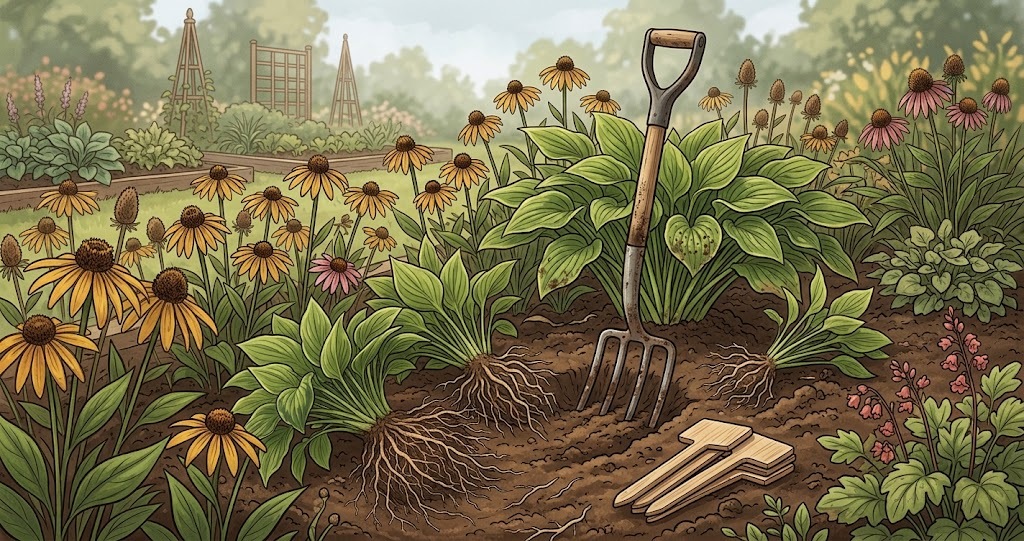
2. Dig the Entire Clump
Use a sharp spade to dig well outside the crown.
Lift the entire root mass rather than pulling plants apart while they’re still rooted.
3. Remove Loose Soil
Shake or gently wash away enough soil to see the roots and growing points.
This makes it easier to identify natural divisions.
4. Separate Healthy Sections
Depending on the species, divide the clump using:
- A sharp spade
- A garden knife
- Two digging forks placed back-to-back
- Your hands for loose-rooted plants
Each division should contain healthy roots and several active buds or shoots.
5. Remove Damaged Material
Discard sections showing signs of rot, disease, or severe insect damage.
Healthy divisions establish much more quickly.
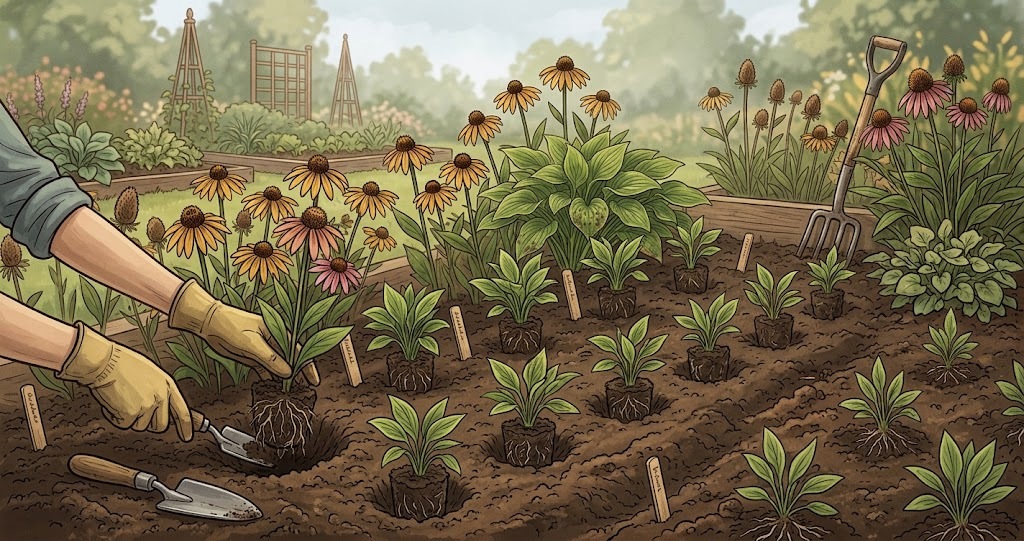
6. Replant Immediately
Avoid allowing roots to dry out.
Replant divisions at the proper depth, firm the soil gently, and water deeply.
7. Mulch After Planting
Apply a light layer of mulch after the soil begins cooling for winter.
Mulch helps moderate soil temperature and reduce frost heaving but should not be piled directly against crowns.
Caring for Newly Divided Plants
Recently divided perennials require consistent care during their establishment period.
Keep the soil evenly moist—but not waterlogged—until plants become established.
Avoid heavy fertilization immediately after division. Excess nitrogen encourages lush top growth when plants should be directing energy toward developing roots.
Monitor plants during dry autumn weather and water as needed until the ground begins to freeze.
Practical Tips
- Divide on a cool, cloudy day whenever possible.
- Water plants before and after dividing.
- Replant divisions immediately.
- Label divisions if growing multiple cultivars.
- Space plants according to their mature size.
- Check your local first frost timing before beginning.
- Follow species-specific recommendations when available.
For more ideas on designing healthy perennial beds, read our guide:
https://secretsofthegreengarden.com/perennial-garden-design-ideas/
Common Mistakes
Dividing Fall-Blooming Perennials in Autumn
This can reduce flowering and slow recovery.
Waiting Too Close to Winter
Plants need time to establish roots before the soil freezes.
Planting Too Deeply
Improper planting depth—especially with peonies and irises—can reduce future flowering.
Leaving Roots Exposed
Roots dry quickly during division. Replant promptly to reduce stress.
Frequently Asked Questions
Why divide perennials at all?
Division reduces overcrowding, encourages stronger flowering, improves plant vigor, and creates additional plants.
Can every perennial be divided?
No. Some perennials tolerate division well, while others dislike root disturbance or require specific timing.
How often should daylilies be divided?
Many gardeners divide them every few years when flowering declines or clumps become crowded, though timing varies with growing conditions.
Can I divide hostas in spring instead?
Yes. Hostas can be divided in either spring or fall, although many gardeners prefer fall because plants are entering dormancy.
What happens if I divide too late?
Plants may not establish enough new roots before winter, increasing the risk of frost damage and poor spring growth.
Conclusion
Dividing perennials in fall is one of the most rewarding maintenance tasks a gardener can perform. By refreshing overcrowded clumps, encouraging healthier growth, and creating free new plants, fall division keeps perennial borders vigorous and attractive for years to come.
The key is remembering the general rule: divide spring- and early summer-blooming perennials in fall, while saving most fall bloomers for spring. Combined with proper planting depth, careful watering, and enough time for roots to establish before winter, this approach gives your garden the strongest possible start for the following growing season.