

Shoulder discomfort is one of the most common physical complaints in modern life. Long hours of sitting, frequent screen use, poor posture, and daily stress place continuous strain on the shoulder area. Over time, this can lead to stiffness, limited mobility, and persistent discomfort.
A sequence for shoulder pain relief offers a gentle, accessible way to counter these effects. By combining mindful mobility, stretching, and relaxation, this simple routine helps release accumulated tension and support long-term shoulder health. It requires no equipment and can be practiced almost anywhere.
Why the Shoulders Accumulate Tension So Easily
The shoulder joint has an exceptional range of motion, allowing the arms to move freely in many directions. This mobility, however, also makes the area more vulnerable to overload and imbalance.
Common contributors to shoulder tension include:
- Prolonged sitting with rounded shoulders
- Constant computer or smartphone use
- Working with arms unsupported or raised
- Lack of regular movement breaks
- Emotional stress and shallow breathing
Without regular movement and release, these factors gradually create stiffness and discomfort. A consistent sequence for shoulder pain relief helps reverse these patterns safely.
The Importance of Gentle and Conscious Movement
Relieving shoulder discomfort does not require forceful stretching or intense exercise. In fact, aggressive movements can worsen symptoms. Slow, controlled motions paired with calm breathing allow the muscles and connective tissues to relax naturally.
This approach supports:
- Increased body awareness
- Gradual reduction of stiffness
- Improved circulation in the shoulder area
- Relaxation of the nervous system
Consistency matters more than intensity. Short, daily practices often provide better results than occasional strenuous sessions.
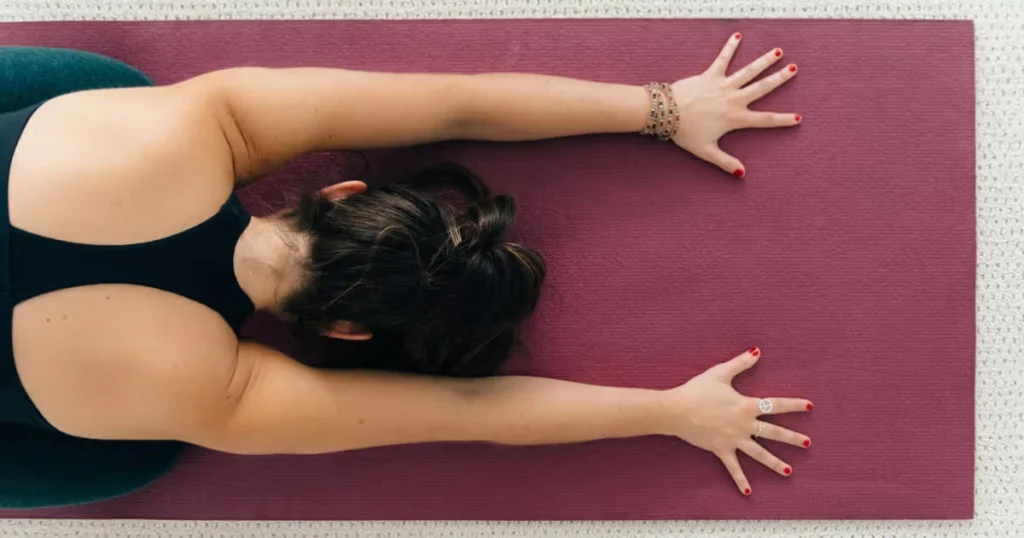
Seated Preparation: Establishing the Foundation
Before beginning the sequence, it is important to prepare both body and mind.
How to Prepare
- Sit comfortably on a chair or the floor
- Keep the spine upright but relaxed
- Place both feet firmly on the ground
- Let the shoulders drop away from the ears
- Relax the jaw and face
- Breathe slowly and evenly
This preparation phase helps shift attention inward and sets the tone for mindful movement.
Crossed Arm Stretch: Upper Back and Shoulder Release
This stretch targets the back of the shoulders and upper back, areas often affected by forward-leaning posture.
How to Perform
- Extend one arm forward at shoulder height
- Gently bring it across the chest
- Use the opposite hand to support the arm
- Hold for approximately 10 slow breaths
- Repeat on the other side
The stretch should feel mild and controlled, never painful.
Hands Behind the Back: Opening the Chest and Shoulders
Daily activities often shorten the muscles at the front of the body. This movement helps restore balance by opening the chest and shoulders.
Step-by-Step
- Bring both hands behind your back
- Interlace the fingers or bring the hands close together
- Gently draw the shoulders downward and back
- Open the chest without arching the lower back
- Breathe deeply for about 10 breath cycles
If interlacing the fingers is not comfortable, simply move the hands closer without forcing the position.
Arm Overhead Stretch: Deep Shoulder Mobility
This stretch reaches deeper muscles in the shoulder and upper arm, supporting joint flexibility.
Correct Execution
- Raise one arm overhead
- Bend the elbow, bringing the hand toward the upper back
- Use the opposite hand to gently assist
- Hold for around 10 breaths
- Switch sides
Avoid pulling forcefully. The movement should feel supportive and controlled.
Gentle Shoulder Twist With Arms Behind the Body
Twisting movements encourage joint mobility and help release lingering tension.
How to Do It
- Bring both arms behind your body
- Cross them gently, alternating which arm is on top
- Move slowly and smoothly
- Keep breathing calm and steady
This movement should feel fluid and comfortable.
Final Relaxation: Integrating the Benefits
Ending the sequence for shoulder pain relief with stillness allows the body to absorb the effects of the practice.
To Conclude
- Let the arms rest naturally by your sides
- Close your eyes if comfortable
- Take several slow, deep breaths
- Notice sensations in the shoulders and upper back
This brief pause enhances relaxation and body awareness.
When to Practice the Sequence
This routine can be practiced at various times throughout the day.
Recommended moments include:
- In the morning after waking
- During work or study breaks
- After long periods of sitting
- In the evening to release accumulated tension
Regular practice produces more consistent results.
Duration and Frequency
The sequence is intentionally short to encourage daily use.
General guidelines:
- Total duration: 5 to 10 minutes
- Frequency: once or twice daily
- Intensity: light to moderate
Even a few minutes each day can make a noticeable difference over time.
Benefits of Consistent Practice
With regular use, many people experience:
- Reduced shoulder stiffness
- Improved posture awareness
- Increased range of motion
- A lighter, more relaxed upper body
- Greater connection with bodily signals
The benefits develop gradually and build over time.
Important Precautions
To practice safely, keep the following in mind:
- Never force a stretch
- Respect personal limits
- Stop if sharp or persistent pain occurs
- Maintain calm, steady breathing
If discomfort continues or worsens, professional evaluation is recommended.
Discomfort vs. Pain: Knowing the Difference
Mild stretching sensations are normal. However, certain signs should not be ignored.
Warning signs include:
- Sharp or intense pain
- Tingling or numbness
- Loss of strength
- Pain radiating into the arms or neck
These symptoms indicate the need for medical assessment.
Supporting the Sequence With Healthy Habits
The effectiveness of a sequence for shoulder pain relief increases when paired with posture-friendly habits.
Helpful adjustments include:
- Keeping screens at eye level
- Avoiding constant shoulder elevation
- Taking regular movement breaks
- Alternating positions throughout the day
Small daily changes can significantly reduce recurring tension.
The Role of Breathing
Breathing is a central element of this sequence. Conscious breathing supports muscle relaxation and stress reduction.
During movement:
- Inhale gently through the nose
- Exhale slowly through the nose or mouth
- Avoid holding the breath
Breathing guides the rhythm of the practice and promotes calmness.
A Self-Care Perspective
This sequence is more than physical exercise. It is a form of self-care that creates space for mental pause and body awareness.
Regular practice supports:
- Reduced stress
- Improved focus
- Greater physical comfort
- A healthier relationship with movement
Frequently Asked Questions
Can I practice this sequence every day?
Yes. Daily practice is appropriate as long as movements remain gentle and pain-free.
Does this sequence replace medical treatment?
No. It is a complementary practice and does not replace professional care.
Can I do this sequence at work?
Yes. The seated format makes it suitable for office or home environments.
Is mild soreness normal afterward?
Light stretching sensations may occur, but sharp or lasting pain is not expected.
Is this suitable for older adults?
Yes, with extra attention to comfort and range-of-motion limits.
Internal Linking Suggestions
From secretsofthegreengarden.com, consider linking to:
- Gentle Stretching Routines for Gardeners
- How Posture Affects Long Hours of Outdoor Work
- Simple Mobility Exercises for Daily Comfort
External High-Authority Sources
For evidence-based guidance:
- Mayo Clinic resources on shoulder mobility and pain
- National Institutes of Health publications on musculoskeletal health
- Harvard Health articles on posture and joint care
Final Thoughts
A simple, mindful sequence for shoulder pain relief can become a powerful daily habit. Through gentle mobility, stretching, and relaxation, it supports shoulder comfort, posture awareness, and overall well-being. Practiced consistently and with respect for the body’s limits, this short routine can make a meaningful difference in everyday physical health.