
If you’re grappling with the challenge of growing potatoes in tight spaces, building a potato tower can be a game changer. This innovative gardening method not only optimizes your yield but also fits beautifully into urban environments or small backyards. Let’s explore how to create your own potato tower and discover its many advantages.
Advantages of Constructing a Potato Tower
- Maximized Space: Potato towers occupy minimal ground area, making them ideal for balconies or small gardens.
- Simplified Harvesting: Retrieving your potatoes is a breeze compared to traditional digging.
- Lowered Pest and Disease Concerns: Elevating the growing medium reduces the likelihood of soil-borne pests and diseases.
- Enhanced Drainage and Airflow: The tower’s structure permits improved water and air circulation, crucial for the healthy development of potatoes.
Materials You’ll Need
- Wire fencing or a large mesh cylinder
- Straw (weeds should be avoided)
- Compost and soil
- Seed potatoes
- Watering can or hose
- Gardening gloves
Step-by-Step Process for Building Your Potato Tower
- Select a Sunny Spot: Choose a location that gets at least six hours of direct sunlight each day, as potatoes thrive in sunny conditions.
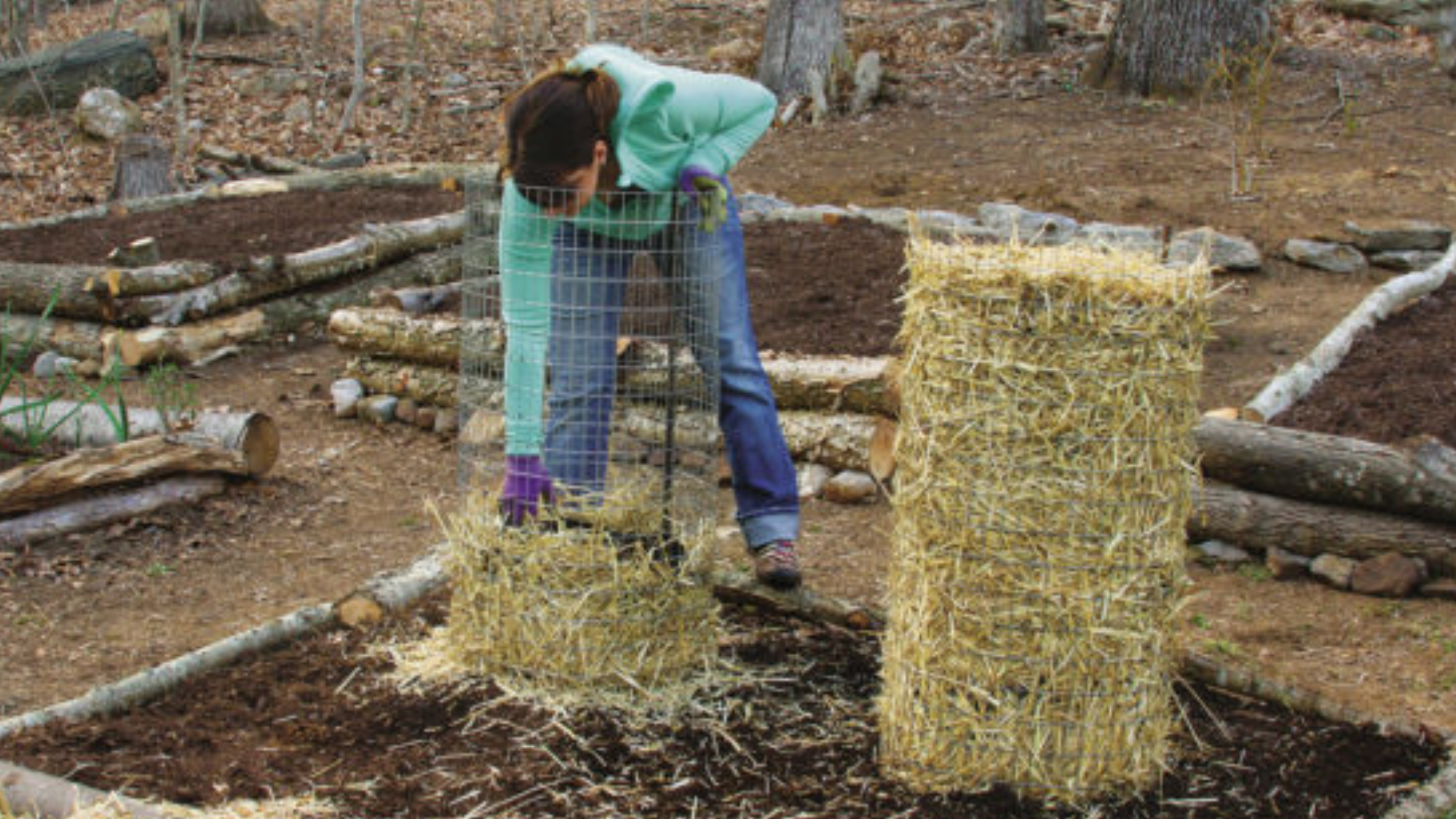
- Create the Tower Structure: Cut a piece of wire fencing into a cylinder around 2 to 3 feet wide and 3 to 4 feet tall. Secure the edges to bring your tower to life.
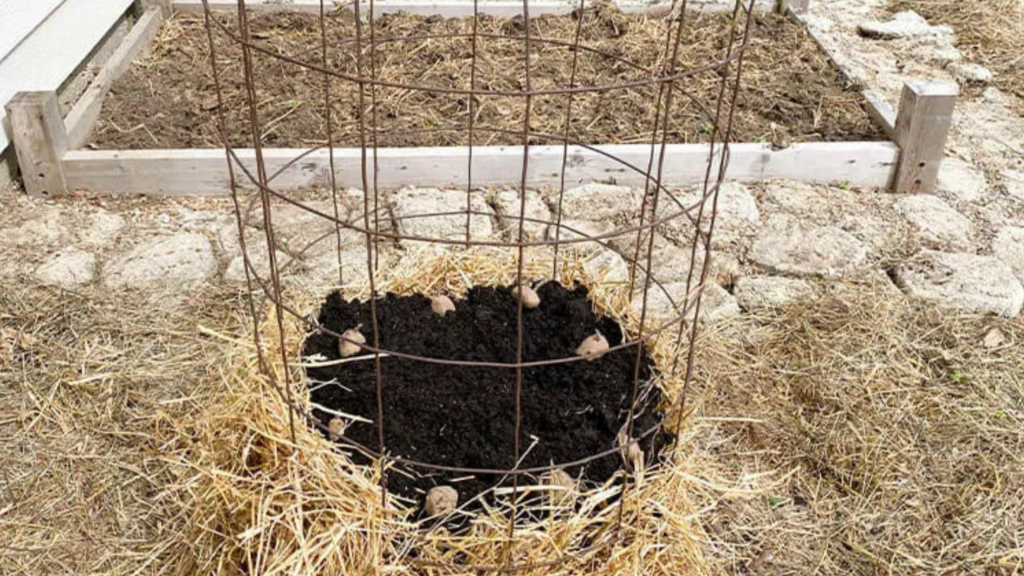
- Layer the Foundation: Start with a layer of straw at the bottom to assist with drainage. Then, add a 6-inch layer of a mix of soil and compost.
- Plant the Seed Potatoes: Position the seed potatoes on top of the soil layer, ensuring the eyes are facing upward. Space them about six inches apart and cover them with another layer of soil and compost.
- Build Upward: As the potato plants grow, keep adding layers of straw around the exterior and more of the soil-compost mix to bury the stems, allowing only the top few inches exposed. This technique encourages more potatoes to develop along the buried stems.
- Water and Maintain: Regularly check the moisture level and water the tower, keeping the soil damp without over-saturating it to prevent rot.
- Harvesting Time: Your potatoes will be ready for harvest when the foliage begins to yellow and die back. Carefully remove the straw and soil from the sides to uncover your potatoes.
Extra Tips
- Selecting Potatoes: Opt for certified seed potatoes to minimize disease risks.
- Positioning the Tower: If mobility is a concern, consider placing the tower on a wheeled platform for easy relocation.
- Pest Monitoring: Frequently inspect for pests so that any issues can be addressed promptly, ensuring a healthy harvest.
Building a potato tower can be a fulfilling and efficient gardening venture. It’s a unique approach that transforms limited spaces into abundant harvests, while also simplifying care and collection. Following this guide, you’ll soon enjoy a plentiful potato bounty. Happy gardening!