
June carries a false reputation as the closing month of the vegetable gardening season. For gardeners who planted in spring and are now watching their early crops finish, it can feel like the productive window is closing.
It isn’t. June is the opening of the second planting season — a window that many experienced gardeners consider their most productive period of the year. Crops planted now benefit from warm soil that accelerates germination, long days that push growth, and a harvest window that extends well into autumn.
This guide covers exactly what to plant in June, how to maximize your second season plantings, and how to plan ahead for fall harvests that begin in September and October.
WHY JUNE PLANTING WORKS
Several factors make June an ideal time for a second round of planting.
Soil temperature: After months of warming, June soil temperatures in most of the continental United States range between 65 and 80°F at a 2-inch depth. This is the optimal range for rapid seed germination. Seeds that took 10 to 14 days to germinate in April’s cool soil may sprout in 5 to 7 days in June.
Frost window: In most of the US, the first fall frost falls between late September and mid-November. This gives June plantings between 90 and 150 frost-free days — more than enough to bring most summer and fall crops to full harvest.
Reduced pest pressure: Many spring garden pests — including aphids, cabbage loopers, and early-season caterpillars — peak in May and early June. Second-season plantings often escape the worst of this pressure.
FAST-MATURING CROPS TO DIRECT SOW IN JUNE
The following crops can be sown directly in the garden in June and will reach harvest before the first fall frost in most US climates.
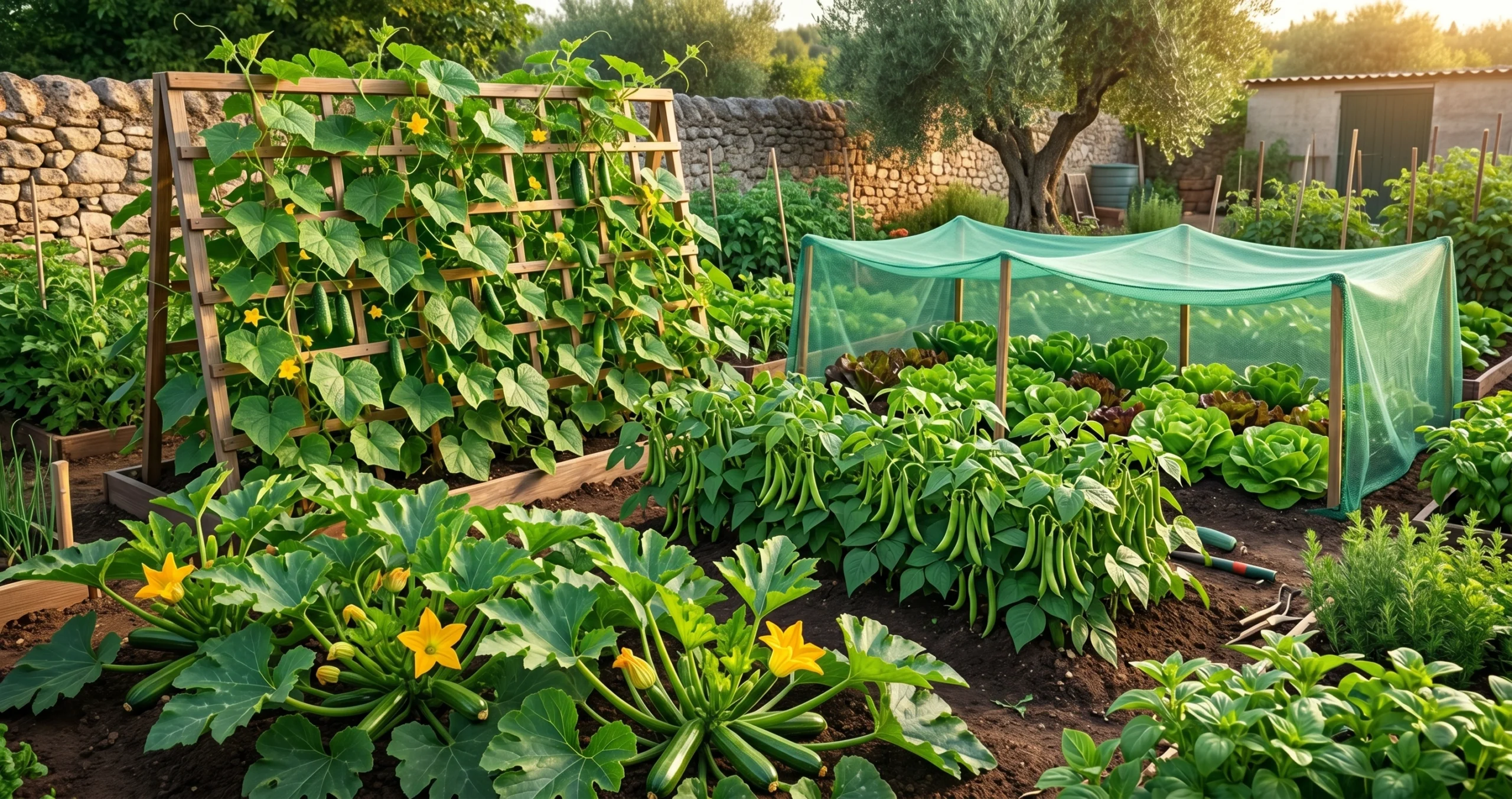
Bush Beans (60 days): Bush beans are one of the most reliable June plantings. They germinate rapidly in warm soil, require no staking, and produce over a 3 to 4 week harvest window. Sow seeds 1 inch deep and 4 to 6 inches apart. For continuous harvests, sow a second succession 2 weeks after the first.
Zucchini (50 days): Zucchini sown in June is often more productive than spring plantings. Plants avoid the squash vine borer’s peak egg-laying period in many regions, and fruit quality tends to be excellent in the cooler temperatures of early fall. Direct sow 2 to 3 seeds per hill, thin to one plant per hill after germination.
Cucumber (60 days): Cucumbers started in June will begin producing in early August and continue until frost. They reward vertical growing — trained up a trellis, they produce more fruit, take up less space, and are easier to harvest. Sow seeds 1 inch deep, 6 inches apart, at the base of a trellis or fence.
Sunflower (70 days): A June sunflower planting will flower in mid-August — beautiful timing that aligns with late summer garden fatigue and provides an important nectar source for late-season pollinators. Direct sow 1 inch deep, 6 to 12 inches apart depending on variety.
Lettuce (30 days under shade cloth): Lettuce is heat-sensitive and typically fails when sown in summer without protection. Planted under 30 to 40 percent shade cloth, June-sown lettuce germinates and grows well and reaches harvest in as little as 30 days. This technique is called “heat shading” and extends the lettuce season through summer in most climates.
STARTING FALL BRASSICAS INDOORS NOW
For a fall brassica harvest — broccoli, cauliflower, cabbage, kale, Brussels sprouts — seeds must be started indoors in June for transplanting in late July.
Brassicas need 8 to 12 weeks from seed to transplant size. Starting in mid-June gives plants the root development and vigor to thrive when transplanted into warm summer soil in late July. The plants then mature as temperatures drop in September and October — which actually improves the flavor of nearly all brassicas.
Start seeds in small cells under grow lights or in a bright window. Maintain consistent moisture. Transplant outdoors when plants have 4 to 6 true leaves, and harden off over one week before transplanting.
PREPARING BEDS FOR JUNE PLANTING
Before sowing, prepare garden beds by removing spent spring crops. Add a thin layer of compost — 1 to 2 inches — worked into the top 4 inches of soil. Avoid over-fertilizing beds that will receive beans (legumes fix their own nitrogen and perform better in moderate fertility).
Water beds thoroughly the day before sowing. Sow seeds at the correct depth (see individual crop notes above) and water gently after sowing. Most June-sown seeds germinate within 5 to 10 days.
MAXIMIZING THE SECOND SEASON
Succession planting is the key to a productive second season. Rather than planting all your bush beans or lettuce at once, stagger plantings by 2 weeks. This spreads the harvest over 6 to 8 weeks rather than concentrating it in 2.
Keep beds consistently watered during germination — June heat can dry the top inch of soil quickly, which halts germination of surface-sown seeds like lettuce. A light layer of straw mulch over newly seeded beds helps retain moisture and moderate soil temperature.
FREQUENTLY ASKED QUESTIONS
Is it too late to plant tomatoes in June?
In most climates, transplanting established tomato seedlings in early June is still viable for a fall harvest, but starting from seed is too late. If you can find transplants at local garden centers, early June is the cutoff for most regions. In long-season climates (zones 9 to 11), June planting from transplants works well.
What about carrots and beets?
Both can be direct sown in June for a fall harvest. Carrots require 70 to 80 days and benefit from consistent moisture for germination. Beets mature in 55 to 70 days. Both are improved in flavor by exposure to light frost, making fall timing ideal.
CONCLUSION
The June planting window is one of the most productive and underutilized opportunities in the vegetable garden calendar. Fast-maturing crops like bush beans, zucchini, and lettuce can move from seed to table in 30 to 60 days, extending the harvest season well into autumn.
Start fall brassicas indoors now, succession sow your summer crops, and keep the beds actively planted through the end of the month. The most satisfying harvest of the year may still be ahead.