
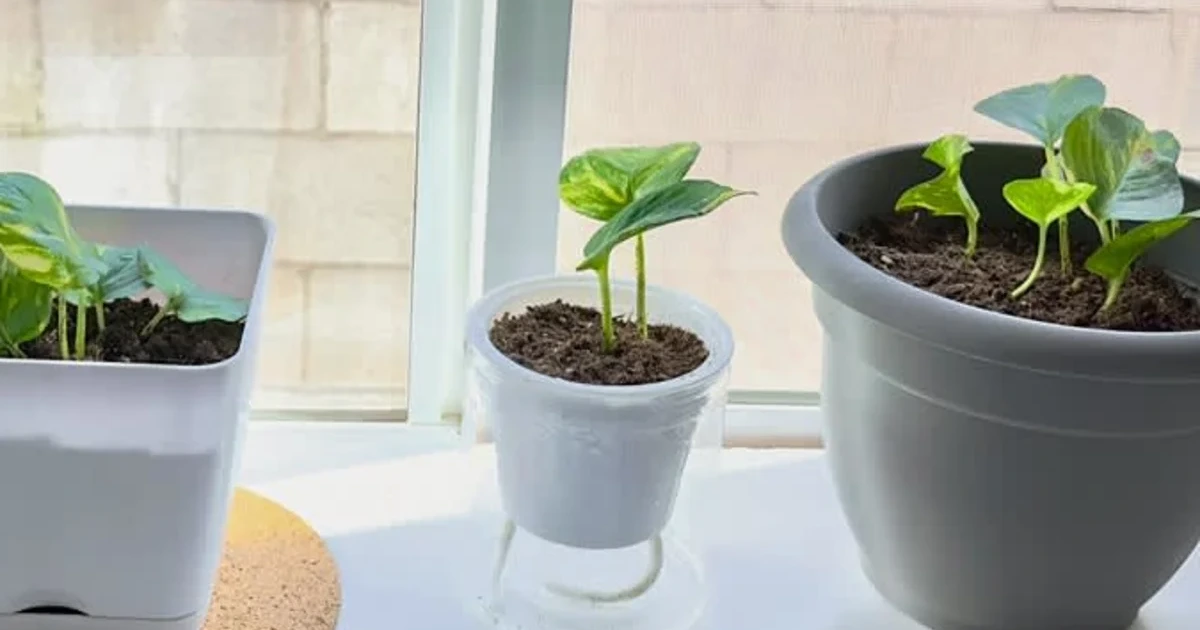
Introduction
Growing vegetables and flowers in containers has one major challenge that traditional garden beds don’t: water disappears quickly. A sunny balcony, rooftop, or patio can dry out a container in a single hot afternoon, leaving tomatoes wilted, herbs stressed, and lettuce bitter by evening.
A self-watering planter solves this problem by storing water beneath the growing medium instead of relying entirely on surface watering.
The concept is surprisingly simple. A built-in reservoir holds water below the soil, while capillary action gradually draws moisture upward into the root zone. Rather than receiving occasional floods followed by periods of dryness, plants have access to a more consistent supply of moisture, taking up water as they need it.
This approach doesn’t eliminate the need for watering altogether, but it dramatically reduces how often it’s required. For busy gardeners, frequent travelers, or anyone growing plants on a balcony or patio, self-watering planters can make container gardening significantly easier while improving plant health and productivity.
What Is a Self-Watering Planter?
A self-watering planter is a container with two separate sections:
- An upper compartment containing the growing medium and plant roots.
- A lower reservoir that stores water.
The two sections are connected by a wicking system, usually consisting of a column of potting mix or a specially designed wick.
As the upper soil begins to dry, water naturally moves upward from the reservoir.
The system relies on capillary action rather than pumps or electricity.
How Capillary Action Works
Capillary action is the natural movement of water through narrow spaces.
It occurs because water molecules are attracted both to each other and to the surfaces surrounding them.
The same principle allows:
- Water to move upward through plant stems.
- Paper towels to absorb spills.
- Soil to pull moisture upward from deeper layers.
In a self-watering planter, the potting mix acts as the wick.
As plants absorb moisture, more water is pulled upward from the reservoir to replace it.
The process continues automatically until the reservoir becomes empty.
Why Consistent Moisture Matters
Many common vegetable problems result not from too little water overall but from repeated cycles of drought followed by heavy watering.
Large fluctuations in soil moisture can stress plants and interfere with normal growth.
Consistent moisture helps support:
- Steady root development.
- Healthy leaf growth.
- Better fruit quality.
- More efficient nutrient uptake.
- Reduced plant stress.
This is especially important for crops that are sensitive to irregular watering.
Reducing Blossom-End Rot
Tomatoes, peppers, and eggplants sometimes develop blossom-end rot—a dark, sunken patch at the base of developing fruit.
Although calcium is involved, the problem is often linked to inconsistent water movement within the plant rather than a simple shortage of calcium in the soil.
When soil repeatedly dries out and is then soaked again, calcium transport to developing fruit may be disrupted.
A self-watering planter helps reduce these fluctuations by maintaining more even soil moisture.
While it cannot guarantee blossom-end rot will never occur, consistent watering is one of the most effective cultural practices for reducing the risk.
Preventing Bitter Cucumbers
Cucumber bitterness is influenced by several factors, including genetics and environmental stress.
Extended periods of drought or irregular watering may increase the production of naturally occurring bitter compounds called cucurbitacins in some varieties.
Maintaining consistent moisture helps reduce water stress and encourages more even fruit development.
Slowing Lettuce Bolting
Bolting occurs when leafy vegetables shift from leaf production to flowering.
Heat is the primary trigger, but drought stress can accelerate the process.
Although self-watering planters cannot prevent bolting during prolonged hot weather, they help reduce one important source of stress by providing a more stable water supply.
This may help extend the harvest period under suitable growing conditions.
Ideal Crops for Self-Watering Planters
Many vegetables perform exceptionally well in these systems.
Popular choices include:
- Tomatoes.
- Peppers.
- Cucumbers.
- Eggplants.
- Lettuce.
- Spinach.
- Basil.
- Parsley.
- Chives.
- Strawberries.
Flowering annuals also benefit from steady moisture, particularly during hot summers.
Choosing the Right Potting Mix
Not every growing medium works equally well.
A suitable mix should:
- Drain well.
- Retain moisture.
- Remain light and airy.
- Resist compaction.
Commercial container potting mixes usually perform much better than ordinary garden soil.
Garden soil often becomes too dense inside containers, limiting both drainage and capillary movement.
Watering the Reservoir
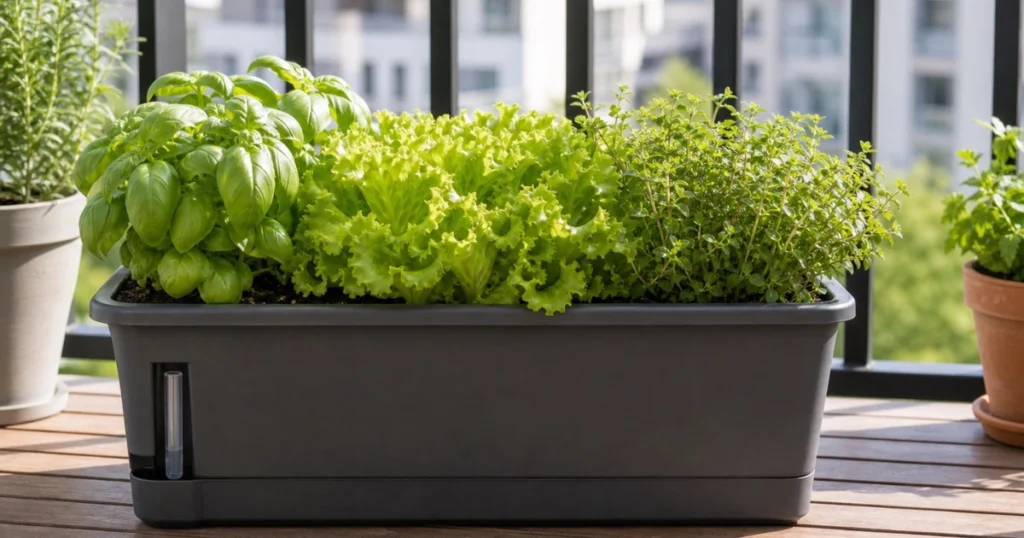
Most self-watering planters include a fill tube leading directly to the reservoir.
Water is added through this opening until the reservoir reaches capacity.
Many designs also include:
- Overflow holes.
- Water level indicators.
- Drainage systems.
These features help prevent accidental overfilling after heavy rain or irrigation.
How Long Does the Reservoir Last?
The answer depends on several factors:
- Reservoir size.
- Plant size.
- Weather.
- Temperature.
- Wind.
- Crop type.
During mild weather, some reservoirs may supply water for several days.
During extreme summer heat, large fruiting vegetables may require more frequent refilling.
Rather than eliminating watering, self-watering planters make watering far less frequent and much more predictable.
Benefits During Vacations
One of the biggest advantages is peace of mind.
A large reservoir can often keep container plants hydrated for several days while the gardener is away.
The exact duration varies with environmental conditions, but the buffer provided by stored water greatly reduces the risk of plants drying out after a missed watering.
This makes self-watering planters particularly valuable for:
- Weekend trips.
- Busy work schedules.
- Holiday travel.
Fertilizing Self-Watering Containers
Plants still require nutrients.
Because water moves upward consistently, nutrients can also move through the potting mix.
Slow-release fertilizers often work well in self-watering systems because they provide a gradual nutrient supply.
Liquid fertilizers may also be used according to product directions.
Avoid overfertilizing, as salts may accumulate more readily in containers than in open garden soil.
Cleaning the Reservoir
Periodic maintenance helps keep the system functioning well.
At the end of the growing season:
- Empty the reservoir.
- Remove old potting mix.
- Wash the container.
- Check overflow holes.
- Inspect the wick.
- Refill with fresh growing medium before replanting.
Cleaning reduces salt buildup and prepares the planter for the next season.
DIY Self-Watering Planters
Many gardeners build their own systems using inexpensive materials.
Common designs use:
- Food-grade buckets.
- Storage totes.
- PVC fill tubes.
- Plastic containers.
- Fabric wicks.
- Perforated platforms.
Homemade versions operate on exactly the same capillary principle as commercial models.
Limitations
Although highly effective, self-watering planters are not perfect.
Potential drawbacks include:
- Greater initial cost.
- Heavier weight when full.
- Occasional algae growth.
- Salt accumulation if overfertilized.
- Reservoir cleaning requirements.
Very wet-loving plants may also require different watering strategies depending on species.
Practical Tips
- Use high-quality container potting mix.
- Keep the reservoir filled during hot weather.
- Check overflow holes regularly.
- Apply mulch to further reduce evaporation.
- Fertilize moderately throughout the growing season.
- Empty and clean the reservoir before winter storage.
Common Mistakes
Using Garden Soil
Heavy soil reduces drainage and limits capillary movement.
Ignoring the Reservoir
Plants cannot draw water once the reservoir becomes empty.
Overfertilizing
Excess fertilizer may accumulate in container systems.
Blocking Overflow Holes
Overflow outlets prevent waterlogging after heavy rain.
Choosing Containers That Are Too Small
Large vegetables require adequate root volume as well as sufficient water storage.
Frequently Asked Questions
Do self-watering planters overwater plants?
No. Healthy roots absorb moisture from the potting mix through capillary action rather than sitting directly in the reservoir. Properly designed containers also include overflow holes to prevent waterlogging.
How often do I need to refill the reservoir?
It depends on the weather, plant size, and reservoir capacity. During hot summer weather, large vegetables may require more frequent refilling than during cooler periods.
Can vegetables grow well in self-watering planters?
Yes. Tomatoes, peppers, cucumbers, lettuce, herbs, and many other vegetables perform exceptionally well when provided with consistent moisture.
Do self-watering planters prevent blossom-end rot?
They cannot eliminate every cause, but by maintaining more even soil moisture they help reduce one of the major factors associated with blossom-end rot.
Can I make a self-watering planter myself?
Yes. Many gardeners successfully build DIY versions using buckets, storage bins, or other containers fitted with a water reservoir and wicking system.
Conclusion
A self-watering planter changes more than the way plants receive water—it changes the entire experience of container gardening. By using the natural principle of capillary action, it supplies moisture steadily and efficiently, allowing plants to draw water when they need it rather than relying on irregular surface watering.
The benefits extend far beyond convenience. More consistent soil moisture supports healthier roots, steadier growth, improved fruit quality, and reduced stress during hot weather. While no planter can completely eliminate the effects of extreme heat or poor growing conditions, a self-watering system removes one of the biggest challenges of container gardening: keeping moisture levels stable.
Whether you’re growing tomatoes on a balcony, herbs on a patio, or lettuce outside an apartment door, a self-watering planter offers a practical way to spend less time worrying about watering and more time enjoying healthy, productive plants.
Internal Linking
Learn how ancient clay pot irrigation delivers water directly to plant roots:
https://secretsofthegreengarden.com/olla-irrigation-clay-pot-watering/
Discover why consistent watering helps reduce common vegetable problems:
https://secretsofthegreengarden.com/heat-stress-in-plants/
Build a practical workspace for potting and maintaining container plants:
https://secretsofthegreengarden.com/potting-bench-guide/
Improve your soil for stronger, healthier container plants:
https://secretsofthegreengarden.com/why-not-leave-bare-soil-winter/
Recommended External Sources
- Royal Horticultural Society (RHS): https://www.rhs.org.uk
- University of Florida IFAS Extension: https://gardeningsolutions.ifas.ufl.edu
- Oregon State University Extension Service: https://extension.oregonstate.edu