
Gardeners often have piles of fallen branches, old logs, and woody pruning material that seem difficult to use. A hugelkultur garden bed turns that material into something valuable by placing wood beneath layers of organic matter, compost, and soil.
As the buried wood gradually decomposes, it contributes organic matter, supports soil organisms, and can improve the bed’s ability to retain moisture. Hugelkultur is not a magic replacement for compost or good gardening practices, but it can be an effective way to recycle woody debris while creating a productive growing area.
What Is a Hugelkultur Garden Bed?
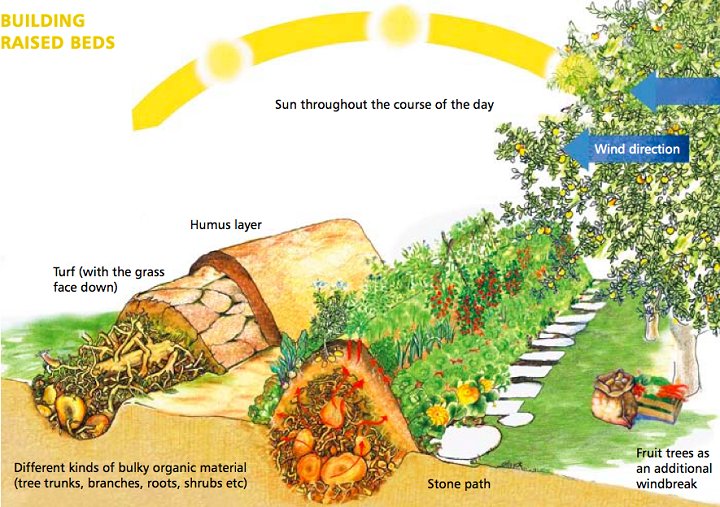
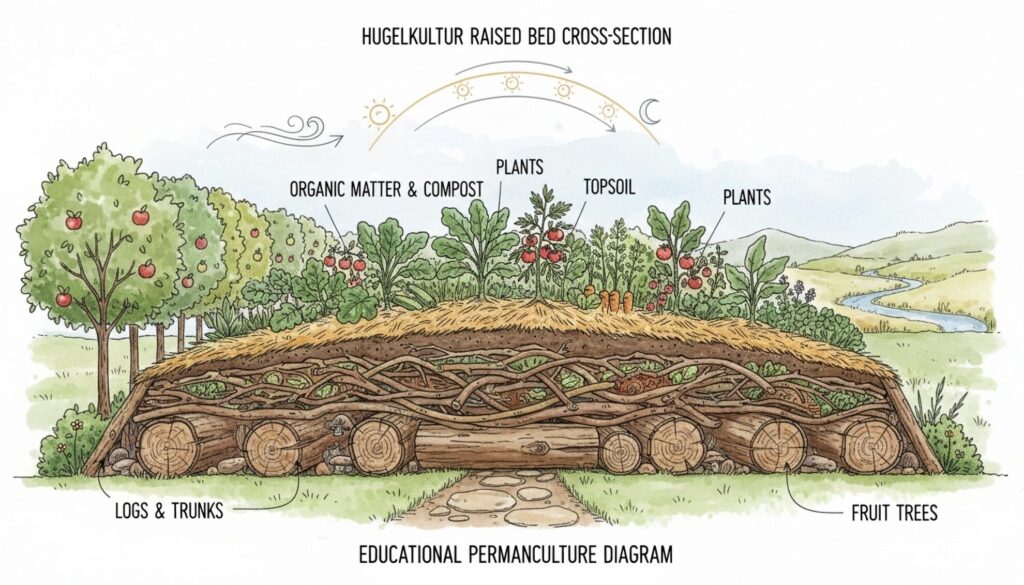
Hugelkultur is a gardening technique built around a core of decomposing wood. Logs and branches form the lowest layer, while nitrogen-rich organic materials, compost, and soil create the planting zone above.
Instead of removing woody garden waste, the material becomes part of the soil-building process.
Over time, fungi and other decomposers break down the buried wood. The bed gradually settles while the decomposing material contributes to a more organic-rich soil environment.
1. Choose Suitable Wood
Start with untreated logs, branches, twigs, and similar woody garden debris.
Partially decomposed wood can be particularly useful because it has already begun breaking down and may absorb water more readily than freshly cut wood.
Suitable materials can include:
- Fallen branches
- Old untreated logs
- Small sticks and twigs
- Woody garden prunings
- Partially rotted wood
Avoid pressure-treated, painted, stained, or chemically preserved lumber because you do not want potentially undesirable substances introduced into vegetable-growing soil.
Very decay-resistant wood is also less useful when your main objective is creating organic matter through decomposition.
2. Create the Woody Foundation
A hugelkultur bed can be constructed directly above the ground, placed inside a raised-bed frame, or partially buried.
If digging is practical, creating a shallow trench can help keep the finished mound from becoming excessively tall. Place your largest logs at the bottom before adding medium-sized branches and smaller sticks.
Try to fill major spaces between the logs rather than leaving large air pockets.
Small branches, leaves, compostable garden debris, and other organic materials can help fill these spaces. This creates a more stable structure as decomposition progresses.
3. Add Nitrogen-Rich Organic Matter
Wood has a high carbon-to-nitrogen ratio. Microorganisms involved in decomposition require nitrogen, so incorporating nitrogen-rich materials around the woody core can help support the process.
Possible materials include:
- Fresh grass clippings
- Finished or partly finished compost
- Well-rotted manure
- Green plant trimmings
- Other nitrogen-rich garden materials
This step is especially useful when working with a large amount of relatively fresh wood.
Most importantly, create a substantial layer of fertile growing medium above the woody material. Young vegetable roots should not be expected to establish directly in a thin covering of soil over fresh logs.
4. Add Compost and Topsoil
Cover the organic layers with good-quality compost and topsoil.
The upper portion of your hugelkultur garden bed should function much like an ordinary productive garden bed. Plants need sufficient soil depth for their roots, particularly during the early years when the woody core remains relatively undecomposed.
Adding mature compost provides readily available organic matter while the slower decomposition process takes place farther below.
Finish by gently leveling the planting surface rather than heavily compacting it.
5. Water the New Bed Thoroughly
Give the completed bed a deep watering before planting.
This settles loose materials, moistens the compost and soil, and begins wetting the woody core.
One of the potential advantages of hugelkultur is improved moisture management. As buried wood becomes increasingly decomposed and porous, it can hold water and contribute to a more consistently moist environment around the surrounding soil.
However, a new hugelkultur bed still requires regular watering. Do not assume fresh logs will immediately eliminate irrigation requirements.
Adding mulch to the finished surface can further reduce evaporation.
6. Allow for Settling
Hugelkultur beds change physically as they mature.
Branches collapse, organic material decomposes, and spaces within the original structure gradually disappear. As a result, the height of the bed normally decreases.
Building the mound slightly higher than your desired long-term level can compensate for some settling.
Rather than rebuilding the structure later, simply add compost or soil to the surface when necessary.
7. Plant Your Hugelkultur Bed
Once enough fertile soil covers the woody core, you can treat the surface much like another garden bed.
Depending on climate, bed depth, and growing conditions, suitable plants may include:
- Tomatoes
- Beans
- Leafy greens
- Onions
- Herbs
- Brassicas
- Squash
- Annual flowers
Plant selection should still follow normal requirements for sunlight, spacing, fertility, and local growing seasons.
Heavy-feeding vegetables may continue to need compost or supplemental nutrients. Hugelkultur should therefore be viewed as a soil-building technique rather than a permanent substitute for fertilization.
Why Hugelkultur Can Improve Garden Soil
The most interesting changes happen underground.
Fungi, bacteria, and other decomposers gradually transform woody material into increasingly complex organic matter. The physical structure of the bed also changes as the wood softens and decomposes.
This process can contribute to:
- Increased organic matter
- Better moisture retention
- Improved recycling of garden debris
- Greater biological activity
- Gradual nutrient cycling
- Improved soil structure over time
The exact results depend heavily on the wood used, rainfall, climate, soil conditions, bed construction, and crops being grown.
Common Hugelkultur Mistakes to Avoid
One common mistake is covering large fresh logs with only a few inches of soil. Create a generous planting layer so roots have good growing conditions from the beginning.
Another mistake is expecting the bed to become maintenance-free. Vegetables still remove nutrients when harvested, so compost, mulch, and appropriate fertilization may remain necessary.
Finally, avoid burying questionable construction lumber simply because it is available. Clean, untreated woody garden material is the safer choice.
FAQ About Hugelkultur Beds
How long does a hugelkultur bed last?
There is no single lifespan because decomposition rates vary with wood species, log size, moisture, temperature, and climate. Large woody material can continue decomposing for years, while smaller branches disappear much faster.
Does hugelkultur reduce watering?
It can improve moisture retention as the buried organic material decomposes, but it does not eliminate watering. Newly constructed beds may need particularly careful irrigation until the system matures.
Can I build hugelkultur in a raised bed?
Yes. Logs and branches can form the lower portion of a sufficiently deep raised bed, followed by organic material, compost, and an adequate layer of planting soil.
What should not go into a hugelkultur bed?
Avoid pressure-treated lumber, painted or stained wood, contaminated material, and plants carrying serious diseases that could persist in the garden.
Does hugelkultur need fertilizer?
Possibly. Decomposing wood contributes to long-term nutrient cycling, but demanding vegetable crops can still require compost or fertilizer, especially when the bed is harvested intensively each season.
Final Thoughts
A hugelkultur garden bed offers a practical way to turn fallen branches and unwanted logs into part of a productive garden system.
The key is proper layering: clean wood at the bottom, nitrogen-rich organic matter around it, and plenty of compost and fertile soil above. Water thoroughly, expect gradual settling, and continue caring for your plants as you would in any other garden.
Rather than promising a maintenance-free garden, hugelkultur provides something more realistic: a way to recycle woody material while gradually improving organic matter, soil biology, moisture management, and nutrient cycling beneath your plants.
SEO Information
Main keyword: hugelkultur garden bed
LSI/NLP keywords used: hugelkultur gardening, raised garden bed, buried wood, soil moisture retention, organic matter, soil building, woody garden debris, nutrient cycling
Internal Link Suggestions from Tesouros do Jardim
- How to Make Homemade Compost Faster — useful when discussing compost used between the woody and soil layers.
- How to Reuse Old Potting Soil — relevant for readers interested in recycling garden materials and improving soil.
- How to Prepare Raised Beds — a natural companion article for readers considering hugelkultur inside a raised-bed structure.
External Link Suggestions
- Hugelkultur Raised Beds – Oklahoma State University Extension — practical university-based information about constructing and managing hugelkultur beds.
- Composting at Home – U.S. Environmental Protection Agency — authoritative background information about decomposition and recycling organic garden materials.
- Soil Health – USDA Natural Resources Conservation Service — reliable information about organic matter, soil biology, and maintaining healthy garden soil.