
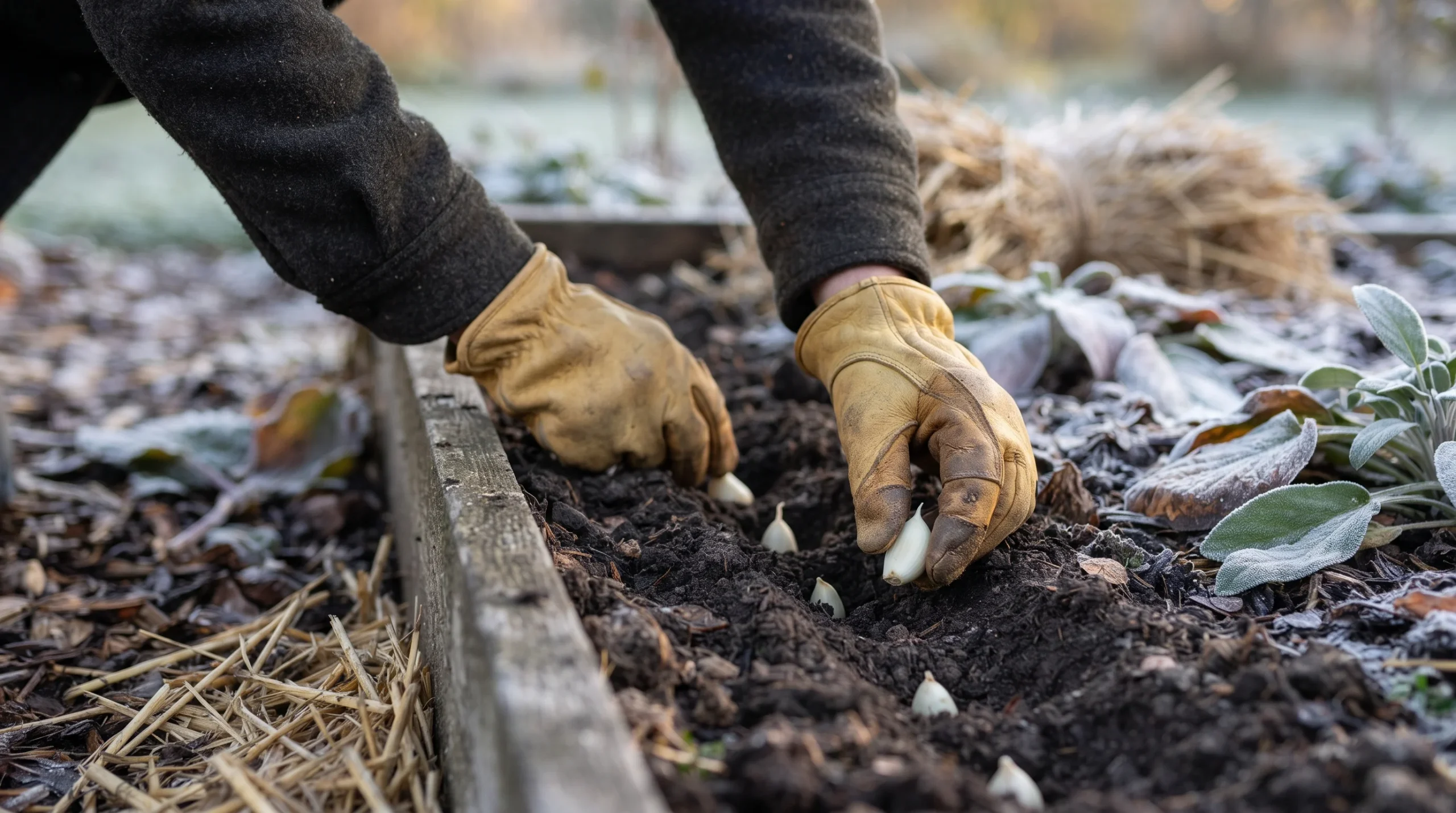
Have you ever wondered why garlic goes in the ground just before winter?
While most gardeners are putting away their tools and preparing their beds for colder weather, garlic is getting ready for a new growing season. Beneath the soil, freshly planted cloves begin developing roots that will support their growth when spring arrives.
Fall planting gives garlic time to establish itself and experience the cold temperatures that help many varieties form well-developed bulbs.
Even in late November, you may still have an opportunity to plant garlic if the ground remains workable. The secret is choosing the right variety, planting at the correct depth, and providing suitable winter protection.
Table of Contents
- Why Garlic Is Planted in Fall and Harvested the Next Summer
- Choosing Hardneck vs. Softneck Garlic for Your Region
- Planting Depth, Spacing, and Pointed-End-Up Orientation
- How Mulch Protects Garlic During Winter
- What the Cold Period Does for Garlic Bulb Formation
- Common Garlic Planting Mistakes to Avoid
- Frequently Asked Questions
Why Garlic Is Planted in Fall and Harvested the Next Summer
Garlic follows a different growing schedule from many familiar garden vegetables. Instead of planting it when spring temperatures begin rising, gardeners often plant garlic several weeks before the ground freezes.
During late fall, the cloves develop roots in the cool soil. Although there may be little visible growth aboveground, the plants are preparing for the next growing season.
When spring arrives, garlic begins producing more green leaves. These leaves capture sunlight and provide the energy needed for bulb development.
Fall-planted garlic often produces larger bulbs than garlic planted late in spring because it has more time to establish roots and grow. However, bulb size also depends on variety, soil fertility, moisture, and weather.
By early or midsummer, the lower leaves begin turning brown, signaling that harvest time is approaching.
Choosing Hardneck vs. Softneck Garlic for Your Region
Not all garlic grows equally well in every climate. Choosing a variety suited to your region can make a significant difference in your harvest.
Hardneck garlic
Hardneck garlic is generally a good choice for gardeners in the Northeast, Midwest, and other regions with cold winters.
It produces a central flower stalk called a scape, which can be harvested and used in cooking. Hardneck varieties usually produce fewer but larger cloves.
Popular varieties include Music, German White, and Spanish Roja.
Softneck garlic
Softneck garlic is often better suited to regions with mild winters, including parts of California and the southern United States.
It generally produces more cloves per bulb and has a longer storage life. Its flexible stems also make it suitable for braiding after harvest.
Popular varieties include California Early and Inchelium Red.
Some softneck varieties also perform well in colder regions. Check with your local university extension office for recommendations suited to your climate.
| Characteristics | Hardneck garlic | Softneck garlic |
|---|---|---|
| Preferred climate | Cold winters | Mild winters |
| Clove size | Generally larger | Generally smaller |
| Number of cloves | Fewer | More |
| Flower stalk | Usually present | Usually absent |
| Storage life | Generally shorter | Generally longer |
Planting Depth, Spacing, and Pointed-End-Up Orientation
Garlic grows best in a sunny garden bed with loose soil that drains well. Adding finished compost can improve soil structure and provide organic matter.
Follow these simple planting steps:
- Separate healthy garlic bulbs into individual cloves shortly before planting.
- Leave the protective papery skin around each clove.
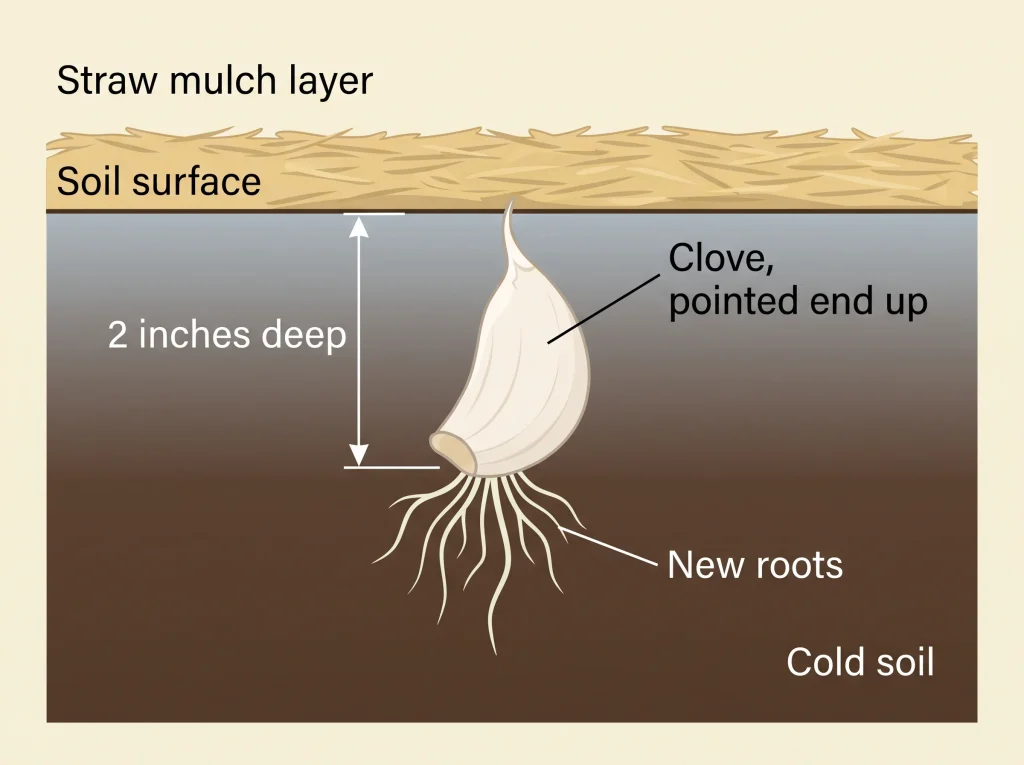
- Position the cloves with their pointed ends facing upward and their flat root ends facing downward.
- Cover the tips with about one to two inches of soil, adjusting the depth for your climate.
- Leave approximately four to six inches between cloves and eight to twelve inches between rows.
- Water gently after planting if the soil is dry.
Giving each clove enough room reduces competition for water and nutrients. Proper planting depth also helps protect the developing roots from harsh winter conditions.
Choose the largest healthy cloves from your planting bulbs, as these generally have better potential to produce well-developed plants.
How Mulch Protects Garlic During Winter
Imagine giving your garlic bed a protective winter blanket. That is essentially what organic mulch does.
A covering of clean straw or shredded leaves helps slow changes in soil temperature. It also reduces moisture loss and protects cloves from being pushed upward by repeated freezing and thawing.
In many regions, a loose layer of about three to four inches of straw is a useful starting point. Gardeners in areas with particularly harsh winters may need a thicker layer.
Some gardeners mulch immediately after planting, while others wait until the soil becomes colder. Local climate and rainfall should guide your decision.
When spring arrives, loosen or move aside compacted mulch if it prevents young shoots from emerging. A lighter covering can remain to help control weeds and retain moisture.
What the Cold Period Does for Garlic Bulb Formation
One of the most interesting things about garlic is that cold weather plays an important role in its development.
Many garlic varieties benefit from a period of cool temperatures through a biological process called vernalization. This cold exposure helps prepare the plant for later bulb formation.
As temperatures rise and daylight increases in spring, the plant begins directing more energy toward developing its bulb.
Without suitable cold exposure, certain varieties may form poorly divided bulbs or a single rounded bulb instead of several separate cloves.
The amount of cold required varies between varieties. This is why choosing garlic suited to your region matters more than following one nationwide planting calendar.
Gardeners in warmer climates can still grow garlic successfully by selecting varieties adapted to mild winters.
Common Garlic Planting Mistakes to Avoid
Planting too shallow
Cloves planted too close to the surface are more exposed to drying, freezing, and soil movement.
Cover them with enough soil to protect them, following planting recommendations for your region.
Skipping winter mulch
In colder climates, leaving soil completely exposed can increase the risk of winter damage.
Loose straw provides insulation without creating a heavy covering. In mild, wet climates, avoid excessive mulch that could keep the soil too damp.
Using grocery-store garlic
Some supermarket garlic may be treated to discourage sprouting. It may also belong to a variety poorly adapted to your local growing conditions or carry plant diseases.
Buying healthy planting garlic from a reputable garden supplier is generally a more reliable option.
Frequently Asked Questions
Is it too late to plant garlic in late November?
Not necessarily. If the soil remains workable and drains well, you may still be able to plant garlic.
In northern states, earlier fall planting is usually preferable. Gardeners in milder southern regions often have a longer planting window.
Do I need to water garlic in winter?
Garlic usually requires little extra watering during cold weather when rainfall or melting snow provides sufficient moisture.
In mild, dry regions, occasional watering may be necessary. Avoid watering frozen or waterlogged soil.
When do the green shoots appear?
Garlic shoots may emerge during late fall in mild weather or remain beneath the soil until late winter or early spring.
Early shoots do not necessarily mean something has gone wrong. Their appearance depends on planting time, variety, and local temperatures.
Conclusion
Planting garlic in late fall is a rewarding way to prepare for next summer’s harvest. Choose healthy cloves, give them enough growing space, and protect the bed with appropriate winter mulch.
Even when your garden looks dormant, important growth may be happening beneath the soil.
Share your garlic-growing experience in the comments, save this guide for your next planting day, and follow our Facebook page for more seasonal gardening tips.
External Sources
1. Growing Garlic in Home Gardens
Support recommendations on garlic varieties, fall planting, soil preparation, planting depth, spacing, and summer harvesting. University of Minnesota Extension. https://extension.umn.edu/garden-and-home/yard-and-garden/gardening-in-minnesota/growing-garlic?utm_source
2. Growing Garlic in the Home Garden
Explain winter straw mulching, hardneck and softneck varieties, planting techniques, and protection against winter damage. Iowa State University Extension and Outreach. https://yardandgarden.extension.iastate.edu/how-to/growing-garlic-home-garden?utm_source
3. Fall Is the Best Time to Plant Garlic in Oregon
Explain why fall planting encourages root development before winter and supports bulb development the following summer. Oregon State University Extension Service. https://extension.oregonstate.edu/news/fall-best-time-plant-garlic-oregon?utm_source