
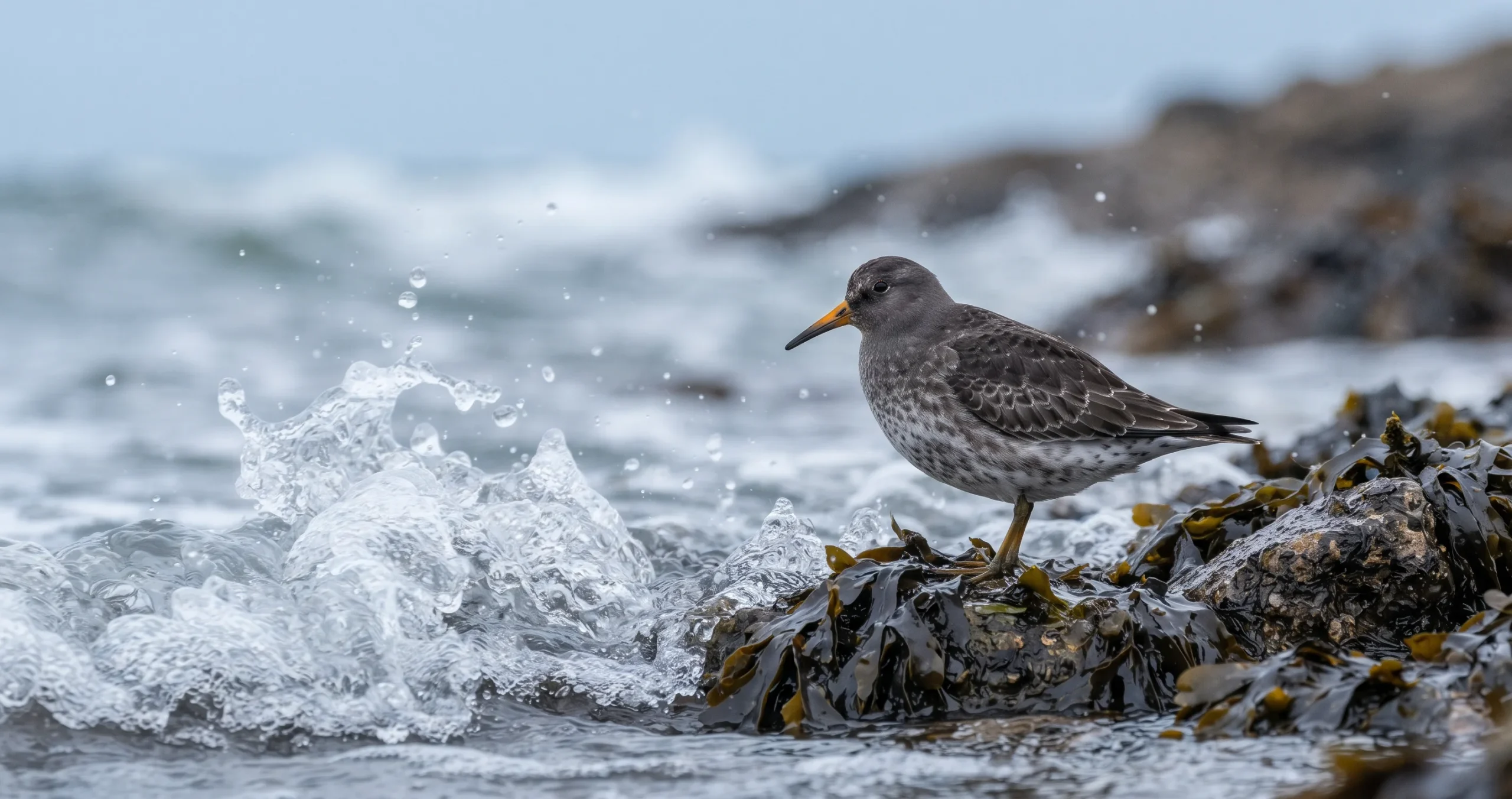
While many migratory birds spend winter in warm southern wetlands, one remarkable shorebird seems perfectly comfortable standing on icy rocks as freezing ocean waves crash around it.
The purple sandpiper (Calidris maritima) is one of the most fascinating winter shorebirds in North America. With its dark plumage, short orange-yellow legs, and remarkable ability to navigate slippery rocks, this small bird thrives in environments that many other shorebirds avoid.
From the rugged coastline of Maine to the rocky jetties of the Mid-Atlantic, purple sandpipers offer birdwatchers a unique glimpse into wildlife adapted to harsh coastal conditions.
Learning where to find them, how to identify them, and what makes their winter survival possible can transform an ordinary coastal walk into an unforgettable wildlife experience.
Table of Contents
- Understanding the Purple Sandpiper
- Purple Sandpiper Identification: Key Features to Look For
- Where Purple Sandpipers Spend the Winter
- The Science Behind Their Remarkable Winter Survival
- What Do Purple Sandpipers Eat?
- Migration and Seasonal Behavior
- Purple Sandpiper vs. Similar Shorebirds
- The Best Time to Observe Purple Sandpipers
- Threats and Conservation
- In Your Own Yard: Supporting Coastal Wildlife
- Frequently Asked Questions
Understanding the Purple Sandpiper
The purple sandpiper belongs to the family Scolopacidae, which includes sandpipers, curlews, snipes, and other shorebirds.
It inhabits northern regions of North America, Europe, and Asia, breeding primarily in Arctic and subarctic environments.
Unlike many sandpipers that prefer sandy beaches and muddy estuaries, purple sandpipers are closely associated with rocky coastlines outside the breeding season.
Why Are They Called Purple Sandpipers?
Despite their name, these birds rarely appear distinctly purple.
Their feathers sometimes display a subtle purplish sheen under favorable lighting conditions, particularly when viewed closely.
From a distance, their winter plumage generally appears dark gray, charcoal, or brownish-gray.
These subdued colors provide excellent camouflage against wet rocks and seaweed-covered coastal surfaces.
Size and Physical Characteristics
Purple sandpipers are medium-sized sandpipers with compact bodies and relatively short legs.
Typical physical characteristics include:
- Body length of approximately 8–9 inches.
- Rounded body and slightly hunched posture.
- Dark gray upperparts.
- Pale, streaked underparts.
- Yellowish-orange legs.
- Slightly downward-curving bill with a yellowish or orange base.
Their robust appearance distinguishes them from several smaller, more delicate-looking shorebirds.
Purple Sandpiper Identification: Key Features to Look For
Winter is an excellent season to observe purple sandpipers along the Atlantic coast of the United States.
Recognizing several characteristics together can help confirm identification.
Dark Winter Plumage
During winter, purple sandpipers develop predominantly slate-gray plumage.
Their heads, backs, and upper breasts are relatively dark, while their lower bellies are noticeably paler.
This coloration allows them to blend into rocky surroundings, sometimes making entire flocks difficult to detect.
Distinctive Orange-Yellow Legs
Their short, yellowish-orange legs contrast with their dark feathers.
This characteristic is particularly useful when distinguishing purple sandpipers from other winter shorebirds.
A Slightly Curved Bill
The bill is relatively slender and curves gently downward toward the tip.
Its base is often yellowish or orange, while the outer portion is dark.
This specialized shape helps the bird investigate narrow crevices and extract small prey.
Behavior on Rocky Surfaces
Habitat and movement are also valuable identification clues.
Purple sandpipers frequently walk across wet rocks, probe beneath seaweed, and retreat from incoming waves before returning to feed.
Their preference for rugged shorelines is one of their most distinctive ecological characteristics.
Where Purple Sandpipers Spend the Winter
Purple sandpipers are particularly associated with the Atlantic coastline of North America during winter.
Many migrate from northern breeding grounds toward coastal environments where marine food remains available.
Winter Distribution in the United States
Purple sandpipers can regularly be observed in coastal areas of:
- Maine.
- New Hampshire.
- Massachusetts.
- Rhode Island.
- Connecticut.
- New York.
- New Jersey.
Smaller numbers also winter farther south along the Atlantic coast.
Their abundance varies depending on weather conditions, coastal geography, and seasonal movements.
Preferred Rocky Habitats
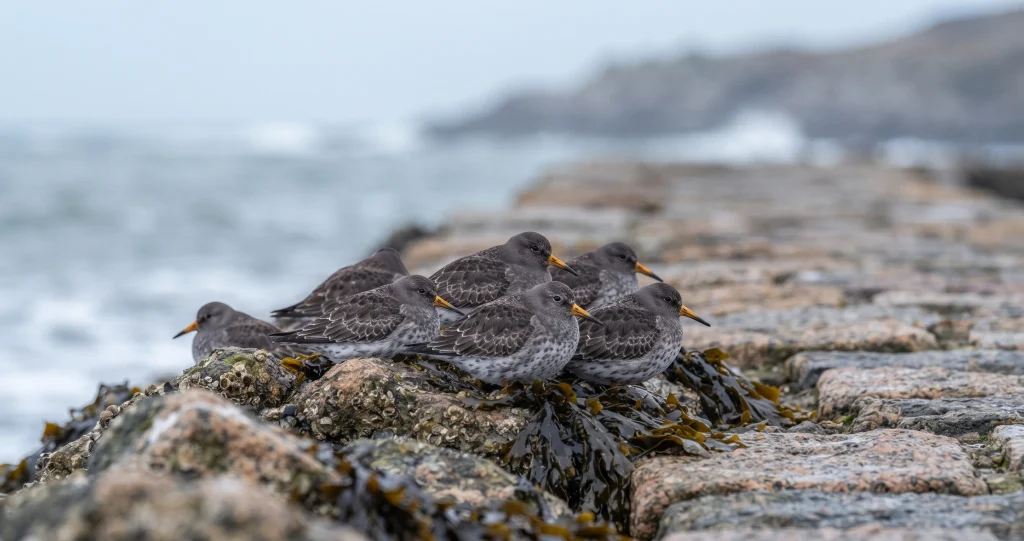
The most promising locations include rocky headlands, stone jetties, breakwaters, coastal ledges, and wave-washed boulders.
Artificial coastal structures can provide suitable feeding habitat when they support marine invertebrates and algae.
Unlike broad sandy beaches, these rocky environments offer numerous crevices where small marine organisms live.
The Science Behind Their Remarkable Winter Survival
For a bird weighing only a few ounces, surviving on an exposed coastline during winter presents considerable challenges.
Cold winds, freezing spray, and unpredictable waves create conditions that require specialized behaviors and physiological adaptations.
Feathers Provide Natural Insulation
Like other birds, purple sandpipers rely on their feathers to reduce heat loss.
A layer of air trapped beneath the feathers provides insulation and helps conserve body heat.
During particularly cold conditions, the birds may fluff their plumage, creating a noticeably rounded appearance.
Regular preening also helps maintain feather condition and water resistance.
How Birds Reduce Heat Loss Through Their Feet
Standing on freezing rocks might seem uncomfortable, but many birds possess specialized circulatory adaptations that help reduce heat loss through their legs.
One important mechanism is countercurrent heat exchange.
Warm arterial blood traveling toward the feet passes near cooler venous blood returning toward the body. Heat transfers between these blood vessels, allowing the returning blood to warm before reaching the body’s core.
This general avian adaptation helps conserve heat while allowing the feet to remain functional at relatively low temperatures.
The Importance of Reliable Winter Food
Purple sandpipers must consume enough food to support their metabolism and maintain body temperature.
Rocky intertidal habitats can remain biologically productive throughout winter, even when terrestrial environments are frozen.
By feeding on small marine invertebrates, these shorebirds gain access to resources that are unavailable to many inland birds during cold weather.
Short Legs and a Compact Body
Their compact bodies and relatively short legs are well suited to moving across uneven rocky surfaces.
Their feet allow them to grip rough areas and maintain balance while searching for prey.
However, even these experienced coastal birds must remain alert to powerful waves.
Resting Together Helps Conserve Energy
Purple sandpipers frequently gather in small flocks during winter.
When resting, they may cluster on sheltered rocks, tuck their bills into their feathers, or stand on one leg.
These behaviors can help reduce exposure and conserve energy between feeding periods.
What Do Purple Sandpipers Eat?
Unlike shorebirds that primarily search for worms in soft mud, purple sandpipers find much of their winter food among rocks and marine vegetation.
Their Natural Winter Diet
Common food sources include:
- Small mussels.
- Periwinkles and other marine snails.
- Barnacles.
- Small crabs.
- Marine worms.
- Amphipods.
- Seaweed-associated insects.
A 2025 study published in Ornithology used molecular analysis to investigate the winter diet of purple sandpipers in Maine, revealing the remarkable importance of barnacles in their diet. OUP Academic
Swallowing Shellfish Whole
Purple sandpipers can swallow small mollusks whole. Their muscular gizzard subsequently helps break down the shells.
They may also search beneath loose seaweed to uncover concealed prey and feed after dark when tidal conditions are favorable. All About Birds
Migration and Seasonal Behavior
Purple sandpipers lead dramatically different lives depending on the season.
Summer in the Arctic
During the breeding season, they inhabit northern tundra landscapes containing rocky ridges, mosses, lichens, and low-growing vegetation.
Their diet shifts toward insects, spiders, and other small terrestrial invertebrates.
Late Fall Migration
Compared with many other shorebirds, purple sandpipers migrate relatively late in autumn.
Significant numbers may not appear along their wintering coastlines until November.
Returning to Familiar Winter Habitats
Purple sandpipers can display strong site fidelity, repeatedly using familiar feeding and resting locations.
A tracking study found that individuals generally remained within relatively small geographic areas during winter, although severe icing occasionally forced them to relocate. Wiley Online Library
Purple Sandpiper vs. Similar Shorebirds
Several coastal birds share characteristics with purple sandpipers. Examining their coloration, legs, bill shape, and habitat can help prevent misidentification.
| Species | Distinguishing features | Preferred winter habitat |
|---|---|---|
| Purple sandpiper | Dark gray plumage, orange-yellow legs | Rocky Atlantic shores |
| Dunlin | Black legs, long curved bill | Mudflats and estuaries |
| Sanderling | Pale plumage, black legs | Sandy beaches |
| Ruddy turnstone | Orange legs, patterned plumage | Rocky shores and beaches |
| Rock sandpiper | Similar dark plumage and yellowish legs | North Pacific coast |
| Red knot | Gray plumage, larger body | Beaches and tidal flats |
The rock sandpiper is a particularly close relative. However, its predominantly Pacific distribution provides an important geographical identification clue.
The Best Time to Observe Purple Sandpipers
Finding these remarkable birds often depends as much on tidal conditions as on the season.
Visit Between November and March
Late fall and winter provide excellent observation opportunities along northeastern Atlantic coastlines.
Depending on the location, some birds may remain until April or May.
Watch During Falling Tides
As seawater retreats, previously submerged feeding surfaces become accessible.
Purple sandpipers frequently take advantage of these newly exposed areas.
Look Carefully at Dark Rocks
Their feathers blend remarkably well with wet coastal rocks. Scan slowly with binoculars rather than relying on movement alone.
Maintain a Safe Distance
Observe birds from established coastal paths and safe viewing areas.
Wet rocks, unexpected waves, and icy surfaces can create dangerous conditions, particularly during winter storms.
A spotting scope allows you to enjoy their fascinating behavior without disturbing feeding flocks.
Threats and Conservation
Despite their ability to tolerate challenging weather, purple sandpipers remain vulnerable to environmental changes.
Coastal development, marine pollution, human disturbance, and changes in prey availability can affect the suitability of their winter habitats.
Climate change may also influence Arctic breeding grounds and the distribution of marine organisms.
Protecting productive rocky shorelines and undisturbed resting areas is important for maintaining healthy populations.
In Your Own Yard: Supporting Coastal Wildlife
Purple sandpipers are unlikely to visit ordinary backyard bird feeders. However, gardeners can still contribute to healthier coastal ecosystems.
Growing native vegetation, reducing unnecessary pesticide use, collecting litter, and establishing rain gardens can help limit pollution entering waterways.
When visiting the coast, leave natural seaweed deposits undisturbed, keep dogs away from resting shorebirds, and respect protected wildlife areas.
Even small actions far inland can contribute to healthier rivers, estuaries, and marine habitats.
Frequently Asked Questions
1. Are purple sandpipers actually purple?
Their feathers are predominantly gray during winter. Some wing feathers display a subtle violet sheen under favorable lighting conditions, which explains their common name.
2. Where can I find purple sandpipers in winter?
Rocky Atlantic coastlines, stone jetties, breakwaters, and seaweed-covered coastal ledges are excellent places to look, particularly in New England.
3. Why do purple sandpipers stay so far north in winter?
Their insulating plumage, specialized feeding behavior, and access to marine invertebrates help them survive cold coastal conditions without migrating as far south as many other shorebirds.
Conclusion
The purple sandpiper is an extraordinary example of how wildlife adapts to seemingly inhospitable environments.
Its understated plumage, specialized feeding habits, and ability to endure harsh coastal weather reveal a fascinating relationship between a small bird and the vast Atlantic Ocean.
The next time you visit a rocky coastline in winter, take a closer look at the seaweed-covered stones. Among the crashing waves, you may discover one of nature’s most resilient little shorebirds.
External Sources
1. Barnacles Dominate the Winter Diet of Purple Sandpipers in Maine
DNA analysis revealed that barnacles are a surprisingly important component of the species’ winter diet in Maine. Ornithology . Scientific study on purple sandpiper winter diet
2. Within-Year Movements and Site Fidelity of Purple Sandpipers
Severe icing can temporarily force purple sandpipers to abandon familiar feeding locations and move to offshore habitats. Journal of Field Ornithology. Research on winter movements and site fidelity