
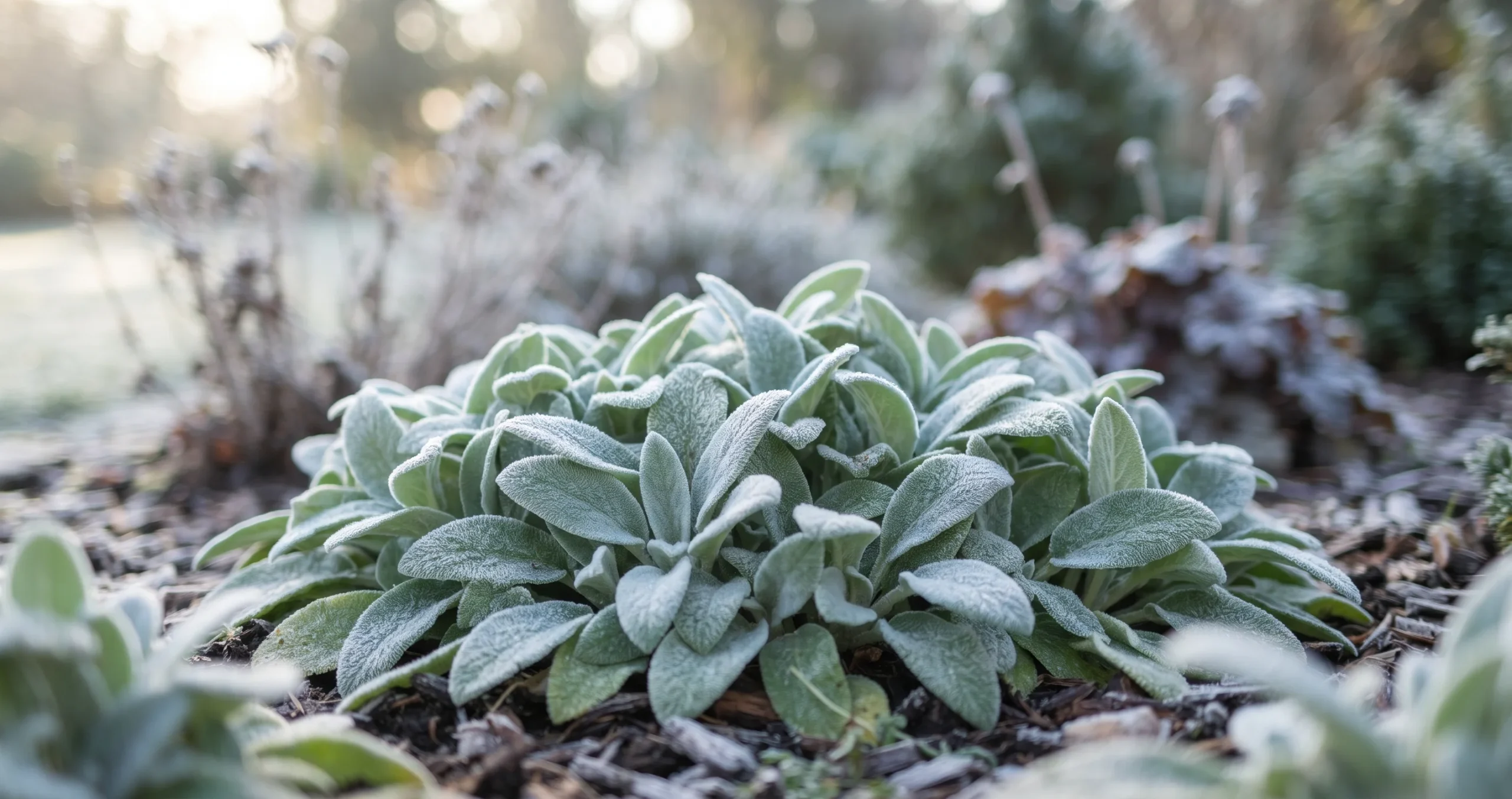
A plant with leaves as soft as velvet can survive freezing winter temperatures, yet a few weeks of soggy soil may cause it to deteriorate completely.
Understanding lamb’s ear winter care begins with recognizing this surprising difference between cold tolerance and moisture sensitivity.
Lamb’s ear (Stachys byzantina) is a beautiful perennial known for its silvery foliage, soft texture, and spreading growth habit. Although it is remarkably resilient in many American gardens, winter moisture, poor drainage, and decaying foliage can create significant problems.
Fortunately, protecting lamb’s ear during winter requires relatively little maintenance. With suitable soil conditions, careful watering, and timely spring cleanup, this distinctive perennial can return year after year.
Table of Contents
- Understanding Lamb’s Ear and Its Seasonal Growth
- Lamb’s Ear Winter Care: How Much Cold Can It Tolerate?
- The Science Behind Lamb’s Ear Winter Survival
- Why Good Drainage Is Essential During Winter
- Normal Winter Dieback vs. Crown Rot
- How to Prepare Lamb’s Ear for Winter
- Caring for Container-Grown Lamb’s Ear
- How to Clean Up Lamb’s Ear in Spring
- Common Winter Care Mistakes
- In Your Own Yard: Creating a Low-Maintenance Lamb’s Ear Garden
- Frequently Asked Questions
Understanding Lamb’s Ear and Its Seasonal Growth
Lamb’s ear belongs to the mint family, Lamiaceae, which also includes lavender, sage, rosemary, and thyme.
Originally native to parts of western Asia, this ornamental perennial has become popular in gardens throughout North America because of its attractive foliage and tolerance of relatively dry conditions.
Its thick, elongated leaves are covered with fine, silvery hairs that give the plant its characteristic woolly appearance.
A Natural Ground Cover
Lamb’s ear spreads through creeping stems that can develop roots where they contact the soil.
Over time, individual plants may form dense mats of silvery foliage, making them particularly suitable for borders, rock gardens, and sunny pathways.
Most varieties produce foliage approximately 6–12 inches tall, although flowering stems may reach considerably higher.
Is Lamb’s Ear Evergreen?
Lamb’s ear can behave as an evergreen, semi-evergreen, or herbaceous perennial depending on local winter conditions.
In regions with mild winters, much of its foliage may remain attractive throughout the year.
In colder climates, exposed leaves may deteriorate or die back while the crown and roots remain alive beneath the surface.
Lamb’s Ear Winter Care: How Much Cold Can It Tolerate?
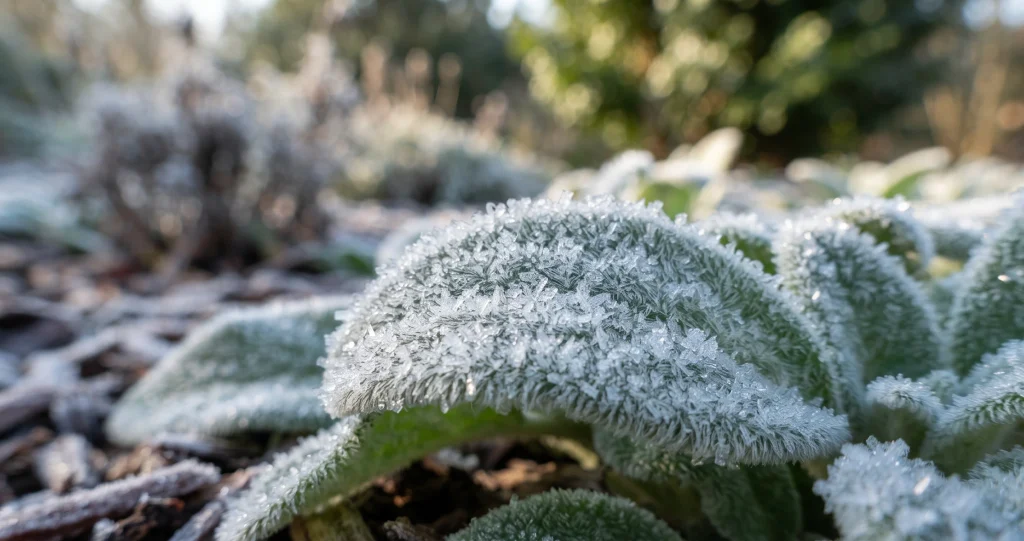
Lamb’s ear is generally suitable for USDA hardiness zones 4–8, although some cultivars may grow successfully outside this range under appropriate conditions.
Established plants can survive substantial winter cold, particularly when planted in well-drained soil.
However, winter hardiness does not guarantee that every leaf will remain green and healthy.
Winter Behavior in Different Climates
| USDA hardiness zone | Typical winter behavior |
|---|---|
| Zones 3–4 | Extensive foliage dieback possible; survival may vary |
| Zones 5–6 | Partial or substantial foliage dieback |
| Zones 7–8 | Often semi-evergreen |
| Zones 9–10 | Foliage may persist, but humidity can create problems |
These are general expectations rather than guaranteed outcomes. Snow cover, rainfall, cultivar selection, and soil drainage can significantly influence winter survival.
Snow Can Provide Natural Insulation
A layer of snow can help insulate perennial crowns from sudden temperature fluctuations.
Although exposed leaves may suffer frost damage, protected growing points can remain viable until spring.
Problems are more likely when melting snow accumulates around the plant and creates prolonged saturation.
The Science Behind Lamb’s Ear Winter Survival
The appearance of lamb’s ear reveals several remarkable adaptations that help it survive challenging growing conditions.
Its soft foliage is not simply an ornamental feature. It is part of a specialized plant structure adapted to relatively sunny and dry environments.
Tiny Leaf Hairs Create a Protective Surface
The silvery hairs covering lamb’s ear leaves are known as trichomes.
These microscopic structures influence how sunlight, air, and moisture interact with the leaf surface.
Their reflective qualities can help reduce excessive solar heating, while the layer of hairs may influence water loss by modifying airflow close to the leaf.
These characteristics are particularly useful during hot, dry weather.
However, woolly foliage does not make the plant immune to freezing temperatures or prolonged dampness.
Reduced Growth During Cold Weather
As temperatures decline, many perennial plants experience slower metabolic activity.
Growth decreases, water requirements change, and the production of new foliage becomes limited.
Lamb’s ear may retain some functioning leaves during mild winter periods, while colder conditions can lead to extensive foliage damage.
The surviving crown becomes particularly important because it contains growing points capable of producing fresh leaves when conditions improve.
Why Freezing Damages Leaves
When plant tissues experience freezing temperatures, ice formation outside cells can draw water away from them.
This dehydration can damage cellular membranes and other structures. More severe freezing injury can cause tissues to collapse.
Affected lamb’s ear leaves may become brown, limp, or flattened against the ground.
Fortunately, damaged foliage does not necessarily indicate that the entire plant has died.
Why Excess Moisture Threatens Roots
Plant roots require oxygen to carry out essential metabolic processes.
When soil remains saturated, water occupies many of the air spaces normally present between soil particles.
This reduces oxygen availability and can interfere with normal root function.
Prolonged wet conditions can also favor organisms associated with root and crown rot.
For lamb’s ear, the combination of cold temperatures, slow growth, and poorly drained soil can be particularly damaging.
The Chicago Botanic Garden emphasizes that good drainage during both summer and winter is essential to the long-term health of this perennial. Chicago Botanic Garden
Why Good Drainage Is Essential During Winter
Lamb’s ear naturally thrives in conditions that are relatively dry. Recreating these conditions in your garden can significantly improve its chances of surviving winter.
Avoid Low-Lying Planting Areas
Garden beds located in depressions often collect rainwater and melting snow.
Even if lamb’s ear grows successfully in these locations during summer, prolonged winter moisture may cause its roots and crown to deteriorate.
Slightly elevated flower beds, slopes, and rock gardens are often better choices.
Improve Heavy Clay Soil
Clay soils tend to retain moisture for longer periods than sandy or loamy soils.
If drainage is consistently poor, consider establishing a raised bed filled with free-draining soil rather than simply adding sand to heavy clay.
Provide Adequate Sunlight and Air Circulation
Choose a location that receives approximately six hours of direct sunlight daily whenever possible.
Allow sufficient space between plants so moisture can evaporate from their woolly leaves.
The Missouri Botanical Garden notes that excessive shade and moisture trapped in the foliage can encourage leaf diseases and rot. Plant Finder
Normal Winter Dieback vs. Crown Rot
One of the biggest challenges for gardeners is determining whether an untidy lamb’s ear plant is experiencing normal seasonal dieback or a more serious problem.
Signs of Normal Winter Dieback
- Brown or flattened outer leaves.
- Reduced foliage growth.
- Firm crowns near ground level.
- Some healthy silver leaves remaining.
- Fresh shoots emerging as temperatures rise.
Signs of Possible Crown Rot
- Soft, mushy tissue near the plant’s base.
- Darkened or deteriorating crowns.
- Leaves collapsing in large sections.
- Persistent moisture around the roots.
- Unpleasant odors from decaying tissue.
| Characteristic | Winter dieback | Crown rot |
|---|---|---|
| Crown texture | Firm | Soft or mushy |
| Foliage | Dry or frost-damaged | Often wet and decaying |
| Soil conditions | Variable | Frequently saturated |
| Spring recovery | Often successful | Uncertain or unlikely |
If only part of the plant is affected, healthy rooted sections may sometimes be separated and replanted in better-drained soil.
How to Prepare Lamb’s Ear for Winter
Preparing lamb’s ear for colder weather is primarily about preventing excessive moisture rather than providing extensive insulation.
Remove Decaying Foliage
Gently remove diseased, slimy, or decomposing leaves during fall.
Healthy foliage can remain in place throughout winter.
Apply Mulch Carefully
In colder climates, a light layer of loose organic mulch around the plants may help moderate soil temperatures.
Keep the crown uncovered to prevent moisture from becoming trapped around its growing points.
Reduce Supplemental Watering
Established lamb’s ear generally requires less supplemental watering during cooler weather.
Check the soil before watering and account for natural rainfall.
Avoid Late-Season Fertilizing
Lamb’s ear generally performs well in relatively lean soils. Heavy fertilization is unnecessary and may encourage excessive vegetative growth.
Caring for Container-Grown Lamb’s Ear
Growing lamb’s ear in containers offers greater control over soil drainage but introduces additional winter challenges.
Roots growing above ground are more exposed to freezing temperatures than those planted directly in garden beds.
Choose Containers With Drainage Holes
Use a frost-resistant container with unobstructed drainage holes and a free-draining potting mixture.
Elevate the container slightly if necessary to allow excess water to escape.
Move Pots to Sheltered Locations
During severe winter weather, containers may benefit from protection beside a sheltered wall or inside an unheated garage that remains suitably cool.
In very cold climates, additional pot insulation may be necessary.
Monitor Soil Moisture
Check containers periodically throughout winter. Water sparingly when the potting mixture becomes excessively dry and temperatures are above freezing.
Avoid leaving containers in water-filled saucers.
How to Clean Up Lamb’s Ear in Spring
Early spring is an excellent time to restore the appearance of lamb’s ear and prepare it for another growing season.
Five Simple Spring Cleanup Steps
- Inspect the plant for emerging silver-green leaves.
- Remove dead and decomposing foliage.
- Trim spent flower stems from the previous season.
- Remove weeds and debris surrounding the crown.
- Divide overcrowded plants when necessary.
Use clean gardening scissors and work carefully around developing shoots.
University of Wisconsin–Madison Extension recommends spring foliage cleanup for the popular ‘Big Ears’ cultivar. Older clumps can also benefit from division when their centers begin dying out. Wisconsin Horticulture
Common Winter Care Mistakes
Cutting Back All Healthy Foliage
Removing every leaf in fall is generally unnecessary. Preserve healthy growth and remove winter-damaged foliage in spring.
Covering the Crown With Heavy Mulch
Thick layers of wet leaves or compost can create excessively damp conditions around the plant’s base.
Watering on a Fixed Schedule
Winter watering should reflect soil moisture and weather conditions rather than a predetermined routine.
Removing Plants Too Early
A brown, flattened plant may still have living roots and growing points. Allow time for spring growth before deciding whether replacement is necessary.
Ignoring Overcrowding
Dense, aging clumps may experience reduced airflow and central dieback. Periodic division can help rejuvenate them.
In Your Own Yard: Creating a Low-Maintenance Lamb’s Ear Garden
Lamb’s ear looks particularly attractive when combined with plants that share its preference for sunny, well-drained conditions.
Consider these companion plants:
| Companion plant | Garden benefit |
|---|---|
| Lavender | Fragrant purple flowers |
| Creeping thyme | Low-growing flowering carpet |
| Autumn stonecrop | Late-season flowers |
| Yarrow | Colorful flower clusters |
| Little bluestem | Native grass with winter interest |
| Prairie smoke | Unusual flowers and seed heads |
Select companion plants suited to your local climate and soil conditions.
You can also allow some lamb’s ear flower spikes to develop during summer. Their small pinkish-purple blossoms attract visiting pollinators, while the silvery foliage provides an attractive contrast to surrounding greenery.
Certain wool carder bees even collect plant hairs from woolly-leaved species such as lamb’s ear to line their nests.
Frequently Asked Questions
1. Should lamb’s ear be cut back before winter?
Generally, healthy foliage can remain throughout winter. Remove diseased or decomposing leaves as necessary and perform a more thorough cleanup in early spring.
2. Does lamb’s ear come back after turning brown in winter?
Yes, in many cases. Brown foliage is often a normal response to freezing temperatures. If the crown and roots remain healthy, new growth can emerge in spring.
3. Can lamb’s ear survive winter outdoors?
Established lamb’s ear is generally winter-hardy in USDA zones 4–8. Some cultivars tolerate a wider range of conditions. Good drainage, appropriate planting locations, and healthy crowns are essential for reliable survival.
Conclusion
The soft, velvety leaves of lamb’s ear may appear delicate, but this perennial is remarkably resilient when grown in suitable conditions.
Successful lamb’s ear winter care depends on excellent drainage, controlled moisture, minimal autumn pruning, and gentle spring cleanup.
By protecting its crown from prolonged dampness, you can help this beautiful ground cover return year after year.
Sometimes, the best way to protect a plant from winter is simply to keep its feet dry.
External Sources
1. Stachys byzantina ‘Big Ears’
The ‘Big Ears’ cultivar can produce leaves up to 12 inches long, approximately twice the size of ordinary lamb’s ear leaves. University of Wisconsin–Madison Extension. Stachys byzantina ‘Big Ears’
2. Digging Deeper Into Stachys
Excessive moisture during either summer or winter can contribute to crown deterioration, root rot, and plant loss. Chicago Botanic Garden. Stachys Plant Evaluation (PDF)
3. Stachys byzantina
Lamb’s ear spreads through stems that develop roots at their nodes, allowing individual plants to form extensive ground-cover colonies. North Carolina State University Extension. Lamb’s Ear Botanical Profile