
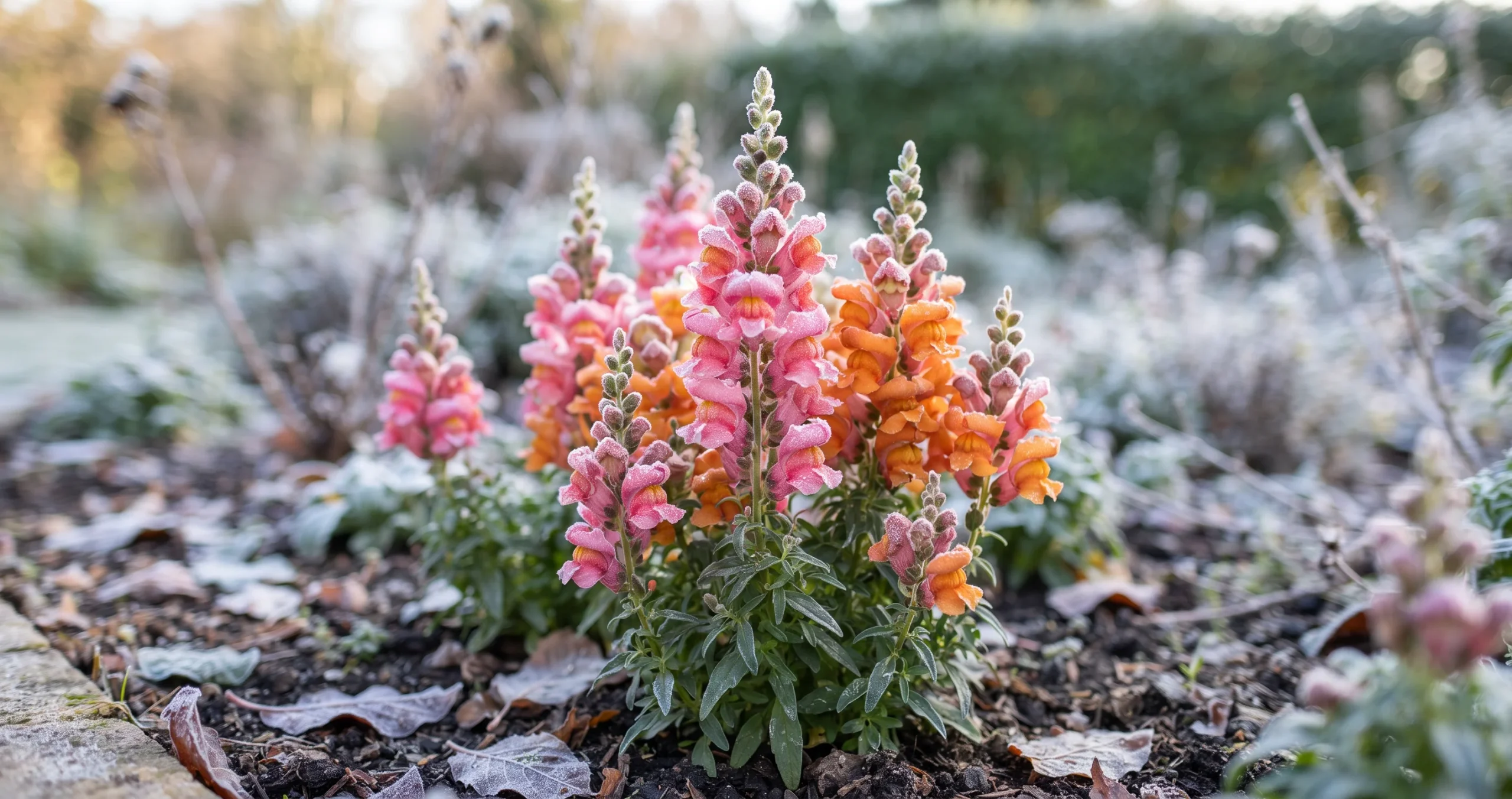
While many garden flowers begin to fade as temperatures drop, snapdragons often seem to come back to life. Their colorful flower spikes can continue blooming when other annuals have already surrendered to the cold.
Understanding snapdragons cold tolerance can help you extend your flowering season, plan fall plantings, and enjoy a more colorful garden during the cooler months.
Snapdragons (Antirrhinum majus) are cool-season flowering plants that thrive in the mild temperatures of spring and fall. Established plants can often tolerate light frosts, making them particularly valuable for gardeners looking to extend seasonal interest.
With proper planting, frost protection, and regular deadheading, these charming flowers can reward gardeners with an impressive display.
Table of Contents
- Understanding Snapdragons and Their Seasonal Growth
- Snapdragons Cold Tolerance: How Much Frost Can They Survive?
- Why Snapdragons Thrive in Cooler Weather
- When to Plant Snapdragons in Fall
- How to Plant Snapdragons for Cool-Season Blooms
- How to Protect Snapdragons From Frost
- Deadheading Snapdragons for More Flowers
- Common Cool-Weather Growing Mistakes
- The Benefits of Snapdragons for Garden Pollinators
- In Your Own Yard: Creating a Colorful Cool-Season Garden
- Frequently Asked Questions
Understanding Snapdragons and Their Seasonal Growth
Snapdragons belong to the plant family Plantaginaceae and are native to parts of the Mediterranean region.
Their unusual flowers resemble small dragon mouths that open when gently squeezed from the sides. This distinctive shape explains their familiar common name.
Available in shades of pink, red, yellow, orange, purple, and white, snapdragons are popular in flower beds, cottage gardens, containers, and cut-flower arrangements.
Are Snapdragons Annuals or Perennials?
Snapdragons are technically short-lived perennials, although they are commonly grown as annuals in the United States.
In regions with mild winters, established plants may survive from one growing season to the next.
In colder climates, prolonged freezing temperatures often prevent outdoor overwintering.
Their survival depends on several factors, including cultivar, soil drainage, exposure, plant maturity, and winter temperatures.
Different Types of Snapdragons
Gardeners can choose from several growth habits.
| Type | Approximate height | Best garden use |
|---|---|---|
| Dwarf | 6–10 inches | Containers and borders |
| Intermediate | 12–24 inches | Flower beds and mixed gardens |
| Tall | 24–48 inches | Cut flowers and background planting |
| Trailing | Varies by cultivar | Hanging baskets and window boxes |
Each type offers different advantages depending on the available space and desired garden design.
Snapdragons Cold Tolerance: How Much Frost Can They Survive?
Snapdragons are more tolerant of cool weather than many popular summer annuals. However, frost tolerance should not be confused with complete winter hardiness.
Ideal Growing Temperatures
Snapdragons generally perform well when temperatures range between approximately 50°F and 70°F (10–21°C).
Cool nights and moderately warm days can encourage vigorous growth and attractive flower development.
During prolonged summer heat, flowering may slow considerably.
Understanding Frost Tolerance
Established and properly acclimated snapdragons can sometimes survive temperatures several degrees below freezing.
| Temperature | Possible plant response |
|---|---|
| 50–70°F (10–21°C) | Favorable growing conditions |
| 40–50°F (4–10°C) | Cool conditions with slower growth |
| 32–40°F (0–4°C) | Generally tolerated by established plants |
| 28–32°F (-2–0°C) | Possible light freeze damage |
| Below 28°F (-2°C) | Increasing risk of significant damage |
These ranges are general guidelines rather than guaranteed survival thresholds. The duration of freezing temperatures, wind exposure, moisture levels, and plant acclimation all influence the outcome.
Young Plants Are More Vulnerable
Newly transplanted seedlings may be more sensitive to sudden temperature changes than established plants.
Gradually exposing young snapdragons to outdoor conditions helps prepare them for cooler weather.
This process, known as hardening off, is particularly important for plants grown indoors or purchased from warm greenhouses.
South Dakota State University Extension notes that snapdragons can survive temperatures as low as 25°F (-4°C) under suitable conditions. However, flower damage can occur even when the plant itself survives. extension.sdstate.edu
Why Snapdragons Thrive in Cooler Weather
The ability of snapdragons to flourish during cooler months reflects a fascinating relationship between plant physiology, temperature, and flowering.
Cooler Temperatures Reduce Heat Stress
During hot weather, plants lose water through tiny openings in their leaves called stomata.
When water loss becomes excessive, plants may partially close these openings to conserve moisture. This can also limit carbon dioxide uptake and reduce photosynthesis.
Snapdragons generally experience more favorable growing conditions during mild weather, when extreme heat is less likely to interfere with these processes.
Cool Nights Help Extend Flowering
Moderately cool nighttime temperatures can help prolong the flowering period.
Individual blossoms may also remain attractive longer than they would during intense summer heat.
This explains why snapdragons sometimes produce their most impressive displays during spring and fall rather than midsummer.
Cold Acclimation Helps Plants Survive
When plants experience gradually declining temperatures, they may undergo physiological changes that improve their ability to withstand cold.
These changes can include adjustments in cellular membrane composition and the accumulation of soluble sugars that help protect tissues against freezing stress.
However, this natural protection has limits. Severe or prolonged freezing can still damage plant cells.
Different Varieties Respond Differently
Commercial flower growers classify snapdragons into four flowering groups based on their responses to temperature and light.
Some varieties are particularly suited to winter flowering, while others perform better during the longer, warmer days of spring and summer. MSU Extension
Choosing a suitable cultivar can therefore make a considerable difference in seasonal flowering performance.
When to Plant Snapdragons in Fall
The best planting time depends largely on your local climate and expected frost dates.
Fall Planting in Northern States
In colder northern regions, planting established snapdragon seedlings during late summer or early fall can provide several weeks of flowers before severe freezing arrives.
Outdoor winter survival is less reliable in these regions.
Fall Planting in Southern States
Gardeners in warmer southern regions can often plant snapdragons during fall and enjoy flowers throughout parts of winter and spring.
University of Florida Extension recommends fall planting for winter displays in USDA hardiness zones 9–11, with occasional successful overwintering in zone 8b. Ask IFAS
Regional Planting Calendar
| USDA hardiness zone | Suggested fall planting period |
|---|---|
| Zones 3–5 | August to early September |
| Zones 6–7 | Late August to September |
| Zone 8 | September to October |
| Zones 9–10 | October to November |
| Zone 11 | November to early winter |
These periods are approximate starting points. Local temperatures, frost dates, elevation, and cultivar selection should guide your final planting decisions.
How to Plant Snapdragons for Cool-Season Blooms
Successful fall planting begins with healthy plants and an appropriate growing environment.
Choose a Sunny Location
Snapdragons generally perform best in locations receiving at least six hours of direct sunlight daily.
During fall and winter, adequate sunlight becomes particularly important as daylight hours decrease.
Prepare Well-Drained Soil
Incorporate mature compost into compacted or nutrient-poor garden soil to improve its structure.
Avoid areas where water regularly accumulates around plant roots.
Provide Adequate Spacing
Space dwarf and intermediate varieties approximately 6–12 inches apart, adjusting according to their expected mature size.
Good air circulation helps reduce the likelihood of fungal diseases.
Water After Planting
Water thoroughly immediately after transplanting to settle the soil around the roots.
Maintain consistent moisture during establishment without saturating the soil.
How to Protect Snapdragons From Frost
Although snapdragons tolerate cool weather, additional protection can help extend their flowering season.
Apply Organic Mulch
Spread a 2–3-inch layer of shredded leaves, straw, or fine bark around established plants.
Keep mulch slightly away from the stems to reduce excessive moisture accumulation.
Use Frost Protection Fabric
Cover plants with lightweight horticultural fleece or frost cloth before freezing nights.
Secure the edges near ground level and remove or ventilate the covering when temperatures rise.
Move Containers Into Sheltered Locations
Container-grown snapdragons are more exposed to temperature fluctuations around their roots.
Move pots near a sheltered wall or into an unheated, protected space during unusually cold nights.
Water Appropriately Before Frost
If the soil is dry, water it during the day before an expected frost.
Moist soil can retain more heat than very dry soil. Avoid saturating the root zone or soaking flowers immediately before freezing temperatures.
Deadheading Snapdragons for More Flowers
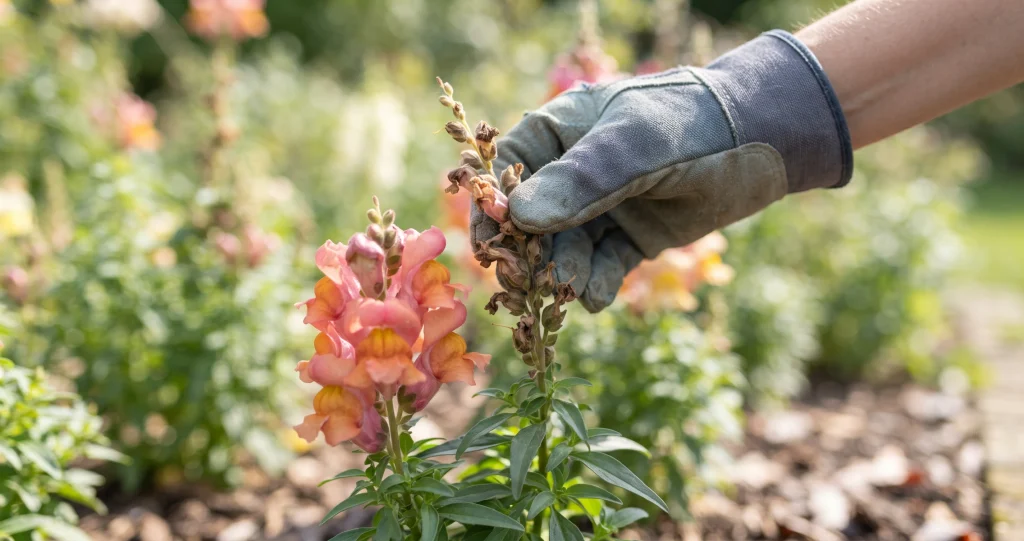
Deadheading is one of the simplest ways to maintain an attractive, productive snapdragon display.
Why Deadheading Encourages New Blooms
After successful pollination, snapdragons begin directing resources toward seed development.
Removing aging flower spikes before seeds mature can encourage the plant to produce additional flowering stems when growing conditions remain favorable.
How to Deadhead Snapdragons Correctly
- Identify faded flowers and spent flower spikes.
- Locate a healthy pair of leaves or developing side shoot below the spent flowers.
- Use clean, sharp pruning scissors.
- Cut just above the healthy leaf node.
- Repeat as additional flower spikes fade.
Avoid removing unopened flower buds near the top of partially flowering spikes.
Removing spent spikes can help snapdragons maintain their flowering display for longer. Illinois
Common Cool-Weather Growing Mistakes
Planting Too Late in Fall
Seedlings planted immediately before severe freezing may have insufficient time to establish their roots.
Overwatering During Cold Weather
Plants often use less water as temperatures decline. Adjust watering according to actual soil moisture rather than following a fixed summer schedule.
Applying Too Much Nitrogen
Excessive nitrogen can encourage soft vegetative growth at the expense of flowering.
Confusing Frost Tolerance With Winter Hardiness
Surviving an occasional overnight frost does not mean snapdragons can withstand months of frozen soil and severe winter temperatures.
The Benefits of Snapdragons for Garden Pollinators
Snapdragons have an unusual floral structure that makes them particularly interesting to observe.
Bumblebees can use their body weight to open the lower portion of traditional snapdragon flowers and reach the nectar inside.
During mild autumn and early spring days, these flowers can offer additional feeding opportunities for active pollinators.
For greater ecological value, combine snapdragons with regionally native flowering plants that support a broader range of insects.
In Your Own Yard: Creating a Colorful Cool-Season Garden
Snapdragons combine beautifully with other flowers that appreciate cooler temperatures.
Consider planting them alongside:
- Pansies and violas.
- Calendula.
- Sweet alyssum.
- Dianthus.
- Ornamental kale.
- Dusty miller.
Arrange taller snapdragons toward the back of flower beds and shorter varieties along pathways and borders.
A combination of different heights, flower shapes, and colors can transform an ordinary autumn garden into a vibrant seasonal display.
Frequently Asked Questions
1. Can snapdragons survive frost?
Established, acclimated snapdragons can often survive light frosts. Some plants may tolerate brief temperatures around 25°F (-4°C), although prolonged freezing can cause serious damage.
2. Can I plant snapdragons in November?
Yes, particularly in warmer southern regions of the United States. In colder northern regions, November is generally too late for unprotected outdoor planting.
3. Do snapdragons bloom again after deadheading?
Yes. Removing spent flower spikes can encourage additional flowering stems, provided temperatures, sunlight, and soil moisture remain favorable.
Conclusion
While many garden flowers disappear with the arrival of cold weather, snapdragons offer a colorful reminder that the growing season may not be over.
Understanding snapdragons cold tolerance, choosing the appropriate planting time, and regularly removing spent flowers can help extend their seasonal display.
With a little preparation and protection, these remarkable flowers can continue bringing color and wildlife activity to your garden long after summer has faded.
External Sources
1. Cool-Season Flowering Annuals
Snapdragons can survive temperatures as low as 25°F under suitable conditions. South Dakota State University Extension. Cool-Season Flowering Annuals for the Garden
2. Planting and Propagation of Snapdragons
Snapdragon seeds are remarkably small, with approximately 6,000–9,000 seeds per gram. University of Florida IFAS Extension. Planting and Propagation of Snapdragons in Florida.