
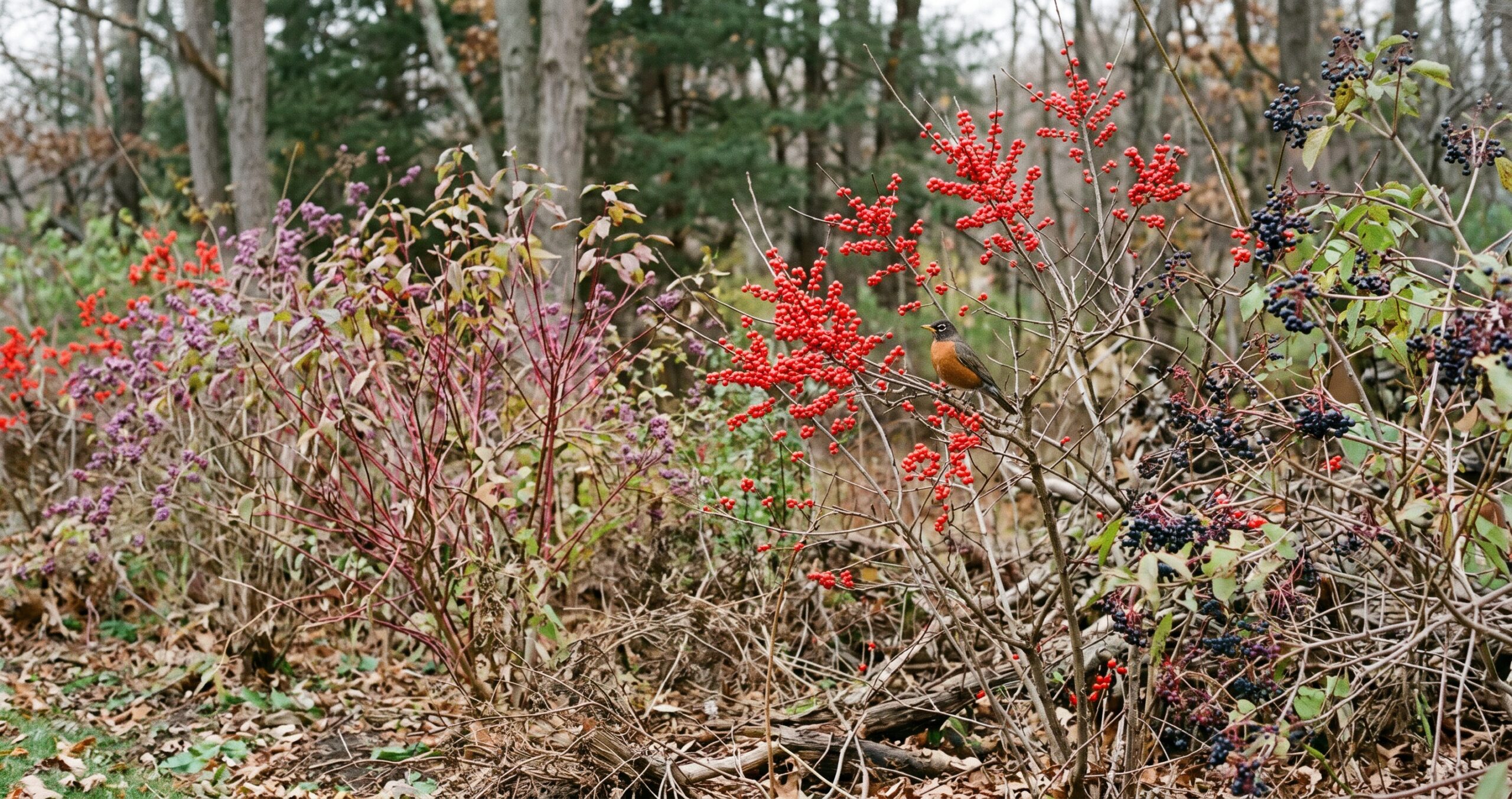
A bird-friendly backyard needs more than a feeder and a birdbath. Planting native shrubs for birds can provide seasonal fruits, protected nesting spaces, shelter from predators, and habitat for the insects that many birds depend on. With thoughtful plant selection, an ordinary yard can become a more useful habitat throughout the year.
Eight particularly valuable choices are serviceberry, American elderberry, winterberry holly, red-osier dogwood, arrowwood viburnum, American beautyberry, black chokeberry, and common snowberry. Each offers different benefits, but their suitability varies across the United States. Choosing species native to your region—and matching them to your soil, sunlight, and available space—is more important than planting all eight.
Editorial note: The exact eight names from the earlier Facebook post could not be recovered. The eight shrubs below are a research-based selection, not a verified reproduction of that post’s list.
Table of Contents
- Why Native Shrubs Matter for Backyard Birds
- Native Shrubs for Birds: Eight Valuable Choices
- Serviceberry (Amelanchier canadensis)
- American Elderberry (Sambucus canadensis)
- Winterberry Holly (Ilex verticillata)
- Red-Osier Dogwood (Cornus sericea)
- Arrowwood Viburnum (Viburnum dentatum)
- American Beautyberry (Callicarpa americana)
- Black Chokeberry (Aronia melanocarpa)
- Common Snowberry (Symphoricarpos albus)
- Comparing the Eight Shrubs
- How to Design a Bird-Friendly Shrub Border
- Regional Planting Considerations
- Planting and Maintenance
- Common Mistakes to Avoid
- Frequently Asked Questions
- Conclusion
1. Why Native Shrubs Matter for Backyard Birds
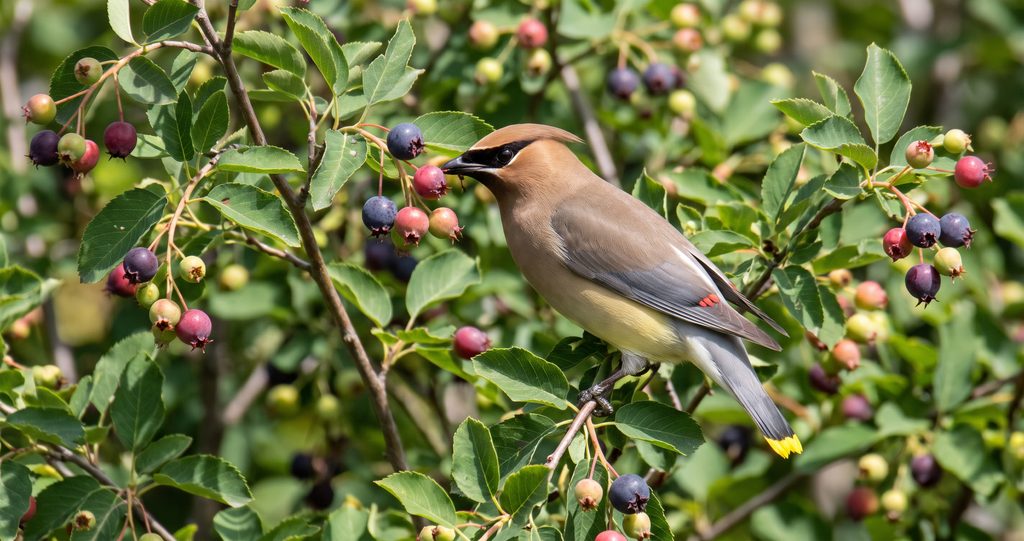
Native shrubs provide resources that ordinary ornamental landscaping may lack.
Their flowers can attract insects, their foliage supports caterpillars and other invertebrates, and their fruits provide food for birds during different seasons.
Dense branches create places where small birds can rest, hide from predators, and sometimes build nests.
Native shrubs also contribute to seasonal habitat diversity. A mixed planting can provide summer berries, autumn fruit, and winter shelter instead of offering only one short-lived food source.
However, planting native shrubs for birds does not guarantee visits from particular species. Bird activity depends on geographic range, habitat connectivity, surrounding vegetation, season, and other environmental factors.
2. Native Shrubs for Birds: Eight Valuable Choices
The best shrub combination includes plants that produce fruit at different times and thrive in the existing landscape.
Some species, such as serviceberry and elderberry, produce fruits during summer.
Others, including winterberry and snowberry, may retain some fruits into winter, although persistence varies with weather and wildlife consumption.
Birds also benefit from shrubs that support insects or form dense thickets, even when their fruits are not heavily consumed.
The University of Minnesota Extension’s guide to multipurpose landscapes identifies native and wildlife-friendly shrubs as valuable sources of both food and shelter.
UMN Extension
3. Serviceberry (Amelanchier canadensis)

Serviceberry is an excellent choice for gardens needing early-season fruit.
Amelanchier canadensis, commonly called Canadian serviceberry or shadblow serviceberry, is native primarily to eastern North America, especially the Atlantic coastal region and adjacent inland habitats.
It may grow approximately 10–25 feet tall and 6–20 feet wide, depending on conditions.
Growing conditions
Serviceberry grows in full sun to partial shade and prefers moist, reasonably well-drained soil.
Its white spring flowers are followed by small fruits that generally ripen from late spring into early summer.
Wildlife benefits
Robins, waxwings, catbirds, and other fruit-eating birds may consume serviceberries.
The spring flowers also provide resources for pollinating insects, while the branching structure offers cover.
Some serviceberry species and cultivars are substantially smaller, so gardeners should verify the botanical name before purchasing.
For western gardens, locally native serviceberries such as Amelanchier alnifolia may be more appropriate than A. canadensis.
UMN Extension
4. American Elderberry (Sambucus canadensis)

cropsandsoils.extension.wisc.edu
American elderberry is a vigorous deciduous shrub valued for its summer flowers and dark fruits.
It is native to much of eastern and central North America, extending through parts of the Great Plains and the southeastern United States.
Mature plants commonly reach 5–12 feet tall and can spread to a similar width.
Growing conditions
American elderberry performs well in full sun to partial shade.
It prefers moist, fertile soil but tolerates a range of conditions when established.
Its broad, cream-colored flower clusters appear in late spring or early summer, followed by purple-black fruits that generally ripen from July through September.
Wildlife benefits
Elderberries attract numerous fruit-eating birds, including robins, catbirds, and other species where their ranges overlap.
The flowers attract insects, providing an additional food-web connection for insect-eating birds.
Elderberry can spread through suckering and is often better suited to roomy borders than small foundation plantings.
Unripe berries and other plant parts contain potentially harmful compounds; the plant should not be treated as entirely edible without appropriate identification and preparation.
5. Winterberry Holly (Ilex verticillata)

Winterberry holly is especially attractive after its leaves fall, exposing clusters of red fruits.
This deciduous holly is native to eastern North America, including parts of the Northeast, Great Lakes region, and Southeast.
Depending on the selection, plants can reach approximately 3–15 feet tall and 3–12 feet wide.
Growing conditions
Winterberry generally prefers moist, acidic soil and grows in full sun to partial shade.
It is particularly useful near pond margins, rain gardens, and naturally damp planting areas.
The fruits mature from late summer into fall and may persist into winter.
Wildlife benefits
Winterberry fruits are eaten by several bird species, sometimes after other fruits have become scarce.
Its branching structure also provides cover.
An important planting requirement: winterberry has separate male and female plants. Fruit production requires a compatible male plant flowering at the same time as the female.
The fruits are not suitable for human consumption and may cause gastrointestinal illness.
North Carolina Extension Gardener Plant Toolbox
6. Red-Osier Dogwood (Cornus sericea)

midmichigannatureandscience.blogspot.com
Red-osier dogwood is a widely distributed North American shrub recognized by its colorful winter stems.
Its native range includes much of northern North America, with populations extending across northern and western U.S. regions and into parts of the East.
It commonly grows 5–9 feet tall and can spread 5–10 feet wide or more where suckering is unrestricted.
Growing conditions
Red-osier dogwood performs best in moist soil and tolerates periodically wet conditions.
It grows in full sun to partial shade, although plants in hot southern climates may benefit from afternoon shade.
White flowers appear in spring or early summer, followed by pale white to bluish fruits in late summer and early fall.
Wildlife benefits
The fruits provide food for songbirds, while the dense stems offer nesting and protective cover.
Its foliage also supports insects that contribute to bird diets.
Red-osier dogwood can spread into a thicket, making it useful for large naturalized spaces but potentially unsuitable for very narrow borders.
North Carolina Extension Gardener Plant Toolbox
7. Arrowwood Viburnum (Viburnum dentatum)

Arrowwood viburnum is a versatile eastern North American shrub known for its white spring flowers and blue-black fruit.
The species complex is native across parts of the eastern United States, although closely related regional forms and taxonomic treatments can differ.
Typical landscape plants grow approximately 6–10 feet tall and often reach a similar width.
Growing conditions
Arrowwood grows in full sun to partial shade.
It adapts to various soils, performing best where moisture is reasonably consistent and drainage is suitable.
Clusters of white flowers appear in late spring, with fruits generally ripening from late summer into fall.
Wildlife benefits
Birds consume the mature fruits, while dense branching provides nesting and escape cover.
Arrowwood can also support various native insects.
Fruit set may be improved by planting genetically distinct, compatible plants with overlapping bloom periods.
The USDA Natural Resources Conservation Service describes arrowwood as a valuable landscape shrub for attracting birds.
plants.usda.gov
8. American Beautyberry (Callicarpa americana)

American beautyberry produces distinctive clusters of bright purple fruits that encircle its stems.
It is native primarily to the southeastern and south-central United States, including areas from the Atlantic coastal region westward into Texas and neighboring states.
Mature shrubs usually reach 3–8 feet tall and approximately 3–6 feet wide.
Growing conditions
Beautyberry thrives in full sun to partial shade and tolerates various reasonably well-drained soils.
It performs well in warm climates and can tolerate periods of dry weather once established.
Its fruits usually become conspicuous from August through October and may remain into early winter.
Wildlife benefits
American robins, brown thrashers, and other songbirds may feed on the berries.
The shrub also provides seasonal cover and resources for insects.
American beautyberry should not be confused with Asian beautyberry species commonly sold in ornamental nurseries.
Northern gardeners should select plants with appropriate cold hardiness rather than assuming this southeastern species will survive every U.S. winter.
North Carolina Extension Gardener Plant Toolbox
9. Black Chokeberry (Aronia melanocarpa)

Black chokeberry combines spring flowers, dark late-season fruits, and colorful autumn foliage.
It is native primarily to eastern North America, including parts of the Northeast, Great Lakes region, and eastern Midwest.
Mature plants commonly grow about 3–6 feet tall, although some selections can become taller or spread into colonies.
Growing conditions
Black chokeberry grows in full sun to partial shade and tolerates moist soils, including periodically wet conditions.
Established plants are adaptable, but full sun generally encourages stronger flowering and fruit production.
The dark purple-black fruits typically mature during August and September.
Wildlife benefits
Chokeberry fruits can provide food for birds, although their strong astringency means they may remain on plants longer than more palatable fruits.
Spring flowers also support pollinating insects.
This shrub can sucker and spread, which is useful for naturalized plantings but requires planning in confined spaces.
Fruit persistence should not be treated as a guarantee of winter food availability.
North Carolina Extension Gardener Plant Toolbox
10. Common Snowberry (Symphoricarpos albus)

Common snowberry is a modest shrub producing small, white, rounded fruits.
Its native distribution includes broad areas of western and northern North America, with regional variation among recognized botanical forms.
Plants commonly grow 3–6 feet tall and can spread to similar or greater widths by suckering.
Growing conditions
Snowberry grows in full sun to partial shade and tolerates various soil types.
Established plants can withstand moderate dryness, making them useful in selected woodland edges and naturalized borders.
Pinkish flowers develop during summer, followed by white fruits that mature in late summer or autumn.
Some fruits may remain through winter.
Wildlife benefits
Snowberry provides dense protective cover for small birds, and its fruits may be consumed by birds and other wildlife.
However, the berries are not necessarily a preferred food source, and their persistence varies.
Snowberry fruits should not be eaten by people.
Gardeners should also check regional native status and planting suitability, particularly where cultivated snowberries may differ from locally occurring populations.
11. Comparing the Eight Shrubs
| Shrub | Typical mature height | Main fruiting period | Best use |
|---|---|---|---|
| Serviceberry | 10–25 ft | Late spring–early summer | Early fruit |
| American elderberry | 5–12 ft | Summer–early fall | Summer bird food |
| Winterberry holly | 3–15 ft | Fall–winter | Persistent fruit |
| Red-osier dogwood | 5–9 ft | Late summer–fall | Dense cover |
| Arrowwood viburnum | 6–10 ft | Late summer–fall | Fruit and nesting |
| American beautyberry | 3–8 ft | Late summer–winter | Southern gardens |
| Black chokeberry | 3–6 ft | Late summer–fall | Borders and fruit |
| Common snowberry | 3–6 ft | Fall–winter | Thicket shelter |
These are approximate sizes and seasons for typical plants. Local conditions, genetic variation, and cultivated selections can substantially change growth and fruiting patterns.
12. How to Design a Bird-Friendly Shrub Border
A productive planting combines different shrub heights and overlapping seasonal resources.
Position taller species toward the back of a border, with lower-growing shrubs along the front.
Allow enough room for mature growth so branches can develop naturally without constant severe pruning.
Combining dense deciduous shrubs with locally appropriate evergreens can provide more continuous shelter after autumn leaf drop.
Ground-level habitat also matters. Our guide to keeping fallen leaves for wildlife explains how leaf litter supports invertebrates and creates foraging opportunities for ground-feeding birds.
green garden
13. Regional Planting Considerations
In the Northeast and Great Lakes region, serviceberry, winterberry, chokeberry, and suitable native dogwoods can be useful choices.
In the Southeast, American beautyberry and elderberry may be particularly appropriate, depending on moisture and local native status.
Parts of the Midwest support serviceberries, dogwoods, chokeberries, and other regionally native shrubs.
Western gardeners should generally prioritize locally occurring species or regional relatives rather than assuming eastern shrubs are suitable.
For example, western serviceberries, native snowberries, and locally appropriate dogwoods may provide better ecological matches.
USDA hardiness zones describe winter temperature limits; they do not establish whether a shrub is native to a particular county or ecological region.
Before planting, check state native plant databases and regional extension recommendations.
14. Planting and Maintenance
Fall or spring planting can work well for many deciduous shrubs.
Prepare a planting hole wide enough to accommodate the roots and avoid planting the root flare too deeply.
Water consistently during establishment, adjusting for rainfall and soil drainage.
Apply mulch around the root zone without piling it against the stems.
Avoid excessive fertilization, which can encourage unnecessary vegetative growth.
Prune only when necessary for health, clearance, or size management. Heavy pruning can remove flower buds and reduce the fruit available to birds.
15. Common Mistakes to Avoid
Selecting shrubs based only on attractive berries is a common mistake.
Some cultivated plants produce fewer fruits than their wild counterparts, while others require compatible pollination partners.
Another problem is planting large, suckering shrubs in spaces too small for their mature size.
Avoid assuming that colorful berries are safe for human consumption. Several wildlife shrubs produce fruits that can cause illness if eaten.
Finally, do not rely entirely on shrubs for bird habitat. Native trees, grasses, wildflowers, water, and suitable nesting spaces also contribute to a healthier backyard ecosystem.
16. Frequently Asked Questions
Which native shrubs provide food during winter?
Winterberry holly and common snowberry may retain fruits into winter. Other shrubs can occasionally hold fruit as well, but availability depends on weather and how quickly animals consume it.
Which shrubs are best for small yards?
Black chokeberry and carefully selected compact cultivars of native shrubs can suit smaller gardens. Always check mature dimensions and regional suitability.
Do native shrubs attract insects?
Yes. Their flowers, leaves, and stems can support pollinators, caterpillars, and other invertebrates, some of which become food for birds.
Can shrubs replace bird feeders?
Native shrubs provide natural resources but do not guarantee a constant food supply. They are best viewed as part of a diverse habitat rather than as an exact replacement for every supplemental feeding practice.
17. Conclusion
Planting native shrubs for birds is one of the most practical ways to improve the ecological value of a backyard.
Serviceberry and elderberry offer seasonal fruits, winterberry and snowberry may provide later resources, and dogwoods, viburnums, beautyberry, and chokeberry contribute additional food and shelter.
The most successful planting is not necessarily the one containing all eight shrubs.
It is the one that matches the local ecosystem, provides resources across seasons, and allows plants to grow into healthy, structurally diverse habitat.
With appropriate species selection and long-term care, a backyard shrub border can become an important part of the surrounding wildlife landscape.