
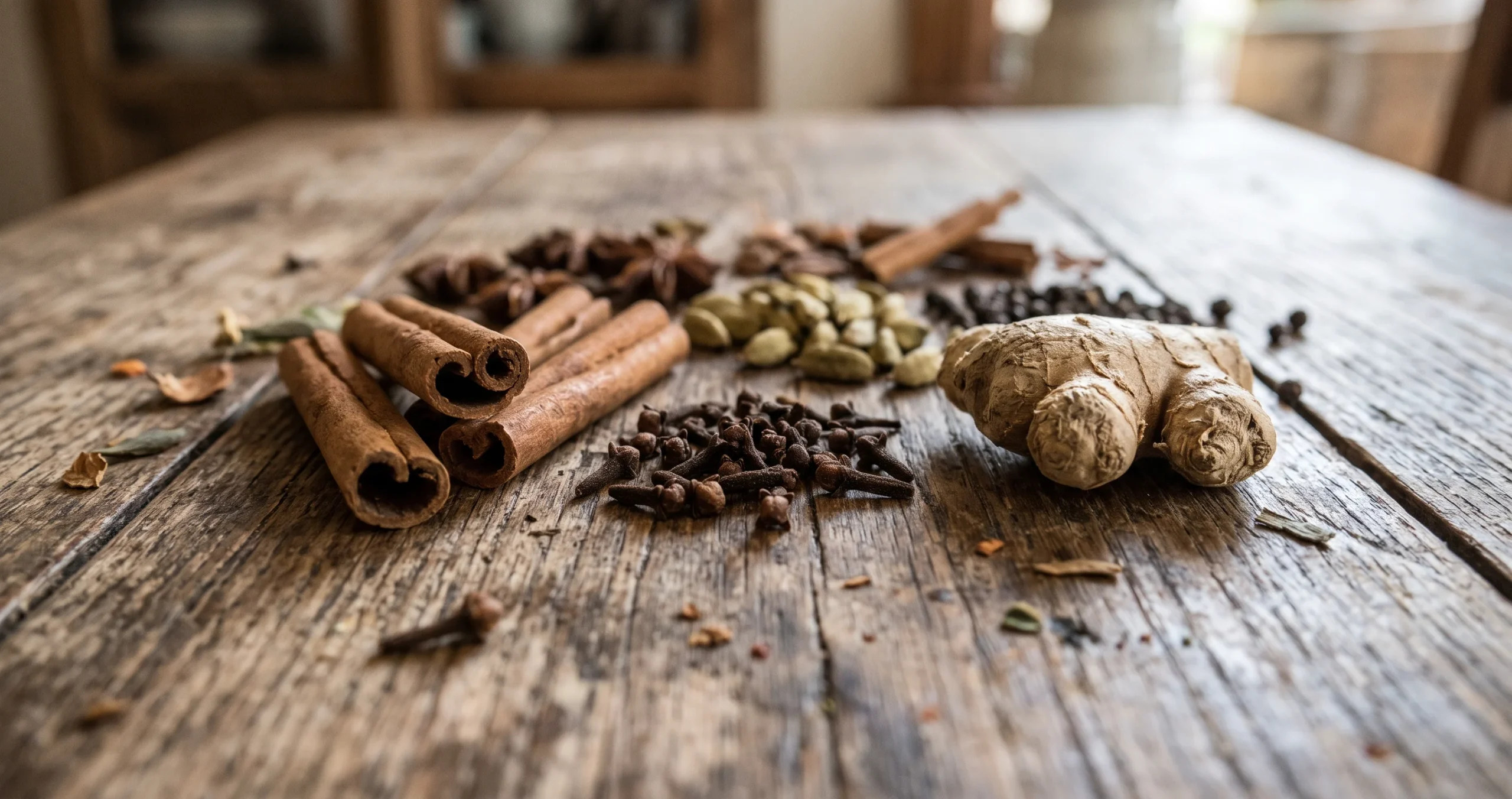
Open your kitchen spice cabinet, and you are looking at a miniature botanical collection.
That cinnamon stick was once part of a tree’s inner bark. The cloves in a small glass jar are dried flower buds. Black peppercorns are fruits, while ginger comes from an underground stem.
The surprising world of spices plant parts reveals something fascinating: many familiar flavors come from completely different structures of living plants.
Some spices are seeds, others are roots, fruits, bark, flowers, or rhizomes. Each plant part has its own biological purpose, and the compounds it contains help create the aromas and flavors we recognize.
Understanding where spices come from changes how we see ordinary ingredients. It also connects cooking with plant anatomy, ecology, agriculture, and gardening.
Table of Contents
- What Are Spices?
- Spices Plant Parts: The Botanical Science Behind Flavor
- Spices Made From Seeds
- Spices Made From Fruits
- Spices Made From Bark
- Spices Made From Roots and Rhizomes
- Spices Made From Flowers and Flower Buds
- Spices Made From Leaves
- Why Plants Produce Aromatic Compounds
- How Spices Are Harvested and Processed
- In Your Own Yard: Growing Spice Plants
- Common Misconceptions About Spices
- Frequently Asked Questions
- Conclusion
What Are Spices?
Spices are aromatic plant materials used to flavor, color, or enhance food.
They may come from seeds, fruits, bark, roots, rhizomes, flower buds, or other plant structures.
Many spices are dried before being sold, although some are also used fresh.
Spices vs. Herbs
In everyday cooking, herbs usually refer to the leafy portions of plants, while spices often come from other structures.
However, this distinction is culinary rather than strictly botanical.
A single plant can provide both an herb and a spice.
Coriander is a familiar example.
Its fresh leaves are commonly called cilantro in the United States, while its dried fruits are sold as coriander seed.
Both ingredients come from the same species, Coriandrum sativum, but they offer different flavors.
Why Botanical Origins Matter
Knowing which plant part produces a spice helps explain its appearance, aroma, and culinary use.
Seeds often contain concentrated aromatic compounds and stored nutrients.
Bark provides protective tissues and may contain strongly scented substances.
Flowers can produce distinctive fragrances associated with pollination.
Underground stems store nutrients and may contain aromatic compounds that influence flavor.
These differences are part of what makes spices so diverse.
Spices Plant Parts: The Botanical Science Behind Flavor
The relationship between spices plant parts and flavor begins with plant anatomy.
Plants have specialized organs that perform different functions.
Roots absorb water and minerals, stems transport substances and support growth, leaves capture sunlight, and flowers participate in reproduction.
Seeds and fruits protect or disperse the next generation.
Many of these structures contain chemicals that humans experience as aromas, flavors, or colors.
How Plants Create Flavor Compounds
Plants produce a wide range of substances through their metabolism.
Some compounds contribute to growth and normal cellular functions.
Others, often called specialized metabolites, can help plants interact with their surroundings.
These substances may discourage herbivores, inhibit certain microorganisms, attract pollinators, or contribute to responses to environmental stress.
Many familiar spice aromas come from volatile compounds that evaporate easily and reach our noses.
Other substances create sensations such as heat, bitterness, or pungency.
Why Different Plant Parts Taste Different
Different tissues contain different combinations of chemical compounds.
For example, cinnamon bark contains aromatic substances associated with its warm fragrance.
Cloves contain substantial amounts of eugenol, a compound responsible for much of their distinctive aroma.
Black pepper contains piperine, which contributes to its pungency.
Chili peppers contain capsaicinoids that activate heat-sensitive receptors in the mouth.
These compounds have different chemical structures and biological roles.
Their concentration can also vary with plant variety, growing conditions, maturity, and processing.
What Drying Does to Spices
Drying removes moisture and helps make many spices suitable for storage.
It can also change their aroma.
Some volatile compounds are lost during drying, while other flavor characteristics become more noticeable as moisture decreases.
Grinding increases the surface area exposed to air.
This can make a spice release its aroma quickly, but it can also accelerate the loss of volatile compounds.
That is why freshly ground spices often smell stronger than older ground products.
Spices Made From Seeds
Seeds are among the most familiar sources of culinary spices.
However, not everything called a seed in the kitchen is botanically a true seed.
Cumin
Cumin comes from Cuminum cyminum, a flowering plant in the carrot family.
The familiar dried cumin “seeds” are technically small, dry fruits called mericarps.
They contain aromatic compounds responsible for cumin’s warm, earthy flavor.
Cumin is widely used in Mexican, Middle Eastern, Indian, and North African cooking.
Mustard
Mustard seeds come from several plants in the mustard family.
Common sources include white or yellow mustard, brown mustard, and black mustard.
Mustard’s characteristic sharpness develops when damaged seed tissues allow certain compounds and enzymes to interact with water.
The resulting pungent substances give prepared mustard much of its distinctive bite.
Nutmeg
Nutmeg comes from the seed of Myristica fragrans, a tropical evergreen tree.
The seed is dried and sold whole or ground.
Its warm, sweet aroma makes it popular in baked goods, sauces, and seasonal dishes.
The same fruit also produces another spice: mace.
Mace comes from the reddish, netlike covering surrounding the seed.
Spices Made From Fruits
Several familiar spices are actually dried fruits.
This category includes ingredients that look nothing like fresh fruit.
Black Pepper
Black pepper comes from Piper nigrum, a tropical climbing vine.
The plant produces small fruits arranged in clusters.
Black peppercorns are generally made from fruits harvested before full ripeness and then dried.
Processing causes their outer surfaces to darken and wrinkle.
White pepper is typically produced by removing the outer fruit layers, often after soaking.
Both products come from the same plant.
Chili Peppers
Chili peppers belong to the genus Capsicum.
Botanically, their edible pods are fruits.
They contain seeds surrounded by fleshy fruit tissue.
Their characteristic heat comes from capsaicinoids, which are especially associated with tissues around the seeds.
The seeds themselves are not the primary site of capsaicinoid production.
Different chili varieties produce different levels of pungency.
Star Anise
Star anise comes from the fruit of Illicium verum, an evergreen tree native to parts of Asia.
Its distinctive star-shaped structure consists of several fruit segments arranged around a central point.
Each segment typically contains a seed.
The spice has a sweet, licorice-like aroma.
Culinary star anise should not be confused with certain related species that are toxic.
Spices Made From Bark
Tree bark may seem like an unlikely source of flavor, but it produces one of the world’s most recognizable spices.
Cinnamon
Cinnamon comes from the inner bark of trees belonging to the genus Cinnamomum.
Workers harvest bark from suitable stems and remove the outer layers.
The inner bark curls as it dries, forming the familiar cinnamon sticks.
Different cinnamon species produce somewhat different flavors.
Ceylon cinnamon, often called true cinnamon, comes from Cinnamomum verum.
Cassia-type cinnamon comes from several related species.
Why Bark Contains Aromatic Compounds
Bark protects the living tissues of a tree.
Some bark tissues contain compounds involved in chemical defense.
In cinnamon, aromatic substances contribute to the characteristic fragrance and flavor.
The composition varies among species and processing methods.
Cinnamon illustrates how a protective plant structure can become a valuable culinary ingredient.
Spices Made From Roots and Rhizomes
Some spices develop below ground.
However, an underground plant structure is not automatically a root.
Ginger
Ginger comes from the rhizome of Zingiber officinale.
A rhizome is a modified stem that grows horizontally, usually underground.
It contains nodes and buds capable of producing new shoots.
Ginger’s characteristic pungency comes partly from compounds called gingerols.
Drying and heating can change the balance of these compounds, influencing flavor.
Turmeric
Turmeric comes from the rhizomes of Curcuma longa, a tropical plant related to ginger.
Its bright yellow-orange color is associated with curcuminoid pigments.
Turmeric is commonly used in curries, rice dishes, and spice blends.
The rhizomes are generally harvested, processed, dried, and ground into powder.
Horseradish
Horseradish comes from the thickened root of Armoracia rusticana.
Its sharp flavor develops when the root is crushed or grated.
Damaged tissues release enzymes that help produce pungent isothiocyanates.
This is why freshly grated horseradish can have such an intense aroma.
Spices Made From Flowers and Flower Buds
Flowers are usually associated with beauty and pollination.
Yet some provide highly prized culinary spices.
Cloves
Cloves are the dried, unopened flower buds of Syzygium aromaticum.
The buds are harvested before opening and dried.
Their shape resembles a tiny nail, with a rounded head and narrow stem.
Cloves contain eugenol, which contributes to their powerful fragrance.
They are used in sweet and savory dishes.
Saffron
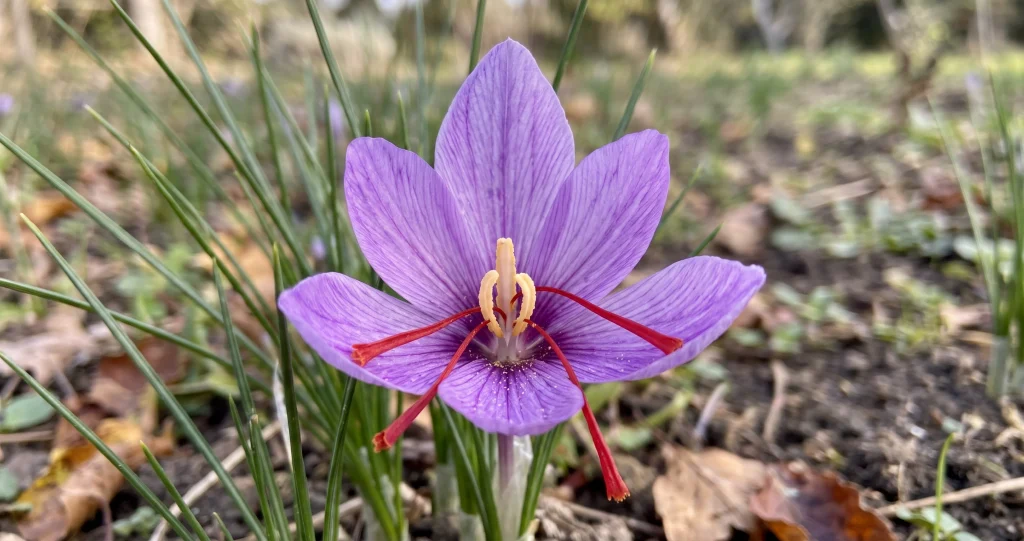
Saffron comes from the dried stigmas of Crocus sativus.
The stigma is part of the flower’s female reproductive structure.
Each flower produces only a small amount of usable material.
Harvesting and separating the stigmas requires careful handling, contributing to saffron’s high price.
Saffron provides a distinctive aroma and golden color to foods.
Mace
Although mace is sometimes grouped with floral-looking spices because of its delicate appearance, it does not come from a flower.
It is the dried aril, a specialized covering around the nutmeg seed.
This distinction highlights why botanical identification matters.
Spices Made From Leaves
The distinction between herbs and spices becomes less clear when aromatic leaves are involved.
Bay Leaves
Bay leaves come from Laurus nobilis, an evergreen tree native to the Mediterranean region.
The leaves contain aromatic compounds that are released during cooking.
They are commonly used in soups, stews, and sauces.
Whole bay leaves are usually removed before serving because they remain tough.
Curry Leaves
Curry leaves come from Murraya koenigii, a small tropical or subtropical tree.
They have a distinctive aroma and are used in many South Asian dishes.
Despite the similar name, curry leaves are not the same as curry powder.
Curry powder is a blend of multiple spices.
A Botanical Comparison of Common Spices
| Spice | Botanical Source | Plant Part Used |
|---|---|---|
| Cinnamon | Cinnamomum species | Inner bark |
| Cloves | Syzygium aromaticum | Unopened flower buds |
| Ginger | Zingiber officinale | Rhizome |
| Turmeric | Curcuma longa | Rhizome |
| Black pepper | Piper nigrum | Fruit |
| Cumin | Cuminum cyminum | Dry fruit |
| Mustard | Several mustard species | Seeds |
| Nutmeg | Myristica fragrans | Seed |
| Mace | Myristica fragrans | Aril |
| Saffron | Crocus sativus | Flower stigmas |
| Chili pepper | Capsicum species | Fruit |
| Horseradish | Armoracia rusticana | Root |
Why Plants Produce Aromatic Compounds
Plants do not produce aromatic substances specifically for human cooking.
These compounds evolved within complex ecological relationships.
Defense Against Herbivores
Some plant chemicals discourage insects or larger animals from feeding.
Strong tastes and pungent compounds may influence which organisms consume particular tissues.
However, their effectiveness varies among species.
Interactions With Microorganisms
Certain plant compounds can influence bacteria and fungi.
Their ecological roles depend on concentration, location, and environmental conditions.
The presence of antimicrobial activity in laboratory experiments does not automatically mean a culinary spice prevents illness when eaten.
Attraction and Communication
Aromatic compounds can also participate in interactions with pollinators and other organisms.
Flowers may release volatile substances that help attract particular visitors.
Different plant structures use chemical signals in different ways.
How Spices Are Harvested and Processed
The journey from living plant to kitchen jar varies considerably.
Seeds and fruits are often harvested after reaching a suitable stage of maturity.
Flower buds may be collected before opening.
Bark spices require careful harvesting and processing.
Rhizomes are generally dug from the soil, cleaned, and sometimes heated before drying.
After harvesting, spices may be dried, sorted, ground, or packaged.
Proper processing helps preserve quality and reduce contamination risks.
For home storage, keep dried spices in tightly closed containers away from excessive heat, moisture, and direct sunlight.
In Your Own Yard: Growing Spice Plants
You do not need a tropical plantation to explore botanical spices.
Several aromatic plants can grow successfully in American gardens.
Grow Mustard
Mustard is a relatively accessible crop for many home gardeners.
Depending on the variety and local climate, it can be grown during cooler parts of the year.
Allow selected plants to flower and form mature seed pods if you want to collect seeds.
Dry the pods thoroughly before storing the seeds.
Try Ginger in Containers
Ginger can grow in containers in warm conditions.
Plant a healthy rhizome with visible growth buds in well-draining potting mix.
Keep the soil consistently moist but not waterlogged.
In colder regions, ginger can be grown indoors or moved inside before freezing temperatures.
Grow Turmeric in Warm Conditions
Turmeric has growing requirements similar to ginger.
It prefers warmth, moisture, and a sufficiently long growing season.
Container cultivation can make it easier to protect the plant from cold weather.
Add Bay Laurel to a Patio Garden
Bay laurel can be grown in containers.
It prefers well-draining soil and suitable sunlight.
In colder climates, container plants may need winter protection.
Use only correctly identified culinary bay laurel, since other plants called bay may be unsuitable or toxic.
Common Misconceptions About Spices
One common misconception is that every spice comes from a seed.
In reality, spices can come from bark, roots, fruits, flower buds, rhizomes, and other plant structures.
Another mistake is assuming ginger and turmeric are roots.
Both are rhizomes, which are modified stems.
Cumin and coriander are also commonly called seeds, although the commercial spice consists of dried fruits.
Finally, natural does not automatically mean harmless.
Spices are generally used in small culinary quantities, but concentrated extracts and excessive consumption can carry risks.
Frequently Asked Questions
1. What plant parts are commonly used as spices?
Spices can come from seeds, fruits, bark, roots, rhizomes, flower buds, stigmas, and other plant structures. Examples include cinnamon bark, clove buds, ginger rhizomes, mustard seeds, and black pepper fruits.
2. Is cinnamon made from tree bark?
Yes. Cinnamon comes from the inner bark of certain Cinnamomum trees. The harvested bark curls as it dries, creating the familiar cinnamon sticks.
3. Can common kitchen spices be grown at home?
Some can. Mustard, ginger, turmeric, and bay laurel are suitable for home cultivation under appropriate conditions. Climate, growing space, and winter temperatures determine which species are practical.
Conclusion
The next time you open your spice cabinet, look beyond the familiar jars and labels.
Cinnamon represents tree bark. Cloves are flower buds. Peppercorns are fruits. Ginger and turmeric are underground stems.
The fascinating relationship between spices plant parts and flavor reveals how ordinary cooking ingredients connect us to plant anatomy, chemical ecology, and agricultural traditions.
Every spice tells a botanical story, And that small collection beside your stove may be one of the most interesting plant collections in your home.
Internal Sources
1. Preserve Garden Herbs Before Frost: 12 Powerful Ways for Better Flavor: Explains how to harvest, dry, freeze, and store aromatic herbs while preserving their flavor.
2. Plant Propagation from Cuttings: Grow New Plants for Free. Covers propagating culinary herbs such as rosemary, mint, basil, and sage.
3. The Ultimate Wellness Tea: Energizing Mornings & Relaxing Evenings. Features culinary uses for ginger, turmeric, and cinnamon.
External Sources
1. University of Illinois Extension – Herbs and Spices: Explains how spices come from different plant parts, including bark, seeds, fruits, and flower buds.
Source: Herbs and Spices – Illinois Extension
2. University of Minnesota Extension – Growing Herbs in Home Gardens: Provides guidance on planting, harvesting, drying, and storing culinary herbs.
Source: Growing Herbs in Home Gardens