
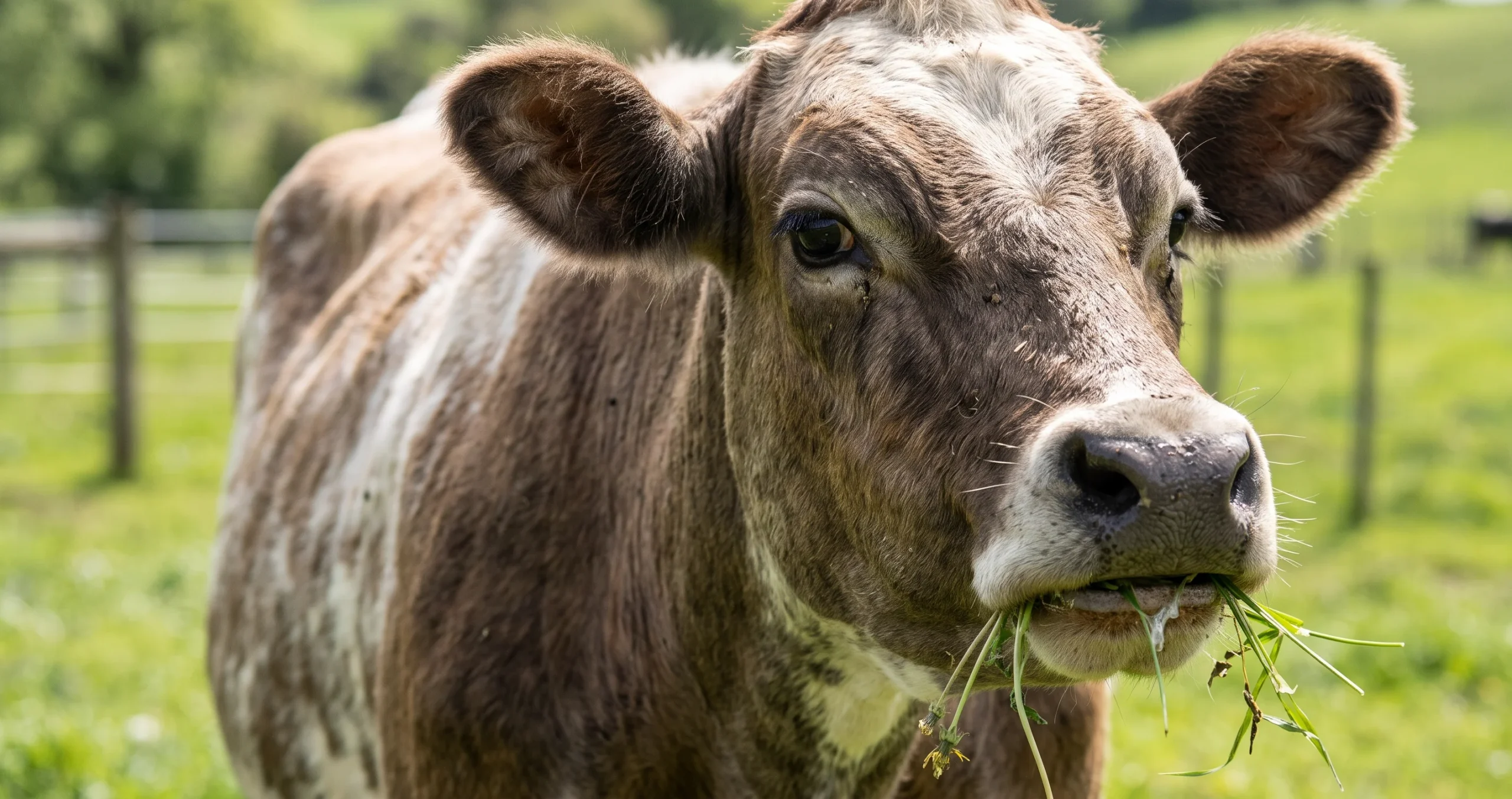
A cow can eat grass, swallow it, and then bring it back into its mouth to chew again. This unusual behavior is part of one of nature’s most fascinating digestive systems.
The cow stomach four chambers system allows cattle to transform tough plant fibers into usable energy through microbial fermentation.
Unlike humans, cows have one stomach divided into four specialized compartments: the rumen, reticulum, omasum, and abomasum. Each performs a different function, from breaking down grass to absorbing nutrients.
Understanding how these compartments work reveals why cows chew their cud, how microorganisms digest cellulose, and what makes ruminants such remarkable grazing animals.
Table of Contents
- What Are Ruminants?
- Cow Stomach Four Chambers: How the Digestive System Works
- The Four Compartments of a Cow’s Stomach
- How Cows Turn Grass Into Energy
- Why Cows Chew Their Cud
- The Role of Microorganisms in Digestion
- How Ruminant Digestion Differs From Human Digestion
- In Your Own Yard: Understanding Grazing Animals
- Common Myths About Cow Digestion
- Frequently Asked Questions
- Conclusion
What Are Ruminants?
Ruminants are mammals with specialized digestive systems that allow them to obtain nutrients from fibrous plant material.
Many familiar grazing animals belong to this group.
Examples include cattle, sheep, goats, deer, bison, and antelope.
Their digestive systems rely heavily on microbial fermentation before food reaches the main acid-producing compartment of the stomach.
Why Grass Is Difficult to Digest
Grass contains several important nutrients, including carbohydrates, proteins, minerals, and water.
However, much of its structure consists of plant cell walls.
These walls contain cellulose, hemicellulose, and other complex substances.
Most mammals do not produce the enzymes needed to break down cellulose directly.
Humans, for example, obtain relatively little energy from dietary cellulose.
Ruminants solve this problem by supporting microorganisms capable of fermenting plant fibers.
A Partnership With Microorganisms
Inside the digestive tract of a cow lives a diverse community of bacteria, archaea, protozoa, and fungi.
Many of these organisms help break down plant material.
Their metabolic activity produces compounds that the cow can absorb and use for energy.
This relationship benefits both partners.
The microorganisms receive food and a suitable environment, while the cow gains access to nutrients that would otherwise be difficult to obtain.
Cow Stomach Four Chambers: How the Digestive System Works
The digestive system of a cow is often described as having four stomachs.
However, this is not anatomically correct.
A cow has one stomach divided into four compartments: the rumen, reticulum, omasum, and abomasum.
Each compartment performs a different function.
Together, they allow the animal to process large quantities of fibrous plant material.
Step 1: Grass Enters the Mouth
Digestion begins when the cow grasps grass using its tongue and lower front teeth.
Cattle do not have upper front incisors.
Instead, they possess a firm dental pad against which the lower incisors press.
The cow tears grass from the ground and begins chewing.
Saliva moistens the food and helps support normal rumen conditions.
Unlike human saliva, bovine saliva is especially important for buffering acids produced during fermentation.
Step 2: Food Reaches the Rumen and Reticulum
After swallowing, food enters the forestomach system.
The rumen and reticulum function closely together.
These compartments contain large populations of microorganisms that begin breaking down plant material.
Muscular contractions mix the contents and help separate particles according to their size and physical characteristics.
Large fibrous particles may remain in the forestomach until they are sufficiently reduced.
Step 3: Microbial Fermentation Releases Energy
Microorganisms ferment carbohydrates from grass and other feed.
This process produces volatile fatty acids, primarily acetate, propionate, and butyrate.
These compounds are absorbed through the digestive tract, particularly the rumen wall.
They provide a major source of energy for the animal.
Fermentation also produces gases, including carbon dioxide and methane.
Cows release much of this gas through belching, a process called eructation.
Step 4: Food Returns to the Mouth
One of the most recognizable features of ruminant digestion is rumination.
During this process, partially digested material returns from the forestomach to the mouth.
The cow chews it again, breaking larger particles into smaller pieces.
This material is commonly called cud.
After chewing, the cow swallows it again.
Rumination improves the physical breakdown of fibrous material and supports further microbial digestion.
Step 5: Digesta Moves Through the Remaining Compartments
As particles become small enough and digestive conditions permit, material moves onward.
It passes through the omasum, where water and other substances are absorbed.
The remaining contents then enter the abomasum.
Here, acid and digestive enzymes help break down feed components and microbial cells.
Digestion continues in the small intestine, where nutrients are absorbed.
The large intestine processes remaining material before waste leaves the body.
The Four Compartments of a Cow’s Stomach
Each stomach compartment has a specialized structure and function.
Understanding these differences makes the entire digestive process easier to follow.
1. Rumen — The Fermentation Chamber
The rumen is the largest compartment of the adult cow’s stomach.
It serves as a major fermentation environment.
Its interior contains numerous papillae, small projections that increase the surface area available for absorbing fermentation products.
Microorganisms within the rumen break down plant carbohydrates and produce volatile fatty acids.
The rumen also acts as a storage and mixing chamber.
Its muscular movements help distribute feed and support fermentation.
2. Reticulum — The Sorting Compartment
The reticulum lies close to the rumen and works with it.
Its inner surface has a distinctive honeycomb-like appearance.
The reticulum helps coordinate movement and sorting of digestive contents.
It also plays an important role in regurgitating cud during rumination.
Heavy foreign objects accidentally swallowed by cattle may become trapped here.
This is associated with a condition commonly called hardware disease.
3. Omasum — The Absorption Compartment
The omasum contains many leaf-like folds.
These folds create a large surface area.
The compartment helps absorb water, electrolytes, and some fermentation products.
It also contributes to the movement and processing of digesta before it enters the abomasum.
Its layered appearance has inspired descriptive names such as the manyplies.
4. Abomasum — The True Glandular Stomach
The abomasum functions more like the stomach of a human.
It produces hydrochloric acid and digestive enzymes.
These substances help break down proteins and other materials.
Importantly, the abomasum also digests microorganisms that have passed from the forestomach.
The resulting nutrients can later be absorbed in the small intestine.
This allows cows to obtain useful protein from the microbial community involved in fermentation.
How Cows Turn Grass Into Energy
The conversion of grass into usable energy is one of the most remarkable features of ruminant biology.
Breaking Down Plant Cell Walls
Plant cell walls contain cellulose and hemicellulose.
Certain rumen microorganisms produce enzymes capable of breaking down these complex carbohydrates.
The resulting compounds are fermented rather than simply absorbed as sugars.
This fermentation releases energy-containing products.
Producing Volatile Fatty Acids
The major volatile fatty acids produced in the rumen are acetate, propionate, and butyrate.
Each contributes differently to metabolism.
Acetate is an important energy source and supports fat synthesis.
Propionate is especially important because the liver can use it to produce glucose.
Butyrate also contributes energy and is extensively metabolized by tissues of the rumen wall.
The proportions produced depend on diet composition and fermentation conditions.
Using Microbial Protein
Microorganisms multiply as they use nutrients in the rumen.
Some eventually pass into the lower digestive tract.
Their cells contain proteins that can be digested in the abomasum and small intestine.
This provides an important source of amino acids for the cow.
The process illustrates how microbial growth contributes directly to animal nutrition.
Why Cows Chew Their Cud
Cud chewing is one of the defining behaviors of ruminants.
It allows animals to process fibrous food more thoroughly.
The Rumination Process
Rumination involves several coordinated actions.
Partially digested material is regurgitated into the mouth.
The cow chews it repeatedly.
Additional saliva mixes with the material.
The cow then swallows it again.
This cycle can occur many times throughout the day.
Why Repeated Chewing Matters
Chewing reduces the size of plant particles.
Smaller particles provide more accessible surfaces for microbial activity.
Saliva also contributes buffering substances that help maintain suitable rumen conditions.
Healthy rumination is therefore important for normal digestive function.
A sudden reduction in cud chewing may indicate stress, illness, or digestive problems.
However, normal rumination patterns vary with diet, age, and individual circumstances.
The Role of Microorganisms in Digestion
The rumen is not simply a container filled with grass.
It is a complex microbial ecosystem.
Bacteria
Bacteria perform many important fermentation functions.
Different groups specialize in breaking down cellulose, starch, proteins, and other feed components.
Their relative abundance changes with diet and environmental conditions.
Protozoa
Protozoa are single-celled organisms found in many rumens.
They participate in fermentation and interact with bacteria and other microorganisms.
Their precise contributions vary depending on the microbial community and feeding conditions.
Anaerobic Fungi
Certain fungi help break down tough plant structures.
They can physically penetrate plant tissues and produce enzymes involved in fiber degradation.
Their activity contributes to the broader fermentation process.
Methane-Producing Archaea
Some rumen microorganisms belong to a group called archaea.
Methanogenic archaea use fermentation products, including hydrogen, to produce methane.
Methane production is a natural part of many ruminant digestive systems.
However, it also contributes to agricultural greenhouse gas emissions.
Researchers continue investigating feeding strategies and management practices that may reduce emissions while maintaining animal health and productivity.
How Ruminant Digestion Differs From Human Digestion
Humans and cows both rely on digestive enzymes and microorganisms.
However, their digestive systems process plant material differently.
Humans Rely More on Enzymatic Digestion
Humans digest many carbohydrates, proteins, and fats using enzymes produced by the digestive system.
Some dietary fiber is fermented by microorganisms in the large intestine.
However, humans cannot extract energy from cellulose as efficiently as cattle.
Cows Ferment Food Before the Small Intestine
In cattle, extensive microbial fermentation occurs before food reaches the main acid-producing stomach compartment.
This arrangement allows microbial products to become important energy sources.
It also enables the digestion of microbial protein farther along the digestive tract.
Different Animals Use Different Strategies
Horses and rabbits are examples of hindgut fermenters.
They rely heavily on microbial fermentation in the cecum or large intestine rather than in a rumen.
These different strategies illustrate how mammals have evolved multiple ways to obtain nutrients from plants.
In Your Own Yard: Understanding Grazing Animals
Even without owning cattle, you can observe some of the principles of ruminant digestion in everyday rural environments.
Observe Grazing Behavior
If you live near a farm or pasture, watch cattle from a safe, permitted distance.
You may notice animals alternating between grazing and resting.
During rest periods, some cows chew rhythmically without taking new bites of grass.
This is often rumination.
Avoid entering livestock enclosures without permission.
Understand Pasture Quality
Not all grass provides identical nutritional value.
Plant species, maturity, weather, and growing conditions influence forage quality.
Young, actively growing plants often differ nutritionally from mature, fibrous vegetation.
Farmers manage grazing to support animal nutrition while protecting pasture productivity.
Support Healthy Soil and Grass Growth
Healthy pastures depend on soil structure, nutrient availability, water, and plant diversity.
Appropriate grazing management can help maintain vegetation cover and reduce erosion.
Overgrazing, however, may expose soil and damage plant communities.
Rotational grazing can be useful in some systems, but its success depends on stocking rates, timing, climate, and management.
Protect Animals From Harmful Plants
Some ornamental and wild plants can be toxic to livestock.
If you keep grazing animals, identify potentially harmful vegetation before allowing access.
Do not assume that a plant is safe simply because it grows naturally in a pasture.
Consult a veterinarian or local agricultural extension service when uncertain.
Common Myths About Cow Digestion
One common myth is that cows have four separate stomachs.
They actually have one stomach divided into four compartments.
Another misconception is that cows digest grass entirely through their own enzymes.
Microorganisms perform much of the fiber fermentation.
Some people also assume that cows chew cud because they failed to chew their food properly the first time.
In reality, rumination is a normal and highly specialized digestive process.
Finally, not all plant material provides equal nutrition.
Forage quality varies according to plant species, maturity, and growing conditions.
Frequently Asked Questions
1. Why do cows have four stomach compartments?
The four compartments perform specialized functions that support microbial fermentation, particle processing, absorption, and enzymatic digestion. Together, they allow cattle to obtain nutrients from fibrous plant material that humans cannot digest efficiently.
2. Do cows really chew the same food twice?
Yes. During rumination, partially digested material returns to the mouth for additional chewing. This reduces particle size, increases contact with saliva, and supports further microbial digestion.
3. Can cows survive by eating only grass?
Cattle can obtain substantial nutrition from suitable forage, but nutritional requirements vary with age, growth, pregnancy, lactation, and health. Grass quality also changes seasonally. Some animals require additional minerals, supplements, or other feeds to maintain appropriate nutrition.
Conclusion
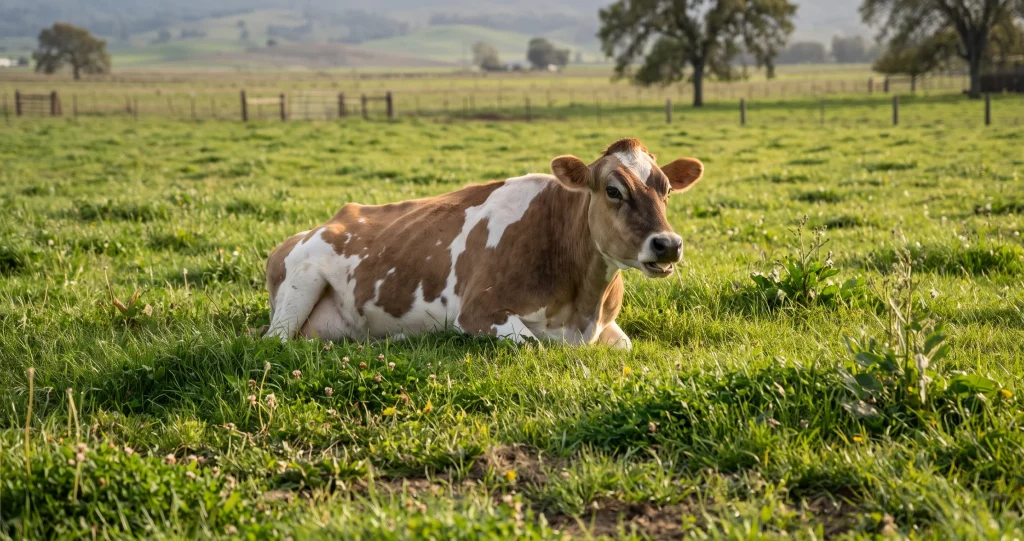
A cow resting quietly in a pasture may appear to be doing very little.
Yet inside its digestive system, microorganisms are actively transforming plant material into useful nutrients.
The cow stomach four chambers system combines microbial fermentation, repeated chewing, absorption, and enzymatic digestion into a remarkably effective process.
The rumen supports fermentation, the reticulum helps coordinate movement, the omasum absorbs water and other substances, and the abomasum performs acid-based digestion.
Together, these compartments allow cattle to use fibrous plants as an important source of energy and nutrients.
And the next time you see a cow calmly chewing its cud, remember the surprising truth behind that familiar farm scene.
What looks like simple chewing is actually part of one of nature’s most intricate digestive partnerships.
External Sources
1. MSD Veterinary Manual – The Digestive System of Beef Cattle: Explains the four stomach compartments—rumen, reticulum, omasum, and abomasum—and how they work together to digest grass and absorb nutrients. Source: MSD Veterinary Manual – Cattle Digestion
2. MSD Veterinary Manual – The Digestive System in Animals: Examines the differences between ruminant and nonruminant digestion, including the role of microorganisms in breaking down cellulose. Source: MSD Veterinary Manual – Animal Digestive Systems
3. MSD Veterinary Manual – Nutrition in Ungulates and Subungulates: Explains how grazing mammals use specialized digestive systems and microbial fermentation to obtain nutrients from grasses and other vegetation. Source: MSD Veterinary Manual – Ruminant Nutrition