
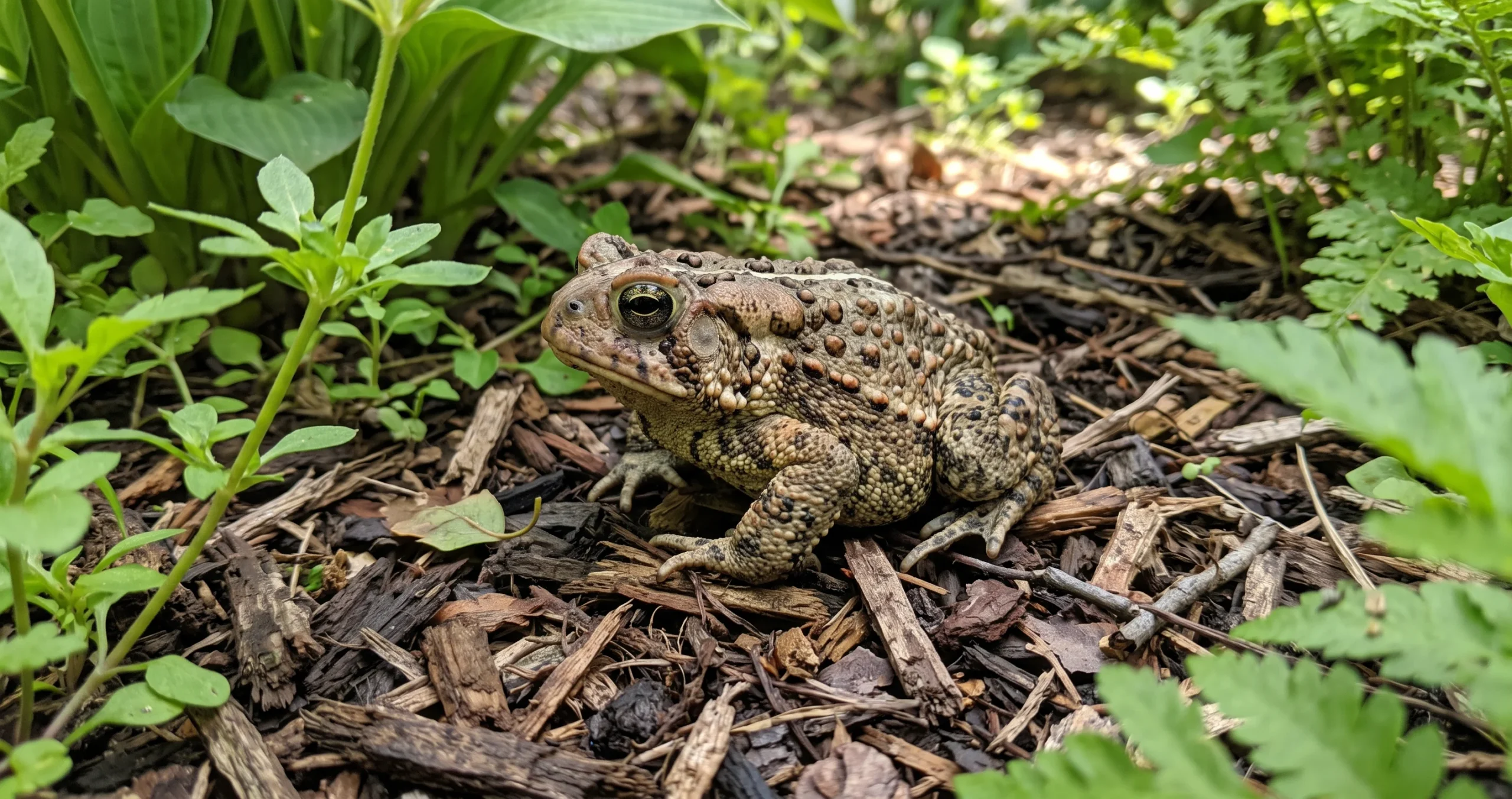
A small amphibian hops across your garden after a summer rain. Its skin looks bumpy, its body is round, and it disappears beneath a flowerpot. Is it a frog or a toad?
The frog vs toad distinction seems simple until you discover that toads are actually a specialized group of frogs. Both belong to the amphibian order Anura, and both play valuable roles in healthy ecosystems.
Although familiar toads often have drier-looking skin and shorter legs, while many frogs have smoother skin and powerful jumping legs, these differences are not universal. Nature rarely follows such tidy categories.
Understanding these animals is about more than identification. Frogs and toads eat insects and other invertebrates, contribute to food webs, and respond to environmental changes that can affect the health of a garden.
With the right combination of shelter, water, native plants, and chemical-free care, even a modest backyard can become a safer place for these fascinating amphibians.
Table of Contents
- Frog vs Toad: The Main Differences
- Why Toads Are Technically Frogs
- What Parotoid Glands Do
- How Frogs and Toads Help Gardens
- How to Build a Toad House
- How to Create a Frog-Friendly Pond
- Why Amphibians Are Sensitive to Chemicals
- Common Frog and Toad Myths
- Frequently Asked Questions
- Conclusion
Frog vs Toad: The Main Differences
The easiest way to compare frogs and toads is to look at several characteristics together rather than relying on one feature.
| Feature | Typical Frog | Typical True Toad |
|---|---|---|
| Skin | Often smooth and moist-looking | Usually dry-looking and bumpy |
| Body | Frequently slender | Often stocky |
| Hind legs | Commonly long and powerful | Often shorter relative to body |
| Movement | Long jumps or swimming | Short hops or walking |
| Eggs | Often laid in clusters | Frequently laid in strings |
| Habitat | Often associated with water | Many spend substantial time on land |
| Parotoid glands | Not characteristic of most frogs | Prominent in many true toads |
These are general patterns, not absolute identification rules.
Skin Texture and Appearance
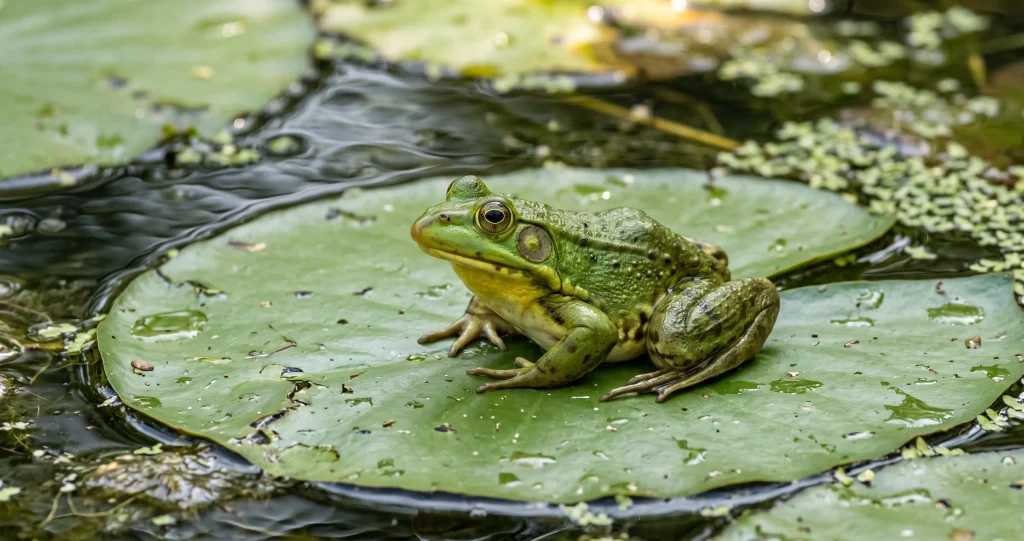
Many familiar frogs have relatively smooth skin that appears moist. True toads, especially members of the family Bufonidae, commonly have thicker-looking, granular skin with noticeable bumps.
However, some frogs have rough skin, and not every toad looks identical. Skin texture alone cannot reliably identify every species.
Legs and Movement
Many aquatic and semi-aquatic frogs have long hind legs adapted for jumping and swimming.
Typical true toads often have shorter hind legs and move through a combination of walking and shorter hops.
But exceptions exist. Some toads can make impressive jumps, while certain frogs spend much of their lives walking or climbing.
Eggs and Reproduction
Egg arrangement offers another useful clue.
Many familiar frogs lay eggs in clusters or floating masses, while numerous true toads deposit eggs in long gelatinous strings.
Nevertheless, reproductive strategies vary widely among amphibians. Some species attach eggs to vegetation, and others have highly specialized breeding behaviors.
Habitat Preferences
Frogs are often associated with ponds, streams, and wetlands, while many toads spend considerable time in gardens, woodlands, and other terrestrial habitats.
Both generally require appropriate moisture and suitable breeding conditions.
A toad resting beneath a garden pot may still travel to a pond during its breeding season.
Why Toads Are Technically Frogs
The surprising truth behind the frog vs toad comparison is that toads are frogs in the scientific sense.
All frogs and toads belong to the order Anura, a large group of tailless amphibians.
The term true toad usually refers to members of the family Bufonidae. These animals form one evolutionary branch within the broader frog group.
However, common names can be misleading. Some animals called toads belong to other families, while others called frogs have toad-like bodies.
This is why scientists rely on evolutionary relationships and anatomical evidence rather than appearance alone.
What Parotoid Glands Do
The Defensive Glands Behind the Eyes
Many true toads possess conspicuous parotoid glands behind their eyes.
These glands produce defensive secretions containing compounds that can discourage predators.
Their size, shape, and prominence vary among species, making them useful identification features in some cases.
Are Toad Secretions Dangerous?
Toad secretions can irritate the eyes, mouth, or other sensitive tissues. Certain species produce especially potent toxins that can cause serious poisoning when ingested.
This is particularly important for dogs that may attempt to bite or mouth a toad.
Observe amphibians without unnecessary handling, and prevent pets from harassing them. If a pet mouths a potentially toxic toad, seek veterinary advice promptly.
Parotoid glands are defensive structures, not weapons used to deliberately attack people.
How Frogs and Toads Help Gardens
Natural Predators of Invertebrates
Frogs and toads feed on a wide variety of small animals.
Depending on the species, their diets may include flies, beetles, moths, ants, slugs, spiders, and other invertebrates.
Some of these animals damage garden plants, making amphibians useful members of a diverse garden ecosystem.
However, frogs and toads are opportunistic predators. They also consume harmless and beneficial organisms, so they should not be treated as perfectly selective pest-control tools.
Supporting a Balanced Food Web
Amphibians are both predators and prey.
They consume invertebrates while providing food for birds, snakes, mammals, and other wildlife.
Tadpoles can also influence aquatic ecosystems through feeding and nutrient cycling, although their diets differ between species.
A garden that supports amphibians often provides habitat for many other organisms.
How to Build a Toad House
A toad house is a simple shelter that provides shade and a protected resting place.
It does not need elaborate construction. A terracotta flowerpot, suitable stones, or a small untreated wooden structure can work.
Step 1: Choose a Quiet Location
Select a shaded, relatively undisturbed area near shrubs, native plants, or a garden bed.
Avoid places exposed to intense afternoon sun, frequent digging, or heavy foot traffic.
Step 2: Prepare the Shelter
Turn an unglazed terracotta pot onto its side or partially bury it to create a stable entrance.
If using a pot with a cut opening, make sure every edge is smooth and cannot injure an animal.
The shelter should have enough room for a toad to enter and turn around.
Step 3: Add Natural Ground Cover
Leave a layer of untreated leaf litter or natural soil beneath and around the shelter.
Nearby plants, logs, and stones can provide additional cover.
Avoid plastic liners, chemical treatments, and materials that become excessively hot.
Step 4: Maintain Suitable Moisture
Keep the surrounding habitat from becoming excessively dry, particularly during hot weather.
A nearby shallow water dish with an easy exit can be helpful, provided it is cleaned regularly.
Never place a toad inside the shelter or force one to remain there. Wildlife should discover and use the space voluntarily.
How to Create a Frog-Friendly Pond
A small garden pond can provide valuable amphibian habitat when designed carefully.
The goal is to create accessible water, protective vegetation, and safe routes between aquatic and terrestrial areas.
Choose a Suitable Site
Select a location with some sunlight and some shade.
Avoid placing the pond where fertilizers, pesticides, or polluted runoff can easily enter the water.
Include Shallow Edges
A frog-friendly pond should have gently sloping margins or stable ramps that allow animals to enter and leave.
Steep-sided containers can trap amphibians, small mammals, and other wildlife.
Include shallow shelves and different water depths where space permits.
Add Native Aquatic Plants
Native submerged, emergent, and marginal plants provide cover and help create a functioning aquatic habitat.
Choose species appropriate to your region and avoid introducing invasive aquatic plants.
Never collect protected plants or wild amphibians to stock the pond.
Avoid Introducing Fish
Fish may consume amphibian eggs and tadpoles.
For a pond intended primarily to support breeding amphibians, avoiding fish is often the better approach.
A pond does not guarantee that frogs will breed, but suitable habitat increases the chances of natural colonization.
Maintain Water Quality
Avoid chemical algaecides and unnecessary pond treatments.
If tap water requires treatment before use, follow local guidance for removing harmful disinfectants.
Check that pumps, filters, and overflow outlets cannot trap small animals.
Why Amphibians Are Sensitive to Chemicals
Their Skin Absorbs More Than Water
Frogs and toads have permeable skin that plays an important role in water balance and, in many species, gas exchange.
Unfortunately, that permeability can also allow contaminants to enter their bodies.
Safer Garden Maintenance
Avoid routine applications of insecticides, herbicides, and chemical treatments around amphibian habitat.
Use hand weeding, suitable mulches, plant diversity, and other nonchemical methods where practical. Keep fertilizers and contaminated runoff away from ponds.
Reducing chemical exposure also protects many of the invertebrates that amphibians eat.
Common Frog and Toad Myths
Myth: Touching a Toad Causes Warts
Human warts are caused by certain human papillomaviruses, not by touching toads.
The bumps on a toad’s skin are normal anatomical structures, not contagious warts.
Myth: All Toads Are Poisonous to Touch
Many true toads produce defensive secretions, but toxicity varies by species and exposure.
Avoid touching your eyes or mouth after contact, wash your hands, and minimize handling to protect the animal.
Myth: Frogs Live Only in Water
Many frogs spend substantial time on land, in trees, or underground.
Their habitat preferences depend on species, season, and life stage.
Myth: Every Toad Needs a Pond in the Garden
A toad may use terrestrial shelter far from its breeding site.
A garden without a pond can still offer valuable resting and feeding habitat.
Frequently Asked Questions
What is the easiest way to identify a frog vs toad?
Look at skin texture, body shape, hind-leg length, and habitat together. Typical true toads are stockier and bumpier, while many frogs have smoother skin and longer legs. None of these features is universal.
Are toads good for vegetable gardens?
Yes. Many toads consume insects, slugs, and other invertebrates, including some garden pests. Their contribution varies with species, prey availability, and habitat.
Can frogs and toads live in the same garden?
Yes. Suitable gardens may support both, particularly when they offer varied vegetation, moisture, shelter, and accessible breeding habitat.
Should I move a toad into my garden?
No. Moving wild amphibians can spread disease, disrupt local populations, and violate wildlife regulations. Improve the habitat and allow native animals to arrive naturally.
Do frogs and toads return every year?
Some individuals return to familiar breeding areas or use suitable habitat repeatedly. However, survival, movement, and breeding-site fidelity vary by species.
Conclusion
The frog vs toad comparison reveals both important differences and a shared evolutionary history.
Although typical frogs and true toads often differ in appearance, movement, and reproduction, both contribute to healthy ecosystems.
Providing shaded shelter, native vegetation, accessible water, and reduced chemical exposure can make gardens more welcoming to local amphibians.
A wildlife-friendly garden does not need to be perfectly tidy. Sometimes, a patch of leaves, a sheltered flowerpot, and a carefully designed pond are exactly what these animals need.