
Table of Contents
- Why Late Summer Is the Most Important Time for Mulch
- How Mulch Protects Soil During Heat Waves
- The Science Behind Soil Temperature Moderation
- Why Mulch Helps Gardens Hold Moisture Longer
- Choosing the Right Mulch for Your Garden
- Wood Chips
- Shredded Bark
- Compost
- Straw
- Leaf Mulch
- H2: Mulch Depth Late Summer Heat – How Much Is Enough?
- The “Mulch Volcano” Mistake
- How to Apply Mulch Correctly
- Practical Tips
- Common Mistakes
- Frequently Asked Questions
- Conclusion
Why Mulch Matters Most in Late-Summer Heat (And How to Apply It Correctly)
By late August, many gardens begin showing the strain of weeks of sunshine, drying winds, and repeated watering. Even healthy plants may wilt more quickly during the hottest afternoons as soil loses moisture faster than roots can replace it. One of the simplest and most effective ways to protect your garden at this time of year is understanding the correct mulch depth late summer heat requires. Properly applied mulch acts as an insulating blanket, helping soil stay cooler, reducing evaporation, and protecting plant roots from temperature extremes.
Unlike fertilizers or pesticides, mulch doesn’t directly feed plants or solve every gardening problem. Instead, it creates better growing conditions by improving the environment around the root system. University horticulture researchers consistently recommend organic mulch because it conserves soil moisture, moderates temperature, suppresses weeds, and gradually contributes organic matter as it decomposes.
However, mulch only works well when it’s applied correctly. Too little provides limited benefit, too much can create problems, and piling mulch directly against trunks or stems—the common “mulch volcano”—can actually damage healthy plants.
Why Late Summer Is the Most Important Time for Mulch
Spring often gets the most attention when gardeners think about mulching, but late summer is when mulch frequently delivers its greatest benefits.
By this point in the growing season:
- Soil has absorbed months of solar heat.
- Evaporation rates remain high.
- Rainfall may become less predictable in many regions.
- Trees, shrubs, and perennials are still actively growing.
- Vegetable gardens continue producing crops.
Without protection, bare soil can heat rapidly during sunny afternoons, placing additional stress on roots already coping with hot weather.
A properly mulched surface helps reduce these fluctuations, creating a more stable environment where roots continue functioning efficiently.
How Mulch Protects Soil During Heat Waves
Roots are surprisingly sensitive to temperature.
While leaves can tolerate brief exposure to hot sunshine, excessive soil temperatures interfere with normal root activity.
Organic mulch works as an insulating layer.
Instead of allowing direct sunlight to strike bare soil, mulch absorbs much of the heat while slowing temperature changes beneath the surface.
The result is soil that generally remains:
- Cooler during hot afternoons.
- More stable throughout the day.
- Less likely to dry rapidly.
- Better protected during temperature swings.
This insulation becomes especially valuable during prolonged periods of summer heat.
The Science Behind Soil Temperature Moderation
Extension horticulturists often describe mulch as a protective blanket for the soil.
Although air temperatures may change rapidly over the course of a day, soil covered with mulch typically experiences smaller temperature fluctuations than exposed ground.
These more stable conditions benefit roots by:
- Reducing heat stress.
- Supporting steady water uptake.
- Encouraging beneficial soil organisms.
- Slowing moisture loss.
Research from university Cooperative Extension programs consistently supports organic mulching as part of water-wise gardening practices.
Penn State Extension provides excellent science-based guidance on mulch selection and application:
https://extension.psu.edu/
Why Mulch Helps Gardens Hold Moisture Longer
One of mulch’s greatest advantages is reducing evaporation.
When sunlight strikes bare soil directly, water escapes into the atmosphere much more quickly.
Mulch slows this process by creating a protective barrier.
Instead of evaporating immediately from the soil surface, moisture remains available longer for plant roots.
This often allows gardeners to:
- Water less frequently.
- Improve drought resilience.
- Reduce water waste.
- Maintain more consistent soil moisture.
Mulch does not eliminate the need for watering.
Instead, it helps gardens use available moisture more efficiently.
Choosing the Right Mulch for Your Garden
Many organic mulches perform well when used appropriately.
The best choice depends on your plants, landscape, and gardening goals.
Wood Chips
Wood chips are widely used around trees, shrubs, and ornamental beds.
They decompose slowly, providing long-lasting soil protection.
Shredded Bark
Shredded bark creates an attractive appearance while effectively suppressing weeds and conserving moisture.
It works especially well in perennial borders and foundation plantings.
Compost
Finished compost functions as both mulch and soil amendment.
Because it decomposes relatively quickly, it may require more frequent replenishment.
Straw
Clean, weed-free straw is commonly used in vegetable gardens.
It keeps fruits cleaner, reduces soil splash, and conserves moisture.
Avoid hay, which often contains weed seeds.
Leaf Mulch
Shredded autumn leaves make excellent mulch.
They recycle organic matter back into the soil while supporting beneficial organisms.
H2: Mulch Depth Late Summer Heat – How Much Is Enough?
One of the most common questions gardeners ask is how much mulch to apply.
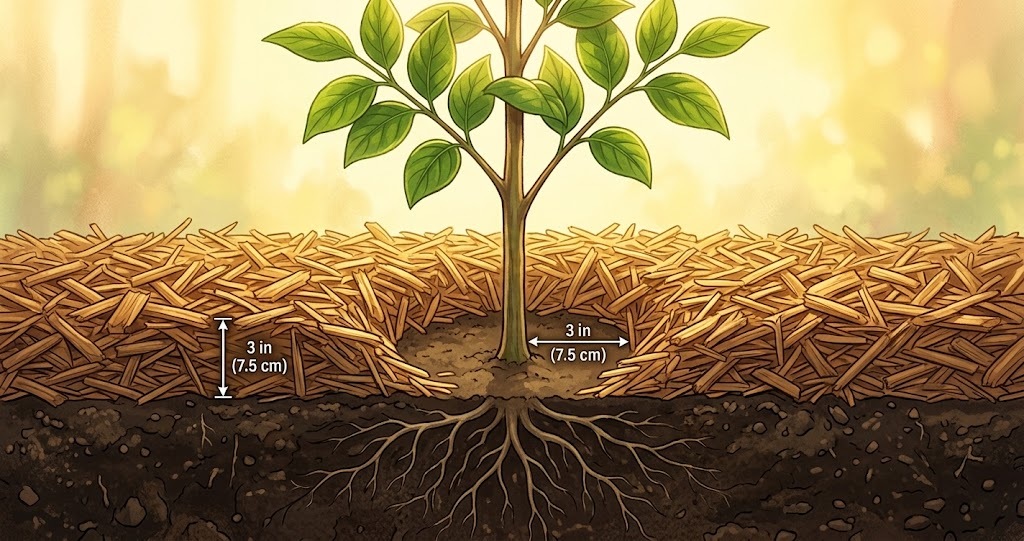
For most landscape beds, university Extension recommendations generally suggest an organic mulch layer approximately 2 to 4 inches deep.
This range usually provides effective moisture conservation and temperature moderation without excessively restricting air movement into the soil.
Several factors influence the ideal depth.
Too Little Mulch
A very thin layer may:
- Allow weeds to emerge easily.
- Provide limited insulation.
- Lose effectiveness quickly.
- Break down rapidly.
Too Much Mulch
Excessively thick mulch may:
- Reduce air circulation around roots.
- Slow water penetration during irrigation.
- Hold excessive moisture near stems.
- Encourage certain pests and diseases.
Rather than piling on additional material every year, inspect existing mulch and replenish only enough to maintain the recommended depth.
The “Mulch Volcano” Mistake
Perhaps the most common mulching error is creating a mulch volcano.
This occurs when mulch is piled directly against the trunk of a tree or the stem of a shrub in a cone-shaped mound.
Although this practice is widespread, horticulturists consistently discourage it.
Why Mulch Volcanoes Cause Problems
Tree trunks and shrub stems are designed to remain exposed to air.
When constantly surrounded by damp mulch, several issues may develop.
Potential problems include:
- Bark decay.
- Stem rot.
- Increased disease risk.
- Insect habitat.
- Rodent damage during winter.
- Root problems caused by excessive moisture around the trunk.
Over time, these conditions may weaken otherwise healthy plants.
The Correct Approach
Instead of piling mulch against the trunk, spread it evenly around the root zone while leaving a small mulch-free gap around the base of the plant.
This “donut” shape protects roots while allowing the trunk or stem to remain dry and well ventilated.
How to Apply Mulch Correctly
Applying mulch is straightforward when done carefully.
Step 1: Remove Existing Weeds
Mulch suppresses weeds but should not simply cover actively growing perennial weeds.
Pull or remove weeds before spreading fresh mulch.
Step 2: Water the Soil
If conditions are dry, water thoroughly before mulching.
This traps valuable moisture beneath the protective layer.
Step 3: Spread Evenly
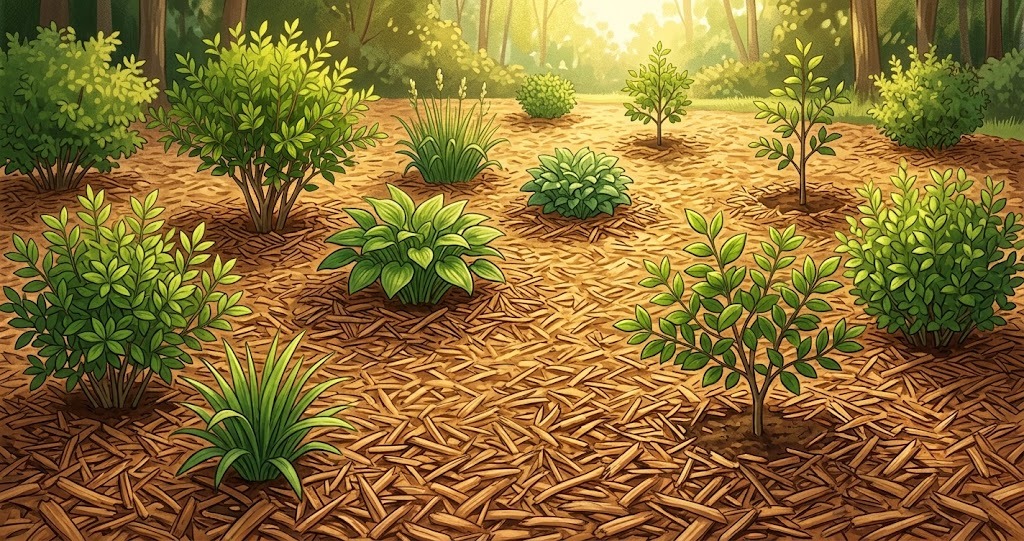
Apply mulch uniformly across the soil surface.
Avoid creating deep piles or uneven ridges.
Step 4: Keep Mulch Away From Stems
Maintain a visible gap around trunks, shrub stems, and perennial crowns.
The mulch should surround the root zone—not bury the plant itself.
Step 5: Replenish as Needed
Organic mulch gradually decomposes.
Check depth annually and add only enough material to restore the recommended layer.
Practical Tips
- Maintain approximately 2–4 inches of organic mulch in most landscape beds.
- Water deeply before applying fresh mulch during dry weather.
- Choose mulch appropriate for the planting area.
- Refresh mulch gradually instead of piling on new layers every year.
- Keep mulch a few inches away from trunks and stems.
- Pair mulching with deep, infrequent watering for maximum drought resilience.
For more ways to reduce heat stress in your landscape, see our guide:
https://secretsofthegreengarden.com/drought-resistant-gardening/
Common Mistakes
Creating Mulch Volcanoes
Mulch should never touch tree trunks or shrub stems.
Applying Excessively Thick Layers
More mulch is not always better.
Using Weed-Seed-Contaminated Hay
Hay frequently introduces unwanted weeds into garden beds.
Ignoring Existing Mulch Depth
Measure before adding more.
Repeated annual applications without checking depth can create overly thick layers.
Forgetting to Water Before Mulching
Applying mulch over already dry soil traps dryness beneath the surface.
Frequently Asked Questions
What is the best mulch depth for most gardens?
For most landscape plantings, Cooperative Extension recommendations generally suggest maintaining an organic mulch layer about 2–4 inches deep.
Should mulch touch tree trunks?
No. Leave a small gap around trunks and stems to reduce the risk of rot, disease, and pest problems.
Which mulch lasts the longest?
Wood chips and shredded bark typically decompose more slowly than compost or shredded leaves.
Is mulch useful during drought?
Yes. Mulch slows evaporation and helps soil retain moisture longer, making irrigation more efficient.
Can I add new mulch every year?
Yes, but first check the existing depth. Add only enough to maintain the recommended layer rather than continually building it up.
Conclusion
Late summer places tremendous stress on garden plants, but one simple practice can make a remarkable difference. Understanding the correct mulch depth late summer heat requires allows gardeners to protect root systems, conserve water, moderate soil temperature, and reduce weed growth without relying on additional irrigation or chemicals.
The key is proper application. A uniform 2–4 inch layer of suitable organic mulch provides excellent protection for most landscape beds, while avoiding the common “mulch volcano” mistake helps keep trunks and stems healthy. Combined with thoughtful watering and healthy soil management, mulch becomes one of the most valuable tools for maintaining resilient gardens through the hottest weeks of the growing season.