
Table of Contents
- Why Save Tomato Seeds?
- The Secret Most Gardeners Miss: Fermentation
- Why Tomato Seeds Have a Gel Coating
- Which Tomatoes Can You Save Seeds From?
- How to Save Tomato Seeds Step by Step
- Choose the Right Tomatoes
- Scoop Out the Seeds
- Ferment the Seeds
- Rinse and Dry
- How to Store Tomato Seeds
- How Long Do Tomato Seeds Stay Viable?
- Common Mistakes to Avoid
- Frequently Asked Questions
- Conclusion
How to Save Tomato Seeds the Right Way (The Fermentation Step Most People Skip)
Learning how to save tomato seeds is one of the most rewarding gardening skills you can master. Not only can it save money year after year, but it also allows you to preserve favorite heirloom varieties that thrive in your own garden. Yet many gardeners unknowingly skip one of the most important parts of the process: fermentation.
Simply rinsing tomato seeds and letting them dry may seem like enough, but tomato seeds are naturally coated in a gelatinous layer that contains compounds that help prevent premature germination inside the fruit. A short fermentation process removes this coating, helps clean the seeds, and more closely mimics what happens in nature when ripe tomatoes fall to the ground.
When done correctly, seed saving is straightforward, inexpensive, and highly effective. The key is understanding why fermentation matters, which tomatoes are worth saving, and how to store seeds so they remain viable for future growing seasons.
Why Save Tomato Seeds?
Saving seeds offers more than just cost savings.
Gardeners who consistently save seeds from healthy, productive plants may gradually build a collection of varieties that perform especially well under their local growing conditions.
Seed saving also helps preserve genetic diversity, particularly among heirloom tomatoes that have often been passed from gardener to gardener for generations.
For gardeners who enjoy growing unusual colors, flavors, or shapes, saving seeds ensures those favorite varieties remain available from one season to the next.
The Secret Most Gardeners Miss: Fermentation
Many first-time seed savers scoop seeds from a tomato, rinse them under water, and spread them out to dry.
Although some of those seeds may still germinate, this shortcut overlooks an important biological feature.
Tomato seeds are surrounded by a slippery gel coating.
This coating contains natural germination inhibitors that help prevent seeds from sprouting while still inside the moist fruit.
Fermentation breaks down this gel naturally.
As microorganisms digest the surrounding material, the coating separates from the seed, leaving a cleaner surface that is easier to dry and store.
Many university Cooperative Extension programs recommend brief fermentation because it improves seed preparation while also helping reduce some seedborne pathogens on the seed surface.
Michigan State University Extension provides an excellent overview of tomato seed saving techniques:
https://www.canr.msu.edu/
Why Tomato Seeds Have a Gel Coating
The gel around each tomato seed serves several purposes.
One of its most important functions is preventing premature germination while the fruit remains attached to the plant.
Without this protective coating, seeds could begin sprouting inside ripe tomatoes under favorable moisture conditions.
Once a tomato naturally falls to the ground and begins decomposing, microorganisms gradually remove the gel.
The fermentation method used by gardeners simply recreates this natural process under controlled conditions.
Which Tomatoes Can You Save Seeds From?
Not every tomato will produce offspring identical to the parent plant.
Understanding the difference between open-pollinated and hybrid varieties is essential.
Open-Pollinated Tomatoes
Open-pollinated varieties reproduce relatively true from seed when properly isolated from cross-pollination.
This group includes many beloved heirloom tomatoes.
If you save seeds from healthy open-pollinated plants, the next generation will usually produce tomatoes with characteristics very similar to the parent variety.
Heirloom Tomatoes
Heirloom tomatoes are open-pollinated varieties that have been maintained over many generations.
They are among the best choices for seed saving because gardeners can reliably preserve their unique characteristics.
If you’re interested in growing more heirloom varieties, see our guide:
https://secretsofthegreengarden.com/how-to-grow-heirloom-tomatoes/
Hybrid Tomatoes
Hybrid tomatoes are different.
They result from carefully controlled crosses between two distinct parent lines.
Although seeds collected from hybrid tomatoes will usually germinate, the resulting plants often do not produce fruit identical to the original hybrid.
Instead, offspring may display a wide range of characteristics inherited from earlier generations.
For gardeners hoping to grow exactly the same tomato again, purchasing fresh hybrid seed each season remains the most reliable option.
How to Save Tomato Seeds Step by Step
Step 1: Choose Fully Ripe, Healthy Tomatoes
Begin with the healthiest plants in your garden.
Select tomatoes that are:
- Fully ripe
- Disease-free
- True to variety
- High quality
Avoid collecting seeds from damaged or diseased fruits.
Step 2: Scoop Out the Seeds
Slice the tomato across its equator rather than from stem to blossom end.
This exposes the seed cavities more easily.
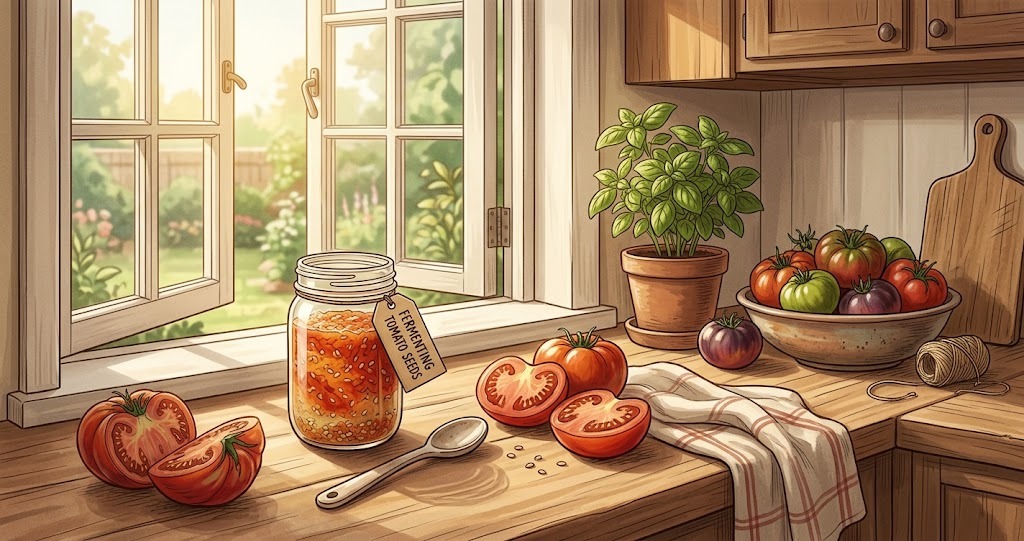
Squeeze or scoop the seeds and surrounding gel into a clean glass jar or small container.
There’s no need to separate every bit of pulp at this stage.
Step 3: Add a Small Amount of Water
Add just enough water to help the mixture ferment.
The container should not be filled completely.
Cover it loosely with a paper towel, coffee filter, or breathable cloth to keep insects out while allowing airflow.
Step 4: Allow the Seeds to Ferment
Place the container at normal room temperature.
Over the next few days, the mixture will begin fermenting naturally.
A layer of mold or foam often develops on the surface.
This is generally considered a normal part of the process.
Most Cooperative Extension guidance recommends fermenting only until the gel coating breaks down—typically about two to four days depending on temperature.
Allowing fermentation to continue much longer increases the risk of seed damage or premature germination.
Step 5: Rinse Thoroughly
Once fermentation is complete, add fresh water.
Viable seeds usually sink, while much of the pulp, mold, and lightweight debris float.
Carefully pour away floating material.
Repeat rinsing several times until the seeds are clean.
Step 6: Dry Completely
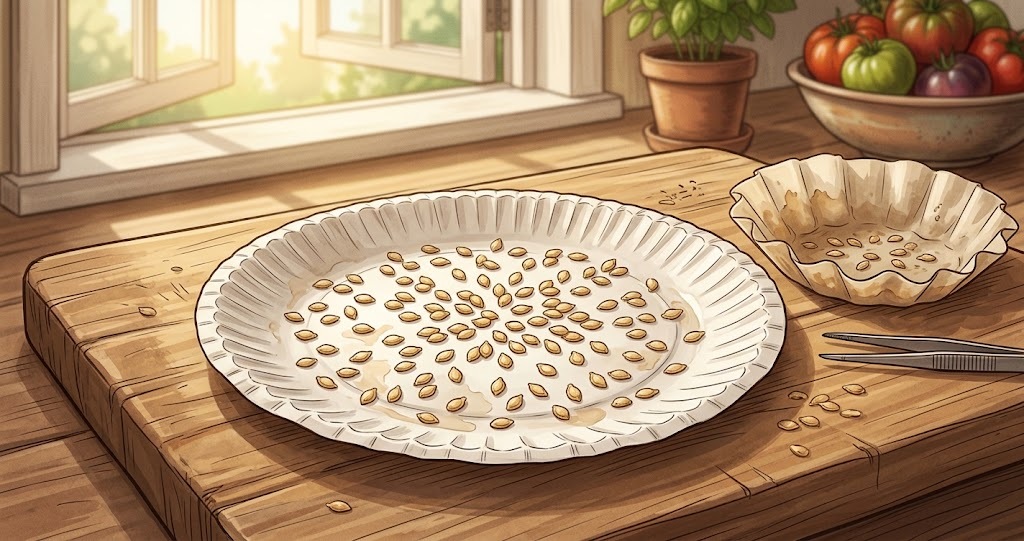
Spread the cleaned seeds in a single layer on:
- A ceramic plate
- Glass dish
- Coffee filter
- Fine screen
- Wax paper
Avoid paper towels because seeds often stick firmly as they dry.
Allow seeds to dry completely in a warm, well-ventilated location out of direct sunlight.
Drying usually takes about one to two weeks depending on humidity.
Seeds should feel hard and brittle before storage.
How to Store Tomato Seeds
Proper storage is just as important as proper cleaning.
Seeds last longest under cool, dry, and dark conditions.
Good storage containers include:
- Paper envelopes placed inside airtight jars
- Glass jars with tight-fitting lids
- Moisture-resistant seed packets
- Airtight containers with silica gel packets if appropriate
Clearly label each variety with:
- Variety name
- Harvest year
- Any helpful garden notes
Keeping accurate records prevents confusion years later.
How Long Do Tomato Seeds Stay Viable?
Under good storage conditions, tomato seeds often remain viable for several years.
Cool temperatures and low humidity help preserve germination.
Many gardeners store seeds in a cool basement, closet, or refrigerator where temperatures remain relatively stable.
Before planting older seeds, conducting a simple germination test on a small sample can help estimate remaining viability.
Common Mistakes to Avoid
Skipping Fermentation
Seeds may still germinate, but fermentation more effectively removes the natural gel coating and prepares seeds for storage.
Saving Seeds from Hybrid Tomatoes
Hybrid offspring often differ substantially from the parent plant.
Drying Seeds Too Quickly in Direct Sunlight
High heat can reduce seed quality.
Air drying in a shaded, well-ventilated location is generally preferred.
Storing Seeds Before They Are Fully Dry
Residual moisture encourages mold and reduces storage life.
Forgetting Labels
It’s surprisingly easy to forget which tomato variety produced which seeds after several months.
Frequently Asked Questions
Why do tomato seeds need fermentation?
Fermentation removes the gel coating that contains natural germination inhibitors and helps prepare seeds for long-term storage.
Can I skip fermentation?
Some seeds may still germinate, but fermentation is widely recommended because it more closely replicates the natural process and produces cleaner seeds.
How long should tomato seeds ferment?
Most Extension guidance recommends approximately two to four days, depending on temperature and when the gel coating has broken down.
Can I save seeds from hybrid tomatoes?
Yes, but the resulting plants are unlikely to grow true to the parent variety.
How should I store tomato seeds?
Store completely dry seeds in cool, dry, dark conditions inside clearly labeled airtight containers or seed envelopes.
Conclusion
Saving tomato seeds is a simple tradition that connects today’s gardeners with generations of growers who carefully preserved their favorite varieties long before commercial seed catalogs became common. While scooping and drying seeds may seem sufficient, the brief fermentation step is what truly prepares tomato seeds for successful long-term storage by removing the natural gel coating that inhibits germination.
By selecting healthy open-pollinated or heirloom tomatoes, following the fermentation process carefully, drying seeds thoroughly, and storing them in cool, dry conditions, you’ll build a reliable seed collection that can provide healthy tomato plants for years to come. With a little patience each harvest season, your best tomatoes can become the foundation of next year’s garden.