
Table of Contents
- What Is Blossom End Rot?
- Why Blossom End Rot Happens
- The Calcium Connection Explained
- Why It’s Usually Not a Lack of Water
- Why Raised Beds, Containers, and Hot Climates Are More Susceptible
- How to Prevent Blossom End Rot
- Water Consistently
- Mulch to Stabilize Soil Moisture
- Fertilize Carefully
- Choose Less Susceptible Varieties
- Can Affected Tomatoes Be Saved?
- Practical Tips
- Common Mistakes
- Frequently Asked Questions
- Conclusion
Blossom End Rot on Tomatoes: Why It’s Not Really About Watering
If you’ve ever picked a tomato only to discover a dark, sunken patch on the blossom end, you’ve encountered one of the most frustrating problems in vegetable gardening. Although many gardeners assume blossom end rot tomatoes are simply the result of not watering enough, the real explanation is far more interesting—and much more manageable.
Blossom end rot isn’t caused by a disease, fungus, or insect. Instead, it’s a physiological disorder that develops when growing fruits don’t receive enough calcium during a critical stage of development. In many cases, the soil already contains sufficient calcium. The real problem is that the plant cannot transport it efficiently to the developing fruit.
Understanding how calcium moves through tomato plants—and how watering habits influence that process—can help you prevent future losses without wasting money on unnecessary calcium sprays or soil amendments.
What Is Blossom End Rot?
Blossom end rot appears as a water-soaked spot on the blossom end of a young tomato. As the fruit matures, the spot enlarges, becomes dark brown or black, and develops a leathery, sunken appearance.
The affected tissue eventually dies because the cells didn’t receive enough calcium while they were forming.
Although tomatoes are the best-known example, blossom end rot can also affect peppers, eggplants, and squash.
The condition usually appears on the first fruits of the season, especially when plants are growing rapidly.
Why Blossom End Rot Happens
Many gardeners assume blossom end rot means the soil lacks calcium.
Sometimes that’s true—particularly in very acidic or nutrient-poor soils—but it’s actually much less common than inconsistent soil moisture.
According to established horticultural research, blossom end rot usually develops because calcium transport inside the plant is interrupted, not because calcium is absent.
The University of Maryland Extension provides an excellent explanation of this process:
https://extension.umd.edu/
The Calcium Connection Explained
Calcium behaves differently from many other plant nutrients.
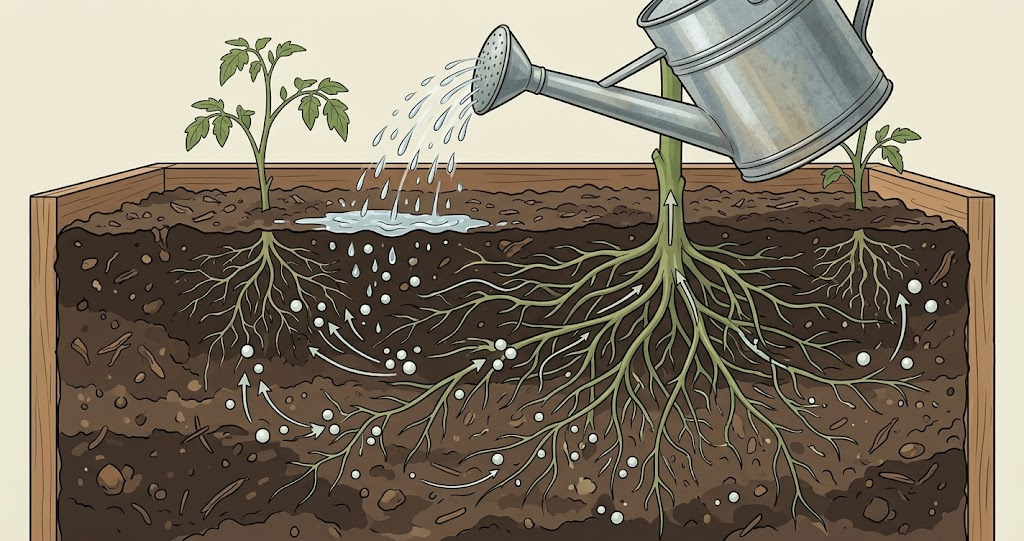
Unlike nitrogen or potassium, calcium is not easily redistributed once it’s inside the plant. Instead, it travels primarily through the xylem—the plant’s water-conducting tissue.
As water moves upward from the roots through transpiration, dissolved calcium travels with it.
Leaves lose far more water through transpiration than fruits do. Because of this, leaves often receive calcium first, while rapidly developing tomatoes may not receive enough during periods of stress.
If calcium delivery slows even briefly while fruit cells are expanding, those cells may collapse permanently, creating the familiar black patch associated with blossom end rot.
This explains why blossom end rot can occur even in soils that test perfectly adequate for calcium.
Why It’s Usually Not a Lack of Water
One of gardening’s most common myths is that blossom end rot simply means the plant needs more water.
The truth is more nuanced.
Tomato plants need consistent moisture—not constantly wet soil.
When soil repeatedly swings between very dry and very wet, root function changes dramatically. During dry periods, calcium uptake slows because less water is moving through the plant.
Then, after heavy watering or rainfall, rapid growth resumes. Unfortunately, the developing fruit may already have suffered irreversible calcium deficiency.
These cycles of stress are much more likely to trigger blossom end rot than a brief period of evenly reduced watering.
That’s why experienced gardeners focus on maintaining even soil moisture instead of watering heavily only after plants begin to wilt.
For more strategies on maintaining healthy soil moisture, see our guide:
https://secretsofthegreengarden.com/how-to-water-your-garden-properly/
Why Raised Beds, Containers, and Hot Climates Are More Susceptible
Raised Beds
Raised beds warm earlier in spring and drain more quickly than in-ground gardens.
While excellent for root health, faster drainage also means moisture levels can fluctuate more rapidly during hot weather.
Without regular watering, these repeated wet-dry cycles increase the likelihood of blossom end rot.
Containers
Container-grown tomatoes face an even greater challenge.
Limited soil volume dries much faster than garden soil, especially in terracotta pots or dark-colored containers exposed to full sun.
On windy summer days, some containers may require watering daily—or even twice daily—depending on temperature, humidity, and plant size.
Hot, Dry Weather
High temperatures increase transpiration and place greater demand on the plant’s water transport system.
Rapid fruit growth combined with hot, dry conditions creates ideal circumstances for temporary calcium shortages inside developing tomatoes.
This is one reason blossom end rot often appears during the hottest part of summer.
How to Prevent Blossom End Rot
Fortunately, prevention focuses on improving growing conditions rather than treating damaged fruit.
Water Consistently
Aim for deep, even watering that keeps soil consistently moist but never waterlogged.
Instead of watering on a rigid calendar, monitor soil moisture several inches below the surface.
Drip irrigation or soaker hoses make maintaining consistent moisture much easier.
Mulch to Stabilize Soil Moisture
Applying two to three inches of organic mulch around tomato plants reduces evaporation and moderates soil temperature.
Suitable mulch materials include:
- Straw
- Shredded leaves
- Pine needles
- Compost
- Untreated wood chips
Mulch helps reduce the rapid moisture fluctuations that interfere with calcium transport.
Fertilize Carefully
Excess nitrogen encourages lush leafy growth.
While vigorous foliage may look impressive, rapidly growing leaves compete strongly for water and calcium, leaving less available for developing fruits.
Use balanced fertilizers according to label directions and avoid overfeeding with high-nitrogen products after flowering begins.
Check Soil pH if Problems Persist
Although inconsistent moisture is the most common cause, extremely acidic soils can reduce calcium availability.
If blossom end rot occurs year after year despite good watering practices, a soil test can determine whether pH or nutrient imbalances require correction.
Adding calcium without confirming a deficiency is rarely beneficial.
Choose Less Susceptible Varieties
No tomato variety is completely immune.
However, gardeners often observe that some cultivars develop blossom end rot less frequently than others under the same growing conditions.
Choosing varieties known for good performance in your local climate can reduce overall risk.
Image: Tomato with early blossom end rot beside a healthy tomato.
Can Affected Tomatoes Be Saved?
Unfortunately, damaged tissue cannot recover.
Once blossom end rot develops, the affected area remains permanently damaged.
However, if growing conditions improve, later fruits on the same plant are often completely normal.
Many gardeners find that blossom end rot disappears naturally after watering practices become more consistent.
Practical Tips
- Water deeply before plants become drought-stressed.
- Use mulch to reduce moisture fluctuations.
- Install drip irrigation if possible.
- Avoid excessive nitrogen fertilizer after flowering begins.
- Monitor containers frequently during hot weather.
- Test soil before applying calcium amendments.
- Remove severely affected fruits so the plant can focus on producing healthy new tomatoes.
Common Mistakes
Watering Only After Plants Wilt
Allowing repeated drought stress followed by heavy watering creates the moisture swings that encourage blossom end rot.
Adding Calcium Without Testing
Most garden soils already contain enough calcium.
If transport—not supply—is the problem, calcium sprays and soil additives may offer little benefit.
Overfertilizing
Too much nitrogen stimulates leafy growth that competes with developing fruits for water movement.
Ignoring Mulch
Bare soil loses moisture quickly, making consistent watering much more difficult.
Frequently Asked Questions
Is blossom end rot contagious?
No. It isn’t caused by bacteria, fungi, or viruses and cannot spread between plants.
Can I eat tomatoes with blossom end rot?
Yes. Simply cut away the damaged portion if the remainder of the fruit is healthy and free from secondary decay.
Do calcium sprays cure blossom end rot?
Research has shown mixed results. If calcium transport inside the plant is disrupted by inconsistent moisture, sprays generally do not correct the underlying problem.
Why does blossom end rot affect only the first tomatoes?
Early fruits often develop while plants are growing rapidly and environmental conditions fluctuate more dramatically.
Will adding eggshells fix blossom end rot?
Not immediately. Eggshells break down very slowly and are unlikely to provide usable calcium quickly enough to prevent blossom end rot during the current growing season.
Conclusion
Blossom end rot may look alarming, but it’s rarely a sign that your garden is lacking calcium. More often, it’s the result of interrupted calcium movement caused by inconsistent soil moisture during rapid fruit development.
By understanding the science behind calcium transport, maintaining steady watering practices, using mulch, avoiding excessive nitrogen, and choosing appropriate tomato varieties, gardeners can greatly reduce the chances of seeing those disappointing black patches on future harvests.
Rather than reacting with quick fixes or unnecessary supplements, focus on creating stable growing conditions. Healthy roots, evenly moist soil, and balanced nutrition give tomato plants the best chance to deliver calcium where it’s needed most—into every developing fruit.