
Introduction
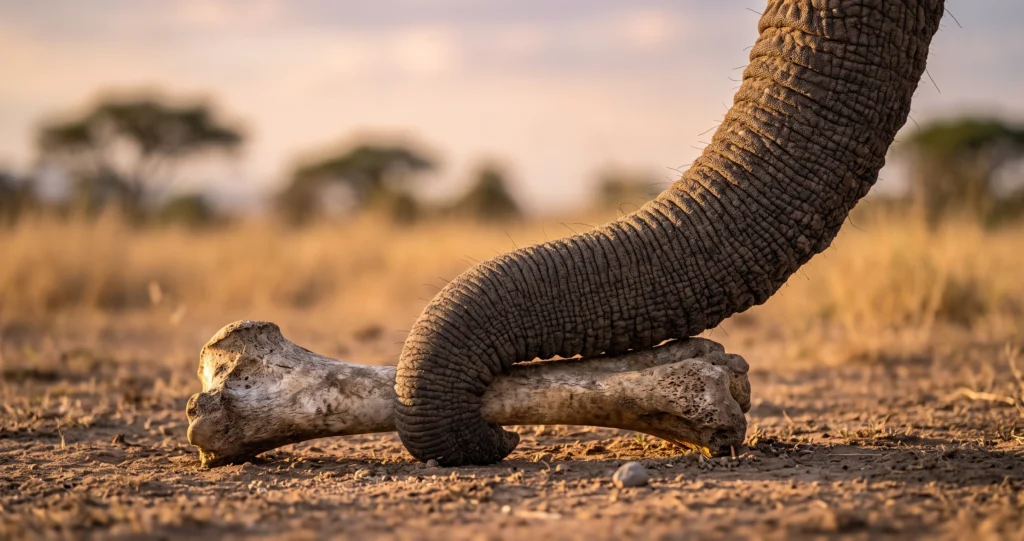
A lone elephant slowly approaches an old skull lying beneath an African acacia tree. Instead of ignoring it, the animal reaches out with its trunk, gently tracing every curve before standing motionless for several minutes. Nearby herd members pause as well, almost as if they understand the significance of what lies before them.
Scenes like this have fascinated scientists, photographers, and wildlife enthusiasts for decades. They appear surprisingly emotional, leading many people to wonder whether elephants actually mourn their dead or whether these behaviors are simply instinctive.
Modern research suggests the answer is more complex than either explanation alone. Scientists have documented elephants returning to the bones of deceased herd members, carefully examining skulls and tusks, lingering near carcasses, and even revisiting sites where relatives died years earlier. These behaviors are among the most intriguing examples of animal social intelligence ever recorded.
Understanding elephant grief behavior is about far more than satisfying human curiosity. It offers valuable insight into memory, social bonds, emotional processing, and the remarkable cognitive abilities of one of Earth’s most intelligent mammals. While researchers remain cautious about assigning human emotions to animals, evidence increasingly shows that elephants experience social loss in ways that deserve serious scientific attention.
This article explores what researchers have observed, the leading theories behind these behaviors, why myths about elephant graveyards persist, and what elephants can teach us about the evolution of intelligence and emotion.
What Researchers Have Observed
Long-term studies of African and Asian elephants have revealed consistent patterns whenever elephants encounter the remains of another elephant.
Unlike isolated anecdotes, these observations come from decades of field research conducted in Kenya, Botswana, South Africa, Tanzania, Sri Lanka, and other regions where elephants roam freely.
Gentle Examination of Bones
One of the most striking behaviors is the careful inspection of elephant bones.
Rather than simply walking past skeletal remains, elephants often:
- Touch bones repeatedly with their trunks.
- Lift skulls or tusks.
- Rotate bones before placing them back down.
- Smell bones for extended periods.
- Stand quietly beside them.
Researchers have noticed that elephants display much greater interest in elephant bones than in the remains of other large mammals living in the same environment.
Skulls and tusks receive particular attention, suggesting these structures may carry important sensory information.
Remaining With the Dead
Scientists have also documented elephants staying beside recently deceased herd members for hours or even days.
Family members sometimes:
- Attempt to lift a fallen elephant.
- Nudge the body repeatedly.
- Cover it with grass, leaves, or branches.
- Stand guard while others remain nearby.
- Return to the location after leaving.
These behaviors are especially common when the deceased individual is a close relative or an experienced matriarch.
Lifelong Family Bonds
To understand why these behaviors matter, it’s important to understand elephant society.
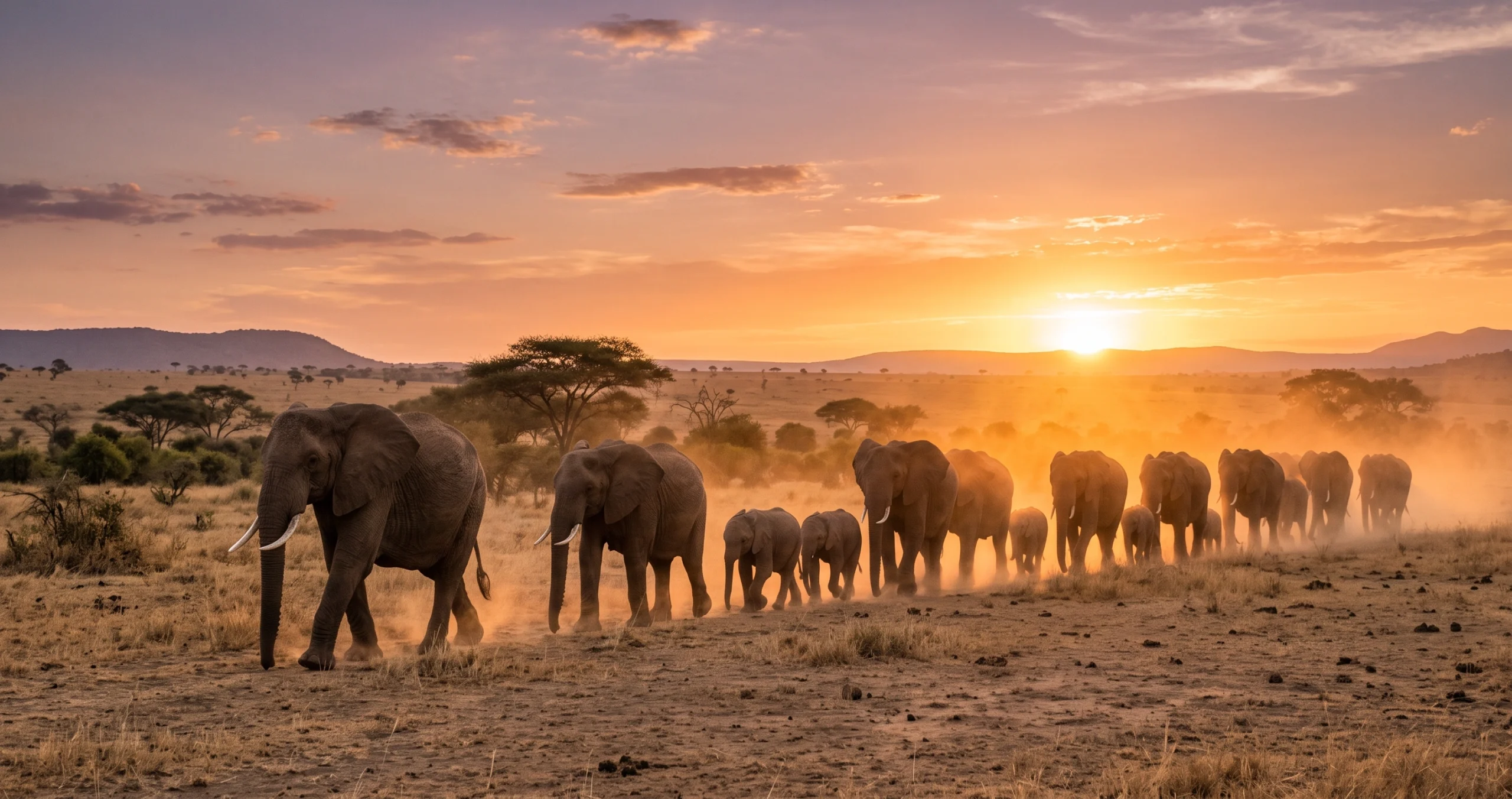
Female elephants live in stable family groups that often remain together for life. Calves are raised not only by their mothers but also by sisters, aunts, and grandmothers. Older matriarchs pass on essential knowledge about migration routes, seasonal water sources, predators, and social relationships.
These close-knit families create emotional bonds that can last for decades.
When an individual dies, the loss affects the entire herd—not only socially but also practically.
The Leading Scientific Theories
Scientists agree on what elephants do.
The debate centers on why they do it.
Two leading explanations dominate current research.
Theory One: Chemosensory Investigation
Elephants possess one of the most advanced senses of smell in the animal kingdom.
Their trunks contain roughly 40,000 muscles and millions of scent receptors capable of detecting extraordinarily subtle chemical signals.
According to the chemosensory investigation theory, elephants examine bones because they are gathering information.
Bones may preserve chemical traces that reveal:
- Individual identity
- Family relationships
- Age
- Sex
- Time since death
This explanation suggests elephants are using their highly specialized sensory abilities to investigate rather than mourn.
Support for this theory comes from studies showing elephants spend significantly more time examining elephant skulls and tusks than random bones from other species.
Theory Two: Genuine Grief
Another explanation proposes that elephants experience a form of grief.
Researchers point to several behaviors that resemble emotional responses seen in humans and other social mammals:
- Remaining beside deceased companions.
- Reduced feeding immediately after a death.
- Quiet behavior around carcasses.
- Returning to sites where relatives died.
- Repeated touching of bones long after decomposition.
Scientists emphasize that this does not necessarily mean elephants experience grief exactly as humans do.
Instead, their responses may represent an elephant-specific emotional state linked to attachment, memory, and social relationships.
Could Both Theories Be Correct?
Increasingly, researchers believe these explanations are complementary rather than competing.
An elephant may investigate bones because scent provides valuable information while simultaneously experiencing an emotional response associated with recognizing a former companion.
Human behavior often combines emotion with practical investigation, and elephants may do something similar.
The scientific consensus is gradually shifting toward recognizing elephant behavior as a sophisticated combination of sensory processing, memory, and social cognition.
Elephant Grief Compared With Other Species
Elephants are not alone in displaying unusual responses to death.
Several highly intelligent species exhibit behaviors that researchers interpret as possible forms of mourning.
Orcas
Orca mothers have been observed carrying deceased calves for days or even weeks.
Marine biologists believe these prolonged behaviors reflect exceptionally strong maternal bonds.
Dolphins
Dolphins sometimes support dead calves near the water’s surface long after death.
Mothers frequently continue protective behaviors despite the calf no longer being alive.
Chimpanzees
Chimpanzees have been observed grooming deceased companions, remaining unusually quiet after deaths, and allowing mothers to carry dead infants for extended periods.
Their reactions suggest social attachment continues even after death.
Crows
Crows gather around dead members of their species in what researchers call “crow funerals.”
Scientists believe these gatherings serve multiple purposes, including danger assessment, learning, and social communication.
Why Elephants Stand Apart
Although several animals display possible mourning behaviors, elephants remain unique because they combine:
- Exceptional long-term memory.
- Lifelong family relationships.
- Advanced communication.
- Cooperative caregiving.
- Repeated attention to skeletal remains years after death.
This combination makes elephant grief behavior one of the strongest examples of complex social awareness in wild animals.
Debunking the Myth of Elephant “Graveyards”
Stories about mysterious elephant graveyards have existed for centuries.
The image of elderly elephants walking to hidden cemeteries before dying has become deeply rooted in popular culture.
Science tells a different story.
Myth: Elephants Deliberately Gather to Die
No scientific study has found evidence that elephants intentionally travel to secret locations to die.
Researchers who have followed elephant populations for decades have never documented such behavior.
Why Bones Sometimes Accumulate
Large numbers of elephant skeletons may occur naturally because:
- Waterholes attract many elephants.
- Severe drought causes multiple deaths.
- Disease outbreaks affect local populations.
- Difficult terrain traps weakened animals.
- Scavengers leave bones concentrated in certain areas.
These natural processes can create the appearance of a graveyard without involving deliberate behavior.
Why the Legend Survived
Before modern wildlife biology, explorers encountering clusters of elephant bones often relied on folklore to explain what they saw.
The mystery surrounding elephants helped these stories spread, eventually becoming part of books, films, and popular imagination.
Today, long-term scientific observation provides a far more reliable explanation.
What Elephant Grief Behavior Teaches Us About Animal Cognition
Studying elephants has transformed how scientists think about animal intelligence.
Rather than viewing intelligence as a simple measure of problem-solving ability, researchers increasingly recognize the importance of social relationships, memory, and emotional flexibility.
Memory Shapes Social Life
Elephants remember family members after years apart.
They recognize voices, identify individuals through scent, and navigate enormous landscapes using memories formed decades earlier.
Returning to places associated with deceased companions may reflect this extraordinary memory.
Social Intelligence Drives Survival
Elephants depend on cooperation.
Experienced matriarchs guide families through droughts, locate hidden water sources, and help protect calves from danger.
These social systems rely on trust, communication, and long-term relationships.
Emotions Have Evolutionary Value
Scientists increasingly argue that emotions evolved because they help animals survive.
Attachment encourages parents to care for offspring.
Social bonds strengthen cooperation.
Responses to loss may reinforce group cohesion.
Elephants provide one of the clearest opportunities to study these evolutionary advantages.
Conservation Benefits
Understanding elephant emotions also has practical conservation implications.
Poaching often removes experienced adults who hold critical ecological knowledge.
The loss extends beyond individual elephants, affecting the survival of entire family groups that depend on experienced leaders.
Protecting elephant populations therefore means preserving their social networks as well as their habitats.
Practical Tips for Wildlife Tourists and Photographers
Observing elephants is an unforgettable experience, but respectful viewing helps protect both animals and people.
Keep a Respectful Distance
Always remain at least the distance recommended by your guide or park regulations.
Avoid encouraging elephants to change their natural behavior.
Stay Quiet
Loud conversations, sudden movements, and vehicle noise can stress elephant families, especially when calves are nearby.
Never Approach a Herd on Foot
Even calm elephants can become defensive if they perceive a threat.
Allow experienced guides to determine safe viewing distances.
Do Not Disturb Elephants Around a Carcass
If elephants are interacting with a deceased herd member or skeletal remains, avoid moving closer for photographs.
Moments like these are scientifically valuable and emotionally significant to the animals.
Watch Body Language
Warning signs include:
- Raised head
- Spread ears
- Trunk lifted high
- Dust throwing
- Mock charges
- Trumpeting
If any of these behaviors occur, increase your distance immediately.
Common Mistakes
Avoid these common misunderstandings:
- Assuming every interaction with bones proves elephants experience human emotions exactly as we do.
- Believing myths about hidden elephant graveyards.
- Approaching elephants too closely for photographs.
- Ignoring warning signals from protective adults.
- Treating fascinating observations as scientific proof rather than evidence that continues to be studied.
Frequently Asked Questions
Why do elephants touch the bones of dead elephants?
Scientists believe elephants use their highly sensitive trunks to gather scent information from bones. Emotional attachment may also play a role, particularly when the remains belong to former herd members.
Do elephants really grieve?
Research strongly suggests elephants respond to death in complex ways, but scientists avoid claiming their emotions are identical to human grief. Instead, they describe elephant grief behavior as evidence of advanced social and emotional processing.
Are elephant graveyards real?
No. Modern scientific studies have found no evidence that elephants intentionally travel to special places to die. Bone accumulations usually result from natural environmental factors.
Which animals besides elephants appear to mourn?
Orcas, dolphins, chimpanzees, some monkeys, and certain birds such as crows have all displayed behaviors researchers associate with responses to death.
Why is elephant grief behavior important to science?
It helps researchers understand the evolution of intelligence, memory, social relationships, emotional processing, and why protecting elephant families is essential for conservation.
Conclusion
Watching an elephant gently explore the bones of another elephant is one of nature’s most unforgettable sights. Whether motivated by scent, memory, emotion, or a combination of all three, these encounters reveal a level of social complexity that few other animals possess.
Modern research shows that elephants maintain lifelong family bonds, recognize individuals long after separation, respond to death in consistent ways, and display remarkable curiosity toward the remains of their own species. While scientists continue to investigate the exact emotional meaning behind these behaviors, the evidence already paints a compelling picture of animals with sophisticated minds and deeply interconnected social lives.
Perhaps the greatest lesson elephants offer is one of humility. As research uncovers new insights into elephant grief behavior, it becomes increasingly clear that intelligence is not measured only by language or technology. Memory, cooperation, empathy, and enduring relationships are also hallmarks of advanced cognition.
Every new discovery reminds us that conserving elephants means protecting more than a species—it means preserving one of the richest social worlds found anywhere in the natural world.
External Authoritative Sources
- Douglas-Hamilton, I., Bhalla, S., Wittemyer, G., & Vollrath, F. (2006). Behavioural reactions of elephants toward a dying and deceased matriarch. Biology Letters (Royal Society). https://royalsocietypublishing.org/journal/rsbl
- Amboseli Trust for Elephants – Long-term scientific research on elephant behavior and social structure. https://www.elephanttrust.org/
- National Geographic – African Elephant Facts, Behavior, and Intelligence. https://www.nationalgeographic.com/animals/mammals/facts/african-elephant