
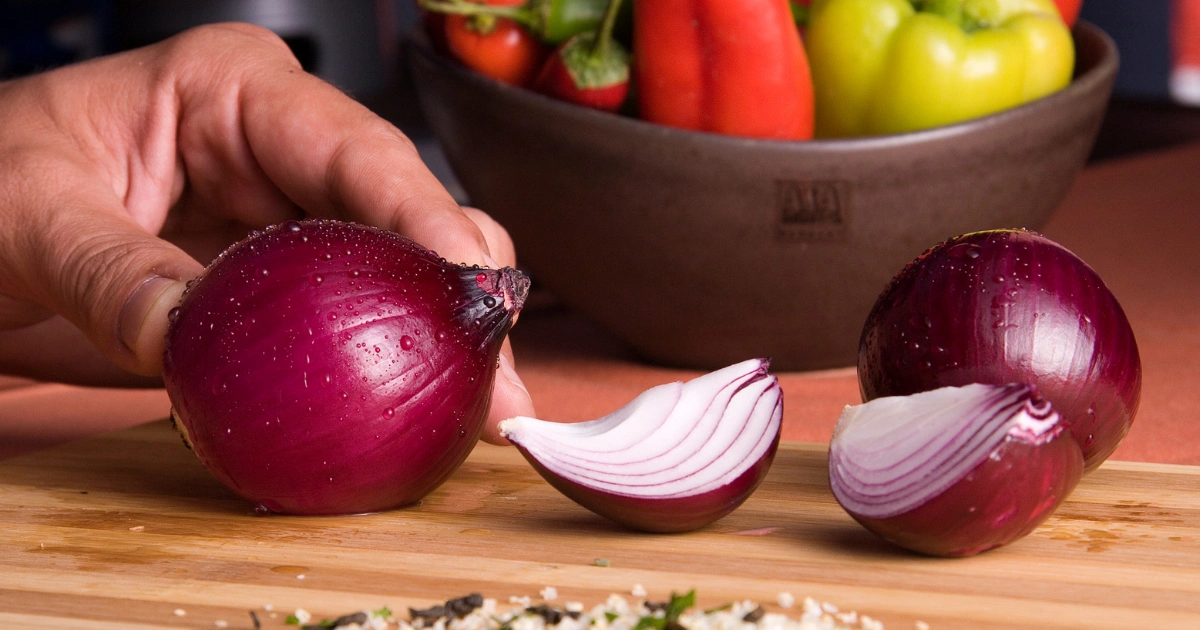
Few kitchen experiences are as universally frustrating as chopping onions and suddenly finding yourself in tears. Whether preparing soup, salads, sauces, or stir-fries, onions release irritating compounds that can quickly turn cooking into an uncomfortable experience.
Fortunately, understanding the science behind why onions make you cry can help reduce the problem dramatically. With the right cutting techniques, storage methods, and kitchen habits, you can prepare onions with far less irritation.
Why Do Onions Make You Cry?

When onions are cut, thousands of tiny plant cells rupture. This triggers a chain of chemical reactions designed to protect the onion from pests and predators.
What Happens Inside the Onion
The process begins when:
- Onion cells break open
- Enzymes mix together
- Sulfur-containing compounds are released
One important enzyme called alliinase reacts with sulfur compounds naturally found inside the onion.
This reaction creates a volatile gas called syn-propanethial-S-oxide, commonly known as the onion tear gas.
How Onion Gas Affects Your Eyes
The gas released from cut onions rises into the air and eventually reaches your eyes.
Once the gas contacts eye moisture:
- A mild sulfuric compound forms
- Nerve endings become irritated
- Tear glands activate
- Eyes produce tears to flush out the irritant
Your body is simply trying to protect itself.
Why Some Onions Cause More Tears
Not all onions produce the same level of irritation.
Stronger Onion Varieties
Typically include:
- Yellow onions
- White onions
- Older onions
These often contain higher sulfur levels.
Milder Onion Varieties
Usually include:
- Sweet onions
- Vidalia onions
- Red onions
Sweeter onions generally contain fewer sulfur compounds.
The Role of Sulfur in Onion Flavor
Sulfur compounds are responsible for:
- Sharpness
- Aroma
- Pungency
- Cooking depth
Without sulfur, onions would taste far milder and less complex.
This is why caramelized onions develop such rich flavor when cooked slowly.
Why Sharp Knives Reduce Tears
A dull knife crushes onion cells aggressively, releasing more irritating chemicals into the air.
A sharp knife:
- Cuts cleanly
- Causes less cell damage
- Releases less gas
- Speeds up preparation
Professional chefs often sharpen knives specifically for vegetable prep efficiency.
Why Refrigerating Onions Helps
Cold temperatures slow chemical reactions inside onions.
Chilling onions for:
- 15–30 minutes before cutting
can noticeably reduce the amount of gas released.
This works because colder enzymes react more slowly.
How Airflow Reduces Onion Irritation
The tear-causing gas is airborne.
Using:
- A kitchen fan
- Open windows
- Ventilation hoods
helps disperse the gas before it reaches your eyes.
Many cooks find that simple airflow dramatically improves comfort.
Are Onion Goggles Effective?
Yes. Goggles physically block onion gas from reaching eye moisture.
Why They Work
They create:
- A sealed barrier
- Reduced eye exposure
- Protection from airborne compounds
Swimming goggles often work surprisingly well in home kitchens.
Does Running Water Help?
Cutting onions near running water may help because moisture can absorb some airborne gas before it reaches the eyes.
Some people also:
- Rinse onions briefly
- Wet cutting boards
- Use damp paper towels nearby
Results vary, but moisture can reduce airborne irritation slightly.
Why Freezing Onions Is Different
Freezing onions changes texture significantly.
Although partially freezing may reduce irritation:
- Texture becomes softer
- Cell walls break down
- Crispness decreases
Refrigeration is usually a better option than freezing for fresh prep.
The Science of Onion Defense Mechanisms
The compounds that irritate human eyes evolved as natural plant defenses.
These sulfur reactions help onions:
- Deter insects
- Resist predators
- Protect damaged tissue
Many members of the allium family use similar protective chemistry.
Examples include:
- Garlic
- Shallots
- Leeks
- Chives
Does Root Cutting Matter?
Some cooks believe the onion root contains the highest concentration of sulfur compounds.
Cutting the root last may slightly reduce irritation because:
- Fewer chemicals release early
- Onion structure stays more intact
While not scientifically perfect, many cooks report improvement using this method.
How Professional Kitchens Handle Onions
Commercial kitchens often rely on:
- Extremely sharp knives
- Large ventilation systems
- Rapid cutting techniques
- Chilled storage
Experienced cooks also work quickly, reducing exposure time.
Best Onion-Cutting Techniques
Slice Efficiently
Faster prep means less exposure to gas.
Keep the Onion Stable
A stable onion improves safety and cutting precision.
Avoid Crushing
Gentle slicing releases fewer irritants than pressing or smashing.
Work in Ventilated Areas
Air circulation matters more than many people realize.
Why Tears Sometimes Continue After Cutting
Onion gas may linger:
- On cutting boards
- In kitchen air
- On hands
Touching your eyes after handling onions can worsen irritation.
Washing hands thoroughly helps reduce lingering effects.
Are Sweet Onions Better for Raw Dishes?
Yes. Sweet onions generally:
- Taste milder
- Produce fewer tears
- Work well in salads and sandwiches
They are often preferred for uncooked recipes.
Onion Chemistry and Cooking Flavor
Interestingly, the same sulfur chemistry responsible for tears also contributes to onion flavor complexity.
Cooking transforms these compounds into:
- Sweet flavors
- Savory aromas
- Rich caramelized notes
This is why onions become dramatically sweeter during slow cooking.
Health Benefits of Onions
Onions contain:
- Antioxidants
- Vitamin C
- Fiber
- Plant compounds like quercetin
Simply wish to say your article is as amazing. The clearness in your post is simply
excellent and i can assume you are an expert on this subject.
Fine with your permission allow me to grab your RSS feed
to keep updated with forthcoming post. Thanks a million and
please keep up the gratifying work.
Worth pointing out that the writer made the topic feel more interesting than I had been expecting, and a look at coralzen continued that elevation effect, content that improves the apparent quality of its subject through skilled treatment is doing something real and this site has clearly developed that kind of editorial alchemy throughout.
Fantastic blog! Do you have any tips for aspiring writers? I’m hoping to start my own blog soon but I’m a little lost on everything. Would you propose starting with a free platform like WordPress or go for a paid option? There are so many options out there that I’m completely overwhelmed .. Any ideas? Bless you!
Backbiome is an advanced daily wellness supplement formulated to help support spinal comfort, reduce feelings of built-up tension, and promote freer, smoother movement throughout backbiome everyday life.
Boostaro is a modern men’s wellness boostaro formula created to support daily vitality, stamina, and confidence through a practical, natural routine.
I consider something truly special in this web site.